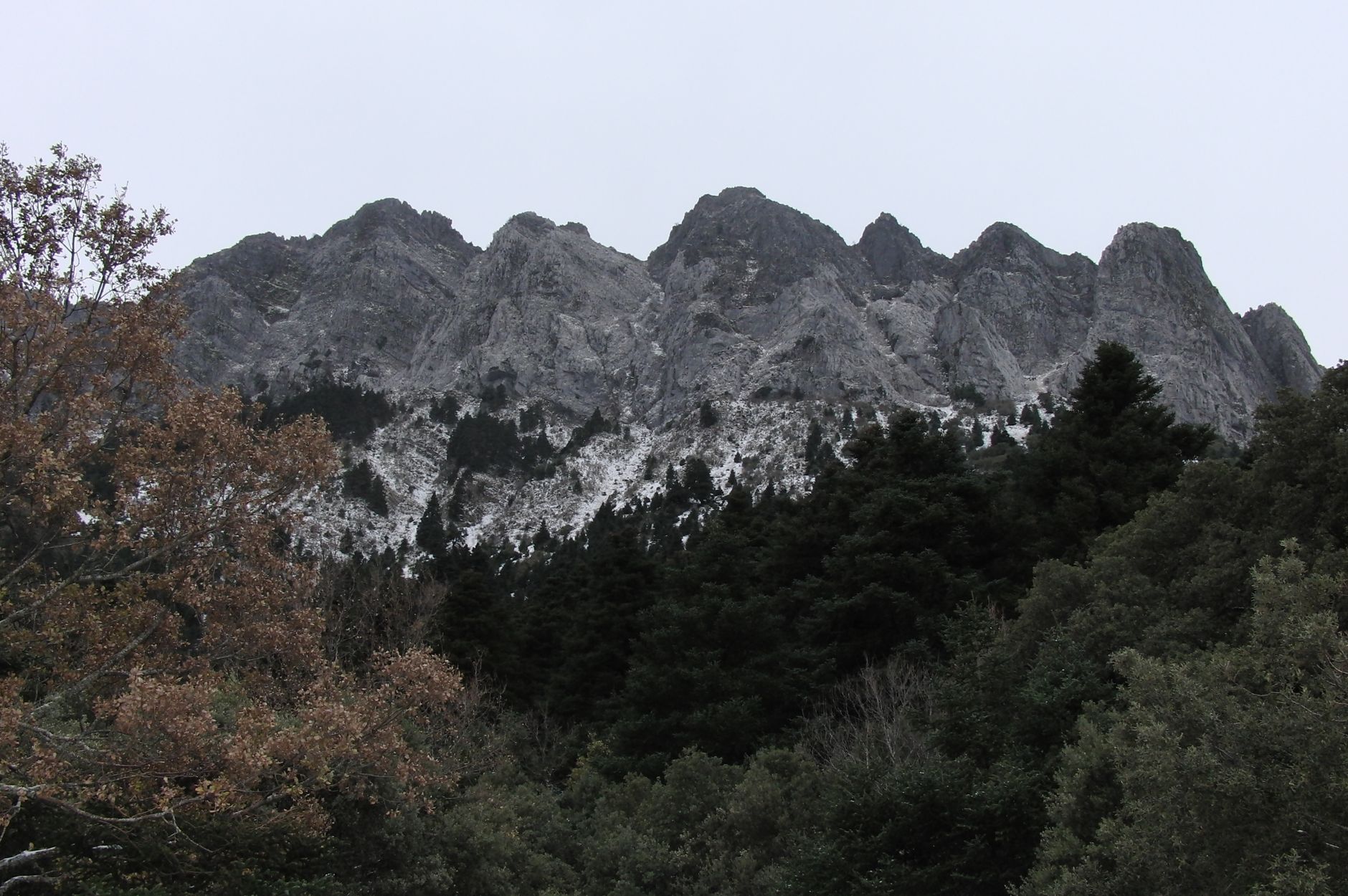

Dusk in the valleys of Sierra Morena descends with a reverential stillness, barely broken by the rustle of rockrose leaves and the subtle hoot of a barn owl. In this remote corner of the province of Córdoba, where the Sierra de Cardeña and Montoro Natural Park preserves one of the last truly wild strongholds of Mediterranean scrub, biodiversity conservation has shifted from a mere declaration of intent to a meticulously calculated scientific exercise. Here, among open dehesas of centennial holm oaks and intermittent watercourses, the world’s most endangered feline finds the ideal habitat to wage its most dramatic battle against extinction.
The Iberian lynx, Lynx pardinus, represents much more than a faunal icon of the Iberian Peninsula; it is the indisputable barometer of the ecological health of the Mediterranean forest. Unlike other boreal apex predators, this specialist hunter has co-evolved closely with the European rabbit, turning this trophic dependency into its greatest strength and, simultaneously, its historical Achilles’ heel. Understanding current recovery dynamics requires analyzing not only official population censuses but also the complex network of ecological interactions sustaining its territoriality and juvenile dispersal in a landscape increasingly fragmented by human activity.
The Architecture of the Mediterranean Habitat and the Role of the Dehesa
The landscape of Cardeña and Montoro is not a static geographical accident, but the result of centuries of balanced interaction between traditional forestry, extensive grazing, and strict protection. The dehesas, characterized by a low density of mature trees over grasslands and dense underbrush, offer the lynx the indispensable vegetation cover for stalking and breeding. Radio-tracking studies show that breeding females preferentially select ecotones: those borderline strips where closed scrubland borders open grasslands.

This mosaic structure maximizes the availability of secure refuges against external disturbances and guarantees the constant presence of natural burrows among granitic outcrops and hollows of old trees. Modern forest management in this protected area prioritizes the creation of artificial clearings and the maintenance of stone brushpiles, structures specifically designed to boost rabbit populations. Without these active interventions, the habitat would tend toward a forest homogeneity that would drastically impair the ranging capacity of young specimens.
Demography and Fragmentation: The Challenge of Ecological Corridors
For decades, population isolation pushed the Iberian lynx to the brink of demographic collapse, reducing its genetic variability to alarmingly low levels. Genetic diversification through the reintroduction of specimens from Doñana and captive breeding programs has marked a radical turning point. However, territorial connectivity remains the primary battleground for conservation biologists operating in Sierra Morena.
Ecological corridors—strips of land connecting isolated population cores—act as vital arteries to prevent inbreeding and facilitate the natural dispersal of subadult males. Linear infrastructures such as regional roads and power lines continue to pose a direct threat, despite the massive installation of wildlife crossings and the burying of hazardous power lines. The effectiveness of these corridors is assessed through continuous monitoring based on GPS collars and nighttime camera trapping.
The recovery of the Iberian lynx proves that population science and political will can reverse the most complex extinction scenarios if habitat integrity is prioritized over short-term economic gains.
The Invisible Trophic Link: Wild Rabbit Health as a Backbone
The demography of the Iberian lynx cannot be understood without analyzing the epidemiological fluctuations of the wild rabbit. Viral diseases such as myxomatosis and rabbit hemorrhagic disease have historically decimated lagomorph populations, causing cascading collapses that directly affected lynx birth rates. In response to this vulnerability, park managers have implemented population reinforcement plans and experimental field vaccinations.

Food availability directly conditions the size of lynx home ranges. In times of high rabbit density, female territorial areas shrink and reproductive success per litter increases. Conversely, food scarcity forces individuals to expand their movements, exponentially increasing the risk of mortality from vehicle collisions or conflicts with traditional hunting activities.
The Human Factor and Social Acceptance in the Rural Environment
No long-term conservation program can thrive while ignoring local human communities. Farmers, private estate owners, and hunters sharing territory with the Iberian lynx play a leading role in the species’ viability. Overcoming the historical antagonism between the hunting sector and conservationists has been one of the greatest achievements in Sierra Morena.
Through collaborative agreements and compensation for best environmental practices, private estate owners actively participate in wildlife censuses and grant researchers access to their lands. This cultural shift has transformed the lynx from being perceived as an unwanted competitor into a symbol of ecological prestige and a potential engine for sustainable socioeconomic development.

Mitigation of Anthropogenic Risks and Road Safety
The analysis of non-natural mortality reveals that collisions on communication routes continue to be a primary cause of casualties in wild populations. Public administrations have intensified the installation of perimeter game fencing along black spots on local roads, forcing wildlife to channel exclusively through underpasses and overpasses enabled for this purpose.
Likewise, intelligent signage and reduced nighttime speed limits in critical areas have demonstrated remarkable efficacy. Concurrently, environmental agency teams work alongside electrical companies to insulate transformers and medium-voltage supports, eliminating the risk of electrocution, another historical threat documented in technical reports on the species.
Practical guide
How to get there: The main access to the Sierra de Cardeña and Montoro Natural Park is via the A-421 road, connecting the Cordoban towns of Adamuz and Cardeña. The city of Córdoba, located about 50 kilometers to the southwest, features an AVE high-speed train station and air connections via Seville and Malaga.

When to visit: Autumn months (October to December) and early spring (March and April) offer the best climatic and biological conditions. During the winter mating season (January) and the breeding season, access to certain restricted areas requires special authorization.
Where to stay: It is recommended to choose rural houses and small hotels with sustainable tourism certification located in Cardeña, Adamuz, or Montoro, integrated into Andalusia’s Protected Natural Spaces Network.
Observation rules: Direct observation of the Iberian lynx in the wild is extremely difficult and requires the company of authorized specialized guides. Public paths must never be left, and call-emitting devices or baits must not be used.
Recommended equipment: High-luminosity binoculars, spotting scope with a stable tripod, sturdy mountain footwear, neutral-toned clothing, and adequate hydration systems for long-distance hiking routes.

The Pulse of the Future: Genetic Monitoring and Climate Resilience
Future challenges for the conservation of the Iberian lynx in Sierra Morena are closely tied to the effects of climate change on Mediterranean ecosystems. The progressive increase in summer temperatures and reduced rainfall alter vegetation phenology and the availability of permanent water resources, affecting both the underbrush and the populations of its primary prey.
Facing this scenario of climatic uncertainty, scientists advocate for the creation of strategically distributed artificial water points and continuous genetic monitoring to assess the adaptability of new generations. Non-invasive genetic tracking, based on the analysis of field-collected scat, allows for micrometric estimation of allelic diversity without the need to stress animals through recurrent captures.
Every new cub born in the wild within the holm oak woodlands of Cardeña represents a victory against ecological forgetfulness and confirms that safeguarding our natural heritage is an urgent task.
The final balance of recent decades confirms that the Iberian lynx has left the antechamber of extinction, although its status still demands unwavering institutional vigilance. The synergy between rigorous scientific research, active habitat management, and the involvement of rural society paints a hopeful horizon. In the twilight of the Cordoban holm oaks, the silent tread of this feline continues to remind us that coexistence between humans and demanding wildlife is, above all, a matter of respect and ethical commitment to the planet’s future.