
The Stone Foundations and Collective Memory in Guimarães
In northern Portugal, the city of Guimarães stands as a living testament to national genesis. Its cobblestone streets and centuries-old walls do not merely hold the weight of past eras; they sustain a daily pulse where tradition and modernity coexist without friction. The dark granite blocks paving the historic center reflect the soft glow of Atlantic dusks, creating an atmosphere of quiet contemplation that defines the experience of exploring this municipality in the Braga district.
The urban layout of Guimarães responds to a defensive and communal logic that has endured for generations. Open public squares, flanked by timber-framed manor houses and granite arcades, act as the true living room of the community. Here, local residents exchange morning news while traditional cafes open their doors to the aroma of freshly ground coffee and local pastries, establishing a leisurely pace that contrasts sharply with the frenetic speed of major European capitals.
Far from becoming a mere museum set, the historic core of Guimarães maintains an intense residential and commercial vitality. Traditional workshops of leatherworkers and goldsmiths continue to operate in the very same neighborhoods where their predecessors established medieval guilds, ensuring the intergenerational transmission of knowledge that might otherwise have been lost. This continuity of traditional trades constitutes the core of a local identity deeply rooted in the land.
The Protective Shadow of the Castle and Defensive Architecture
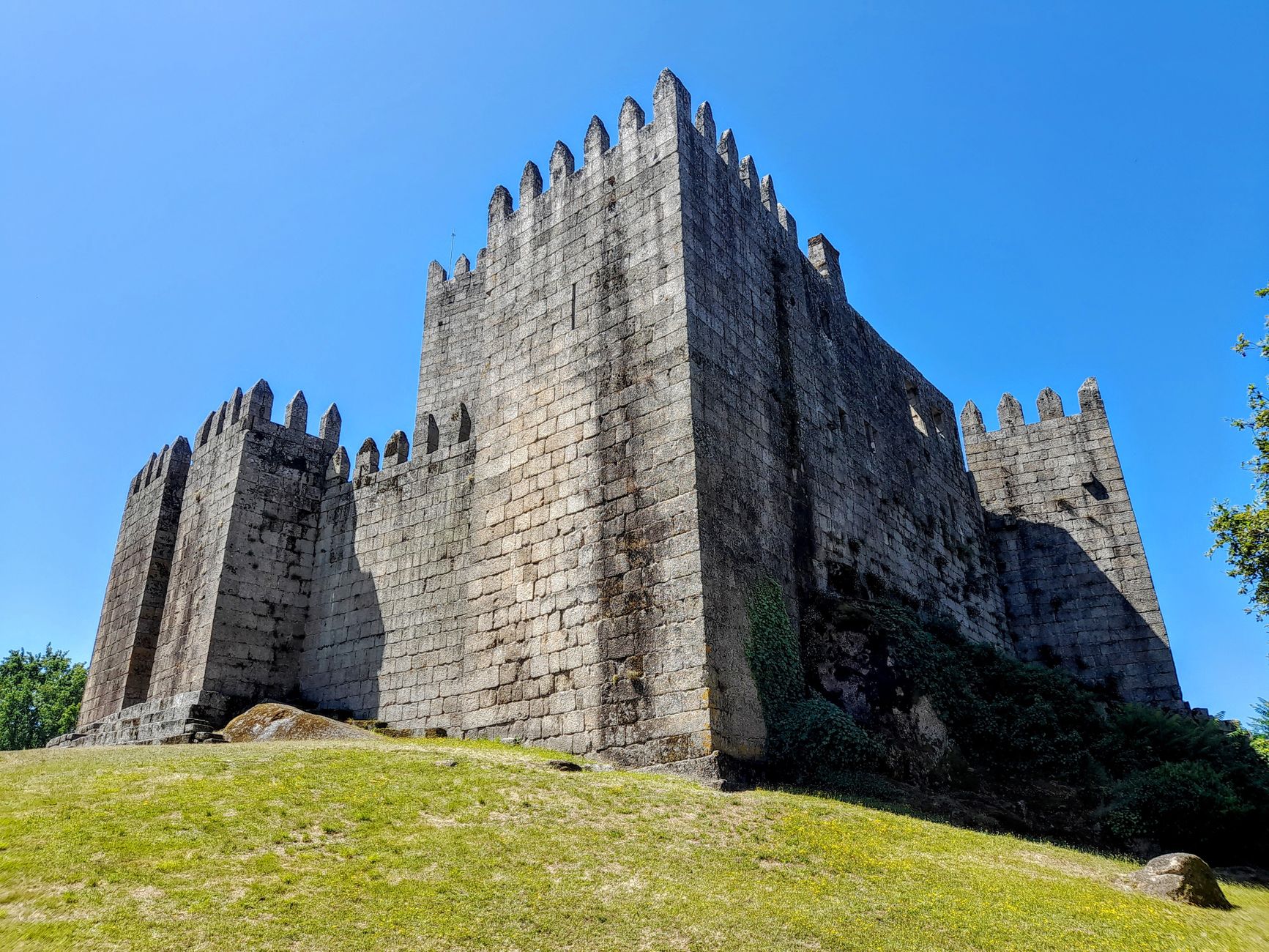
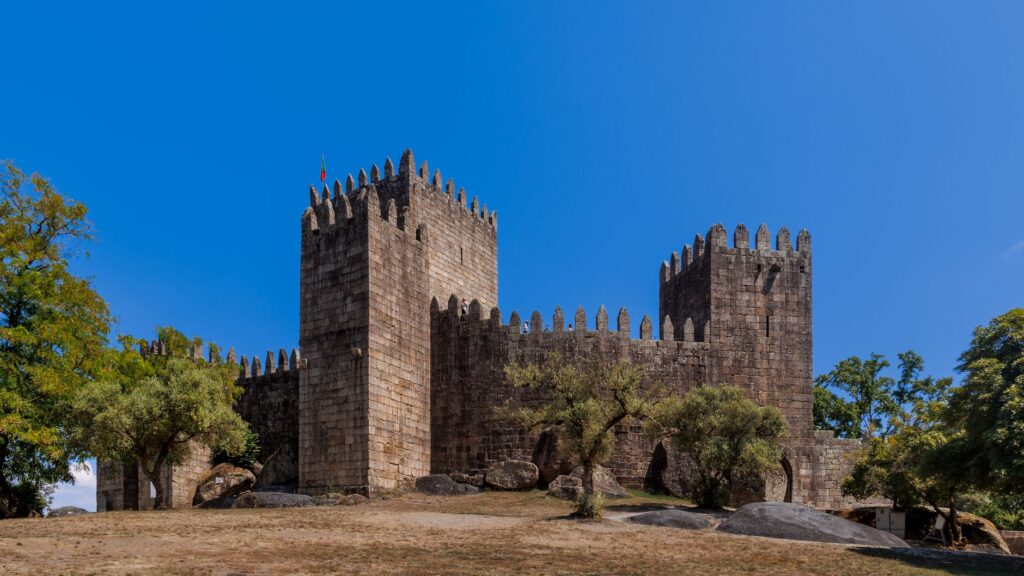
Dominating the urban skyline, the castle of Guimarães stands as the undisputed symbol of Portuguese sovereignty. Built in the 10th century to protect the local population from Norman and Saracen raids, this monument played a pivotal role in the formation of the Portucalense County. Its rough-hewn stone walls and crenellated towers recall an era of geopolitical tensions where every block of stone was a declaration of independence and territorial resilience.

The immediate surroundings of the castle, known as the Paço dos Duques de Bragança, introduce a palatial counterpoint with their imposing brick chimneys and vaulted halls. This 15th-century palace reflects an architectural transition toward a unique Renaissance in the northern Iberian region, where defensive functionality yielded to noble luxury without losing the characteristic sobriety of the Minho area. Visitors wandering through its rooms discover a careful balance between dynastic history and contemporary institutional life.
The preservation of these monuments is no accident, but the result of sustainable urban preservation policies driven by both local authorities and the citizenry itself. The progressive pedestrianization of the ancient core has drastically reduced noise and environmental pollution, allowing the ancient stone to breathe and enabling passersby to rediscover the architectural details of the facades without the interference of vehicular traffic.
Stone in Guimarães is not merely a construction material, but the physical archive where the community has written its daily history across the centuries.
Squares and Plazas: The Social Heartbeat of the City
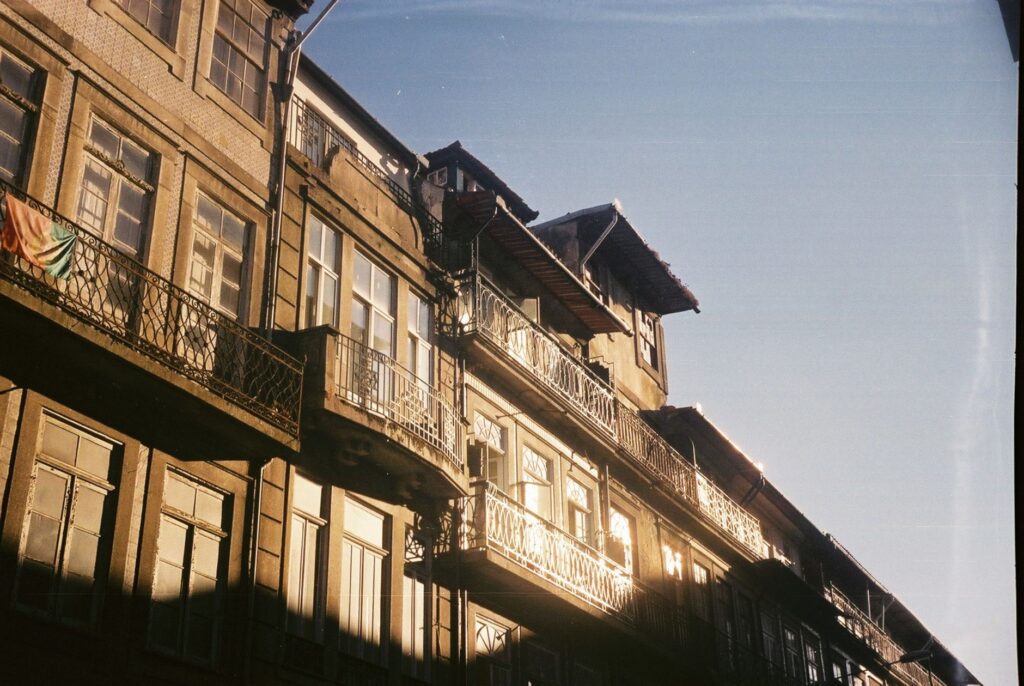
The civic heart of Guimarães beats strongly in spaces such as Largo da Oliveira and Praça de Santiago. These arcaded squares, linked by an architecture of traditional houses with wrought-iron balconies, concentrate the social life of the municipality. As dusk falls, terrace tables fill with residents debating local affairs, sharing the space with curious travelers seeking to understand the authenticity of northern Portugal.
At the center of Largo da Oliveira stands the Padrão do Salado, a Gothic canopy erected in the 14th century to commemorate a historic battle. This monument, alongside the Church of Nossa Senhora da Oliveira, forms a visual and spiritual milestone that structures the urban journey. The sculptural details of the capitals and stone crosses demonstrate the mastery of medieval stonemasons, whose legacy remains present in every corner of the historic fabric.
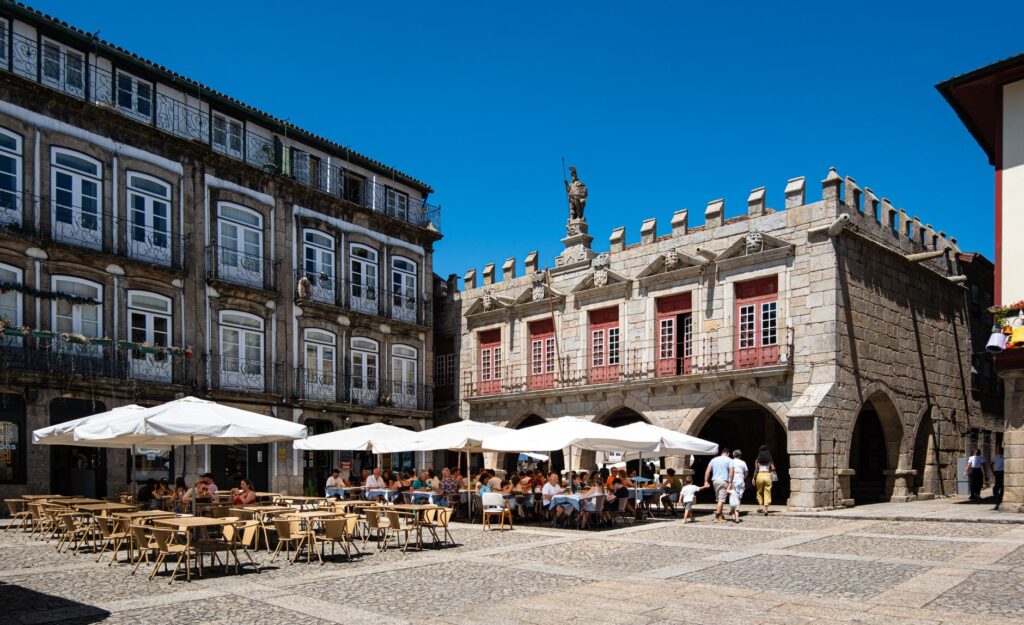
Commercial life in these squares is sustained by small grocery stores and independent bookstores that resist global homogenization. Local shopkeepers preserve the custom of greeting every regular customer by name, weaving a network of mutual trust that strengthens the social fabric. This neighborhood retail model is essential for maintaining the economic vitality of the historic center without compromising its heritage integrity.
Peripheral Neighborhoods and the Transition to the Green Landscape
Beyond the medieval walls, Guimarães displays an urban landscape in constant dialogue with the green hills surrounding the Ave River valley. The peripheral residential districts showcase vernacular architecture where single-family homes with family gardens mingle with small textile industries and footwear workshops, sectors that have driven the local economy for decades without drastically altering the natural environment.
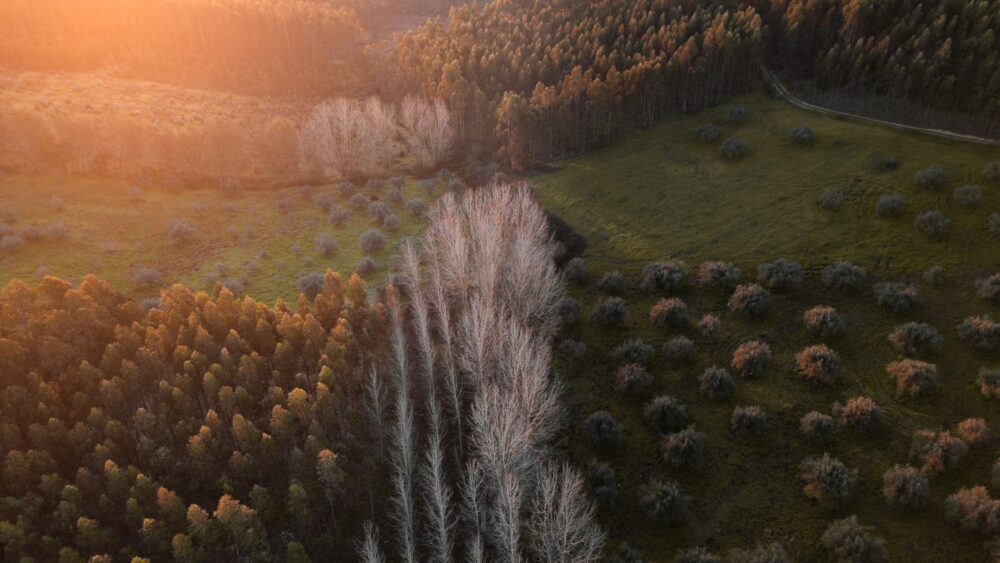
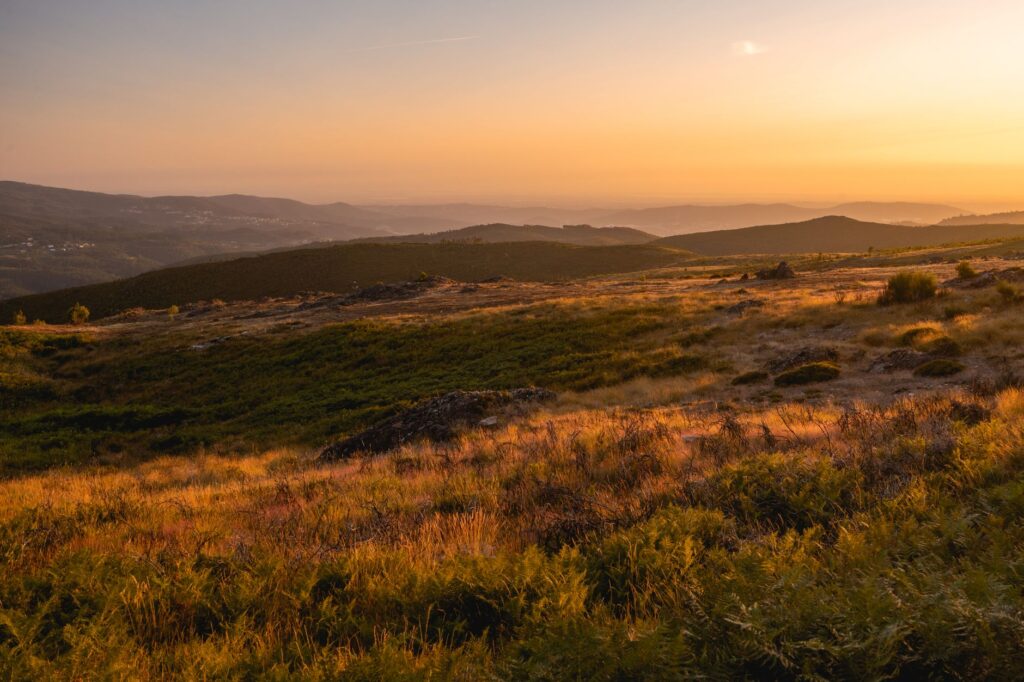
The hiking trails connecting the city with the nearby Serra da Penha offer an exceptional panoramic perspective of the valley. In this sacred mountain, flanked by immense granite boulders and lush pine and oak forests, the inhabitants of Guimarães find a natural refuge for Sunday rest. The sanctuary crowning the summit is a spiritual and recreational meeting point where religious traditions merge with respect for the environment.
The responsible management of these natural spaces is a priority for the municipality, which promotes reforestation initiatives with native species and regular cleanups of traditional trails. In this way, the relationship between the historic city and the mountainous surroundings remains balanced, ensuring that urban development respects the ecological limits of the surrounding territory.
The Gastronomy of Minho: Tradition and Land Products
The cuisine of Guimarães is a faithful reflection of the agricultural and livestock wealth of the Minho region. Hearty dishes such as duck rice, papas de sarrabulho, and classic vinho verde form a culinary proposal designed to be shared around long family tables. Traditional restaurants in the historic center maintain recipes passed down from mothers to daughters, using local ingredients sourced from the region’s food markets.
The municipal market of Guimarães is the epicenter where both local restaurateurs and individuals stock their larders. Stalls overflow with seasonal vegetables, artisanal goat cheeses, and smoked local sausages. Conversing with market vendors reveals the exact origin of each product, fostering a short and transparent consumption chain that directly supports the farmers and herders of the municipality.
Convent pastry also holds a prominent place in local gastronomic identity. Specialties such as tortas de Guimarães, crafted with a thin layer of flaky pastry and a sweet filling of angel hair squash and almonds, are the result of recipes rescued from ancient female convents. These sweets are best enjoyed accompanied by a short coffee in one of the historic squares, closing a sensory delight cycle deeply tied to cultural heritage.
Sustainability and Responsible Visitor Decisions
Tourism in Guimarães has experienced steady growth in recent years, prompting local authorities to implement strategies aimed at sustainability and respect for residents’ daily lives. Touristic overcrowding is combated by promoting alternative routes that divert visitor flows toward less congested neighborhoods and peripheral natural spaces, thereby distributing the economic and social impact.
Travelers are encouraged to adopt responsible practices, such as using public transport, choosing accommodations certified with ecological criteria, and purchasing from local shops. Respect for residents’ peace and quiet and the preservation of urban furniture are basic rules actively communicated by the municipal tourist office to those arriving in the city. This approach fosters conscious and respectful tourism attuned to the place’s idiosyncrasy.
Citizen participation in tourism decision-making ensures that community needs prevail over purely commercial interests. Neighborhood forums and cultural associations work closely with the city council to design events that celebrate identity without disrupting the tranquility of residential streets, consolidating Guimarães as a benchmark for sustainable tourism in the northern Iberian Peninsula.
The true value of traveling to Guimarães lies in the capacity to slow down one’s pace and tune into the measured cadence of a community protecting its heritage with pride.
Practical guide
How to get there: Guimarães boasts excellent rail connections from Porto via regional trains completing the journey in approximately one hour. It is also accessible by road via the A7 highway, connecting to the national Portuguese motorway network.
When to go: Spring and autumn offer mild temperatures ideal for walking through the historic center without summer crowds. August hosts major local festivities, though booking accommodation in advance is recommended.
Where to stay: The municipality offers options ranging from small boutique hotels housed in rehabilitated historic buildings to rural tourism homes on the slopes of Serra da Penha.
Recommended gastronomy: Do not miss the region’s traditional vinho verde, paired with local dishes such as roasted kid goat and the famous tortas de Guimarães.
Mobility tips: The old town is completely pedestrianized; the best way to explore it is on foot. To access Serra da Penha, taking the historic cable car departing from near the city is highly recommended.
Final Reflections on Arrested Time
Exploring Guimarães means understanding that history is not merely a set of memorable dates carved in stone, but a constant flow nourishing the present. Amid medieval walls, arcaded squares, and granite forests, the Portuguese city offers a necessary pause in the accelerated rhythm of the contemporary world. Its identity, forged over centuries by generations who knew how to care for their heritage, invites every traveler to contemplate the value of what is enduring and authentic.