Origins of a Peninsula Between Sea and Sand
In northern Chile, where the world’s most arid desert abruptly meets the waters of the Pacific Ocean, Iquique unfolds as a peninsula defined by stark geographical contrasts. The city cannot be understood without the constant presence of the great wall of the Coastal Cordillera, a beacon of dry rock that seems to watch over every street of its historic grid. From pre-Hispanic times to the colonial era and its subsequent republican boom, this coastal enclave has continually reinvented itself without severing its ties to an extreme geography.
Urban growth has traditionally responded to the scarcity of flat land, resulting in a compact layout where community life unfolds close to urban beaches and former maritime promenades. The presence of the sea is not merely a scenic backdrop, but a structuring element that defines the rhythms of its residents, a climate tempered by coastal fog, and a seafaring vocation spanning generations.
The configuration of this Chilean territory has been linked to the capacity of human adaptation in the face of absolute aridity across the pampa. Each settlement has had to dialogue with an environment where water remains a precious resource and where relief determines the strict boundaries of expansion. This de facto insular condition transforms the city into an urban refuge that looks permanently toward the marine horizon, consolidating an independent personality rooted in resilience and the intelligent use of available space.
The Architecture of Oregon Pine and Nitrate Legacy
The most distinctive face of Iquique’s heritage is concentrated in its buildings made of Oregon pine, imported massively during the heyday of the nitrate industry between the late 19th and early 20th centuries. Landmark properties such as the Astoreca Palace and the Municipal Theater exhibit intricate carpentry that defied time and salt air, showcasing an architectural aesthetic influenced by builders from around the globe.

This built heritage is not a static stage set, but an inhabited space where converted offices, former social clubs, and private homes keep an unrepeatable construction typology alive. Continuous facades, shaded corridors, and interior courtyards respond to intuitive bioclimatic solutions designed to mitigate desert heat long before modern air conditioning.
The materiality of these constructions reflects a unique cultural exchange in northern Chile, where timber transported in merchant vessels became the ideal support for erecting lightweight structures capable of withstanding earthquakes. The ornamental details found on balconies and cornices demonstrate the care taken by artisans who adapted European styles to the climatic needs of the coastal Tarapacá Region, leaving a built landscape that demands special attention in heritage conservation policies.
Iquique’s heritage is not locked behind museum glass; it lives in the Oregon pine boards that creak under the northern sun and in the shared memory of its neighborhoods.
Life in Traditional Markets and Public Squares
Far from strictly tourist circuits, the social heart of the city beats strongly in spaces such as the Central Market and Plaza 21 de Mayo. In these gathering spots, the daily pulse consists of aromas of freshly caught seafood, unhurried conversations beneath century-old fig trees, and neighborhood commerce that resists the standardization of big-box retailers.
Walking through these areas reveals the coexistence between long-standing Iquique families and migrant communities who have enriched the social fabric with new culinary and commercial expressions. The neighborhood scale fosters a street-level sociability where daily greetings and mutual familiarity remain fundamental tools for understanding local identity.
The daily flow within these public areas demonstrates how the community appropriates urban space to mitigate high temperatures through the search for shade and social interaction. Plaza benches transform into intergenerational gathering points, while market stalls display the diversity of products that supply port households, keeping commercial traditions rooted in community history alive.
Public Space Design and Craft Heritage
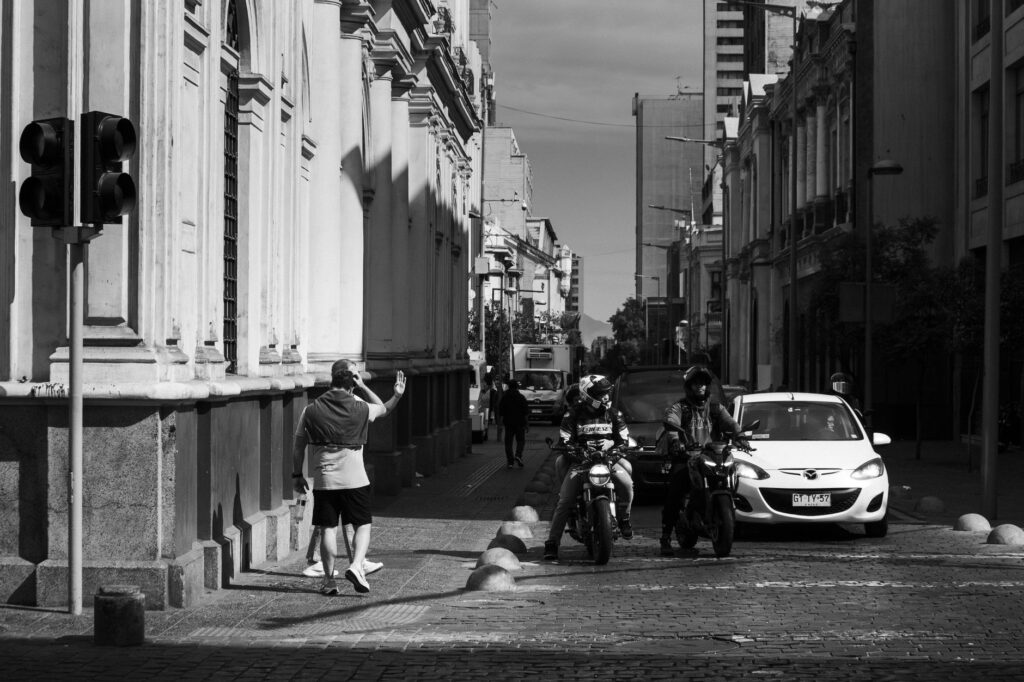
The integration of urban design in Iquique constantly engages with the need for shade and shelter against intense solar radiation. Pedestrian promenades, public bench arrangements, and the recovery of former industrial spaces reflect a contemporary effort to balance urban modernization with respect for the port’s visual memory.
In local workshops and small design studios, creators from the Tarapacá Region reinterpret desert materials and traditional Andean textiles. This contemporary craftsmanship avoids folkloric clichés to propose utilitarian objects and apparel that highlight local raw materials, from camelid fibers to recycled wood from old nitrate structures.
This focus on sustainable design seeks to address contemporary challenges of responsible consumption, promoting small-scale production that values craft time over massification. Local creators recover ancestral techniques and combine them with modern aesthetics, allowing design to function as a bridge between Chile’s historical heritage and present-day aesthetic needs.
The Living Memory of Nitrate Works and the Sea
Iquique’s history is inseparable from the Humberstone and Santa Laura nitrate works, located in the interior pampa but intimately connected with the shipping port. Although they now function as memorial sites declared UNESCO World Heritage locations, their legacy continues to shape the emotional identity of Iquique residents, whose ancestors drove labor and social milestones essential to Chilean history.

This industrial past coexists with artisanal fishing in coves such as Cavancha and Riquelme, where boats still set out at dawn. Local gastronomy draws directly from this trade, offering dishes where fresh fish and seafood are cooked using recipes passed down through generations without unnecessary artifice.
The duality between the desert pampa and the Pacific Ocean defines the essence of this territory in Chile. While the nitrate works recall the harshness of extractive labor under extreme conditions, the fishermen’s cove symbolizes daily subsistence and harmonious contact with the sea, forming a complex identity narrative read in every corner of contemporary urban life.
Responsible Travel and Urban Conservation
The rise of travel to northern Chile brings unavoidable challenges regarding sustainability and heritage conservation. For those visiting the city, the key lies in adopting practices that reduce impact on fragile coastal and desert ecosystems, prioritizing local services and respect for community life in traditional neighborhoods.
Supporting proximity commerce, exploring the historic center on foot or via public transport, and appreciating cultural expressions without folklorizing traditions are conscious decisions that transform the traveler into an active agent of preservation. Iquique offers a profound experience provided visitors approach it with curiosity and respect for the desert’s own rhythms.
The responsibility of the visitor also entails understanding local dynamics of water supply and waste management, recognizing that temporarily inhabiting such a fragile territory requires moderation and ecological awareness. Caring for the architectural and natural environment of the Chilean coast ensures that future generations can continue enjoying this unique testimony of civilization in the sand.
Practical Guide
- How to get there: Diego Aracena International Airport connects Iquique to Santiago with daily flights. Regular long-distance bus services also access the city via Route 5 North.
- When to go: The climate is coastal desert with pleasant temperatures year-round, although the summer months (December to March) see the highest influx of domestic visitors.
- Where to stay: Historic neighborhoods and the Cavancha district offer options ranging from small boutique hotels in restored mansions to independent apartment rentals.
- Getting around: The historic center and coastal promenades are easily explored on foot. For longer trips, the urban shared taxi network is affordable and efficient.
- Cultural recommendation: Visiting the Humberstone and Santa Laura nitrate works requires planning a half-day excursion from the city, preferably hiring accredited local guides.
- Recommended gastronomy: Try fresh fish dishes such as conger eel or swordfish at the popular eateries within the municipal market.
- Travel tip: Use broad-spectrum sunscreen and a hat throughout the day due to high radiation levels in the desert zone.
Final Reflections Facing the Ocean
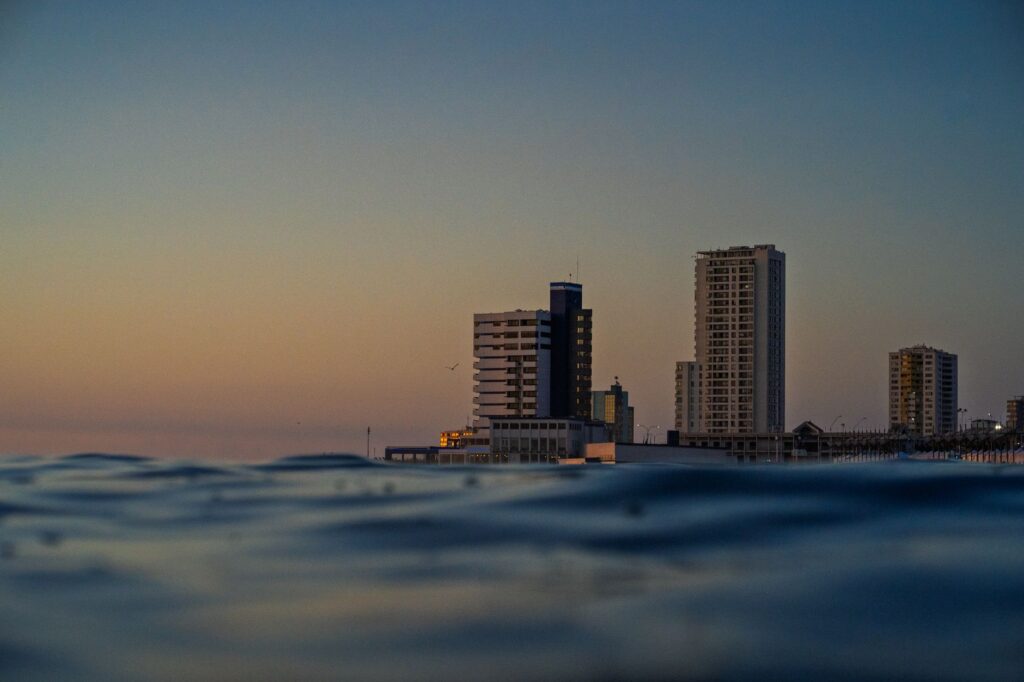
As evening falls, when coastal fog begins to wrap around the hills and the sun dips into the Pacific, Iquique reveals its true poetic dimension. It is not merely a dot on the map of Chile, but a space where human resilience has managed to build a home in one of the planet’s most challenging territories.
Observing the ebb and flow of the waves from the Iquique coast invites us to rethink our relationship with the environment and to value those places that keep their history alive in every timber board, every public square, and every everyday gesture of their people.
The persistence of this community along the coastal strip of Chile demonstrates that material and immaterial culture can flourish even in the most arid locations. Keeping the memory of Oregon pine, nitrate, and artisanal fishing alive remains the best tribute to a past that continues to shape the future of this singular northern port.