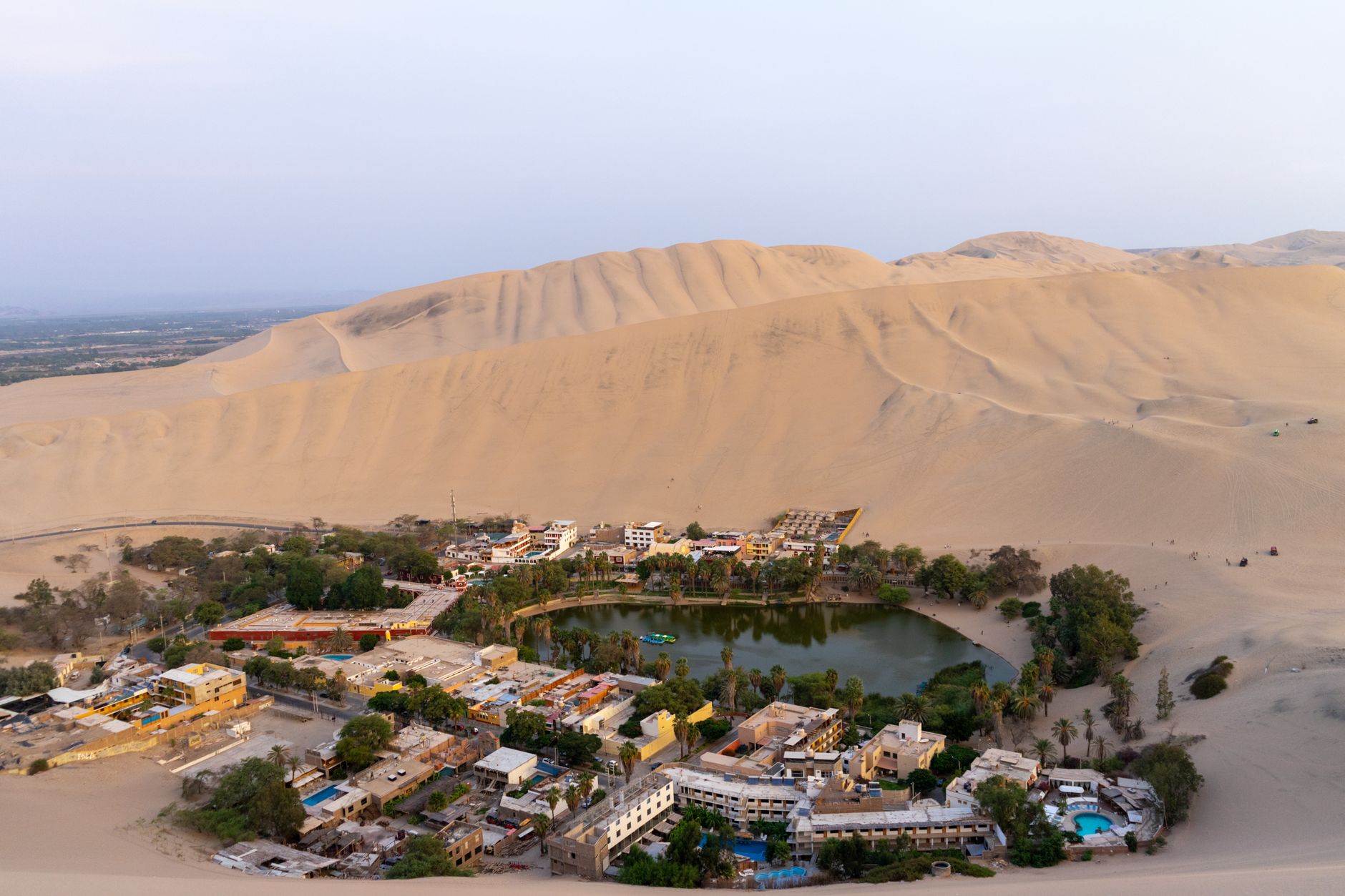

A Horizon of Sand and Tradition on the Southern Peruvian Coast
The landscape of Ica, located on the central-southern coast of Peru, is defined by a geography where the immensity of the coastal desert collides with fertile valleys crossed by seasonal rivers and pre-Inca irrigation channels. At approximately 399 metres above sea level and with coordinates that place the city in the middle of an arid plain, this territory offers a trekking and exploration experience quite different from the high Andean mountains. Here, the challenge does not stem from high-altitude oxygen scarcity, but from a combination of high temperatures, fine sandy surfaces that increase physical exertion, and relentless solar radiation for most of the year across the desert in Peru.
For travelers seeking to venture into its medium-distance walking routes, understanding the environment is just as important as carrying water or proper footwear. The dunes surrounding the region are not mere inert accumulations of sediment, but dynamic formations shaped by local winds, popularly known as the Paraca. This coastal wind, blowing strongly from the Pacific Ocean, continually reshapes paths and requires walkers to maintain constant orientation skills and a careful reading of the terrain to avoid getting lost in a monochromatic landscape.
Exploring this terrain demands careful itinerary planning, especially considering the vast openness of the geography. Local terrain features change subtly with the movement of light, creating visual illusions that can disorient even experienced hikers if they rely solely on intuition rather than precise navigation tools.

Physical Preparation and the Thermal Challenge of the Desert
Tackling a hike around the outskirts of Ica requires prior training focused on cardiovascular endurance and lower-limb strength. Walking on loose sand forces calf and ankle muscles to work harder with every step, which accelerates fatigue if the appropriate physical condition is lacking. Experts in arid-zone safety recommend starting routes early in the morning, taking advantage of the cooler temperatures before the sun reaches its zenith around midday.
Hydration is another fundamental pillar that allows no room for improvisation. In an environment where relative humidity is typically low and body evaporation rates are high, carrying insufficient water can turn an invigorating excursion into an emergency. Local authorities and authorized guides advise carrying at least one liter of water per hour of moderate hiking, complemented by mineral salts to prevent severe dehydration and muscle cramps resulting from continuous exertion under the sun.
Physical conditioning should also incorporate stability exercises to strengthen joints against the uneven, shifting nature of sand ridges, ensuring that the body can handle prolonged hours of exposure without undue strain.
Climatology and the Solar Cycle in the Ica Region
The climate of Ica is distinctly desert and subtropical, characterized by a near-total scarcity of annual rainfall and almost permanent sunshine. With sunrises around half past five in the morning and sunsets concluding after six in the evening depending on the time of year, the useful window for outdoor hiking is concentrated in the early morning hours and the late afternoon.
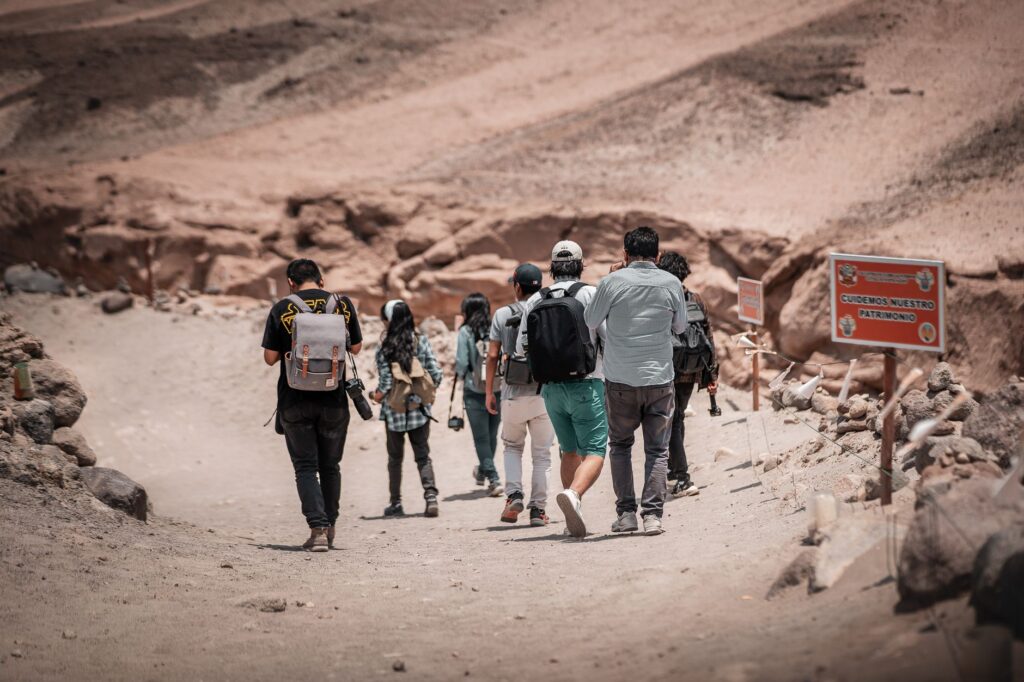
During peak hours, ambient temperature can rise rapidly, turning the ground surface into a source of radiant heat. For this reason, choosing the right season to visit the area is crucial. Although the destination is accessible year-round due to the absence of seasonal rains, the months between the southern autumn and spring offer much more favorable thermal conditions for prolonged hiking compared to the intense summer heat.
Understanding the solar cycle helps hikers maximize daylight hours safely, avoiding the dangerous midday temperature spikes that characterize this arid coastal zone.
Millennial Heritage and Cultural Traces Along the Way
Hiking in Ica is not limited to physical exertion on sand; it also constitutes a journey through ancient civilizations that adapted to extreme aridity. The Paracas and Nazca cultures, which flourished in this very territory, left an invaluable archaeological legacy composed of geoglyphs, necropolises, and primitive water management systems, such as underground aqueducts that continue to surprise researchers with their technical sophistication.

Walking through the peripheries of the city and its surrounding valleys provides insight into how ancient populations managed to transform a seemingly hostile desert into an agricultural oasis by harnessing underground aquifers and water from Andean snowmelt. Each trail crosses layers of history where geology and archaeology intertwine, reminding visitors that this territory has been inhabited and traversed for millennia by communities that respected environmental limits.
These cultural markers serve as open-air testaments to human ingenuity, offering modern explorers a deeper connection to the historical layers embedded within the landscape.
The desert does not punish the traveler for audacity, but for a lack of respect toward the silent rules of sand and sun.
Regulated Access, Navigation, and Safety in the Field
The expansion of tourism and adventure routes in Ica has driven the need to establish clear regulations to protect both visitors and the fragile ecosystem of dunes and valleys. Many areas of natural and historical interest have access restrictions to prevent soil degradation and the disruption of archaeological sites protected by Peruvian legislation.
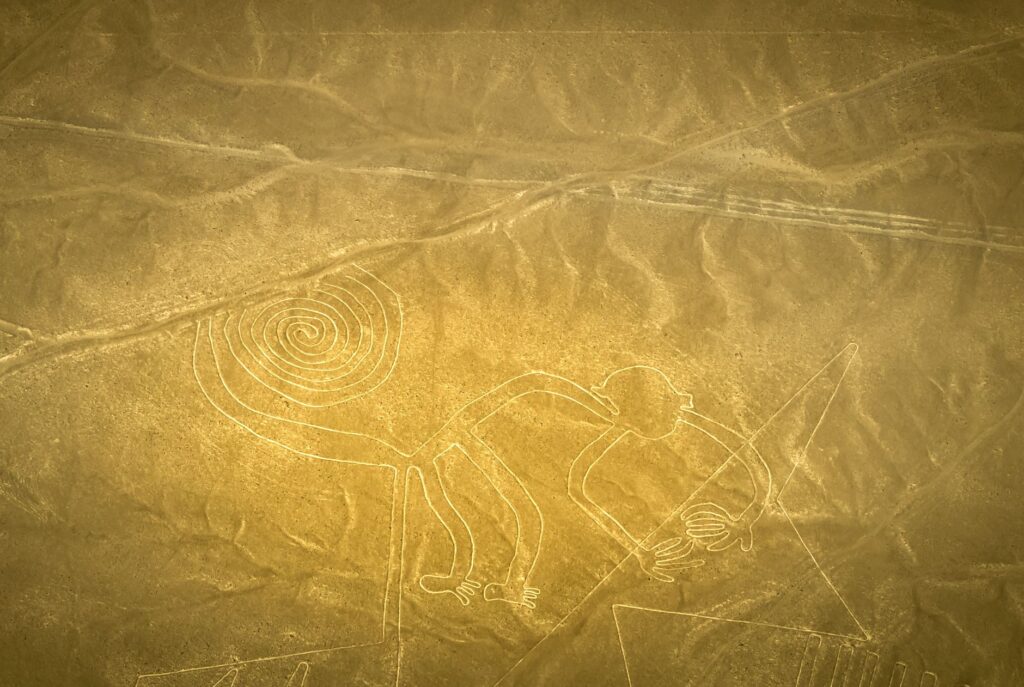
Carrying updated topographic maps, GPS navigation devices, or the company of certified local guides is an indispensable precaution. Unlike traditional mountain trails defined by trees or fixed rocks, the Ica desert features few stable reference points, meaning a sandstorm or a shift in lighting can erase footprints within minutes, increasing the risk of getting lost.
Adhering to established safety protocols ensures that unexpected weather shifts do not compromise the well-being of those traversing the open desert expanses.
Environmental Conservation and Minimum Impact on the Trail
The steady rise in visitors to the region’s natural spaces presents the urgent challenge of preserving local ecological balance. The principle of minimum impact must guide every step of the excursionist, which implies leaving no inorganic waste behind, respecting native flora and fauna—adapted to extreme drought conditions—and avoiding the use of motorized vehicles outside authorized tracks, a practice that severely erodes dune formations.
The conservation of these landscapes depends on collective awareness regarding the fragility of the desert ecosystem. Protecting Ica’s natural heritage ensures that future generations can also enjoy the immensity of its horizons, the richness of its agricultural history, and the profound silence characteristic of one of the most fascinating deserts on the South American coast.
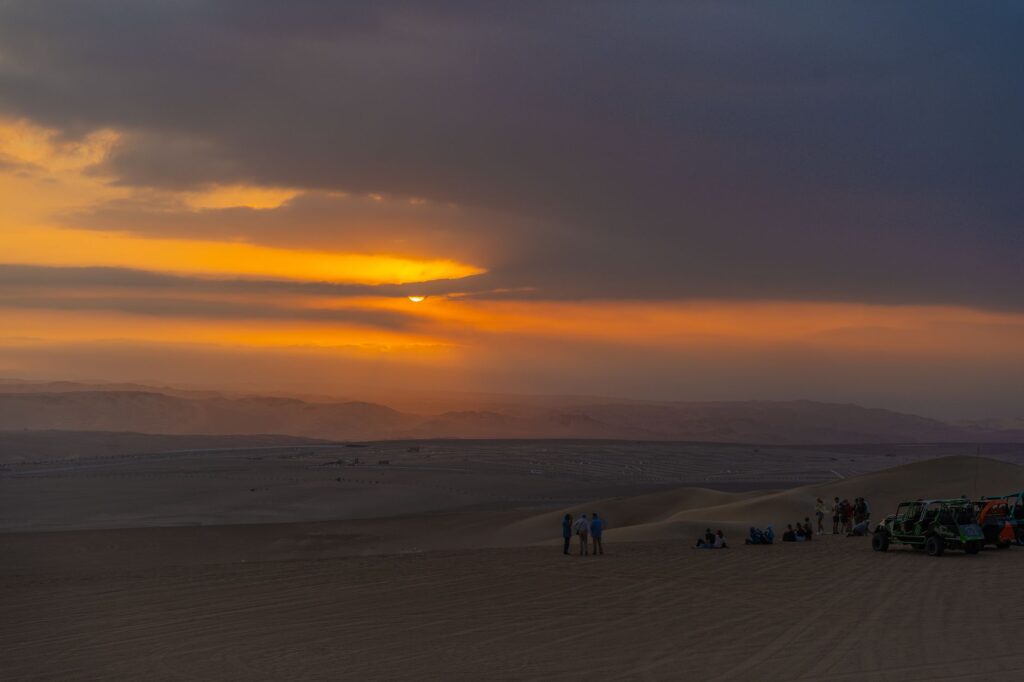
Promoting sustainable outdoor habits contributes directly to the longevity of these fragile environments, keeping trails clean and ecosystems undisturbed for future travelers.
Practical guide
- How to get there: Ica is connected to Lima via the Pan-American Highway South, with an estimated travel time by bus or private vehicle of about four to five hours.
- Best time to visit: The southern autumn, winter, and spring months offer milder temperatures for outdoor walking without the intensity of summer heat.
- Permits and regulations: Certain archaeological areas and natural reserves require admission fees and the company of official guides authorized by the relevant ministry.
- Recommended equipment: Specific footwear for walking on sand, broad-spectrum sunscreen, UV-filter sunglasses, a cap, lightweight long-sleeve clothing, and sufficient water reserves.
- Health and safety: Carry electrolytes, avoid walking alone on infrequently traveled routes, and check the local wind forecast before starting any desert journey.
Ultimately, walking through Ica is an invitation to read the landscape with patience, respecting the rhythms of the desert and understanding that true adventure lies in harmony between the traveler and nature.