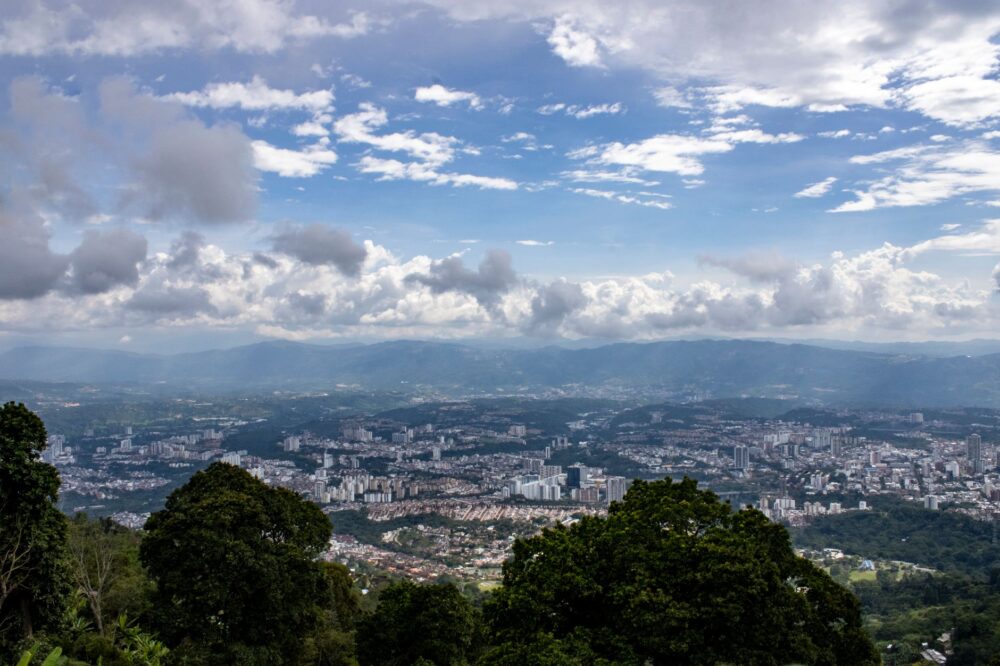
Beneath the Shadow of the Urban Mountain Profile
In northeastern Mexico, geography lays down its law through mountainous profiles that command the horizon. Monterrey, the capital of the state of Nuevo León, rises some 551 metres above sea level, flanked by emblematic formations such as Cerro de la Silla and the Sierra Madre Oriental. This topography not only grants an unmistakable visual character to the region but also directly conditions the development of its transport infrastructure. The arrival and departure of aircraft demand rigorous technical precision, where pilots and air traffic controllers must coordinate with wind currents descending from the surrounding peaks.
Daily activity in this major industrial metropolis moves to the rhythm of a population exceeding one million in its central core, expanding into a metropolitan zone of colossal dimensions. Everyday travel combines arterial roadways, ground public transit, and a strong aeronautical vocation linking this economic hub with the rest of the country and key international destinations. Far from being a mere transit point, the air terminal functions as an extension of the hardworking and dynamic character of Nuevo León.
Airport Architecture and Modernisation in Nuevo León
The airport infrastructure serving Monterrey has evolved remarkably to respond to the demographic and commercial growth of the area. The facilities combine spacious passenger terminals with platforms designed to streamline the flow of commercial and cargo aircraft. Architectural design prioritises functionality, integrating metal structures and large glass panels that allow natural light—characteristic of northern Mexico—to flood the interiors while offering panoramic views of the mountains framing the valley.
Inside the terminal buildings, spatial distribution seeks to reduce friction in traveller transit. Check-in counters, security checkpoints, and boarding lounges are organized along linear axes that facilitate intuitive orientation for those moving through the complex. This effort to optimise space responds to the constant need to absorb high passenger volumes without compromising comfort or the operational schedules of the airlines operating at Monterrey International Airport.
The Passenger Experience Between Waiting Lounges and Connectivity
For travellers arriving at or departing from the Monterrey airfield, the experience combines operational efficiency with subtle nods to local culture. Corridors and commercial areas reflect the identity of a state where industrial tradition coexists with unique gastronomy and an accelerated pace of life. Mobility options to and from the terminals include authorised taxi services, rideshare options, and direct roadway connections linking to the city centre and major industrial corridors.

Punctuality and frequency management are critical aspects of the terminal’s daily routine. Direct connections with Mexico City, Guadalajara, and various hub airports in the United States turn this airfield into a strategic node for executives, tourists, and families. Synchronization between ground and air schedules remains essential to maintaining the pulse of a city that never seems to stop, where every flight represents another link in the chain of economic and social exchange.
The Metropolitan Pulse and Its Link to Air Routes
The sustained growth of Monterrey has transformed its relationship with airspace. As residential and industrial zones expand toward neighbouring valleys, airspace management requires meticulous coordination between aeronautical authorities and local operators. This coexistence between a constantly expanding metropolis and high-capacity transport infrastructure poses ongoing challenges in urban planning and environmental sustainability.
The air routes connecting Monterrey to the world not only transport passengers but also consolidate a steady exchange of ideas, technology, and culture. Travellers passing through its facilities perceive the dual nature of an environment where the technological modernity of commercial aviation merges with the historical memory of a land forged by collective effort and the tenacity of its inhabitants across generations.
Sustainability and Future Challenges in Regional Air Navigation
The future of connectivity in northeastern Mexico depends inescapably on resource optimization and the reduction of environmental impact. Airlines and airport administrators are gradually implementing measures geared toward ground energy efficiency, from waste management to the use of lower-emission ground support equipment. These advances seek to balance growing mobility demand with the preservation of the natural environment defining the state of Nuevo León.
Likewise, continuous training for technical and operational personnel ensures that international safety standards are thoroughly met. The region’s meteorological complexity, marked by thermal variations and occasional heavy precipitation events, tests the response capacity of navigation systems, consolidating a culture of prevention and technical rigor distinguishing aviation in this part of the continent.

Industrial Identity Reflected in Every Takeoff
Understanding the importance of air transport in Monterrey requires looking beyond passenger traffic statistics. Each aircraft crossing the Monterrey sky embodies the ambition of a community devoted to production, commerce, and innovation. Airlines act as invisible bridges connecting industrial plants and local business centres with highly demanding global markets.
The constant movement of aircraft in northern Mexico reflects the resolve of a society that has turned distance into a challenge overcome through organization and steady work.
This incessant flow of people and goods nourishes a vibrant regional economy. Passengers waiting at boarding gates share space with business executives, students, and families who rely on the transport network to maintain personal and professional ties beyond state and national borders.
Shared Horizons in the Valley of Nuevo León
In summary, air transport infrastructure in Monterrey represents a fundamental pillar for territorial cohesion and socioeconomic development. The combination of functional architecture, a privileged geographic location among mountains, and rigorous operations enables the city to maintain its status as one of the most powerful engines of the Mexican economy.

Civil aviation in this corner of the northeast is not merely a means to shorten journeys, but the reflection of a community projecting its daily effort toward the skies of the world.
The balance between route expansion and respect for the natural environment will continue to set the agenda for coming years, ensuring that the gateway to the Monterrey sky remains open to progress and human exchange.
Practical guide
Location and Access: Monterrey International Airport is located in the municipality of Apodaca, about 24 kilometres east of the city centre. It is accessed via the Miguel Alemán Highway.
Ground Transport: Formal authorized taxi services, rideshare applications, and buses link the terminals with strategic points throughout the metropolitan area.
Climate and Planning: Weather conditions tend to be warm most of the year, with intense summers and occasional precipitation between late summer and autumn that may require itinerary attention.

Main Connections: It offers regular domestic flights to Mexico City, Guadalajara, Cancun, and Tijuana, alongside direct links to key U.S. cities such as Houston, Dallas, and San Antonio.
Documentation: Arriving at least two hours in advance for domestic flights and three hours for international routes is recommended, carrying valid official identification and digital or printed boarding passes.
Infrastructure: Terminals feature banking services, currency exchange booths, VIP lounges, dining areas, and short- and long-term parking options for travellers.
The Final Echo of Routes Embracing the Peaks
As evening falls, golden light illuminates the profiles of the Sierra Madre, tinting the tarmac where aircraft begin their taxi maneuvers with ochre and violet tones. In that moment of visual stillness, the incessant movement of civil aviation integrates with the ancient serenity of the mountain landscape. Monterrey bids farewell to each flight under the watchful gaze of its peaks, remembering that the road to the future is built day by day among asphalt, metal, and the constant desire to connect horizons.