
Between the Red Sea and the Dead Sea, in southern Jordan, stands a city that was not built on the ground but carved into the mountain. Petra, the ancient Nabataean capital, is a labyrinth of facades hewn from red sandstone, a place where geology and history are inextricably intertwined. Inscribed as a UNESCO World Heritage Site in 1985, it remains one of the most fascinating archaeological sites on the planet. But beyond the awe inspired by its monuments, Petra poses an urgent question: how can a living cultural landscape be preserved without turning it into a petrified stage set?
The answer lies, in part, in the very nature of the place. Petra is not just a collection of tombs and temples. It is an ingenious hydraulic system, a crossroads of caravan routes, and a territory that has been shaped over centuries by those who inhabited it. Today, the challenges of conservation and the pressure of tourism force a search for balance between protecting the heritage and the daily life of the communities that still depend on it.
A landscape sculpted by water and rock
Entry to Petra is through the Siq, a narrow, winding gorge that snakes between sandstone walls over eighty meters high. This natural passage, formed by water erosion over millennia, is not just a spectacular entrance: it is the key to understanding the city. The Nabataeans, aware of the importance of controlling water in an arid environment, used the topography to create a system of dams, channels, and cisterns that allowed them to store and distribute rainwater. That system made possible the development of a prosperous city in the middle of the desert.

At the end of the Siq, the first sight of the Khasneh, or Treasury, is breathtaking. Its Hellenistic facade, carved directly into the rock, seems to float in the dim light of the gorge. But the Khasneh is only the beginning. As one advances, theaters, royal tombs, colonnaded streets, and temples unfold, testifying to the fusion of Eastern traditions and Hellenistic architecture. Petra is an outstanding example of how a civilization can adapt to an extreme environment while creating a material culture of exceptional richness.
“Petra is half-built, half-carved into the rock, and is surrounded by mountains riddled with passages and gorges,” describes UNESCO. That symbiosis between nature and human work is the essence of the place.
Daily life in a heritage landscape
Beyond the monuments, Petra has been an inhabited territory for centuries. The Bdul Bedouin tribe lived in the caves and tombs of the site until, more than twenty years ago, they were resettled in the nearby village of Umm Sayhun. The move aimed to curb erosion caused by grazing and improve the community’s living conditions, but it also profoundly transformed the relationship between the inhabitants and their environment.
Today, many members of the local community work as guides, camel drivers, or handicraft vendors. Their knowledge of the terrain is invaluable to archaeologists and conservators, and their presence adds a human dimension that no tourist brochure can capture. However, the balance is delicate. The increase in tourism, especially at congestion points like the Siq, exerts constant pressure on the site. Authorities try to manage visitor flows and develop infrastructure that does not compromise the integrity of the landscape.

The conservation of Petra is not just about restoring facades or stabilizing structures. It also involves maintaining the Nabataean hydraulic system, which remains essential to prevent flash floods. The Muthlim tunnel, diversion dams, and channels require continuous monitoring and maintenance. The lesson of Petra is that heritage is not a static object but a process that demands constant care and adaptation.
Architecture that fuses East and West
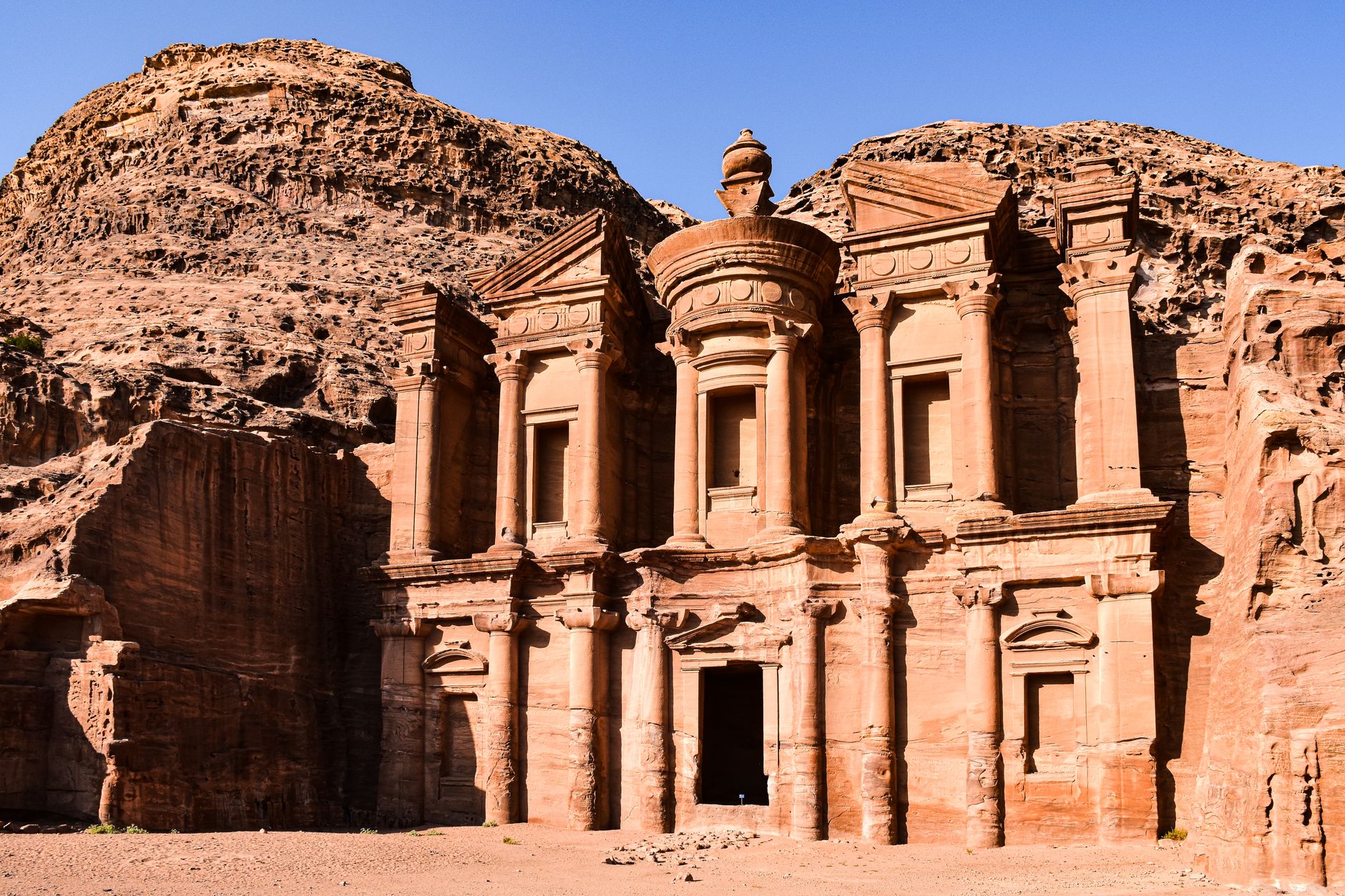
The architectural ensemble of Petra is an exceptional testimony to the encounter between cultures. The facades of the royal tombs, such as the Urn Tomb, the Palace Tomb, or the Corinthian Tomb, combine Hellenistic elements with Nabataean traditions. The Deir, or Monastery, carved into the rock high on a mountain, is perhaps the most imposing work due to its scale and isolation. Its facade, nearly fifty meters wide, repeats the scheme of the Khasneh but with colossal proportions.
Beyond the tombs, Petra preserves remains of temples, Byzantine churches, and Crusader fortresses. The colonnaded street, the theater, the nymphaeum, and the baths reflect Greco-Roman urban planning. The triple-apsed basilica and the church created in the Urn Tomb attest to the Byzantine presence. Each layer of occupation has left its mark, and together they form an archaeological palimpsest of incalculable value.

The red sandstone, which gives Petra its characteristic color, is also its weak point. Erosion caused by wind and rain threatens the stability of the facades. Experts work on consolidation techniques and on monitoring the most vulnerable monuments. The authenticity of the site depends on these efforts being maintained over time and carried out with materials and methods compatible with the original rock.
The challenge of sustainable tourism
Petra receives hundreds of thousands of visitors each year. Most arrive from Amman, the Jordanian capital, on day trips that barely allow a glimpse of the site’s magnitude. That influx generates vital income for the region but also poses problems of congestion, wear, and waste management. The archaeological park authorities have developed plans to regulate access, improve signage, and create alternative routes that better distribute visitors.
One strategy is to encourage longer stays and deeper experiences. Petra is not exhausted by the Khasneh and the Deir. There are less-traveled trails, such as the one leading to the High Place of Sacrifice, with panoramic views over the mountains, or the path to Little Petra, a caravan settlement north of the main site. These routes allow a better understanding of the extent and complexity of the cultural landscape.
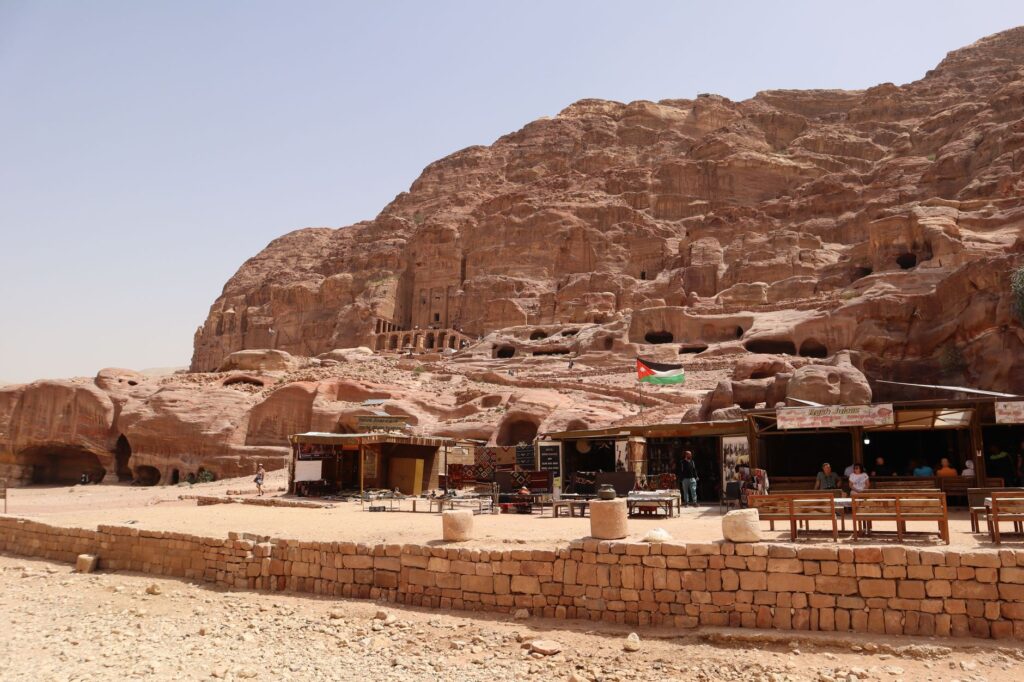
The local community also plays a growing role. Some community tourism projects offer homestays and Jordanian cooking workshops. These initiatives not only diversify the offer but also ensure that tourism benefits reach those who live in the area. The sustainability of Petra depends on its conservation and enjoyment being compatible with the well-being of the people around it.
“The property is under pressure from tourism, which has increased greatly since the time of inscription, particularly congestion points such as the Siq,” warns UNESCO. Managing that pressure without sacrificing the visitor experience is one of today’s great challenges.
A landscape that is still alive
Despite the challenges, Petra is not a dead ruin. It is a landscape that breathes, that changes with the light of day and the seasons. At dawn, when the first rays of sun illuminate the sandstone, the facades seem to glow. At dusk, the tones deepen and the silence of the mountains prevails. In those moments, it is easy to imagine the bustle of caravans that once crossed the desert laden with incense, silk, and spices.
Petra’s greatness lies in that ability to evoke a remote past while remaining a concrete place, with current problems and hopes. The Nabataeans demonstrated that it was possible to prosper in a hostile environment through engineering, trade, and diplomacy. Today, the Jordanians who work in its conservation demonstrate that it is also possible to protect a unique legacy without renouncing development.
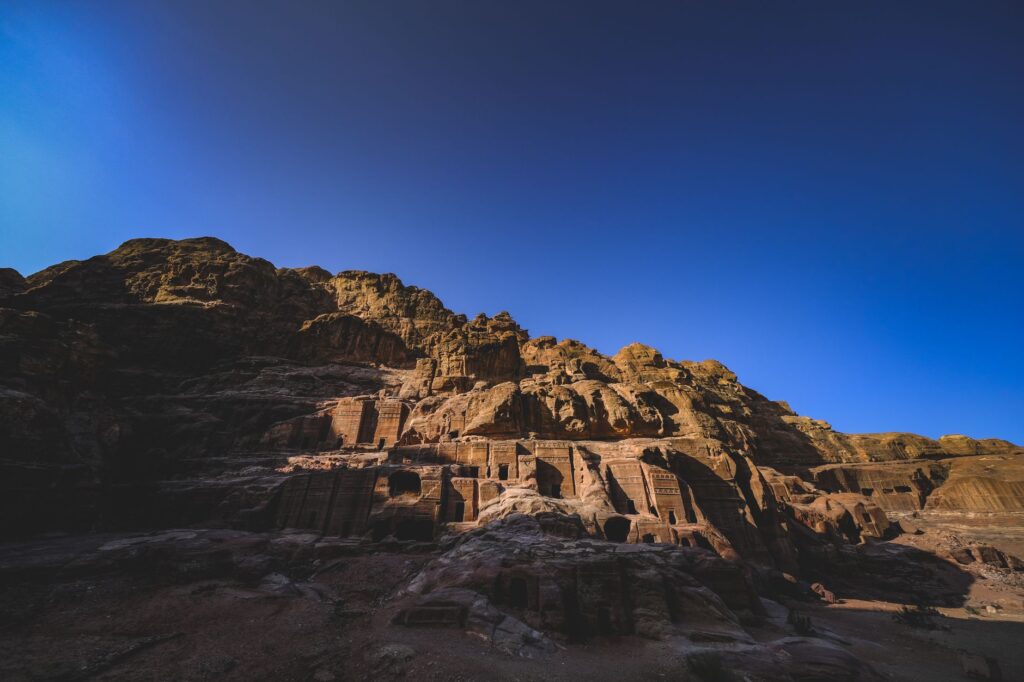
The traveler who arrives in Petra does not just contemplate monuments. They immerse themselves in a landscape that has been shaped by the interaction between humans and nature for millennia. That is the true lesson: heritage is not a collection of stones but a living relationship that we must care for.
Practical guide
Getting there
- Petra is located in southern Jordan, about 230 kilometers from Amman and about 130 kilometers from Aqaba. The most common access is by road, by bus or rental car.
- The nearest town is Wadi Musa, where most hotels and restaurants are concentrated. From there, the entrance to the archaeological park is a short walk away.
- The nearest international airport is Aqaba (King Hussein International Airport), although many visitors arrive from Amman (Queen Alia International Airport).
When to visit
- Spring (March to May) and autumn (September to November) offer mild temperatures and are the most recommended seasons.
- Summer can be very hot, especially at midday. If visiting then, it is best to start early and carry plenty of water.
- Winter can be cold, with freezing nights and occasional rain. Snow is rare but possible in the high areas.
What to bring
- Comfortable, sturdy footwear for walking on uneven, rocky surfaces.
- Sun protection: hat, sunglasses, and sunscreen.
- Enough water. There are some sales points inside the site, but it is better to be prepared.
- A flashlight or headlamp if planning to visit less-lit areas or do the “Petra by Night” tour.
Useful tips
- Access to the Siq and the main monuments is included in the park entrance fee. It is advisable to buy the ticket in advance during high season.
- A complete visit requires at least two days. On the first day, you can cover the main axis; on the second, explore the secondary trails.
- Hiring a local guide is an excellent way to understand the history and context of the place. Many guides speak English and Spanish.
- Respect the park rules: do not touch the facades, do not climb on the monuments, and do not leave waste.
- Drone use is restricted. It is best to check before bringing one.
Surroundings
- Little Petra (Siq al-Barid) is a smaller but equally interesting site, about 15 minutes away by car.
- Wadi Rum, the red sand desert, is about two and a half hours by road and offers spectacular landscapes and Bedouin experiences.
- The Dead Sea, with its salty waters and mineral mud, is a popular stop to combine with Petra.
Petra is a destination that demands time and attention. It is not about ticking monuments off a list but about immersing oneself in a landscape that tells the story of an ingenious and resilient civilization. At the end of the day, when shadows lengthen over the facades, the visitor understands that this place is not just a testimony to the past but an invitation to reflect on our own relationship with the environment.