
Between the Red Sea and the Dead Sea, in southern Jordan, stands one of the most fascinating ancient cities on the planet. Petra, the capital of the Nabataeans, was carved into the sandstone rock more than two thousand years ago. Today, its monumental facades, its channels and cisterns, and its imposing desert landscape attract hundreds of thousands of visitors each year. But behind the tourist awe, an urgent question lingers: how can we preserve this legacy for future generations without turning it into a theme park?
This report explores Petra from a conservation and heritage perspective, focusing on the everyday choices each traveler can make to contribute to its protection.
A crossroads of civilizations
Petra was inhabited since prehistoric times, but it reached its splendor as a Nabataean caravan center between the 4th century BC and the 1st century AD. Its strategic location made it a commercial hub between Arabia, Egypt, and Syria-Phoenicia. Incense from Arabia, silk from China, and spices from India passed through its routes. The Nabataeans, skilled traders and engineers, knew how to turn an arid environment into a prosperous city.
The fusion of Eastern traditions and Hellenistic architecture is visible in every corner. UNESCO notes that Petra is ‘half-built, half-carved into the rock,’ surrounded by mountains riddled with passages and gorges. That combination of nature and human work earned it inscription on the World Heritage List in 1985, under criteria (i), (iii), and (iv).
‘Petra is one of the world’s most famous archaeological sites, where ancient Eastern traditions blend with Hellenistic architecture,’ UNESCO states.
The Siq: the natural gateway to the city
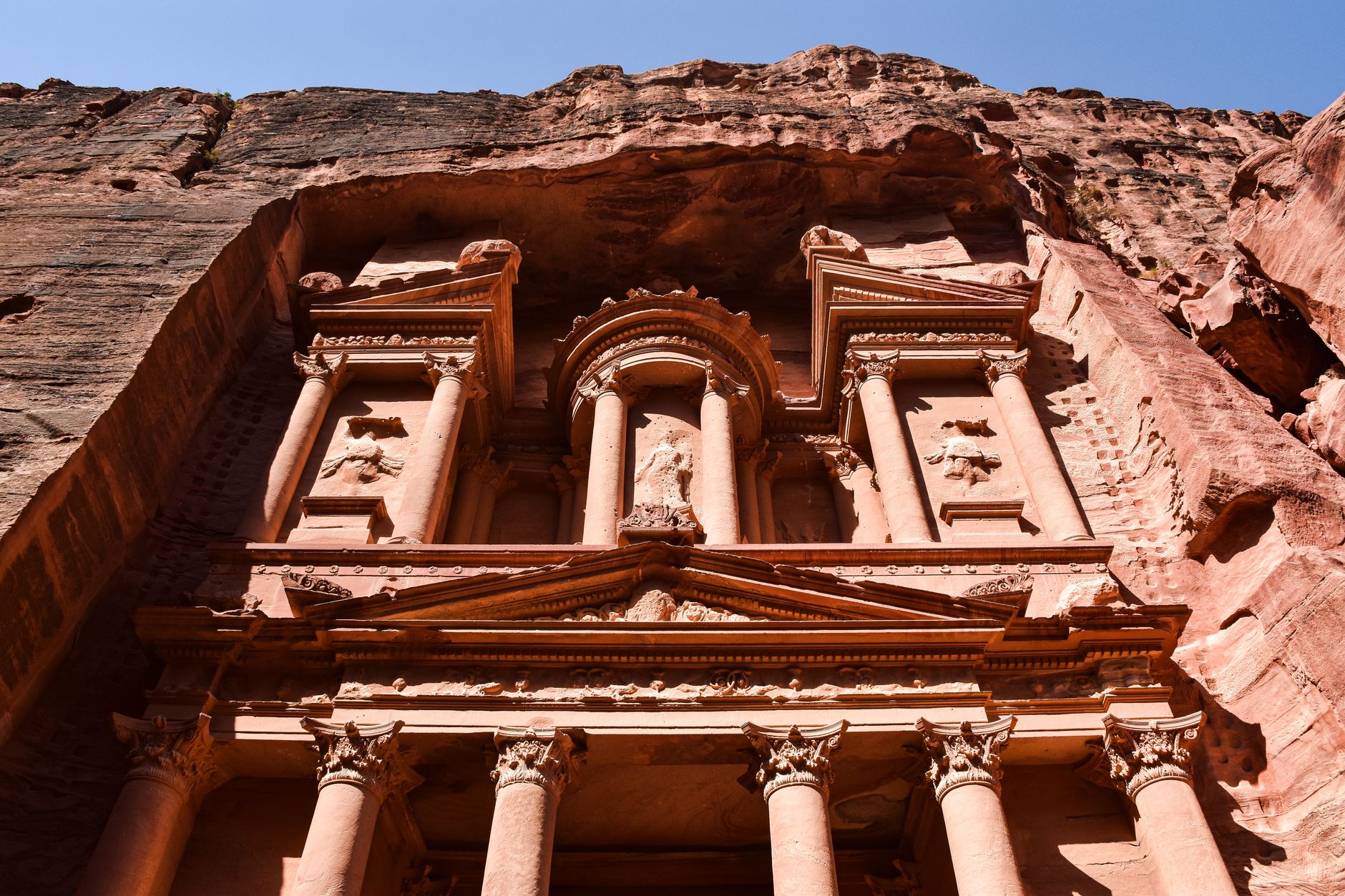
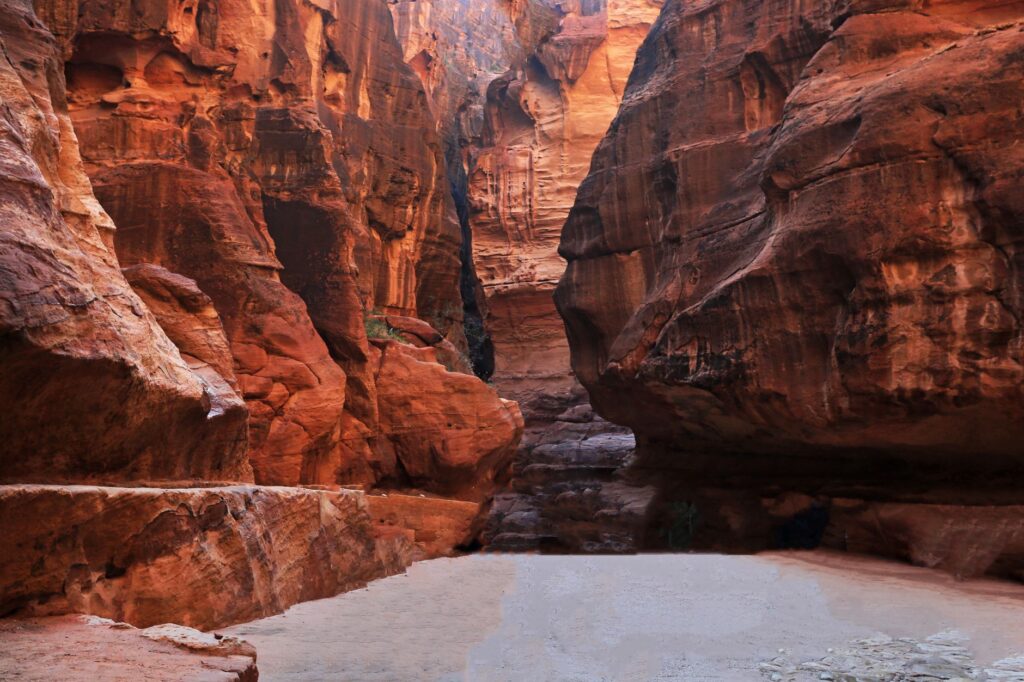
The main access to Petra is the Siq, a narrow, winding gorge that cuts through sandstone walls up to 80 meters high. Walking through it is an overwhelming experience: light filters from above, the wind echoes, and at the end, the facade of Al-Khazneh, the Treasury, appears—one of the most photographed monuments in the world.
This passage is not just a scenic threshold; it was also part of the water management system. The Nabataeans built channels and dams to divert sudden floods and supply the city. Without that system, life in such a dry environment would have been impossible.
Architecture for eternity
Petra houses a vast extent of tombs, temples, and religious sites carved into the rock. Among the most notable are the Urn Tomb, the Palace Tomb, the Corinthian Tomb, and the Deir (Monastery). Each shows a mix of Nabataean and Hellenistic elements, with columns, pediments, and capitals that astonish by their scale and detail.
The so-called Treasury (Al-Khazneh) is perhaps the finest example of that fusion. Its 40-meter-high facade combines Corinthian orders with local motifs. Experts consider these masterpieces a unique artistic achievement of the first centuries BC and AD.
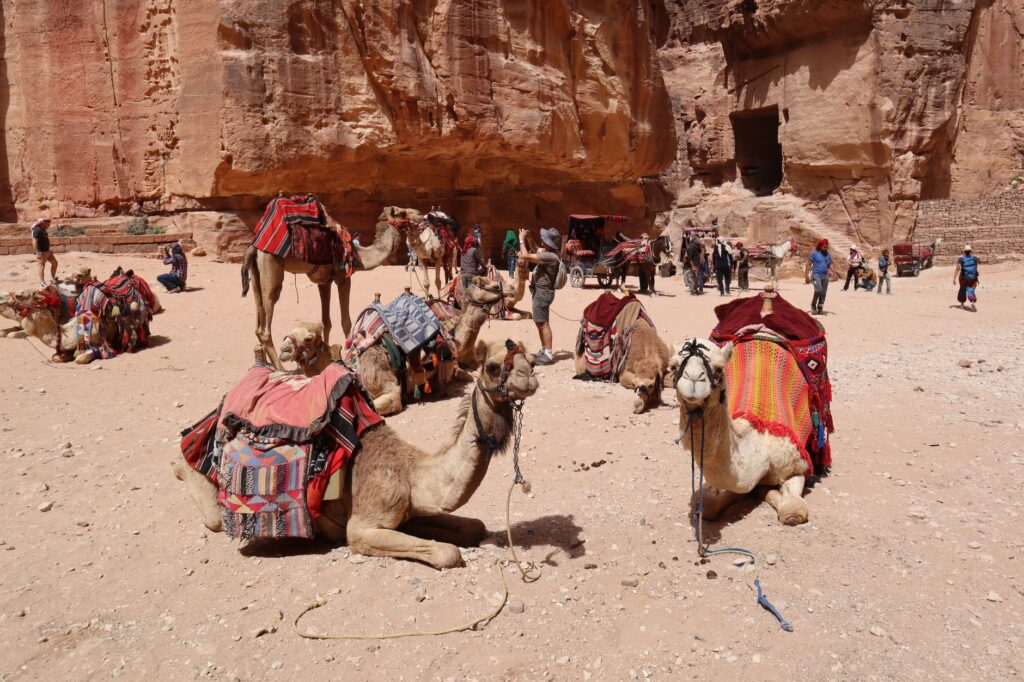
Beyond the facades
Petra is not just a collection of funerary monuments. Archaeologists have documented remains of a theater, a colonnaded street, a nymphaeum, baths, Byzantine churches, and even a mosque on Jebel Haroun, traditionally associated with the tomb of the Prophet Aaron. There are also traces of copper mining at Umm al Amad, dating back to the fourth millennium BC.
The city was a living settlement for centuries, and its decline came with changes in trade routes and earthquakes. It was rediscovered for the West in 1812 by Swiss explorer Johann Ludwig Burckhardt, and since then it has never ceased to captivate travelers and scholars.
Water: the true engineering feat
One of the most remarkable aspects of Petra is its hydraulic system. The Nabataeans built a network of channels, tunnels, diversion dams, cisterns, and reservoirs that allowed them to control and conserve seasonal rains. This system made extensive settlement possible in an essentially arid area during the Nabataean, Roman, and Byzantine periods.
The diversion dam and the Muthlim tunnel are outstanding examples of that engineering. Today, however, the system requires constant maintenance to prevent flash floods along Wadi Musa and the Siq. UNESCO warns that if the Nabataean diversion system is not continually monitored and repaired, the site remains vulnerable to flooding.
‘The water management system allowed extensive settlement of an essentially arid area. Today, its maintenance is key to the site’s preservation,’ the organization emphasizes.
Conservation under pressure
Petra faces multiple challenges. The natural erosion of sandstone, exacerbated in the past by wind and sand, remains a long-term threat. The relocation of the Bdul Bedouin tribe to a new village at Umm Sayhun more than twenty years ago aimed to reduce pressure on the landscape, but the site remains exposed to environmental factors.
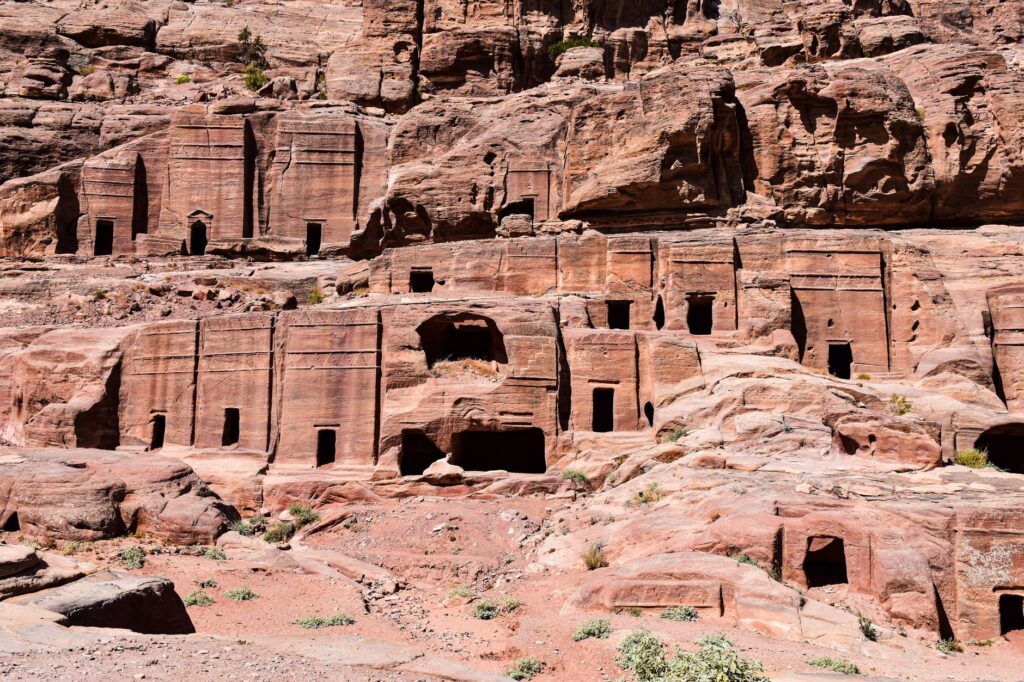
Tourism, which has increased greatly since inscription, creates congestion at critical points such as the Siq. Infrastructure for visitors and local communities also pressures the environment. UNESCO has pointed to the need for a sustainable development framework that protects the site while contributing to the region’s economic viability.
Jordanian authorities, through the Department of Antiquities and the Petra Development and Tourism Region Authority, manage the archaeological park. Strategies have been developed to manage tourist access and regulate the location and design of shops and services.
Responsible choices for visitors
Travelers play a crucial role in Petra’s conservation. Here are some practical recommendations for a respectful and conscious visit:
- Stay on marked trails. Leaving the paths can damage the rock and archaeological remains.
- Do not touch or climb the facades. Sandstone is fragile, and human contact accelerates its deterioration.
- Take your trash with you. The desert environment is especially vulnerable to pollution.
- Hire accredited local guides. They know the history and conservation rules, and their work supports the community.
- Visit during off-peak hours. Going early or staying until closing reduces congestion and improves the experience.
- Support conservation initiatives. Some local organizations work on site maintenance; learning about them can make a difference.
The landscape that surrounds the story
Petra cannot be understood without its surroundings. The red sandstone landscape, with its mountains, canyons, and gorges, is an integral part of the site’s outstanding universal value. Light changes throughout the day, tinting the rocks in tones ranging from pink to intense orange. At sunset, from the Monastery viewpoint or from the heights of Jebel Khubtha, the view is overwhelming.
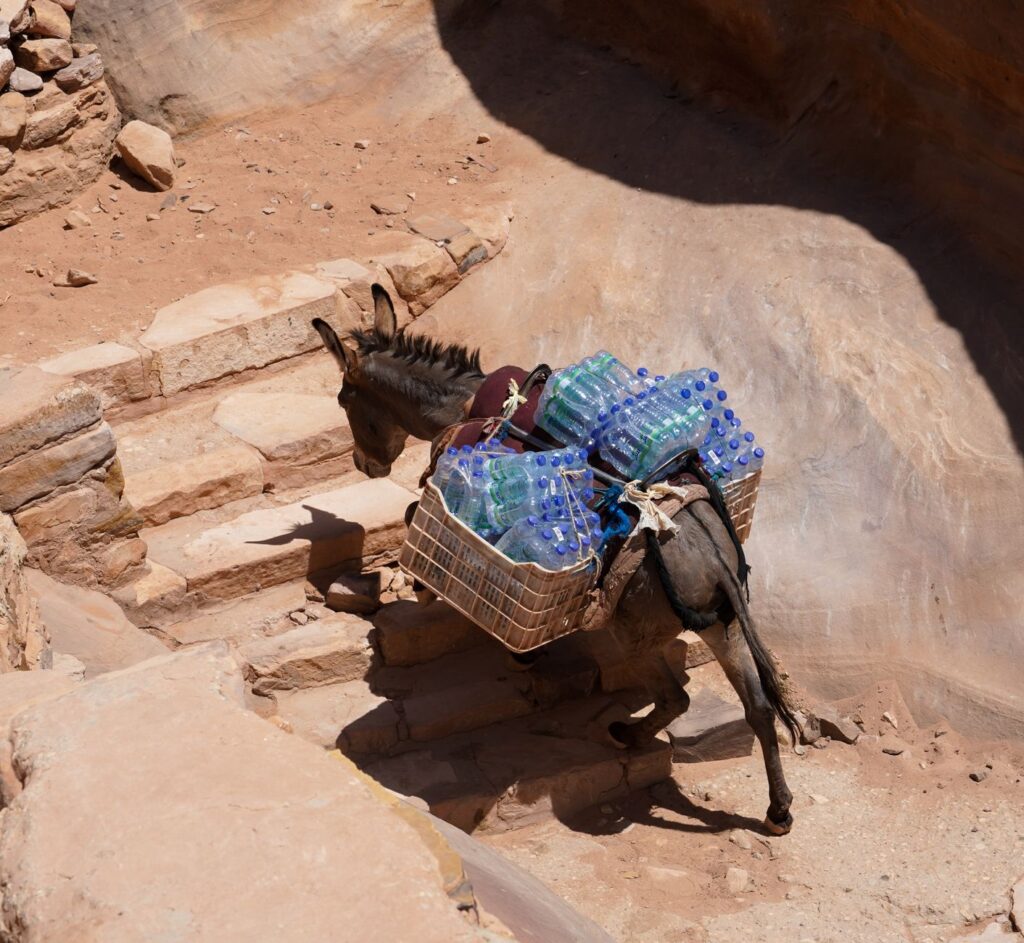
That landscape also hosts biodiversity adapted to extreme conditions. Conservation is not limited to monuments; it involves protecting the ecosystem that surrounds them.
Practical guide
When planning a visit to Petra, several logistical and practical aspects should be considered. Entry to the site is through the Wadi Musa visitor center, where tickets can be purchased and guides hired. Hours vary by season, so it is advisable to check official sources before traveling.
The climate is desert-like: very hot summers and cold winters, with freezing nights. Carrying enough water, sunscreen, a hat, and comfortable shoes is essential. The walk through the Siq and to the main monuments can be demanding, especially in summer.
Accommodation options in Wadi Musa range from budget hotels to resorts. Local cuisine includes dishes such as mansaf, considered Jordan’s national dish, and mezze. Respecting local customs, such as dressing modestly, is appreciated.
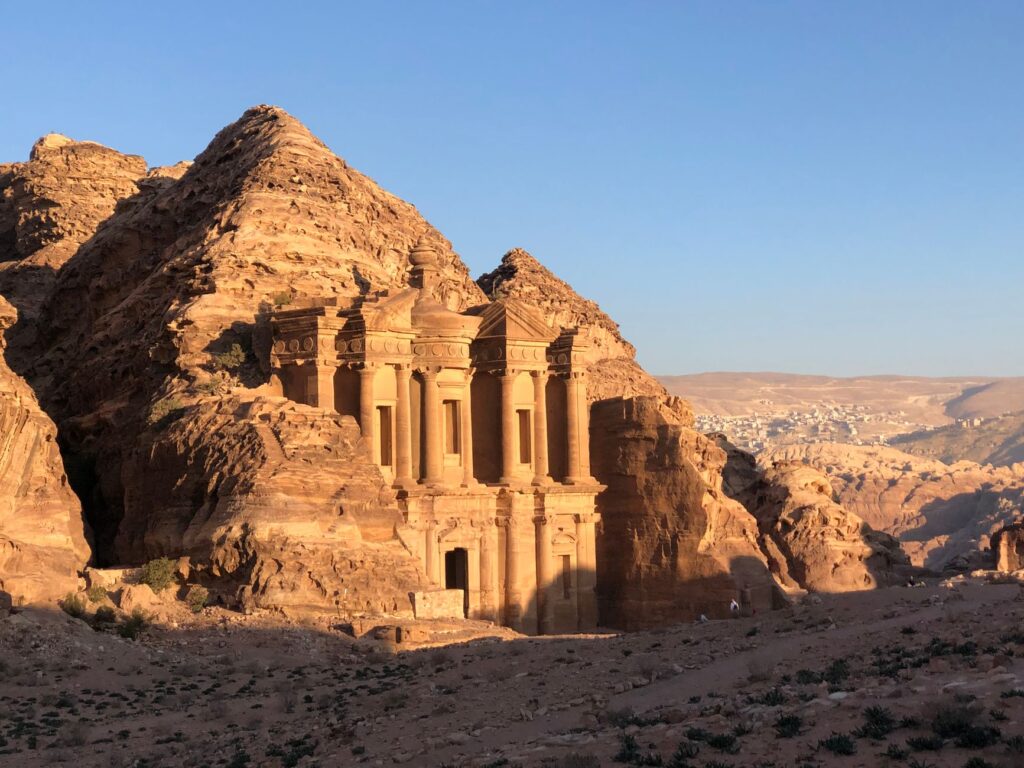
For a deeper experience, consider the ‘Petra by Night’ visit, which illuminates the Siq and the Treasury with candles, though it requires an additional ticket and is not available every night. There are also hiking routes to less crowded places, such as the Monastery or the Umm al Biyara viewpoint.
A legacy that challenges us
Petra is an exceptional testimony to a vanished civilization. Its tombs, temples, and channels speak to us of a people capable of turning a desert into a prosperous crossroads. Today, that legacy challenges us: will we be able to protect it?
The answer is not only in the hands of authorities or experts. Every visitor who walks through the Siq, who admires the Treasury, or who stops to contemplate the landscape participates in Petra’s story. Doing so with respect and awareness is the best way to ensure that this city carved in rock continues to breathe beneath the desert for many centuries to come.