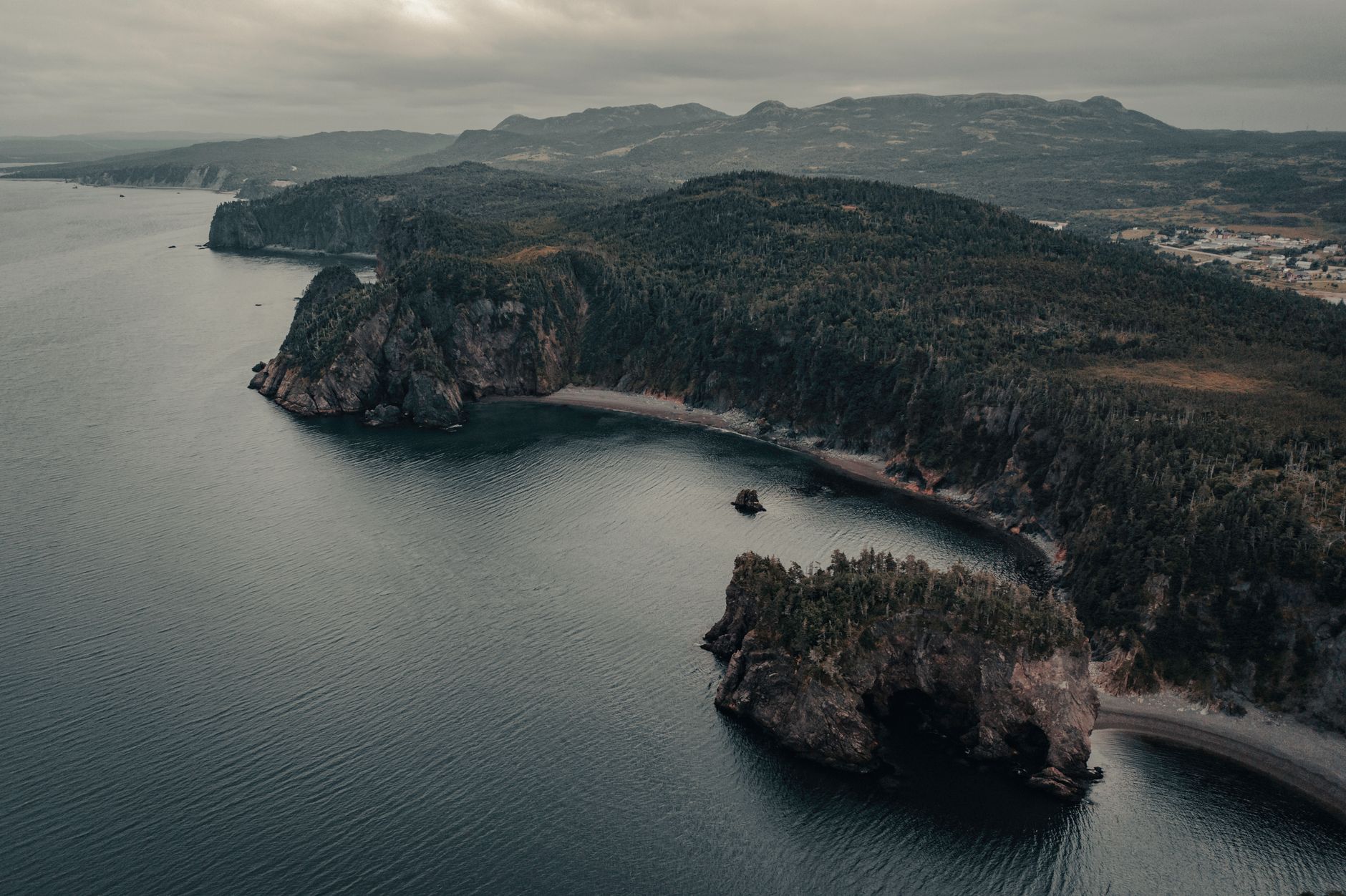

The Patagonian wind hits the cliff without mercy. Below, a line of white foam marks the meeting point between sea and steppe. It is not a gentle landscape, but it is extraordinarily fertile. Here, at the northeastern tip of Argentine Patagonia, the continental shelf breaks and plunges into the abyss. That edge, the slope, is an invisible frontier where ocean currents rise loaded with nutrients. The result is a feast for marine life.
Punta Norte, at the tip of the Valdés Peninsula, is one of the few places in the world where this phenomenon can be observed from land. What happens beneath the surface sustains one of the largest concentrations of seabirds and marine mammals in the South Atlantic. Getting here requires a long journey over gravel roads, but the spectacle justifies any effort. There are no luxury hotels or crowds. Only the sound of the wind, the smell of salt, and the comings and goings of thousands of creatures that depend on a fragile and precise oceanic balance.
A meeting point of waters and lives
The Valdés Peninsula is a geographic feature of about 3,625 square kilometers connected to the mainland by a narrow isthmus. Its shape, almost an island, is bathed by the Atlantic Ocean. To the north, San José Gulf; to the south, Nuevo Gulf. But the true ecological engine is not in the gulfs, but offshore, where the cold, nutrient-rich Malvinas Current rises along the slope.
This upwelling, an oceanographic process, drags minerals and plankton to the surface. It is the base of a food chain that begins with microscopic organisms and ends in top predators such as the southern right whale or the elephant seal. The Patagonian shelf is, therefore, one of the areas of highest primary productivity in the world.
The slope is not a wall, it is a highway of nutrients connecting the abyssal floor with the illuminated surface. Without that flow, the peninsula would be a salt desert.
Geology also matters. The sedimentary cliffs offer ledges and caves for nesting. The pebble and coarse sand beaches serve as resting places for South American sea lions and southern elephant seals. Each species occupies a different niche, but all depend on the same marine pantry.
The kingdom of seabirds
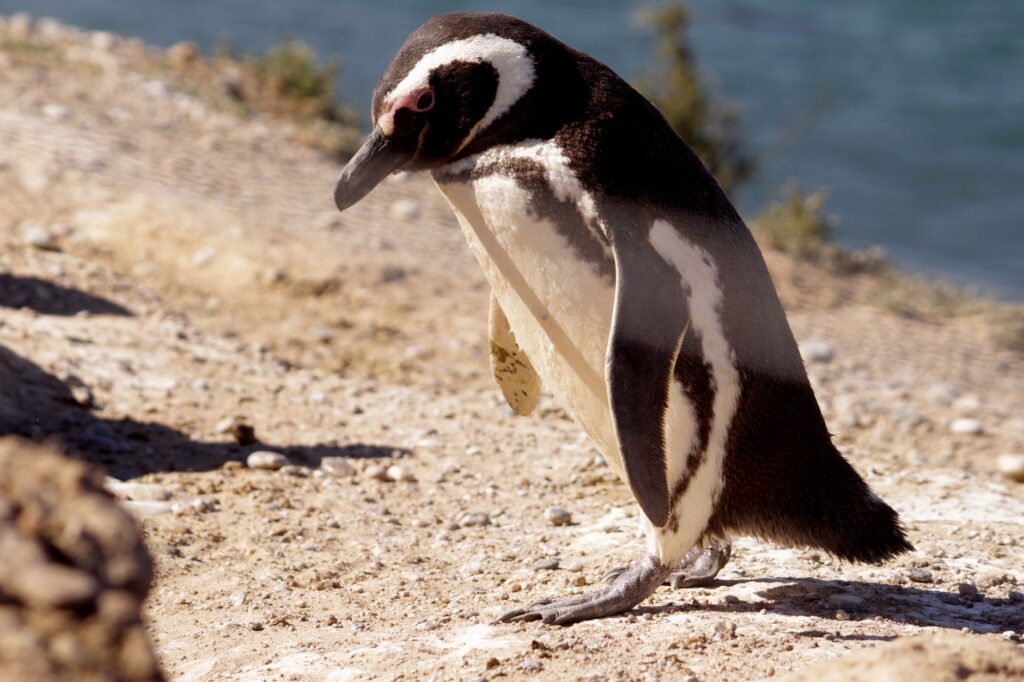
Punta Norte is a paradise for birdwatchers. Between October and March, the sky fills with wings. Imperial cormorants, with black and grey necks, perch on the rocky edges. South American terns flutter over the surf. But the star is the Magellanic penguin, which nests in burrows dug in the steppe, hundreds of meters from the sea.
Every morning, hundreds of penguins descend along marked paths to the water. They return at dusk, their bellies full of anchovies and silversides. The Punta Norte colony is one of the most important on the Patagonian coast, with thousands of breeding pairs. Their presence attracts predators such as the skua and the giant petrel, which patrol the area in search of eggs or unprotected chicks.
Further south, at Punta Delgada, another colony sits on an easily accessible cliff. There, the rangers control the flow of visitors. There are no high fences or strident signs. Only marked trails and the warning not to approach within five meters of the nests. The regulations are strict and enforced with zeal.
A sanctuary for sea lions and elephant seals
The peninsula is not only a paradise for birds. Its coasts are breeding grounds for the South American sea lion and the southern elephant seal. The former form noisy rookeries on the reefs. The latter, more discreet, choose solitary beaches to molt and mate.
At Punta Delgada, a colony of elephant seals stretches along hundreds of meters. The males, enormous with inflated noses, defend their harems with roars that echo off the cliff. The females, smaller, cluster around them. The juveniles, kept apart, wait their turn. It is a spectacle of power and survival that repeats every spring.

Observation is done from an elevated viewpoint. Below, the animals wallow in the wet sand. The smell is intense, but no one complains. The rangers explain that the colony has grown in recent decades thanks to legal protection. Commercial hunting of seals and sea lions, which decimated populations in the 20th century, was banned in Argentina in 1946. Since then, recovery has been slow but steady.
The hidden engine: currents and upwelling
To understand why there is so much life here, one must look at the oceanographic map. The Malvinas Current, which flows north from the Drake Passage, carries cold, nutrient-rich waters. Upon colliding with the continental shelf, it rises. This upwelling fertilizes the surface. Phytoplankton blooms, and with it, zooplankton. Forage fish, such as anchovies and sardines, arrive en masse. And behind them, the predators.
The Patagonian shelf is one of the most extensive in the world. Off the Valdés Peninsula, the slope is about 300 kilometers from the coast. But upwelling also occurs in tidal fronts and submarine canyons. The Bahía Blanca canyon, to the north, and the Nuevo Gulf canyon, to the south, are two of the features that channel deep currents to the surface.
Researchers at the National Patagonian Center (CENPAT), based in Puerto Madryn, have studied these processes for decades. They have found that productivity varies seasonally. In spring and summer, upwelling is more intense. In winter, it weakens. This variation marks the reproductive cycle of species. Southern right whales, for example, come to the gulfs to give birth and nurse between June and December, when the waters are warmer and calmer. They then migrate south to feeding areas on the slope.
Conservation: between protection and human pressure
The Valdés Peninsula was declared a UNESCO World Heritage Site in 1999. That status recognizes its ecological values and also imposes obligations. The National Parks Administration and the provincial government manage the protected area. There are rangers at key points, and visitor quotas have been established to prevent trail degradation.
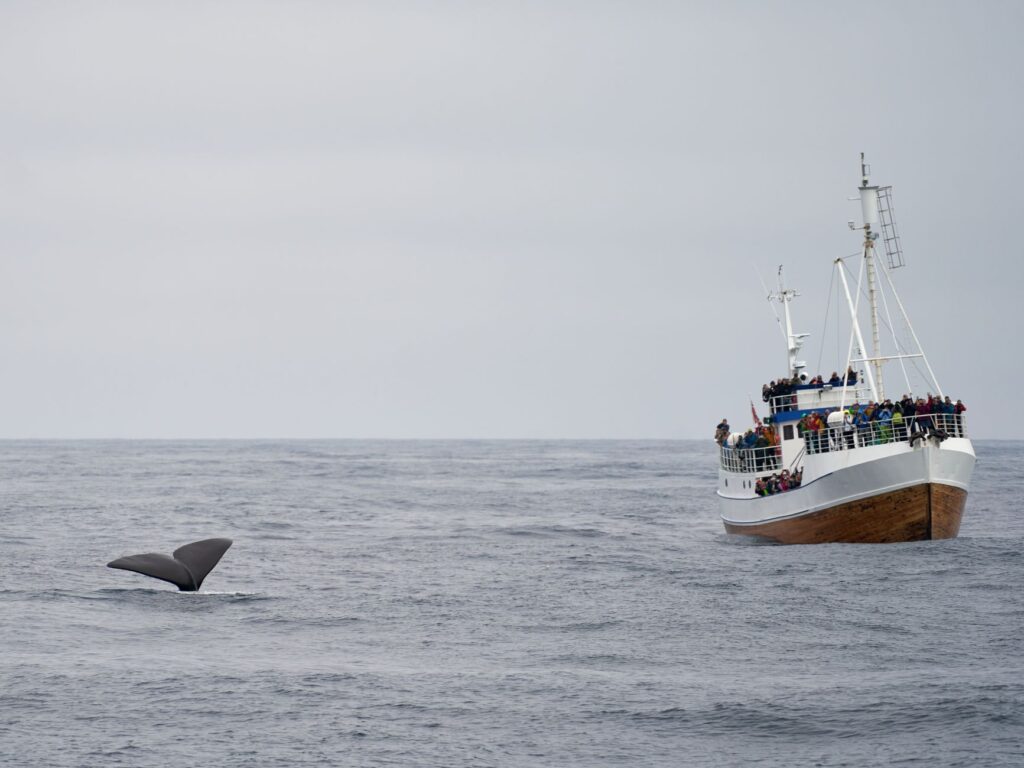
However, pressure does not cease. Tourism grows every year. Puerto Madryn, the nearest city, receives thousands of visitors in high season. Whale-watching boats operate with strict permits, but maritime traffic increases. Commercial fishing also competes for the same resources as birds and mammals. Overfishing of anchovy and squid can affect penguins and sea lions.
Another challenge is climate change. Ocean warming alters currents and plankton distribution. Scientists warn that a change in water temperature could shift feeding areas. Variations in whale arrival and penguin reproductive success have already been observed. The peninsula, like the entire Patagonian system, is vulnerable.
Conservation here is not a luxury, it is an economic and ecological necessity. Without whales or penguins, tourism collapses. And without upwelling, there are no whales or penguins.
Life on the cliffs
Walking the trails of Punta Norte is a lesson in patience. The wind gives no respite. The light changes every minute. But the reward comes when a penguin emerges from the water and walks upright to its burrow. Or when a group of Commerson’s dolphins swims near the coast. Or when an elephant seal lifts its head and emits a roar that seems to come from another world.
Rangers live here during the season. Some are volunteers, others professionals. They know every trail and every nest. Their job is to educate visitors and protect the fragile balance. It is not always easy. Sometimes they must intervene to keep a too-curious tourist away. But their presence is essential. Without them, the peninsula would be a theme park without rules.

The best time to visit is from September to April, when species are active. In winter, the cold is intense and many colonies empty. But the landscape, with its ochre and grey tones, has an austere beauty that is also worth experiencing.
Gastronomy and culture in Puerto Madryn
Puerto Madryn is the gateway to the peninsula. Founded by Welsh settlers in the late 19th century, the city retains a quiet, provincial air. Its gastronomy reflects the abundance of the sea. Patagonian lamb, slow-roasted, competes with fresh seafood and fish. King crab, langoustines, and hake are protagonists in downtown restaurants.
The Welsh heritage is present in the cafés, where traditional Welsh tea is served with cakes and homemade bread. In September, the city celebrates the Lamb Festival and the National Sea Festival, which attract visitors from all over the country. Local culture blends Welsh tradition with port life and nature tourism.
For travelers, Puerto Madryn offers a comfortable base. There are hotels of all categories, from hostels to luxury lodges. The gastronomic offer is varied, with an emphasis on seafood. And the tourism infrastructure is well developed, although in high season it is advisable to book in advance.
Practical guide
Getting there: The nearest airport is Puerto Madryn (El Tehuelche Airport), with flights from Buenos Aires and other Argentine cities. You can also arrive by bus from Buenos Aires (about 18 hours) or by car on National Route 3. The distance from Puerto Madryn to Valdés Peninsula is approximately 100 kilometers, on a gravel road in good condition.
When to go: High season is from September to April, when whales, penguins, and elephant seals can be seen. October and November are ideal for southern right whale watching. For penguins, the best time is October to March. The climate is windy and dry; bring warm clothing and sun protection.
What to bring: Comfortable footwear, warm clothing in layers, hat, sunscreen, and binoculars. Do not forget water and food, as there are few services inside the peninsula. It is recommended to hire excursions with licensed guides, who know the best observation points and respect conservation rules.
Where to stay: Puerto Madryn offers the greatest variety of accommodation. There are also inns in Puerto Pirámides, inside the peninsula, but the offer is limited and sells out quickly in high season. For those seeking a more natural experience, there are campsites in permitted areas.
Visiting rules: It is forbidden to leave the trails, approach wildlife closer than five meters, feed animals, or collect shells or stones. Entrance to the peninsula has a fee and is paid at the tourism office. Rangers may request compliance with the rules at any time.
A closing by the sea
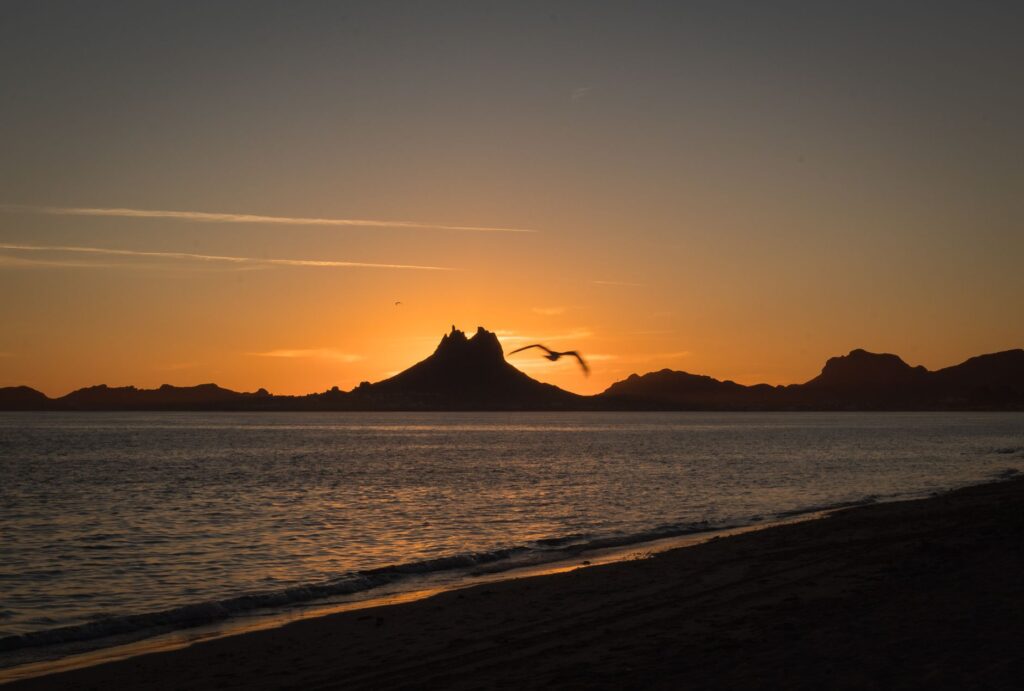
At the end of the day, when the sun sets over the cliff, the wind calms. Penguins return from the sea in single file. Elephant seals settle on the sand. A right whale emerges in the distance and sends up a spout that shines in the golden light. It is a moment of peace, but also of awareness. This ecosystem, as productive as it is fragile, depends on currents we do not control and on decisions that are in our hands. The Valdés Peninsula is not just a tourist destination; it is a reminder that the health of the ocean is the health of the planet.