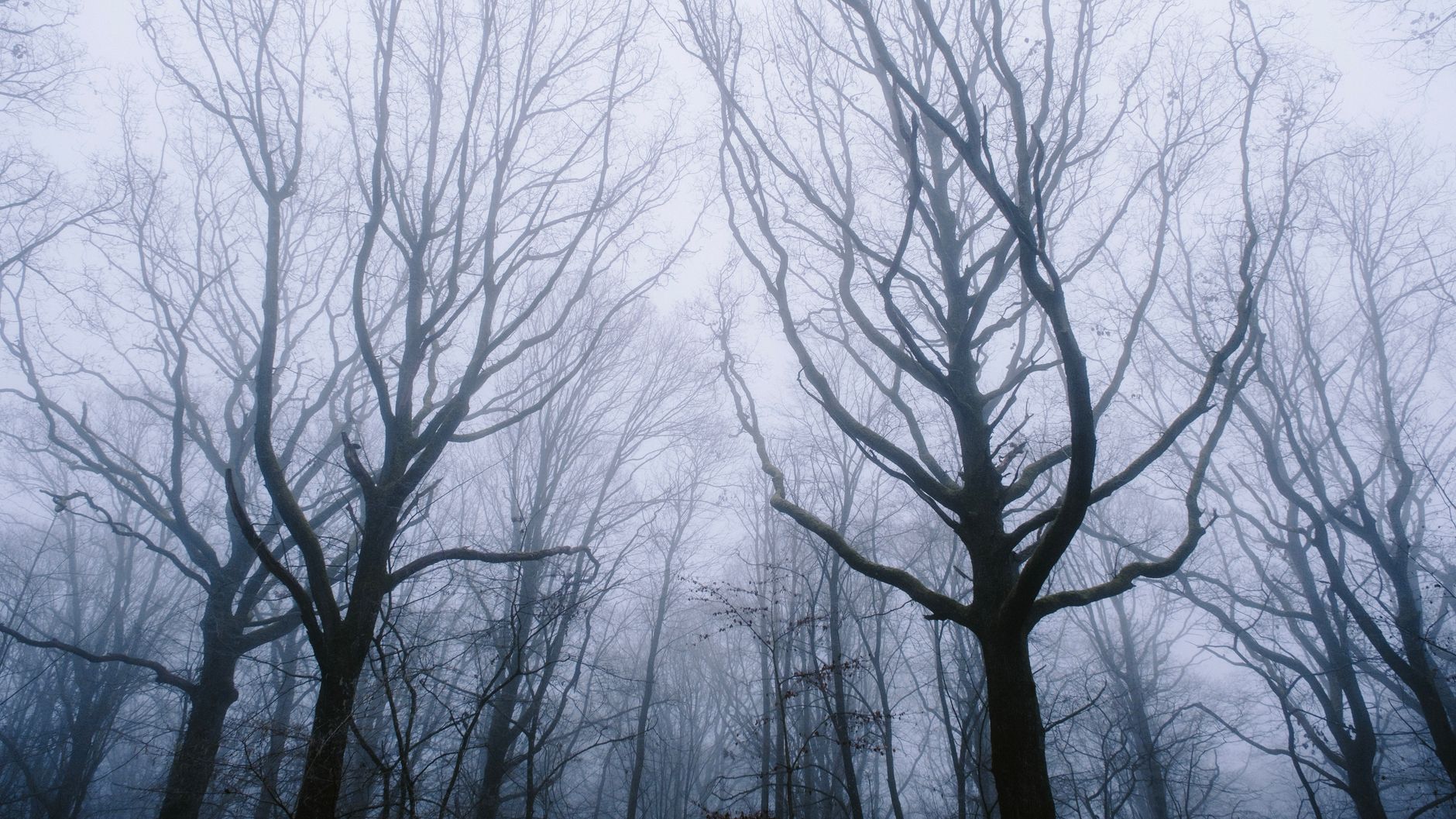

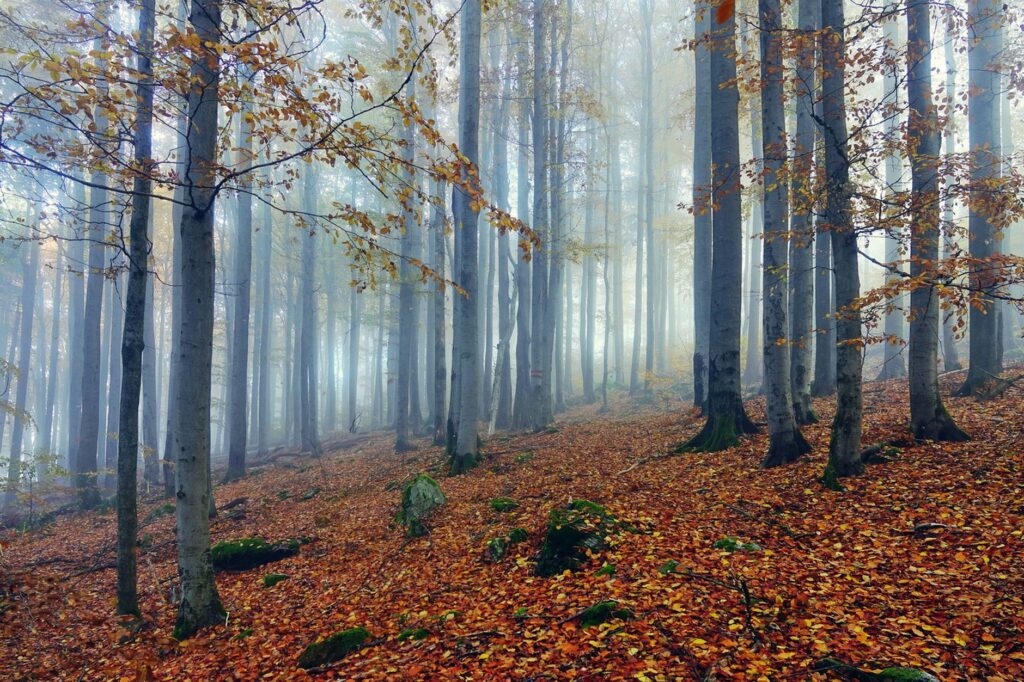
Fog slips through the Ibañeta pass and drifts between the trunks like a slow animal. It is seven in the morning in the Aezkoa valley, in the far northeast of Navarre, and the Irati beech forest is still silent. No phone signal, no engine noise. Only the crunch of leaves underfoot and, in the distance, the drumming of a black woodpecker hunting insects in a dead beech.
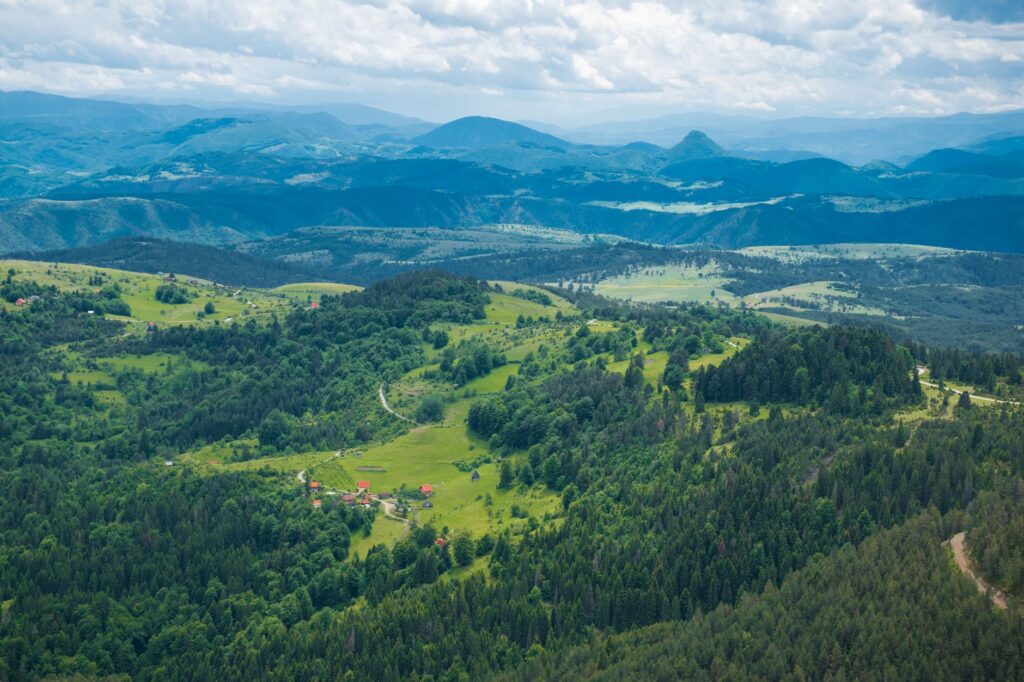
Irati is not just any forest. With roughly 17,000 hectares shared between Spanish Navarre and the French Basque Country, it forms the second-largest beech-fir forest in Europe after Germany’s Black Forest. But its real singularity lies not only in scale: it is in the human footprint that has crossed it for centuries. Snow wells, charcoal kilns, ironworks, smuggling paths and timber-hauling tracks draw a landscape that was never entirely wild.
A forest with a memory of ice
On the high slopes of Abodi, above 1,200 metres, dozens of snow wells survive, circular stone structures where winter snow was packed with straw and stored. In spring, blocks of ice were carried by mule down to Pamplona and other cities to supply hospitals, ice houses and noble households through the summer.
The trade vanished with industrial ice in the late 19th century, but the wells remain, half-buried among beeches, many restored by local associations. Walking to one is a glimpse into an economic system that now seems almost incomprehensible: a trade in cold in a land of fog.
Irati cannot be understood without those who worked it: snowmen, charcoal burners, sawyers and shepherds built a balance we now admire as landscape.
The beech, the tree that orders the landscape
The beech (Fagus sylvatica) dominates the lower and middle reaches of the forest. Its dense canopy blocks light from the ground, limiting undergrowth and creating that sense of a green cathedral so many visitors describe. Higher up, beech gives way to silver fir (Abies alba), forming the beech-fir forest characteristic of Irati.
Forest management is a delicate matter here. Beech timber has been exploited for centuries for railway sleepers, charcoal and firewood, and it remains an economic resource today. Hauling tracks, loading docks and old charcoal kilns bear witness to that activity. The current challenge is to reconcile exploitation with the conservation of an ecosystem that shelters species such as the white-backed woodpecker, the capercaillie or the wolf, the latter expanding in the area.
Villages that learned to live with the forest
Around Irati lie small villages: Ochagavía, Izalzu, Jaurrieta, Aribe, Villanueva de Aezkoa, Orbaitzeta. Many hover around 200 inhabitants and depend on livestock, timber and, increasingly, nature tourism. Depopulation is a real problem, but so is visitor pressure in summer and autumn, when the beech turns copper and garnet.
In Ochagavía, the best-known village in the Salazar valley, houses display coats of arms, carved eaves and slate roofs. Its medieval bridge over the Anduña river is a recurring postcard, but the interest lies in the details: inscriptions on facades, communal ovens, churches with Baroque altarpieces in villages that never exceeded a thousand inhabitants.
The snow well route: walking towards the cold
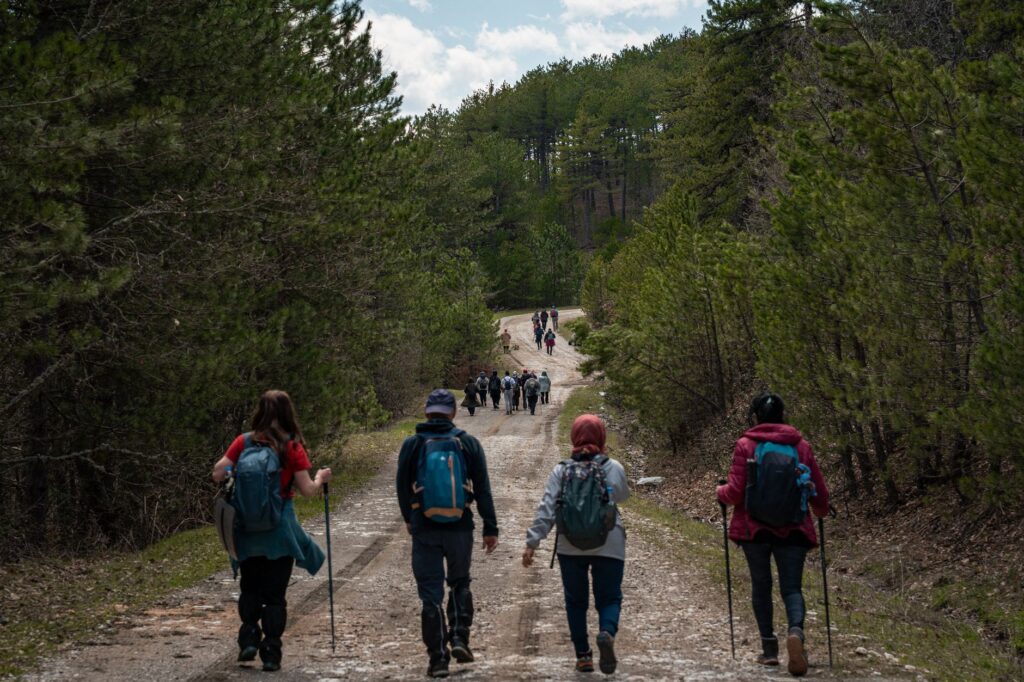
One of the most interesting walks starts in the Abodi area and links several restored snow wells. The route is not demanding in distance, but it is in elevation and orientation: fog can erase the path in minutes. Carry a map and compass as well as a phone, because coverage is patchy.
- Belagua snow well: one of the best preserved, with interpretive panels on the trade.
- Abodi snow wells: several wells in a chain, some with reconstructed roofs.
- Contienda path: an old shepherds’ and smugglers’ route between valleys.
The landscape changes with the seasons. In spring, the beech bursts into tender greens and mountain flowers. In summer, the shade of the beeches offers refuge from the heat of the plain. In autumn, the palette turns reddish and the ground is covered with leaves. In winter, snow closes many tracks and the forest recovers an almost total solitude.
Discreet wildlife, hard to see
Irati shelters remarkable biodiversity, but observing it requires patience and silence. The white-backed woodpecker, a forest-dwelling bird, finds one of its last refuges in the Iberian Peninsula here. There are also roe deer, wild boar, wildcats, martens and, in recent years, documented wolf presence. Large predators generate tensions with grazing, a debate that runs through the entire Navarrese mountain range.
For visitors, the advice is simple: keep your distance, do not feed animals and respect livestock fences. The forest is not a theme park.
Rural architecture and industrial heritage
Beyond the beech forest, the Irati area preserves a surprising industrial heritage. In Orbaitzeta, one of the most important arms factories of the 18th century operated, the Royal Arms Factory, now in ruins but visitable with a guide. The valleys are dotted with ironworks, mills and early 20th-century hydroelectric plants, many still in use.
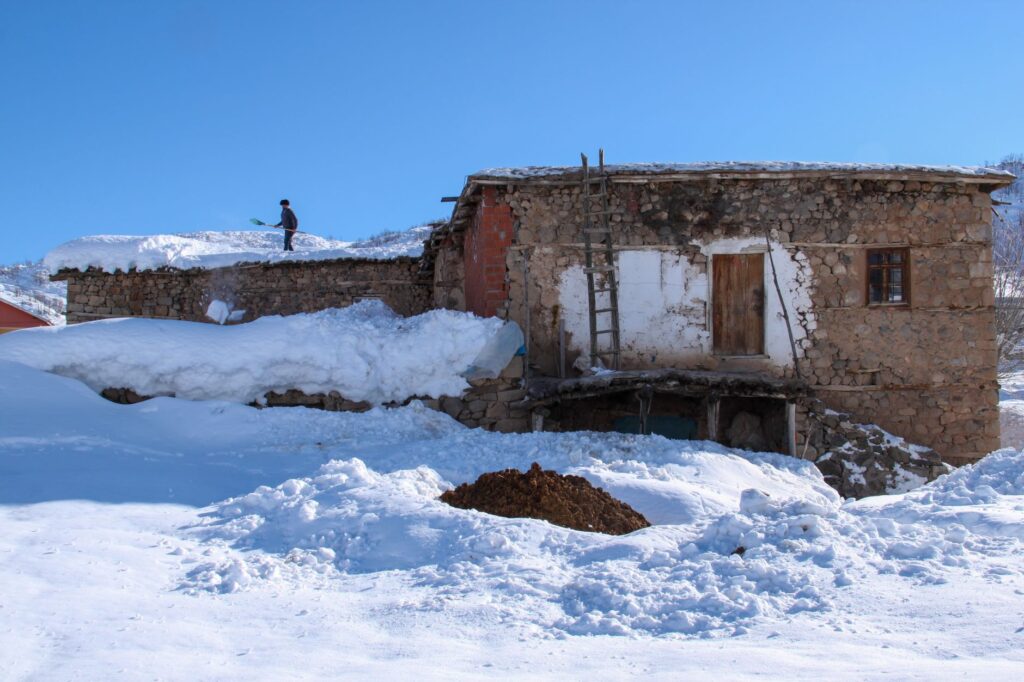
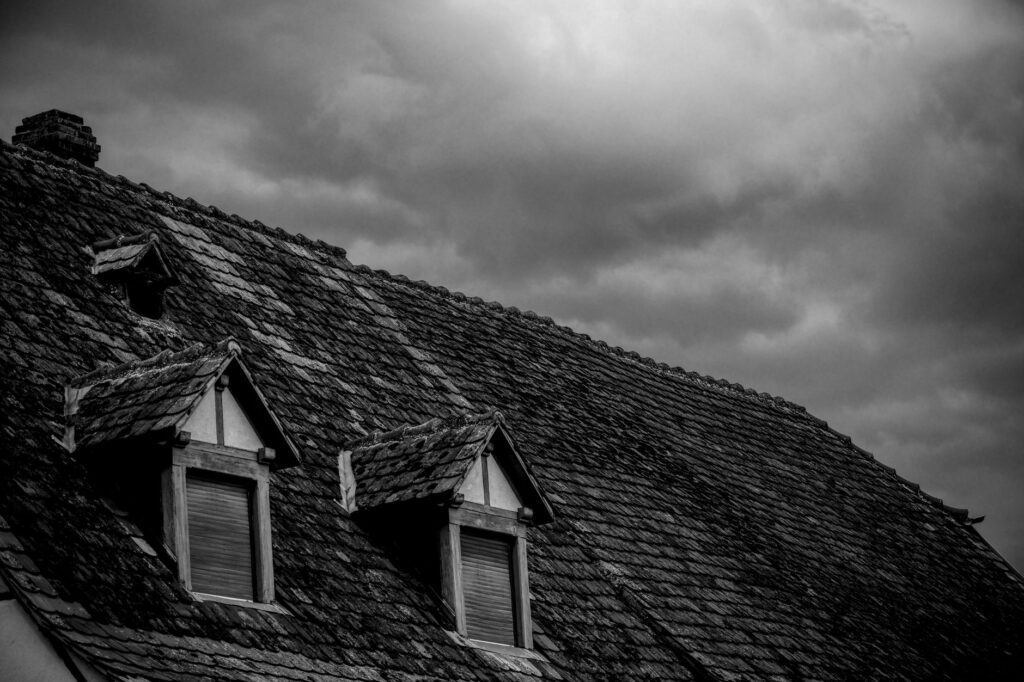
Traditional architecture combines limestone, beech wood and slate. Large farmhouses, with steeply pitched roofs, respond to the need to shed snow and rain. Small windows facing south sought to retain heat in harsh winters.
Mountain gastronomy
The valley’s cuisine is hearty and honest: lamb, pork, river trout, sheep’s cheeses such as Idiazabal, and desserts like cuajada or natural yoghurt. In Ochagavía and nearby there are family restaurants where you eat well without pretension. Wine comes from the Navarrese Ribera, and cider and txakoli appear on tables closer to the French border.
A recurring dish is Navarrese-style trout, with serrano ham, and seasonal mushrooms, especially in autumn. Pastry includes garroticas and rusos de Ochagavía, yolk sweets that have become a common souvenir.
Getting there and when to go
The main access to Irati is by road from Pamplona, towards Aoiz and then to Ochagavía or the Irabia area. Buses are limited and most visitors arrive by car. Parking in summer and autumn can be difficult; it is best to start early.
The best season depends on your goal. For autumn colour, from mid-October to mid-November. For comfortable walking, from May to September. For snow, from January to March, always with caution and proper equipment.
Practical guide
Getting there: Pamplona is the nearest airport and train station. From there, the NA-178 road towards Ochagavía or the NA-2010 towards Irabia. The journey is around an hour and a half.
Where to stay: rural houses and small hotels in Ochagavía, Izalzu, Jaurrieta and Aribe. Book ahead in autumn and on public holidays.
What to bring: waterproof footwear, a warm layer, water, a map or GPS, and rain protection. Fog is frequent.
Rules: do not leave marked trails in reserve areas, do not light fires, do not leave waste and respect livestock and fences.
Information: the Ochagavía tourist office and the Irati interpretation centre offer updated maps and advice.
A forest remembered by walking
At the end of the day, when the fog dissolves and the low sun cuts through the beeches, Irati returns an image unlike any other in southern Europe. It is not a spectacular landscape in the grand sense; it is an intimate, worked landscape, full of layers. The snow wells, charcoal kilns, farmhouses and paths tell a story of slow adaptation, of communities that learned to use the forest without destroying it.
That is perhaps the most valuable lesson this corner of Navarre keeps: that a forest can be economy, memory and refuge at once. And that walking it attentively is a way of understanding how we have lived, and how we might continue to live, on the damp margins of Europe.