
Brief escapes for a hassle-free long weekend
The Mexican labor calendar offers one of its most anticipated breaks each year with the long weekend commemorating the anniversary of the Mexican Revolution. With three days available—from Saturday, November 14 to Monday, November 16—the urge to leave the asphalt of Mexico City behind becomes a collective ritual. There is no need to plan transcontinental journeys or request special work permits; less than three hours from the capital, destinations capable of completely altering one’s vital rhythm in a matter of minutes converge.
The geography surrounding the Valley of Mexico functions as a refuge of contrasts where colonial architecture, temperate forests, and deep-rooted traditions coexist without haste. Instead of facing the crowds of major beaches or saturated airports, choosing nearby Magic Towns represents a smart decision to optimize rest time, ensuring that the road trip does not consume half of the vacation.
Valle de Bravo: Forest, mist, and the stillness of water
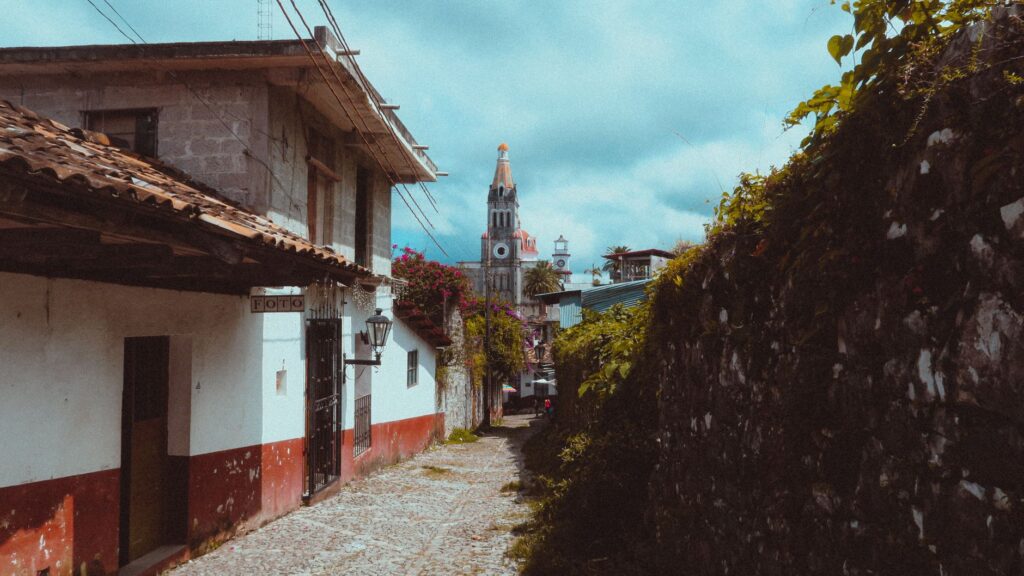
Located approximately two and a half hours west of Mexico City, Valle de Bravo stands out as the favorite destination for those seeking to balance outdoor activity with the comfort of a mountain town. Its urban layout, characterized by cobblestone streets, gabled tile roofs, and white facades adorned with bougainvillea, retains a provincial atmosphere despite its Sunday popularity.
The main protagonist of the landscape is Lake Avándaro, a body of water surrounded by hills densely populated with pines and oaks. During November mornings, the mist descends from the hills to cover the lake surface, creating an ideal setting for sailing or kayaking before the sun dominates the sky. For travelers with an adventurous spirit, the foothills of Cerro de la Cruz offer launch points for paragliding flights, allowing visitors to contemplate the immensity of the forest and the water mirror from above.
Gastronomy and traditions in the lakeside heart
The culinary offerings of Valle de Bravo transition between traditional state snacks and author cuisine promoted by chefs who have found their permanent home in this wooded corner. In the municipal market, local cecina stalls accompanied by green chorizo and handmade tortillas are an obligatory stop to understand the flavors of the land.
The true luxury of a three-day getaway does not lie in the distance traveled, but in the speed with which the body slows down when urban noise is replaced by the murmur of the wind through the pines.
In addition to gastronomy, the neighborhood of Santa María Huacatitlán preserves one of the most notable architectural treasures of the region: the Pino Mocho, a centuries-old tree that forms part of local identity, and the church housing sacred art images from the viceregal era. Walking through these alleys away from the commercial center allows visitors to appreciate the daily life of a community that keeps its traditional trades alive.
Tepoztlán: Mysticism under the shadow of Tepozteco
Heading south, crossing the Ajusco mountain range and entering the state of Morelos, the climate changes drastically to offer warm temperatures and clear skies. Tepoztlán is located less than ninety minutes from the capital and is immediately distinguished by the imposing presence of volcanic stone hills that embrace it, geological formations charged with pre-Hispanic legends.
The town is internationally recognized for its particular energy and vibrant weekend market, where local artisans, holistic therapists, and visitors seeking spiritual rest converge. The ascent to the Tepozteco archaeological zone, situated at the top of the main mountain, represents a moderate yet rewarding physical challenge. Along the cobblestone trail, dry tropical flora and local fauna accompany the traveler to the small temple dedicated to the pulque god, Ometochtli.

Ancestral flavors and mindful rest
Tepoztlán’s gastronomy revolves around native corn and milpa ingredients. Traditional market-style mojarras and tlacoyos stuffed with beans, broad beans, or requesón, bathed in raw green salsa, represent the culinary essence of the municipality. Likewise, local bakeries offer oversized conchas and pulque bread, baked in traditional wood-fired ovens.
For those seeking a deep breath, the lodging options include boutique hotels with wellness concepts, traditional temazcales, and spaces dedicated to meditation. Disconnecting from screens and letting time pass to the rhythm of the bells of the Nativity church is the best way to enjoy this Morelos oasis.
Taxco de Alarcón: Silversmithing, steep slopes, and vertical architecture
Descending further south into the state of Guerrero lies Taxco de Alarcón, a viceregal jewel built on exceptionally steep slopes. About two and a half hours from Mexico City, this Magic Town defies the laws of gravity with its narrow stone streets and stepped white houses that appear to hang from ravines.
Historically linked to silver mining, Taxco keeps this tradition alive through hundreds of silversmith workshops where master artisans continue to shape the metal using techniques inherited from generation to generation. Borda Square, flanked by the monumental Parish of Santa Prisca—one of the highest expressions of Churrigueresque baroque in Mexico—constitutes the obligatory meeting point to observe the coming and going of characteristic white VW bugs serving as local public transport.

The cultural pulse of silversmithing and its viewpoints
Touring Taxco implies being willing to walk up and down labyrinthine alleys that reveal surprises at every turn, such as hidden squares, museums dedicated to mining history, and natural viewpoints like the monumental Christ, which overlooks the entire urban valley.
Taxco is not merely visited; it is climbed, admired in detail, and discovered in the subtle gleam of every storefront where silver takes on a life of its own.
Among culinary recommendations, the traditional jumil stands out—a seasonal insect consumed toasted in salsa or directly alive, forming part of the pre-Hispanic heritage that survives in northern Guerrero. Accompanied by a plate of white or green pozole, an emblematic Thursday dish available in several local inns, the gastronomic experience is unforgettable.
Tlaxcala de Xicohténcatl: Discrete history and millennial heritage
For travelers who prefer to bypass high-profile destinations, Tlaxcala offers a peaceful alternative, rich in history and located just two hours from the country’s capital. Although the capital city and its surroundings retain urban status, the pace of life maintains the leisurely cadence characteristic of traditional towns.

The Franciscan convent complex, declared a UNESCO World Heritage Site, stands out for its Mudejar-style wooden ceilings and monumental atrium. Very close by, the archaeological site of Cacaxtla and Xochitécatl allows visitors to explore the best-preserved pre-Hispanic murals of the central highlands, offering a unique perspective on the cultures that dominated the region before the arrival of the Spanish.
During November, Tlaxcala’s fields begin to turn yellow with late cempasúchil flowers and the proximity of forests where firefly sightings occur, although the latter phenomenon has its peak season in summer. Visiting Tlaxcala is an exercise in historical contemplation and enjoyment of a modest yet honest cuisine based on native corn, escamoles, and pulque.
Practical guide
How to get there: All mentioned destinations are within a radius of less than three hours from Mexico City, accessible by private cars or commercial buses departing from the North, West, and South terminals.
When to travel: The long weekend from November 14 to 16 is ideal, though leaving early Saturday morning is recommended to avoid capital exit traffic.

Lodging: Advance booking is essential, as demand increases considerably due to the official nature of the holiday weekend.
Safety and route recommendations: Use toll highways for greater safety and comfort along the route. Bring warm clothing for nights in Valle de Bravo and comfortable footwear with non-slip soles for walking the steep streets of Taxco and Tlaxcala.
The art of returning without haste
The true value of a three-day getaway lies in the ability to transform routine without exhausting one’s energy in the attempt. Returning to Mexico City on Monday afternoon, with light luggage and a mind cleared by mountain air or southern sun, confirms that vast geographical distances are not needed to find a genuine breath of fresh air. In the end, short roads are the ones that best bring us back home.
Source: Adapted from Alan x el Mundo, ‘A dónde ir este puente de noviembre cerca de CDMX’.