
Origins and the Topographic Conquest of the Scottish Highlands
The construction of the West Highland Line represents one of the most complex milestones in late 19th-century British civil engineering. Formally inaugurated along its main section toward Mallaig in 1901, this railway route was conceived with the strategic purpose of integrating the isolated fishing and agricultural communities of northwestern Scotland into the economic network of the United Kingdom. The terrain’s topography, characterized by expansive peat bogs, deep lochs, and rugged mountain ranges, posed titanic challenges to the era’s engineers, who had to devise unprecedented technical solutions to overcome unstable soils and extremely adverse weather conditions.
The route’s design required meticulous planning to avoid excessive gradients without resorting to kilometer-long tunnels—a limitation imposed both by available technology and the meager budgets of the promoting companies. The labor crews, historically known as navvies, operated in absolute isolation, utilizing manual tools and explosive charges to carve their way through the hard granite of the Highlands. The result was a masterpiece of mountain alignment that leverages the natural contours of the landscape to maintain viable traction for steam and diesel locomotives.
Over the decades, the infrastructure has not only fulfilled a freight and passenger transport function but has also cemented itself as a backbone of Scottish territorial identity. The overcoming of colossal geographical obstacles transformed the perception of distance in a region where road travel traditionally depended on slow ferries and impassable tracks during winter months. Today, the study of its layout reveals a seamless harmony between human intervention and the mandatory respect for a natural environment of untamed beauty.
The Glenfinnan Viaduct: Monumental Geometry in the Landscape
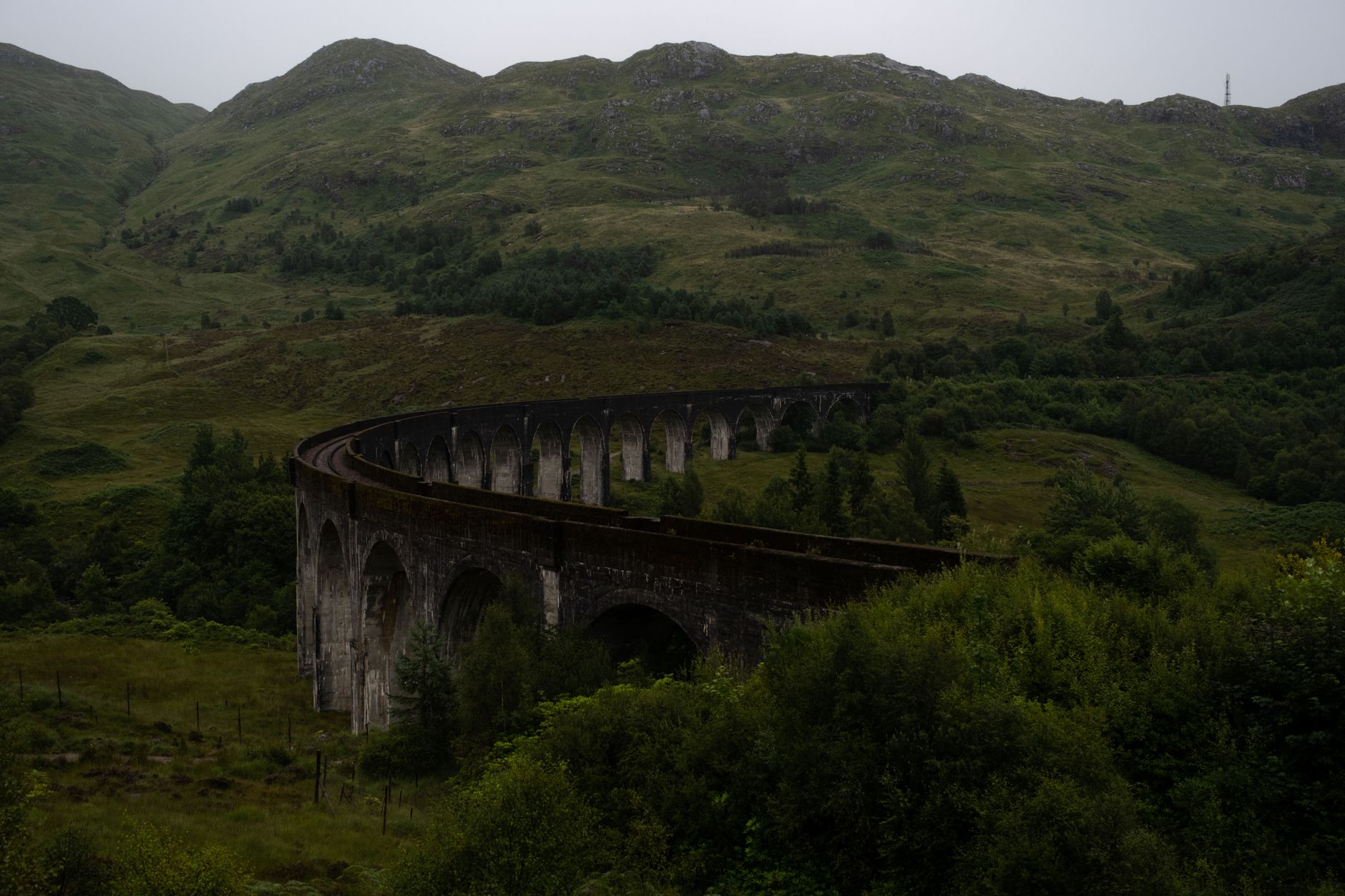
Few architectural elements elicit as much visual and technical admiration as the Glenfinnan Viaduct. Featuring twenty-one mass concrete arches and a maximum height of thirty meters above the River Finnan bed, this structure constitutes a marvel of structural design executed in an era when steel and traditional masonry dominated major public works. The choice of unreinforced concrete, molded with wooden formwork on site, responded both to the scarcity of suitable ashlar stone in the vicinity and to the need to erect a support capable of withstanding the intense dynamic forces of heavy rolling stock.
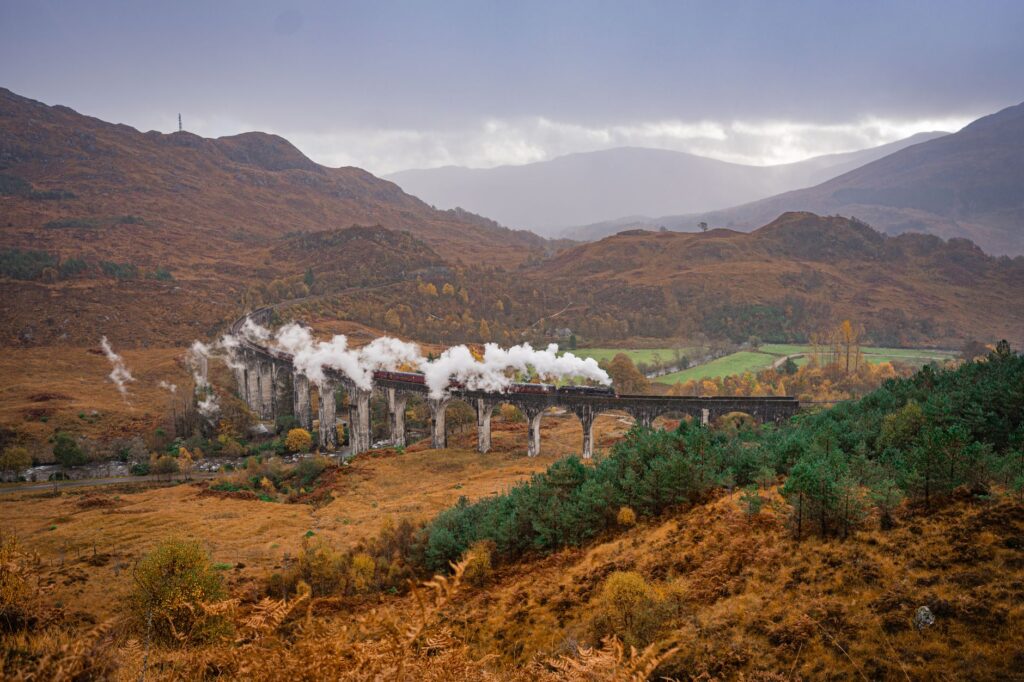
The curvature of the viaduct, traced with a precise radius of eight hundred meters, is not an aesthetic whim but a direct response to the necessity of aligning the railway track with the valley’s topography without drastically altering natural slopes. Each pier was founded directly upon bedrock or on submerged timber piles where subsoil consistency required prior consolidation. This attention to structural detail has allowed the viaduct to maintain its operational integrity for over a century, enduring the daily passage of railway formations subject to constant thermal oscillations and persistent ambient humidity.
The Glenfinnan Viaduct is not merely a monument to nineteenth-century constructive ingenuity; it is the hinge connecting Scotland’s industrial history with the timeless permanence of its glens.
Witnessing a train cross its arches evokes the golden age of British rail, where technical audacity combined with sober, functional aesthetics. The preservation of the viaduct requires meticulous periodic inspections and specialized sealing treatments to prevent concrete degradation from water infiltration—a constant challenge in the wet climate of the west coast. This maintenance effort guarantees that the structure continues operating as an essential component of the regional transport network.
Rannoch Moor: Engineering Challenges Over Shifting Peat Bogs
The section traversing Rannoch Moor is, without a doubt, the most audacious and challenging segment of the entire journey. This desolate moorland, composed of kilometers of water-saturated peat and deep silt, presented a surface incapable of supporting the conventional weight of a railway line. To resolve this critical problem, engineers deployed a pioneering floating foundation technique: rather than excavating down to find solid rock—an operation practically impossible due to the depth of the mire—they constructed an elastic mattress of brushwood, birch branches, and tree trunks upon which tons of stone and ballast were poured.
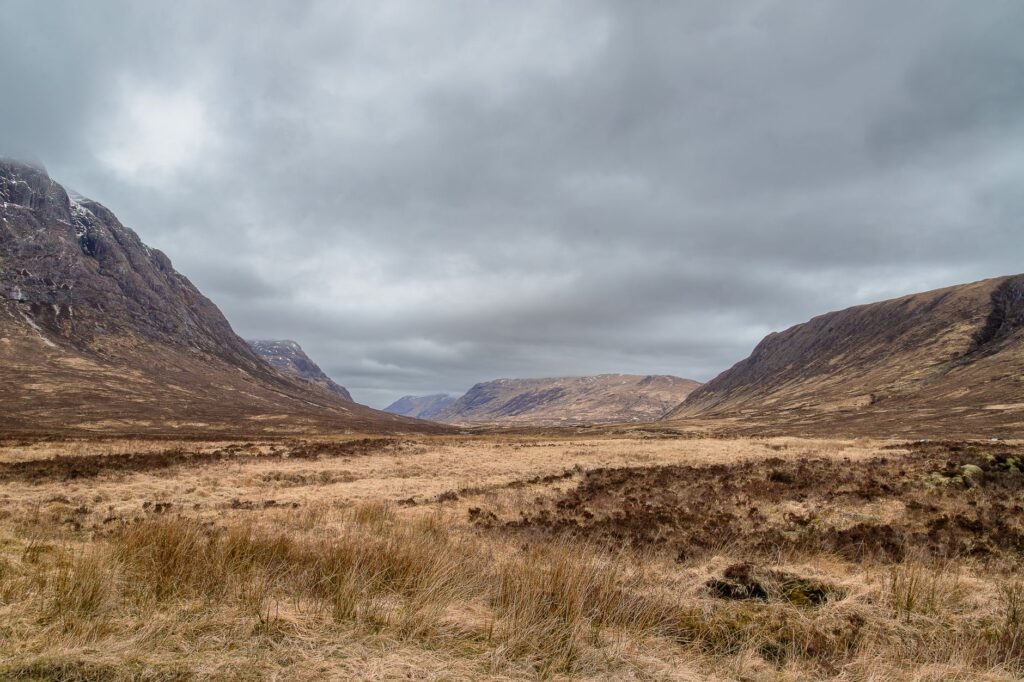
Resting atop this flexible base is the track, designed to settle and redistribute the weight of trains evenly across the swampy surface. During laying operations, multiple embankment sections suffered unforeseen subsidence, swallowing auxiliary locomotives and demanding emergency solutions based on controlled drainage and the widening of the support base. The result is a track that literally floats upon the peat, requiring permanent topographic control by maintenance teams to millimetrically correct any deviation in leveling.
The solitude of this moor, battered by gale-force winds and frequent snowstorms, imparts a singular character to the journey. Stations situated in this sector, such as Corrour—which holds the title of being the highest on the British railway network—historically functioned as critical operational enclaves for fuel supply and track condition monitoring. Today, the logistical management of this section demands close coordination between traffic control centers and winter snow-clearing crews.
Logistics and Rolling Stock on Low-Density Routes
The operational viability of the West Highland Line depends on a highly delicate financial and logistical balance. Serving communities of low demographic density yet high tourist and seasonal significance, fleet management requires versatile and robust trainsets. Currently, the route is operated primarily by Class 156 diesel multiple units, vehicles specifically designed to withstand prolonged journeys in adverse weather conditions and endowed with proven mechanical reliability across northern Britain’s most demanding routes.
In addition to scheduled passenger services, the corridor hosts during the summer months the legendary steam train commercially known as the Jacobite. This special operation attracts tens of thousands of international visitors, generating a substantial economic impact in coastal towns such as Mallaig and Fort William. However, integrating century-old steam locomotives into a modern railway infrastructure requires complex logistical maneuvers, including managing dedicated water supply points, coordinating timetables with public service trains, and rigorous safety checks on the track.
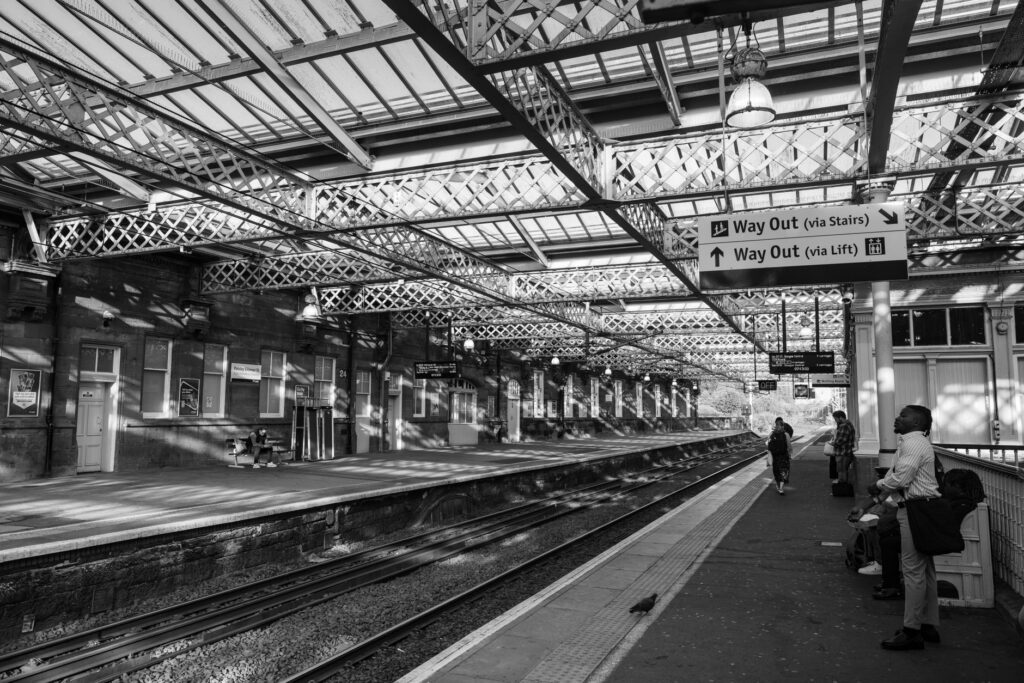
- Timetable coordination between regular passenger services and heritage steam trains.
- Preventive maintenance of drainage systems on embankments susceptible to slippage from heavy rainfall.
- Management of water supply and recharging points for steam locomotives at terminal stations.
- Automated geometric track inspection to detect settlement in peat-supported sections.
The infrastructure also plays a key role in local freight transport, facilitating the transfer of fishery products, timber, and essential supplies to areas where road transport proves complex or unfeasible during extreme weather episodes. The modernization of signaling systems, with the gradual introduction of remote control technologies, seeks to optimize line capacity without altering its characteristic historical layout.
Socioeconomic Fabric and Impact on Coastal Communities
The impact of the West Highland Line extends far beyond the purely technical or tourist sphere; it constitutes the circulatory system keeping numerous rural communities of the Scottish Atlantic coast alive. Before the arrival of the railway, geographical isolation condemned local inhabitants to a subsistence economy highly vulnerable to poor harvests and fluctuations in the fishing market. The railway opened a fast and secure route to commercialize fresh fish caught in western ports to the markets of Glasgow and London within hours.
Likewise, the railway facilitated the arrival of early visitors interested in hiking and mountaineering at the beginning of the twentieth century, laying the foundations for a sustainable tourism industry that today sustains regional employment. Intermediate stations, many converted into private residences, local museums, or small cafes, preserve original Victorian architecture and act as community meeting points. The preservation of this architectural heritage reflects the pride of a population that views the train as an indisputable symbol of cultural resilience.
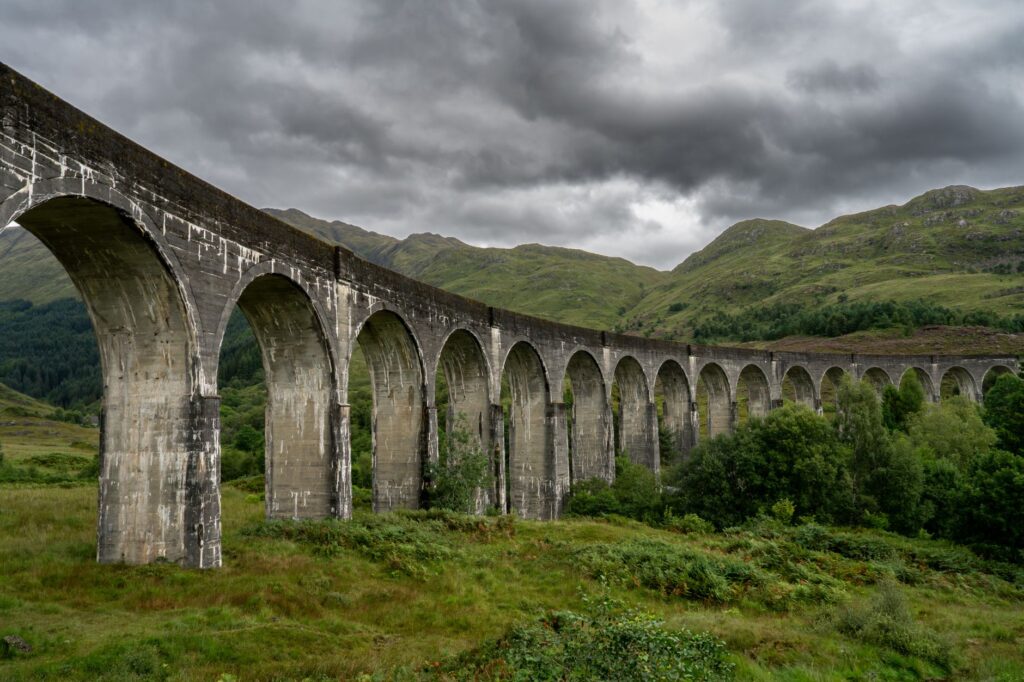
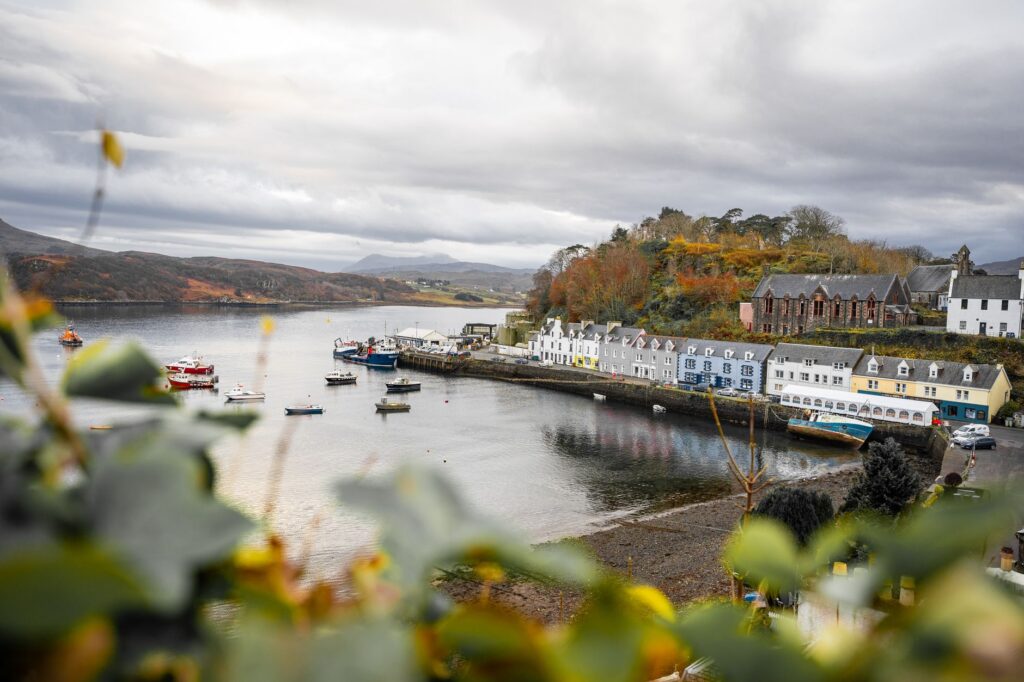
The rail connection toward Mallaig radically transformed the economy of the Highlands, turning geographical isolation into a competitive advantage based on nature tourism.
Today, local user associations collaborate closely with railway operators and public administrations to ensure the frequency and quality of services, avoiding the risks of marginalization threatening other secondary lines across Europe. This community commitment ensures that the train remains a motor of social cohesion, enabling residents to access advanced health and educational services in major urban centers without abandoning their traditional homes.
Practical guide
Planning a journey along the West Highland Line requires understanding the operational particularities of a mountain railway network operating within one of Europe’s most beautiful and demanding natural environments.
How to get there: The main starting point of the route is Glasgow Queen Street station, perfectly connected to Glasgow International Airport and the rest of the British rail network. Trains toward Mallaig operate daily, offering direct connections completing the journey in approximately five and a half hours.
When to travel: Spring and summer months (May to September) offer extended daylight and more stable weather conditions, ideal for enjoying the scenery and hiking excursions. The Jacobite steam train service typically operates from April through October, making advance booking essential several months ahead due to high international demand.
Trip planning: Acquiring a modular ticket or a regional Scottish rail pass is recommended if planning intermediate stops in towns such as Crianlarich, Tyndrum, Bridge of Orchy, or Fort William. These stops allow exploration of iconic hiking routes like the West Highland Way.
Requirements and operational advice: Weather conditions in the Highlands can change dramatically within minutes; wearing waterproof and windproof garments is essential, even in summer. Seats situated on the left side of the carriage traveling northbound offer the best panoramic views approaching the Glenfinnan Viaduct and the Atlantic coast.
Final Reflection on Rail Travel in the 21st Century
In an era dominated by the hyperconnected speed of commercial aviation and high-capacity motorways, the West Highland Line proposes a lucid vindication of travel as a conscious and contemplative experience. Traversing the misty moors of Rannoch and beholding the geometric majesty of the Glenfinnan Viaduct reminds us that human mobility can and must engage respectfully with geography. This Scottish corridor is not merely an efficient transport medium, but a living archive of human engineering and determination, a lasting reminder that the most beautiful paths are those built with patience, precision, and profound respect for the territory that embraces them.