Navigating the waters of the Gulf of Panama demands a deep understanding of the oceanic dynamics that have transformed the Pearl Islands archipelago into a milestone of contemporary maritime exploration. Just a few nautical miles from the frenetic activity of the interoceanic canal, this insular labyrinth composed of more than two hundred islands and islets unfolds a geography of contrasts where the tide defines the rhythm of marine and human life. Here, water is not merely a medium for transit, but a living force that shapes pristine beaches, basaltic rock cliffs, and impenetrable mangroves acting as ecological sanctuaries.
This report explores the logistics, seamanship, and human dimension of venturing into these latitudes aboard a classic sailing vessel. Far from the mass tourism of large hotel complexes, traversing the archipelago requires meticulous planning that ranges from fuel and provisions autonomy to absolute respect for the strict environmental conservation regulations protecting its marine reserves.
The Invisible Geography of the Gulf and Its Tidal Rigor
The primary technical challenge when planning a route through the Pearls lies in the thermal amplitude and the tidal regime. With drops that can exceed five meters between high and low tide, the Gulf of Panama behaves as a vast natural funnel that accelerates currents in the narrow channels between islands such as Contadora, Saboga, or Del Rey. Navigators must consult tide tables with Swiss rigor, as a miscalculation when anchoring can leave the vessel stranded on coral banks or exposed to unexpected cross-currents.
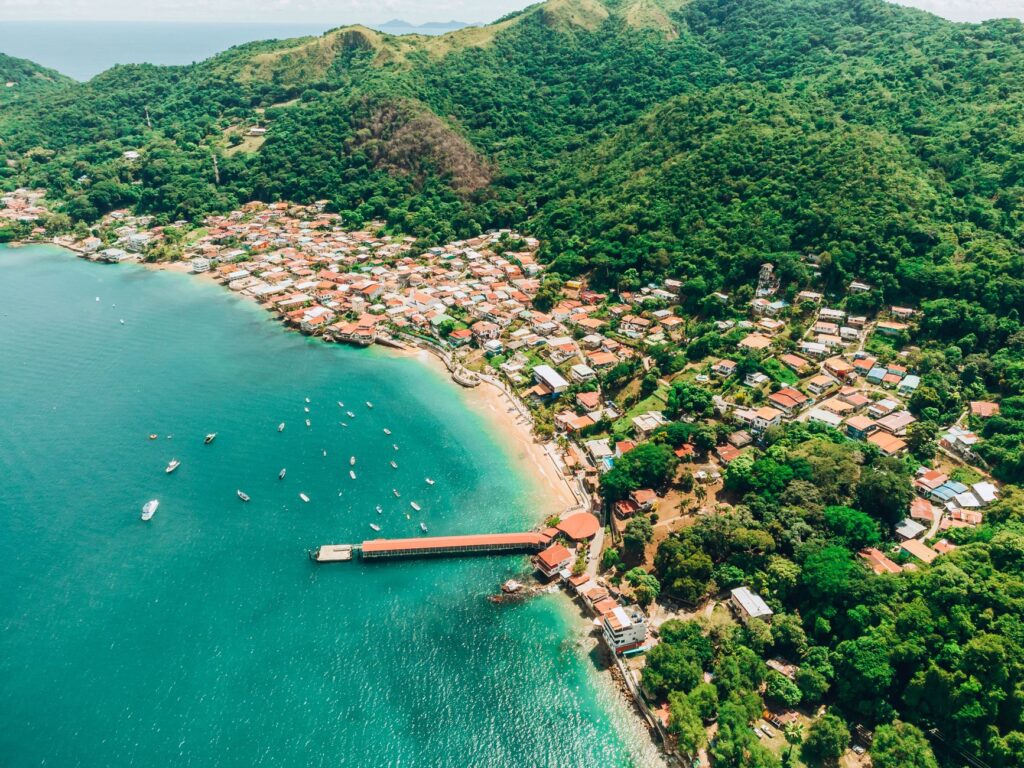
Modern cartography, combined with global positioning systems, coexists in this area with a tradition of visual piloting inherited from old artisanal fishermen and pearl divers. Submerged rock formations and sand shoals require constant vigilance from the crow’s nest or bow, especially during fading daylight hours. Reading the color of the water—ranging from emerald green in the shallows to the deep navy blue of oceanic trenches—constitutes the skipper’s first line of defense.
The Route of the Galleons and the Pirate Legacy
Beyond its ecological value, the archipelago holds a dense historical layer. During the colonial era, these islands functioned as the Spanish Empire’s great pearl extraction center, a bloody monopoly fueled by enslaved labor that harvested oysters under extreme conditions. Names like Isla del Rey or Isla San José evoke chronicles of treasure-laden galleons that frequently attracted the greed of English filibusters such as Henry Morgan and John Hawkins.
Today, anchoring in sheltered coves like Ensenada de la Mina allows one to evoke those times of blind navigation. Archaeological vestiges are scarce but significant: ancient freshwater wells carved into living rock by corsairs and remnants of colonial settlements forgotten beneath dense tropical vegetation. Panama’s maritime history is read here through shipwreck remains and the oral memory of local communities, direct descendants of ancient inhabitants who have preserved their identity against the advance of real estate speculation.

Life Aboard: Autonomy and Coexistence in Confined Spaces
Embarking on a multi-day journey through the Pearls radically transforms the perception of time and consumption. Life on a classic sailboat imposes strict discipline in managing limited resources such as freshwater, electricity generated by solar panels or wind generators, and fresh provisions. Each crew member assumes rotating roles ranging from nighttime deck watch to cooking and mechanical maintenance work.
The sea grants no certainties; it offers lessons of humility to those who dare defy its millenary rhythm with haste and arrogance.
The confined space enforces coexistence based on empathy and clear communication. When trade winds blow strongly or the rainy season’s tropical storms unleash their sudden fury, crew coordination becomes the decisive factor between safe navigation and an emergency situation. Preventive maintenance of rigging, standing lines, and the auxiliary engine is an inescapable routine at dusk before securing the vessel for the night.
Marine Ecosystems and the Urgency of Conservation
The waters surrounding the archipelago form a biological corridor of capital importance for the tropical eastern Pacific. Between July and October, humpback whales migrate from cold Antarctic and sub-Antarctic waters to these warm, sheltered inlets to mate and give birth to their calves. Observing a cetacean breach a few miles from the bow, always respecting safety distances to avoid altering their behavior, is one of the pinnacle moments of any nautical expedition in the area.

Likewise, coral reefs harbor exceptional biodiversity of pelagic fish, eagle rays, and reef sharks. However, these ecosystems face growing pressures due to global warming, coral bleaching, and unregulated illegal fishing. Local scientific organizations and environmental authorities strive to consolidate protected marine areas that limit the impact of uncontrolled tourism and guarantee the sustainability of fish populations upon which local artisanal fishers depend.
Practical Guide
Planning a nautical journey to the Pearl Islands requires logistical rigor, up-to-date permits, and absolute respect for the marine environment. Below are the key aspects for organizing the expedition with guarantees of safety and success.
Best Time to Sail
The dry season, extending from December to April, offers the most consistent trade winds and clear skies, though the sea can chop up due to the northern wind. The wet season, from May to November, features calm mornings followed by intense afternoon storms, yet rewards visitors with prime conditions for humpback whale watching and hyper-green island landscapes.

Permits and Navigation Clearances
It is essential to set sail from authorized ports on the continental coast, such as Panama City (Flamenco Marina or Amador Causeway) or Vacamonte port. Departure documents, valid vessel insurance, and the official crew list must be presented to the Panama Maritime Authority (AMP). If anchoring in natural reserve zones, specific restrictions from the Ministry of Environment must be consulted.
Recommended Technical and Safety Equipment
In addition to mandatory safety equipment (approved life jackets, life raft, VHF radio, and EPIRB), it is strongly advised to carry updated electronic cartography, a dual-frequency echosounder for reading shoals, a primary Delta or Spade-type anchor with sufficient chain and spare rode, and an onboard water desalination system if planning an extended stay without touching port.
Provisioning Logistics
The archipelago has basic supply shops on islands like Contadora and San Miguel, but the variety of fresh produce is extremely limited. All primary provisioning of fuel, potable water, mechanical spare parts, and non-perishable food must be completed in Panama City before undertaking the journey.

Environmental Impact and Best Practices
Throwing any type of waste into the sea is strictly prohibited. Greywater and blackwater retention systems must be used onboard, or anchoring executed with low-impact technologies. The anchor should preferably be dropped over sandy bottoms to avoid destroying living coral colonies that sustain the gulf’s biodiversity.
The Perpetual Echo of the Pacific at the Insular Frontier
When the sailboat shuts down its engine and the sole sound onboard is the gentle friction of the hull against calm waters in a deserted cove on Isla San José, the true dimension of the journey reveals itself in all its magnitude. It is not merely a matter of having logged nautical miles or passed the test of extreme tides, but of having tuned into the ancestral heartbeat of an ocean that has watched conquerors, pirates, and scientists pass by without ever losing its vocation as an untamed refuge.
The pearls that gave this archipelago its name are no longer sought with the avidity of colonial gold, but in the silent contemplation of a blazing sunset mirrored on the Pacific’s surface. As one sails back toward the continental coast, with the bluish silhouette of the islands fading into the horizon, remains the intimate certainty that this marine sanctuary endures as one of the last bastions of authenticity on the map of contemporary adventure.