
Origins and Geography of an Industrial Myth
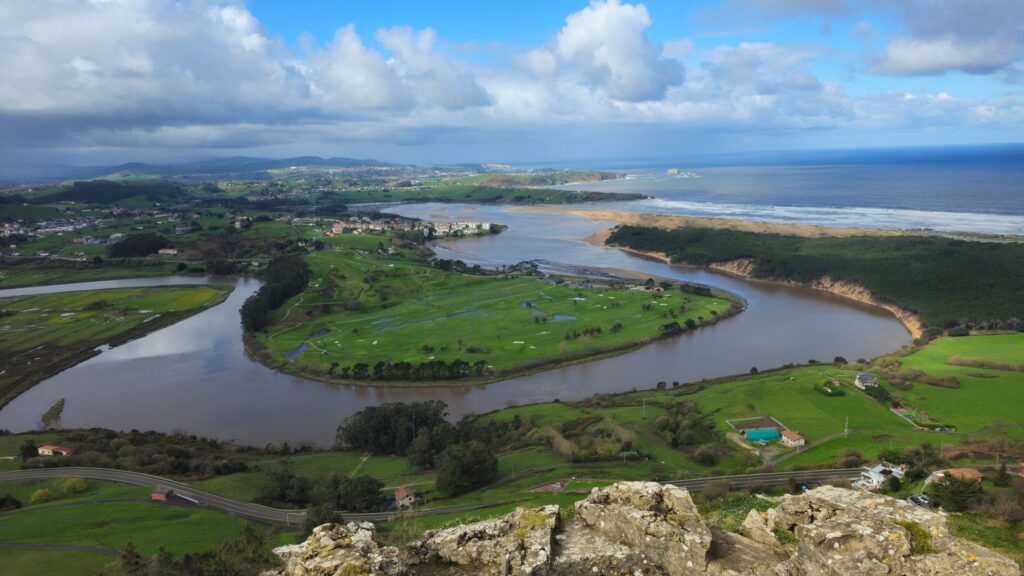
In the extreme north of Lugo province, where river canyons open toward the wild Cantabrian Sea, stands the historic complex of Sargadelos. Founded in the late eighteenth century by the Enlightenment figure Antonio Raimundo Ibáñez, this enclave did not merely mark the birth of a ceramic factory; it established a pioneering ironworks and manufacturing model in the Iberian Peninsula. The choice of this valley was no coincidence: the abundance of water, the proximity of forests for charcoal production, and above all, the rich kaolin deposits nearby formed the ideal setting to materialize enlightened ambitions of technical modernization.
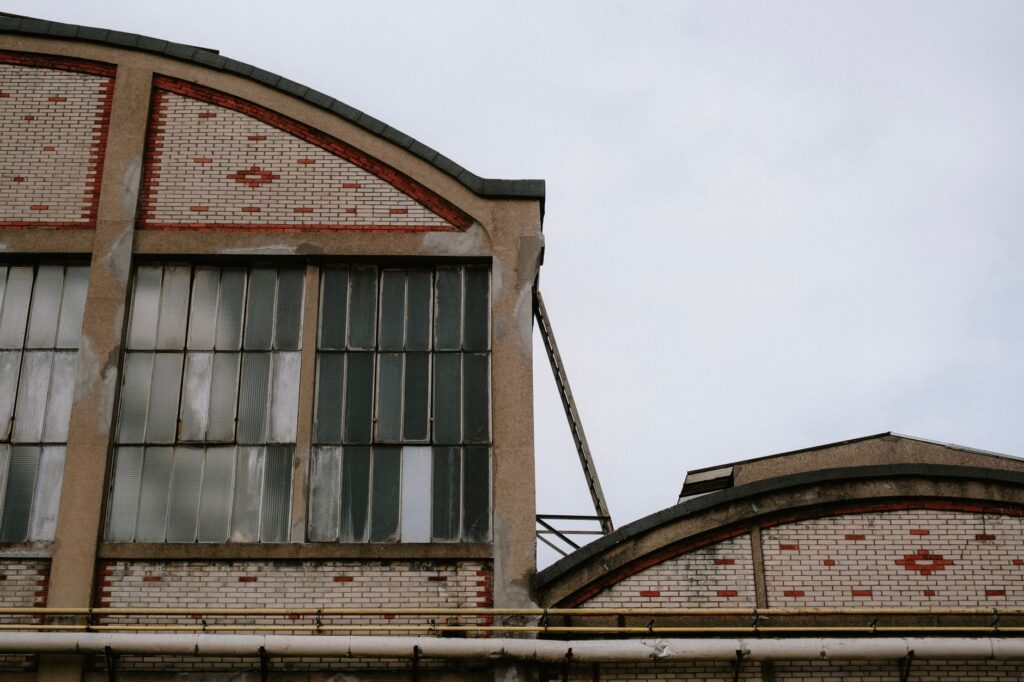
Today, the industrial complex and active workshops maintain a fascinating pulse between industrial archaeology and contemporary artistic creation. The original buildings, restored after various historical vicissitudes, retain the geometric layout characteristic of neoclassical factory architecture. Walking through their surroundings, the visitor perceives the constant echo of a tradition that managed to transcend mere domestic utility to become a standard of Galician identity, engaging in direct dialogue with the most advanced European aesthetic currents of its time.
The Alchemy of Kaolin and Cobalt Blue
The process transforming raw earth into Sargadelos porcelain is a meticulous exercise in chemistry and manual dexterity. It all begins in the mills, where locally extracted kaolin is mixed with quartz and feldspar in exact proportions. This liquid paste, known as slip, is poured into porous plaster molds that absorb excess moisture, fixing the walls of future pieces with millimeter precision. Each mold demands a profound understanding of setting times, as an excess or defect in drying would ruin the structure before it even reaches the kiln.
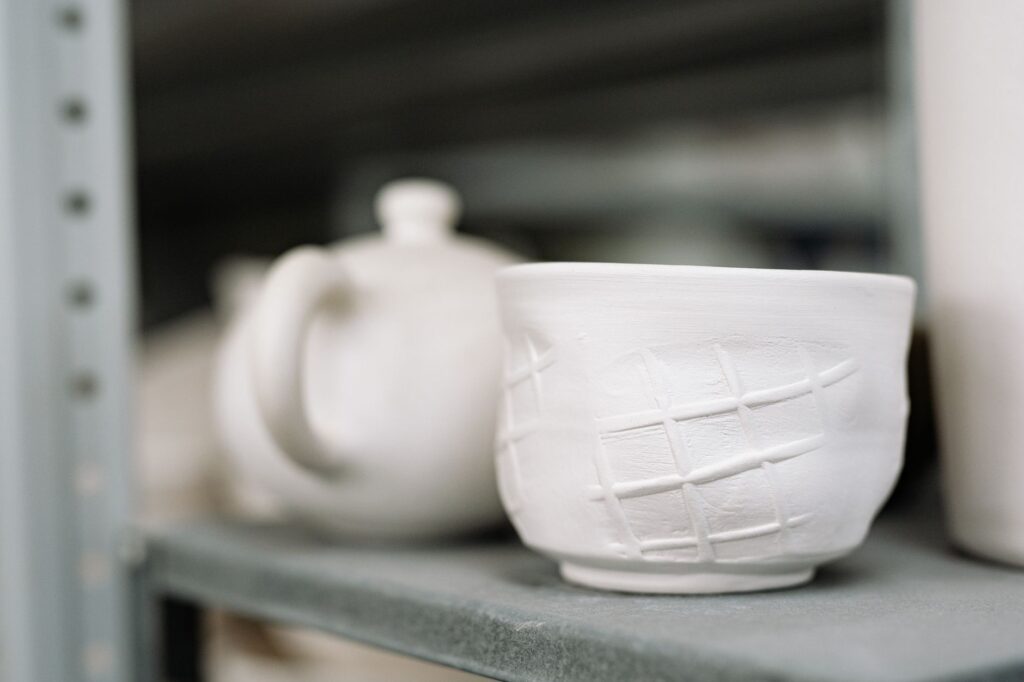
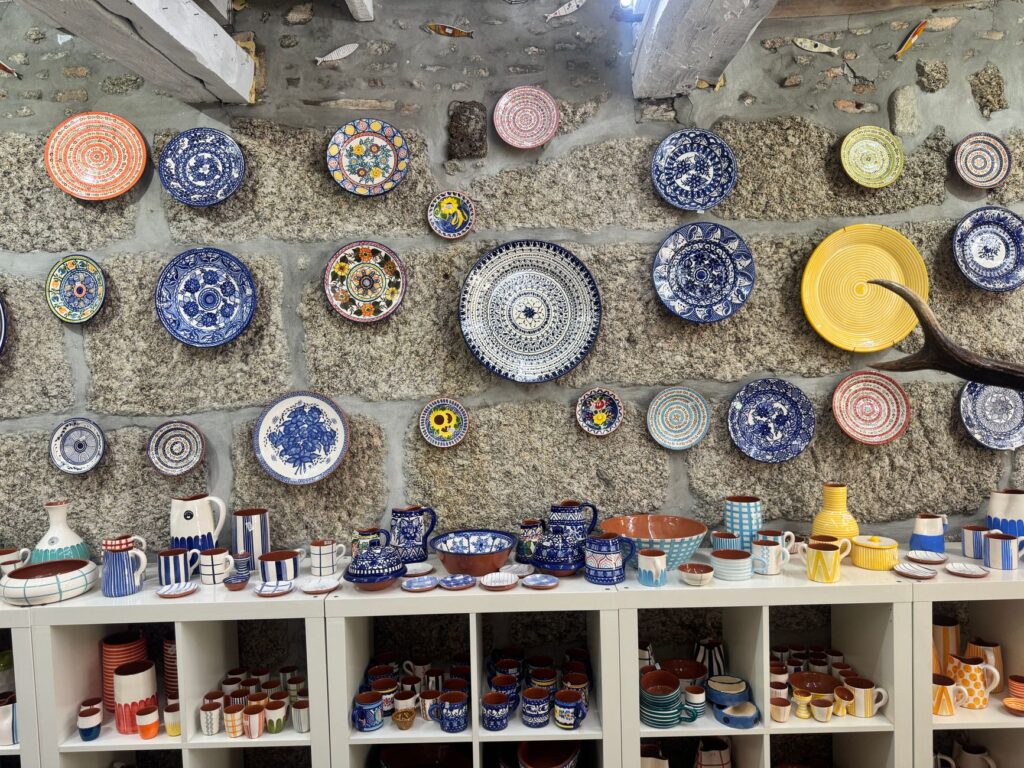
Once un-molded, the raw piece undergoes a first biscuit firing that grants it the necessary consistency for the most delicate phase: hand decoration. This is where the iconic cobalt blue intervenes, a mineral pigment that, upon contacting the raw glaze, undergoes a radical chromatic transformation during the high-temperature grand firing. The brushes of master decorators, loaded with cobalt oxide, trace precise geometries, zoomorphic motifs inspired by Galician Romanesque art, and Celtic references across the porous surface, constituting the visual DNA of the brand.
Architecture of Form and Modern Geometry
Far from remaining trapped in static traditionalism, Sargadelos production underwent a profound renewal in the mid-twentieth century thanks to the vision of creators like Isaac Díaz Pardo and Luis Seoane. Their contribution consisted of rescuing traditional forms from northern Spain and subjecting them to a process of geometric stylization that directly linked with rationalism and modern industrial design. Gravies, tureens, flasks, and zoomorphic figures abandoned decorative baroque styling to embrace streamlined lines, pure volumes, and impeccable formal functionality.
This aesthetic transition turned Galician ceramics into an object of international collectionism and a benchmark of contemporary Spanish design. Current pieces maintain that rigorous duality: on one hand, they scrupulously respect the canons established by those historical renewers; on the other, they incorporate ephemeral collections signed by contemporary artists exploring new sculptural limits. The result is a living catalog where everyday tableware and author pieces coexist, united by a common denominator: formal sobriety and the purity of whites and blues.
The Contemporary Workshop: Between Wheel and Mold
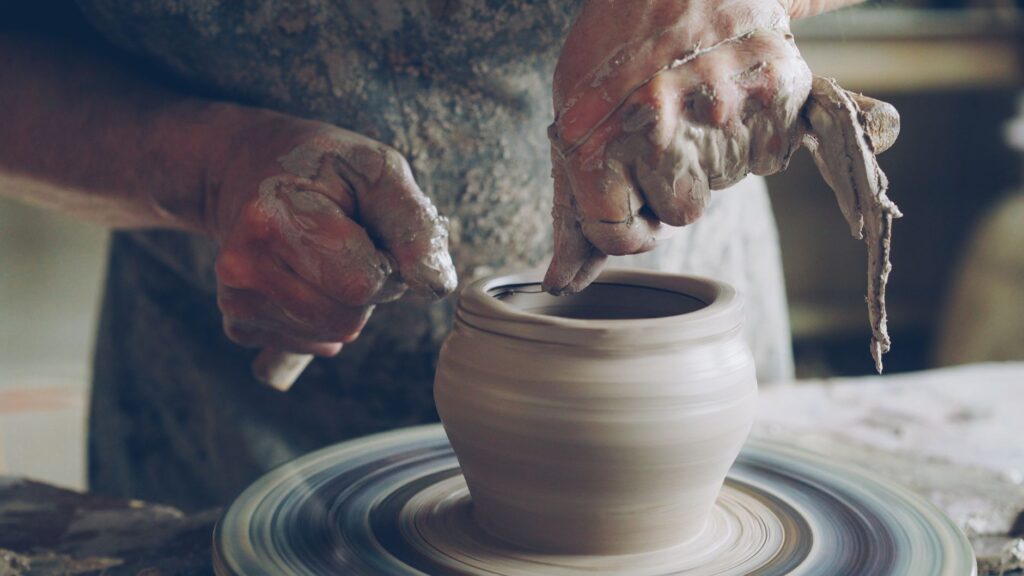
Stepping into the guts of the current workshop is witnessing a perfectly synchronized choreography where contemporary technology coexists frictionlessly with inherited know-how. While large runs benefit from the precision of multiple molds, singular pieces and limited series continue to pass through the hands of expert throwers. These artisans, with decades of craft behind them, master the exact tension between fingertips and the speed of the rotating plate, sculpting pieces whose balance depends exclusively on tactile sensitivity accumulated over generations.
The true value of our ceramics lies not only in the beauty of its glaze, but in the capacity to keep alive hands that think through matter.
The subsequent glazing phase requires a quick and precise immersion in vats composed of a secret formula of feldspars and ground glass. A miscalculation in the tenth of a second the piece spends submerged causes unwanted accumulations that will ruin the final transparency. After this bath, pieces are meticulously arranged on carts feeding tunnel kilns, where they exceed temperatures above twelve hundred degrees Celsius, a baptism of fire vitrifying the material and fixing the intensity of Cervo’s characteristic blue forever.
Landscape as Source and Destination
The bond between Sargadelos and its geographic environment transcends mere physical location; the coastal landscape of A Mariña Lucense impregnates each creative phase of the workshop. The grayish tones of granitic stone, the white foam of waves crashing against the cliffs of Ribadeo, and the deep blue of the Cantabrian Sea act as the natural chromatic palette of the designers. It is no coincidence that ornamental motifs constantly evoke forms of the surrounding nature, from fern fronds to the winding silhouettes of the estuary.
Traveling to this corner of Galicia implies understanding that industrial design is not born in aseptic urban offices, but in direct friction with the geological and cultural elements of the territory.
This communion with the environment also translates into a firm commitment to local sustainability. Raw material extraction is carried out under strict environmental controls to preserve the fragile balance of the Lucense mountains, while the management of clay and glaze waste is reintroduced into production cycles. Thus, the factory not only extracts value from the land but returns to the region a cultural prestige that attracts respectful travelers interested in quality industrial tourism.
Practical guide
How to get there: The historic complex and Sargadelos workshops are located in the municipality of Cervo, on the northern coast of Lugo. The nearest airport is Asturias (OVD), about 120 kilometers away, or A Coruña (LCG), at 140 kilometers. Road access is comfortably made via the Cantabrian highway (A-8), taking the corresponding exit toward Cervo and following signs to the historic-artistic complex of Sargadelos.
When to visit: Any time of year offers an experience enriched by low tourist crowds, although spring and autumn present ideal lighting conditions for photographing the industrial landscape and walking along the river path. It is essential to check opening hours for the interpretation center and guided tours of active workshops beforehand.
Recommended accommodations: The A Mariña Lucense region stands out for its network of restored manor houses, rural boutique hotels, and small traditional seaside houses converted into design accommodations. Singular establishments stand out in coastal towns like San Cibrao or Viveiro, where traditional Galician architecture merges with contemporary comfort and exceptional seafood gastronomy.
Shopping and visiting tips: Original Sargadelos pieces can be purchased directly at the complex’s official store or authorized establishments in major Galician capitals. Verification of authenticity stamps engraved on the base of each object is recommended. For photography enthusiasts, the river walk connecting the remains of ancient ironworks with the factory complex offers memorable framings where industrial architecture dialogues with lush Atlantic vegetation.
Visual Epilogue: The Blue Reflection in Workshop Twilight
When the working day draws to a close and kilns extinguish their deafening roar, the Sargadelos workshop plunges into an almost monastic stillness. On work tables, the last biscuit-fired pieces await the firm pulse of the following day beneath twilight filtering through large industrial windows. In that suspended silence, among shelves packed with plaster molds and containers of cobalt oxide, the true dimension of this legacy shines clearly: a tangible reminder that enduring beauty arises not from the speed of mass consumption, but from creative patience, absolute respect for noble materials, and a people’s stubborn will to turn earth into eternal art.