Introduction to the Fluvial Corridor and Its Industrial Pulse
The Middle Rhine Valley is not merely a landscape of romantic postcards and castles perched on slate crags; it is, above all, one of the densest and most contested logistical corridors in Central Europe. Ever since Prussian engineers laid out the first tracks in the mid-nineteenth century, both the left and right banks of the river have functioned as a continuous artery where steam first and electric traction later have compressed geographical space. This report examines how the railway infrastructure linking Cologne with Mainz has negotiated the abrupt fluvial topography, turning a natural obstacle into an axis of territorial cohesion.
Over a span of more than one hundred and fifty kilometers, the Rhine railway tracks enforce a meticulous choreography between heavy freight trains and high-speed passenger convoys. The complex orography, marked by narrow gorges where water presses against the foundations of retaining walls, demands constant maintenance and precision engineering that few stretches on the continent can match. Understanding this route involves delving into the archives of nineteenth-century engineering as well as the digital control screens that regulate traffic density per square meter across this international corridor today.
Conquering the Gorges: Architecture and Geology
The construction of the Rhenish railway posed a colossal challenge for nineteenth-century builders, who had to reclaim land from the water using cyclopean embankments and bore dozens of tunnels through the schistous massifs of the slate mountains. The dense, fractured rock required novel shoring techniques and the use of dynamite in extraordinarily confined spaces, flanked perpetually by the relentless flow of the river and historic roadways. Each tunnel excavated along this section represents a small victory over the verticality of the terrain.
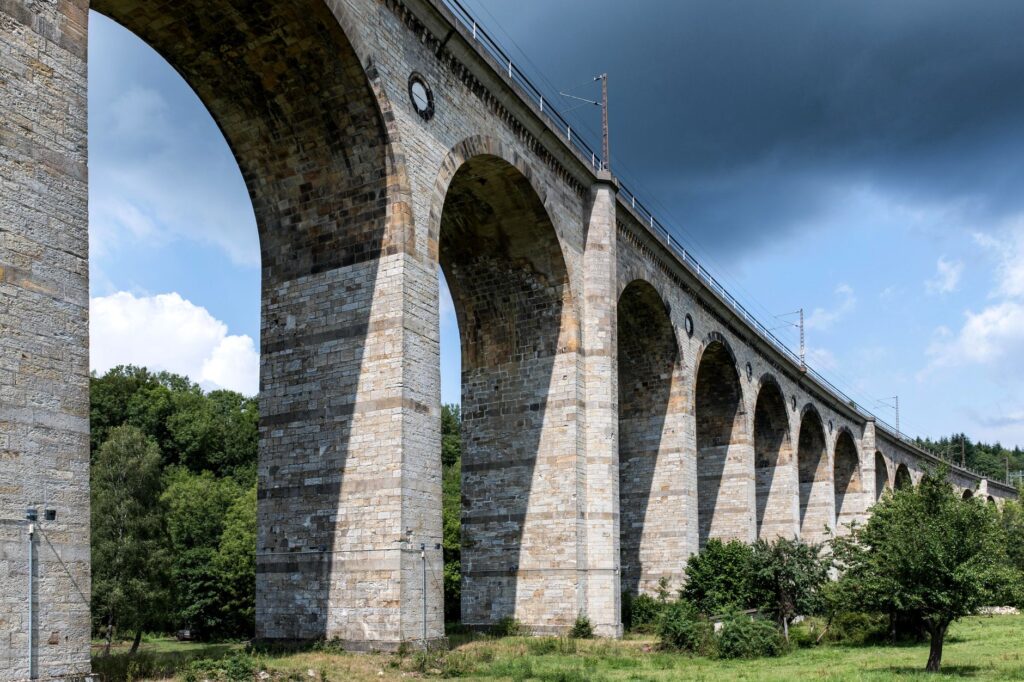
The railway bridges crossing the tributaries and small side valleys of the Rhine merit special mention. Initially designed with ashlar stone arches and later reinforced or replaced by metal lattice structures, these viaducts now support loads far exceeding anything their creators could have imagined. Constant river humidity and corrosive gases from early locomotives have been combated through systematic restoration plans, employing modern alloys that preserve original heritage aesthetics without compromising structural safety.
The Rhine railway is a moving historical document, where every meter of ballast and every tunnel bored into the slate narrates the industrial ambition of an era that transformed European geography.
Central European Logistics: The Rhine Bottleneck
Within the European transport machinery, the Rhine corridor acts as a critical freight axis connecting North Sea ports—principally Rotterdam and Antwerp—with the industrial hubs of southern Germany and northern Italy. However, this concentration of traffic generates notable operational tensions. Constrained between mountain slopes and the river channel, the space available for track expansion is virtually nonexistent, turning this section into a celebrated bottleneck for trans-European networks.
To mitigate this congestion, rail operators and German authorities have invested in advanced signaling systems, such as the European Train Control System (ETCS), allowing safety distances between convoys to be reduced and passage capacity to be increased without expropriating or logging protected hillsides. Nevertheless, the coexistence of nighttime freight trains with daytime passenger traffic still requires meticulous synchronization, where any minor incident in Mainz can trigger a ripple effect all the way to Cologne.
Heritage in Motion: Stations and Riparian Towns
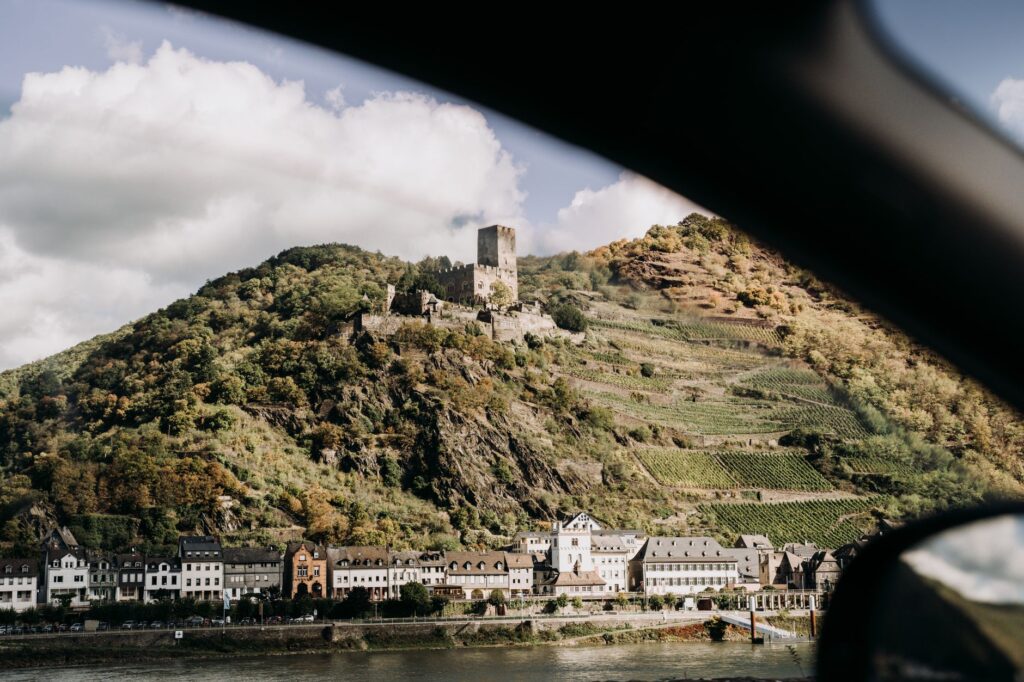
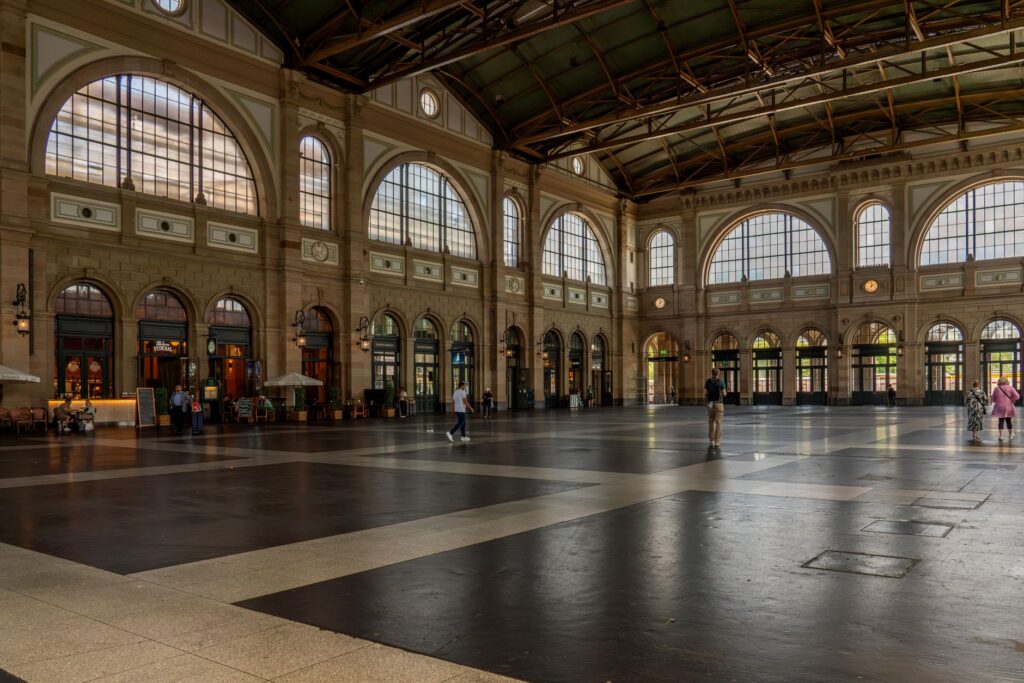
Traveling along this railway line offers a window into Germany’s social and economic evolution through its railway architecture. The main stations, built in styles ranging from Neo-Romanesque historicism to interwar industrial functionality, often retain their original wrought-iron and glass canopies. These buildings are far from mere museum relics; they continue to operate as centers of gravity for local communities in historic cities like Koblenz and Bonn, structuring the daily lives of thousands of commuters.
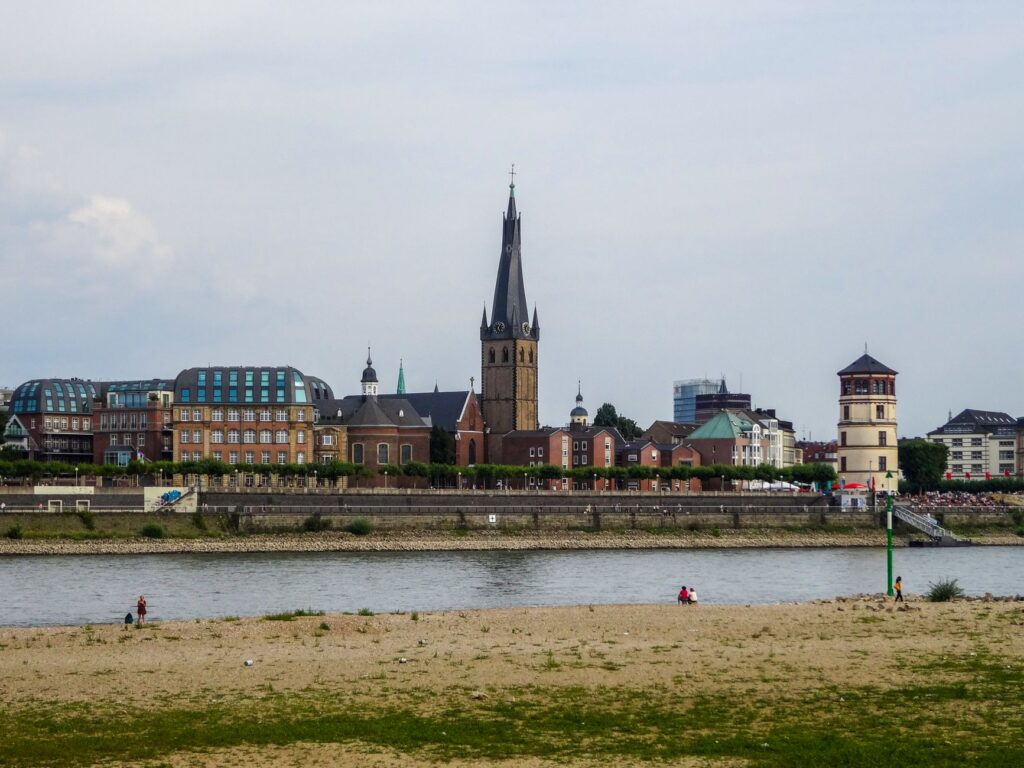
The rail route likewise functions as the finest possible viewpoint over the cultural landscape of the Upper Middle Rhine Valley, a UNESCO World Heritage site. From the window, passengers gaze at vineyards clinging to impossible terraced southern slopes, medieval fortifications such as Marksburg Castle, and the legendary Lorelei rock. The symbiosis between train and landscape is so profound that the infrastructure itself has integrated into the region’s visual identity, remaining inseparable from the territory’s tourism and cultural experience.
Sustainability and Climate Change Challenges
In recent decades, the Rhine railway corridor has become a testing ground for sustainable mobility, driven by the European goal of decarbonizing freight transport. Complete electrification of the line, achieved many years ago, is increasingly powered by renewable energy sources, drastically reducing the carbon footprint per ton-transported compared to road haulage or traditional river navigation during severe low-water periods.
Ironically, climate change itself poses new physical threats to the infrastructure. Extreme precipitation and sudden storms increase the risk of slope failures onto the tracks, prompting the installation of geotechnical sensor networks linked to control centers to automatically halt trains upon any millimeter-scale movement in the slate embankments. Similarly, prolonged heat waves require constant monitoring of steel rail expansion, proving that nineteenth-century engineering must engage in an ongoing dialogue with twenty-first-century climate technology.
Maintaining fluidity and safety in this river gorge demands relentless technological vigilance, where the unpredictable geology of the terrain meets advanced control algorithms.
The Human Pulse: Drivers, Technicians, and Local Communities
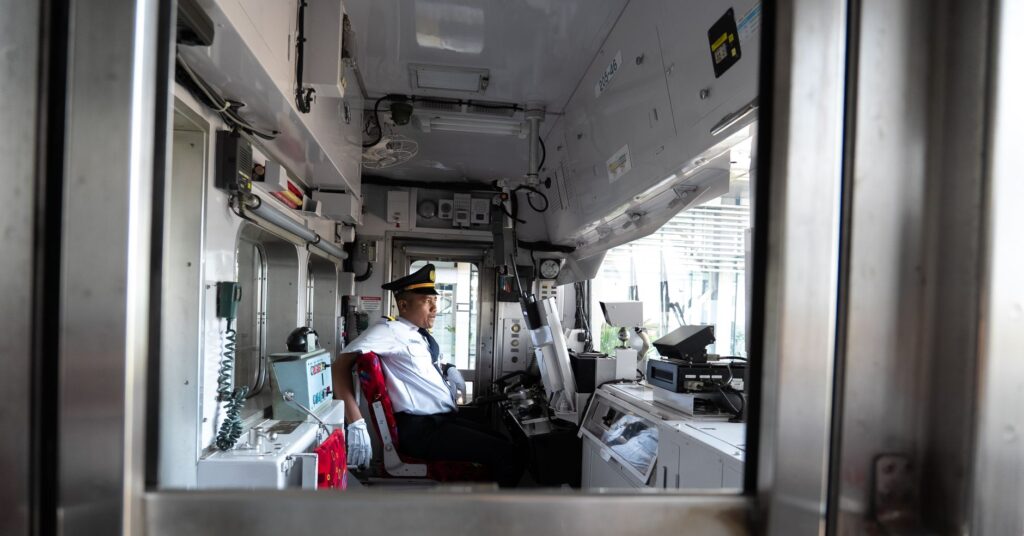
Behind the technical precision of timetables and the robustness of bridges lies the human factor that makes this corridor beat every single day. Train drivers operating this route must pass rigorous certifications to memorize hundreds of signals, blind curves, and specific speed limits unique to such a singular alignment. Their daily work, often performed on night shifts under dense river mists, constitutes the invisible link ensuring territorial continuity among Rhenish metropolises.
Equally essential are infrastructure maintenance teams—specialized crews taking advantage of nighttime gaps between services to inspect sleeper conditions, clear drainage systems in rock cuttings, and repair weather-exposed catenaries. For local communities living alongside the tracks, the constant passage of trains forms part of their soundscape and daily economy, generating an interdependency of livelihood and culture that defines the character of these riverbanks.
Practical guide
How to get there: The main entry points to the corridor are the international airports of Frankfurt (FRA) and Cologne/Bonn (CGN). Both terminals offer direct high-speed ICE train connections reaching the heart of the Rhine valley in under an hour.
When to visit: Autumn months (September to November) offer exceptional golden light, lower tourist crowds, and the opportunity to witness the grape harvest season across the region’s steep hillsides. Spring is also highly appealing due to mild weather.
How to get around: To tour the railway line flexibly, acquiring the regional Deutschlandticket or state-specific transit passes for North Rhine-Westphalia and Rhineland-Palatinate is strongly recommended, allowing unlimited hop-on and hop-off access at any historic station along the route.
Technical recommendations: Travelers with bulky luggage should book seats on regional express (RE) trains operating along the river, as they feature spacious luggage areas and panoramic windows offering direct views of the river channel and castles.
Fluvial Epilogue Under the Setting Sun
When the sun dips behind the wooded peaks of the Eifel massif and the last golden rays reflect off the dark waters of the Rhine, the valley settles into an apparent quietude that contrasts with the tireless activity of the tracks. In that silent twilight, the rhythmic passing of a freight train illuminated by rows of white and red lights serves as a reminder that this infrastructure never sleeps. It is the steady heartbeat of a corridor that has successfully linked Europe’s industrial past with its logistical future, proving that steel and stone, when intelligently integrated into geography, transcend their purely utilitarian function to become living heritage of humanity.