
Imperial Origins and Iron Geography in the Steppe
Northeast Asia has historically been defined by its vast and unforgiving expanses of land, where monumental distances impose a constant challenge to any attempt at human integration. In this territory, railway engineering has never been a mere transport resource, but rather the backbone of sovereignty, commerce, and survival. Manchuria’s railway network, heir to imperial disputes and nineteenth-century strategic layouts, represents one of the most fascinating testimonies of how steel and steam managed to tame a hostile geography.
The Manchurian plains stretch beneath an immense sky, marked by winters so severe that the ground freezes meters deep. In this context, railway maintenance demands titanic technical effort. The engineers who originally designed these lines had to calculate with millimeter precision the expansion and contraction of metal under thermal variations exceeding fifty degrees Celsius between January and July. The durability of the infrastructure depends entirely on material quality and constant manual inspection that defies harsh weather conditions.
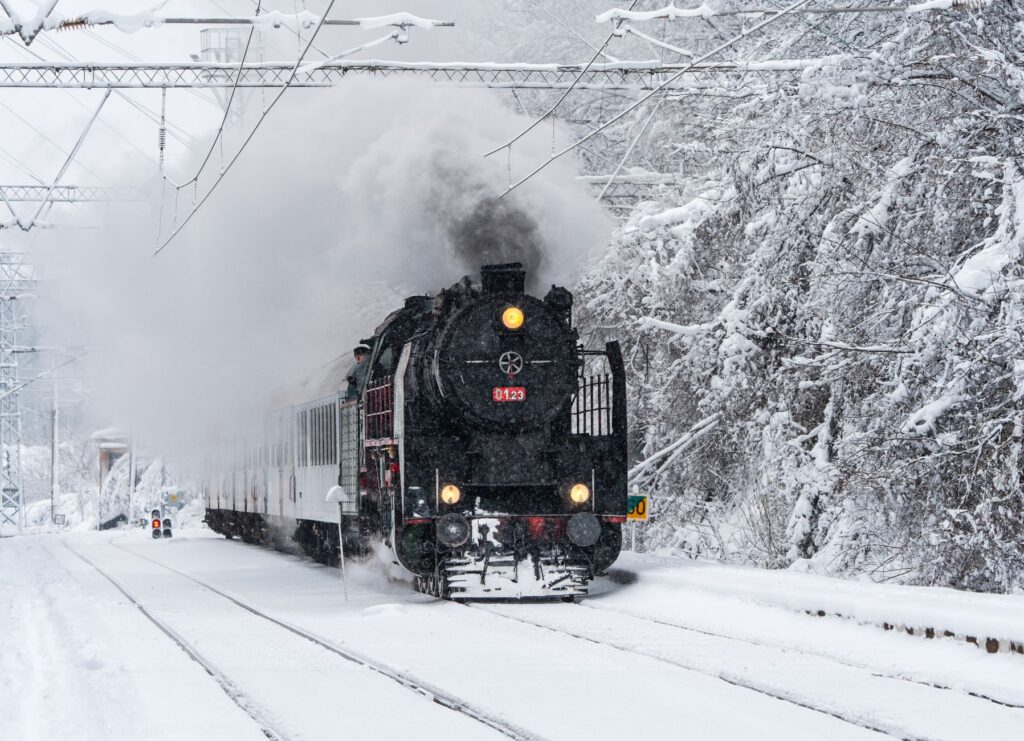
Over recent decades, this railway corridor has evolved from a purely military and resource-extraction route into an indispensable civil link. The old steam locomotives have yielded to powerful diesel and electric formations capable of bypassing blizzards and snow accumulations that would paralyze any other land transport mode. Nevertheless, the soul of the route remains intact: a reverent respect for the steppe and the operational discipline required to operate at the ends of the earth.
The Broad Gauge and the Challenge of International Track Conversion
One of the greatest technical and logistical challenges along the border between China and Russia lies in the divergence of track gauges. While the Chinese system operates predominantly on standard gauge, connections penetrating northward and eastward adopt the Russian broad gauge standard. This millimeter difference in the rails has turned border stations into complex intermodal hubs where mechanical engineering and commercial diplomacy converge.
At transfer points, the movement of cargo and passengers is far from a simple administrative procedure. Freight cars must be lifted using gigantic hydraulic jacks to replace their bogies—the wheel and axle assemblies—a process requiring hours of perfect synchronization. This operational bottleneck vividly illustrates how political boundaries continue to manifest physically on the ground, forcing logistics operators to constantly innovate to minimize waiting times.
The railway across the steppe is not merely a tool to shorten distances; it is a living organism metabolizing geopolitical differences through tons of steel and oak sleepers treated against ice.
For travelers crossing these latitudes, the transition between railway networks offers a contemplative pause rarely found in modern aviation. As the train halts in the gauge-changing pavilions, observers can witness the meticulous work of operators working in sub-zero temperatures. This pause emphasizes the sheer magnitude of human effort required to keep regions connected, separated not only by physical distance but by deeply rooted technical traditions.
Engineering Against Permafrost and Summer Floods
Manchuria’s extreme continental climate imposes an annual cycle of destruction and reconstruction on transport infrastructure. During the brief summer, sudden thaws transform the plains into marshes and test the embankments supporting the tracks. Water erosion and the softening of the permafrost constantly threaten to misalign the railway layout, demanding permanent track patrols and advanced drainage technologies.
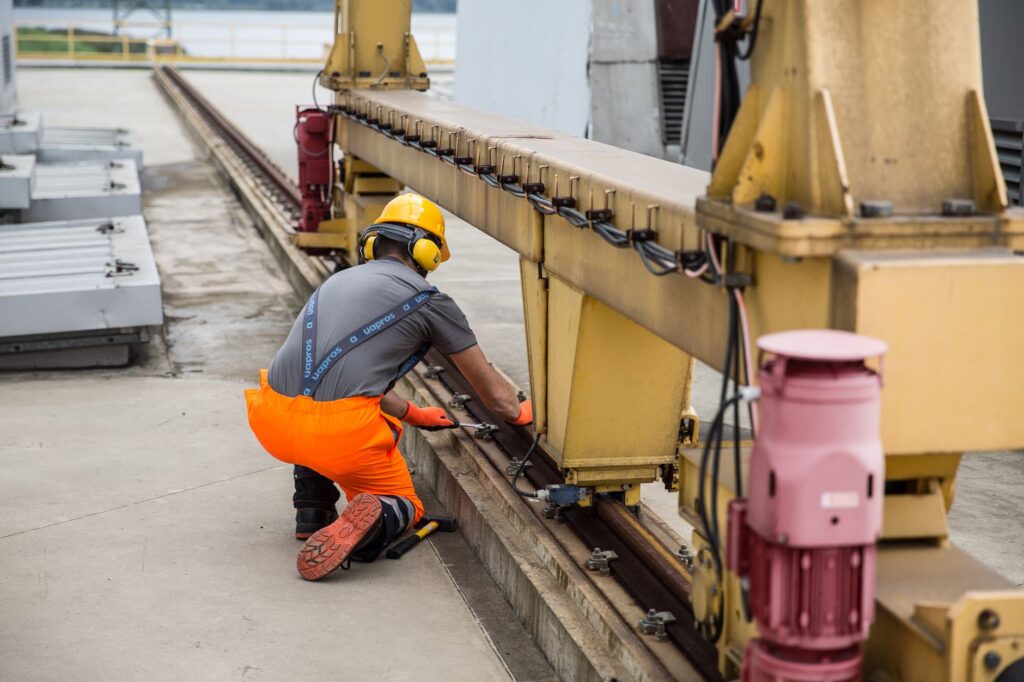
To counteract soil instability, maintenance crews employ traditional techniques combined with modern geotextiles. Layers of ballast—the crushed stone supporting the sleepers—must be regularly replaced and laser-leveled. The structural resilience of these corridors relies on sustained investment and empirical knowledge passed down through generations among local railway workers.
This delicate ecological and technical balance proves that heavy transport in subarctic zones cannot rely solely on automation. The intuition of engine drivers sensing subtle vibrations in the track or the ability of inspection teams to detect invisible fissures are the true guarantors of line safety. Every kilometer of track is the result of a continuous pact between human engineering and the fury of natural elements.
The Human Pulse: Drivers, Telegraphists, and Isolated Stations
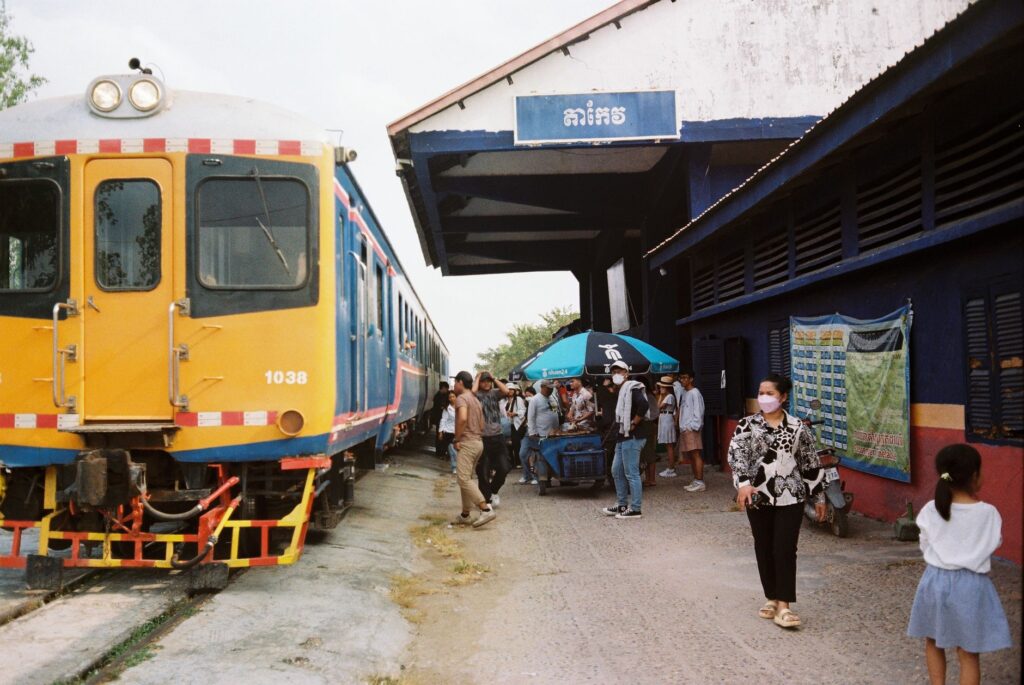
Behind the imposing machinery and strict schedules lies a human community whose life revolves around the rhythm of the railway. In small settlements dotting the route, the arrival of the daily or weekly train represents the sole link to the rest of the country. Station masters and signal operators play a fundamental role, managing track crossings on single-track sections where the margin for error is nonexistent.
Working conditions in these latitudes demand extraordinary mental fortitude. During the dark winter months, when daylight hours are reduced to a minimum and thermometers plummet, radio communications and backup systems become essential lifelines. The local railway culture values punctuality, union solidarity, and technical rigor above all else in the execution of daily tasks.
Conversing with veterans of the line reveals profound professional pride. Many have dedicated their entire working lives to keeping the service operational despite historic snowstorms or economic crises. Their testimony humanizes a system that, viewed from the outside, might seem cold and purely industrial, reminding us that long-distance transport is, at its core, a collective endeavor of mutual care.
Contemporary Transformation: Transcontinental Freight and Passengers
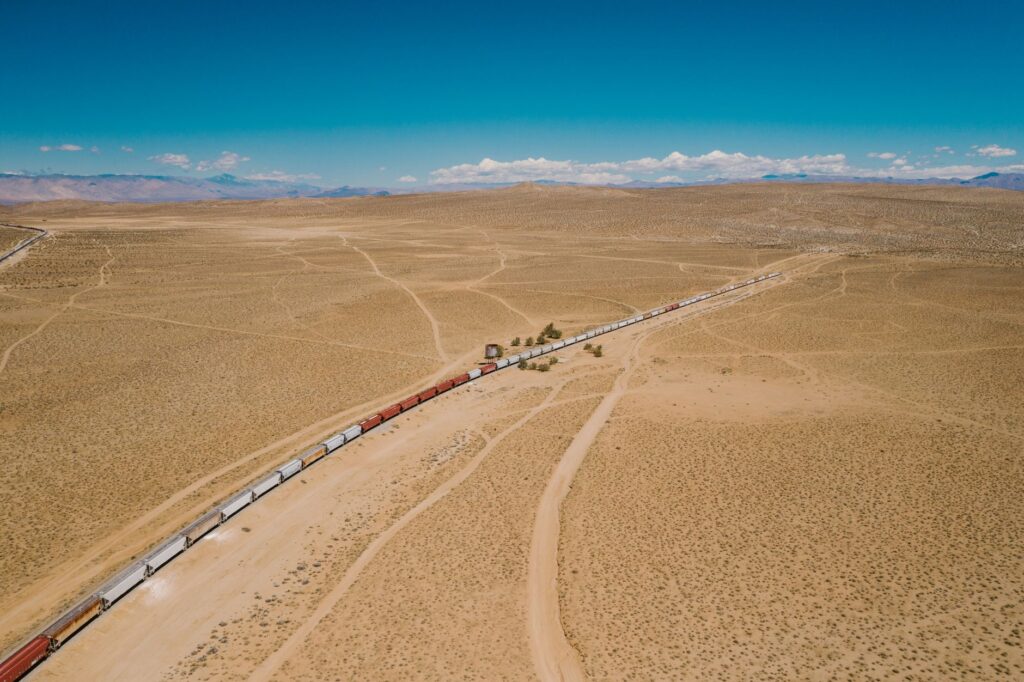
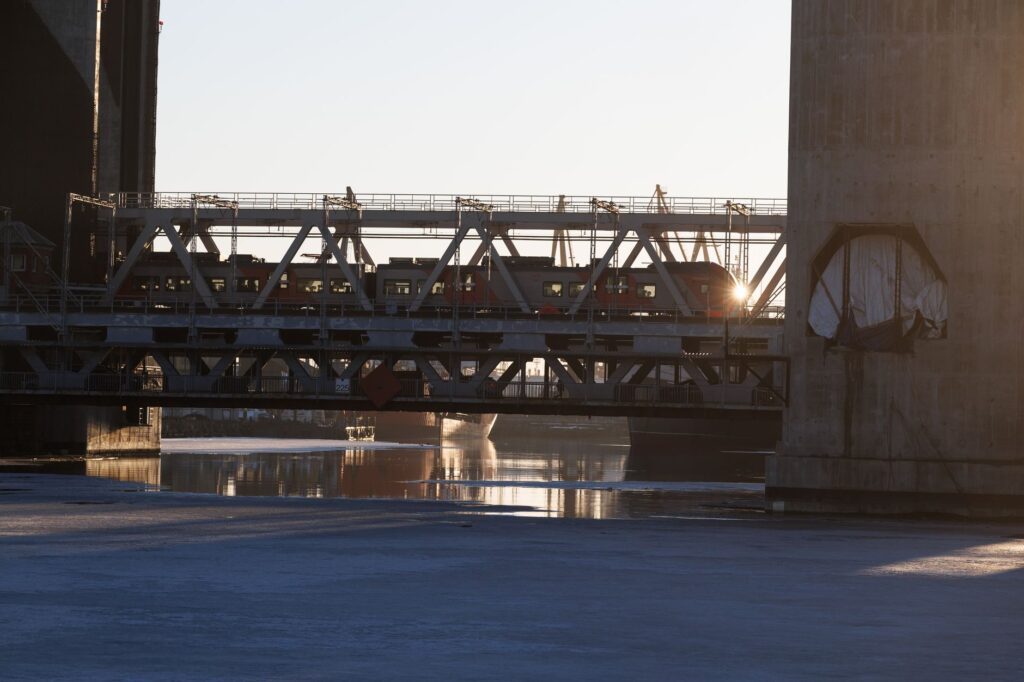
In the twenty-first century, the Manchurian railway corridor has acquired renewed prominence due to the surge in freight transport between East Asia and Europe. High-capacity container trains regularly cross the steppe carrying manufactured goods and raw materials, relieving congestion on traditional maritime routes and offering a competitive land-based alternative in terms of time.
However, integrating ultra-long freight trains with regional passenger traffic poses considerable operational challenges. Railway authorities must constantly prioritize timetables to prevent commercial convoys from delaying local services relied upon by rural inhabitants. Logistical efficiency is measured here not only by transport volume, but by the ability to maintain a balanced service addressing both global demands and everyday local needs.
Simultaneously, improvements in digital signaling and the electrification of key sections have drastically reduced the sector’s carbon emissions. Nevertheless, modernization is pursued cautiously to avoid compromising the structural robustness required by the environment. The result is a hybrid system where cutting-edge technology coexists harmoniously with classical railway tradition.
Practical guide
Planning a trip or a study tour of the Manchurian railway system requires meticulous preparation due to geographical and climatic constraints. The essential aspects to consider are detailed below.
- Best time to visit: Autumn months (September and October) offer moderate temperatures and golden steppe landscapes. Winter (December to February) is rigorous but ideal for experiencing the true operational harshness of the line.
- Documentation and visas: A passport valid for at least six months and corresponding visas for transit countries are required. It is essential to verify current border regulations for international land transport.
- Recommended luggage: Thermal layering apparel, slip-resistant waterproof footwear, and universal power adapters compatible with local voltage standards.
- Ticket booking: Long-distance train tickets must be booked weeks in advance through authorized official platforms or specialized trans-Asian railway travel agencies.
- Health and safety: Extreme temperature variations and ambient dryness require constant hydration. Packing a basic medical kit with remedies for mild respiratory conditions is strongly advised.
Epilogue at the Last Frontier Station
When the train finally halts at the ultimate station before the Siberian border, the silence of the steppe once again envelops travelers and machine alike. The steam from the heating system rises in white wisps against the twilight, blending with the infinite horizon. At this extreme point, where the tracks seem to vanish into immensity, it becomes evident that the railway is not merely an engineering feat, but an extension of the human will to keep the ends of the earth united.
The solidity of the oak sleepers, the steady gleaming of the rails under the frost, and the silent dedication of those operating the system stand as tangible proof that connectivity is a fundamental right against geographical adversity. Upon embarking on the return journey or continuing toward new horizons, travelers are left with the certainty of having witnessed one of the great milestones of global land mobility, a living monument to effort and perseverance on the steppe.