Just a few meters away from where the gentle waters of the Aveiro estuary kiss the salt pans, the air smells of damp clay and calcined oxides. In this western corner of Portugal, where the Atlantic modulates the light with an almost liquid clarity, a fragile heritage survives that defies the passage of time. It is not merely a matter of meandering canals or colourful moliço boats, but of an underground, luminous tradition: the manual manufacture and painting of traditional tiles, known as azulejos. While mass production floods the global market with mechanical pieces devoid of soul, a handful of historic workshops and contemporary studios keep the kilns burning where chemistry and memory merge.
This report explores how the tile craftsmanship of Aveiro has transformed into a bastion of cultural resistance. Through a journey through centuries-old kilns, experimental design galleries, and historical archives, we examine the delicate balance between heritage conservation and aesthetic renewal. Far from the commercial souvenir, the Portuguese tile reveals itself here as a three-dimensional historical document, a map of pigments and geometries that narrates the social, commercial, and artistic evolution of the Iberian Peninsula.
The Geography of Clay: The Territory That Informs the Matter
Understanding Aveiro’s tiles requires, first of all, stepping onto the terrain that nourishes them. The shores of the estuary offer not only a landscape of marshes and floodgates, but a unique sedimentary substrate composed of silts and mineral-rich clays. Since the 15th century, local potters have extracted the fundamental raw material from this riverbed to body the tiles. The quality of the local clay determines the porosity and thermal resistance of the final piece, a critical factor before subjecting it to the scorching fire of the kiln.

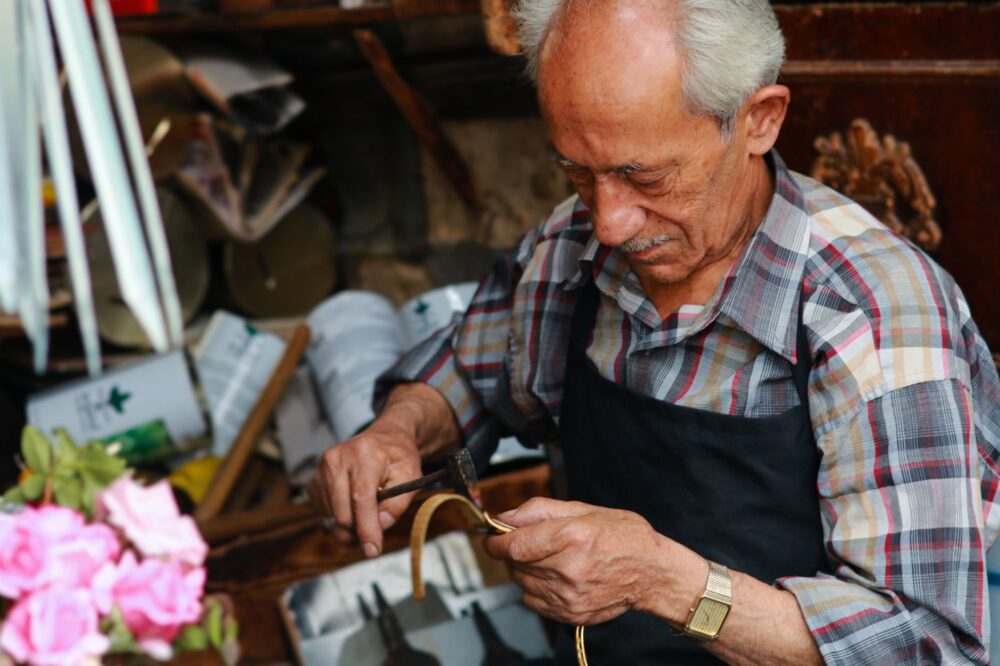
The region’s traditional workshops are structured around a central courtyard where the clay rests and decants for weeks. This natural maturation process eliminates organic impurities and grants the paste optimal plasticity. Master artisans insist that clay has memory: if processed in a hurry, the piece rebels in the kiln, cracking or warping under thermal shock. Thus, the territory is not merely a resource provider, but the primary conditioning factor of a production rhythm that stands in sharp contrast to contemporary urgency.
From Mold to Bisque: The Invisible Architecture of the Support
The creation process of a high-end tile begins long before the brush touches the surface. On the workshop worktables, the matured clay is pressed into wooden molds or manually cut with taut metal wires, guaranteeing a uniform thickness that ranges millimetrically between nine and eleven millimetres. Each raw tile, known in technical jargon as the green brick, must dry completely homogeneously in the shade for at least fifteen days.
Once natural drying is complete, the pieces are introduced into the kilns for the first firing, resulting in the ceramic biscuit. This thermal cycle, reaching temperatures close to one thousand degrees Celsius, transforms the fragile clay into a porous ceramic structure ready to absorb the stanniferous enamel. Porosity in this phase is the artisan’s best-kept secret; if the biscuit absorbs too much moisture, the design will blur; if it absorbs too little, the pigment will slide off without adhering to the support.

The Alchemy of Enamel: Tin White and Noble Metals
The distinctive whitish sheen characteristic of classic Iberian tiles comes from stanniferous enamel, a liquid suspension composed of tin oxide, lead, silica, and fine sand. In Aveiro’s workshops, preparing this bath is an almost secret ritual passed down from generation to generation through dog-eared notebooks and family memoirs. Applying the enamel over the dry biscuit requires absolute physical dexterity: the artisan submerges the piece in the tank for an exact second, relying on capillary suction to achieve a uniform layer.
Over this powdery, matte surface, which has not yet received its second firing, the designs are traced. The pigment, composed of metallic oxides mixed with water and organic binders, behaves unpredictably: cobalt offers deep marine blues; copper, emerald greens; manganese, violet and dark tones; and antimony, warm yellows. The painter cannot correct a false stroke, as the raw enamel instantly absorbs the ink like blotting paper, turning each brushstroke into a definitive and irreversible act.
The brush over raw enamel admits no doubts or regrets; every line is a pact sealed with the fire yet to come.
The Transforming Fire: When Chemistry Defies Physics
Once decorated, the pieces are carefully arranged inside the kiln for the final firing, a process regulated in modern artisanal workshops by electronic probes, though many masters still rely on the color of the flames and the dull sound emitted by expanding ceramics. During this second phase, exceeding eleven hundred degrees, fascinating chemical transformations occur: the enamel melts into a translucent vitreous layer, while the metallic oxides of the drawing chemically fix within it.

It is the moment of truth in the workshop. Opening the kiln door after twenty-four hours of progressive cooling reveals the true identity of the colors. Cobalt blue, which before entering the fire looked like a dull, powdery gray, bursts into a luminous and intense range. The magic of ceramics lies precisely in this unpredictable metamorphosis, where the artisan proposes the ingredients and the physics of heat disposes the final result, always accepting a margin of error that grants each batch its unrepeatable character.
New Languages: Avant-Garde Dialogues with Tradition
Faced with the risk of museological fossilization, Aveiro’s ceramic scene has experienced a fruitful aesthetic renewal in recent years. Contemporary designers, architects, and young ceramists trained in the Fine Arts schools of Porto and Lisbon have settled in the region to hybridize secular techniques with abstract art, parametric design, and sculptural installation. These creators do not reject historical heritage; rather, they employ it as a living and malleable vocabulary.

In these new-wave studios, experiments are conducted with three-dimensional reliefs, asymmetric modular compositions, and lead-free ecological glazes that comply with current strict environmental regulations without losing traditional chromatic depth. The tile thus ceases to be a mere flat decorative covering to become an active architectural element, capable of playing with sunlight, modulating the interior temperature of buildings, and proposing complex visual narratives in public and private spaces.
Practical guide
Planning a rigorous and respectful visit to the workshops and tile interpretation centers in Aveiro requires taking into account local rhythms and access regulations for active workshops.
- How to get there: The main access is via the national rail network from Porto (a one-hour regional train ride) or Lisbon. To explore the peripheral workshops located along the estuary, renting a vehicle or using local bicycles (the traditional BUGA) is recommended.
- When to go: Spring and early autumn offer the cleanest light for photography and mild temperatures ideal for walking through the marshes. Avoid the peak summer months if you seek tranquility in the workshops.
- Workshop visits: Most artisanal workshops are active workspaces, not museums. It is essential to book in advance via email or phone and respect industrial safety rules (closed shoes, prohibition of touching hot pieces or operating kilns).
- Ethical shopping: Always purchase pieces that include a certificate of origin and authorship. Authentic artisanal tiles show slight irregularities in edges and glaze; be wary of excessively low prices masking mass-produced screen-printed items.
- Accommodation and gastronomy: Stay in restored historic townhouses linked to moliceiro architecture and support local dining based on fresh estuary produce, such as eel stew (caldeirada de enguias).
The Archive and Memory: Safeguarding Mural Heritage
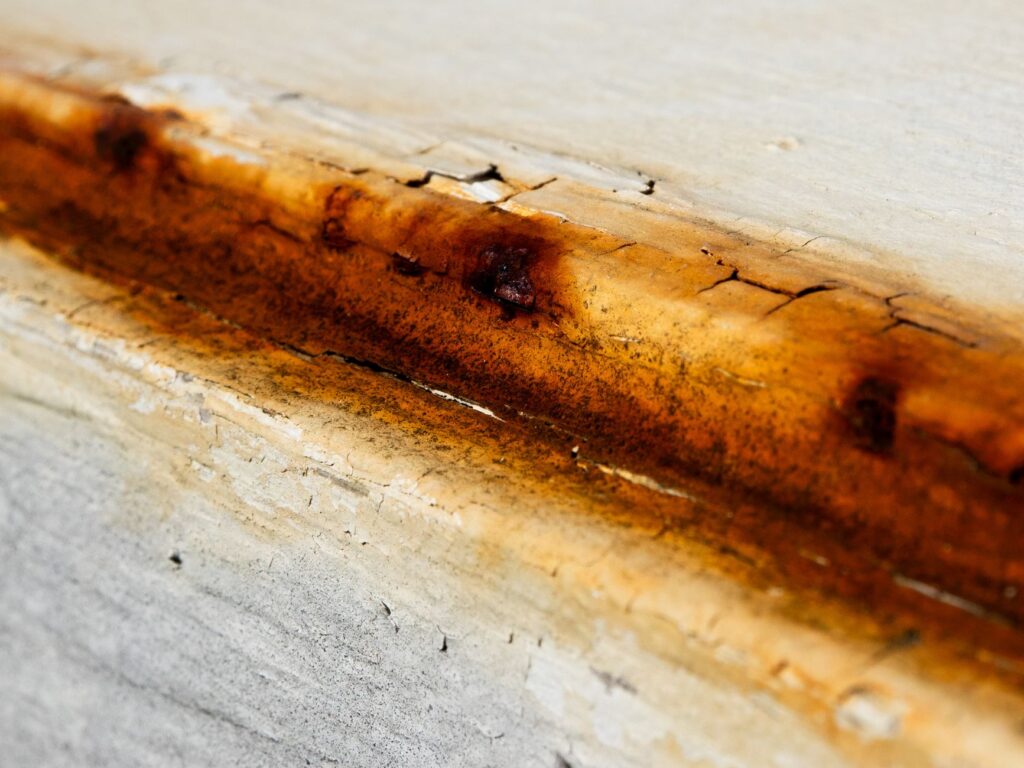
Beyond the production of new pieces, Aveiro’s cultural ecosystem stands out for its tireless cataloging and restoration work of historical panels on urban facades and convents. The Aveiro Museum, located in the former Convent of Jesus, houses one of the country’s most important collections of baroque and rococo tilework, serving as a reference center for preventive conservation specialists. Here, conservators use microscopic techniques to consolidate original mortars and halt the saline woodborer that threatens historical facades exposed to sea breezes.
This archival task is not a nostalgic exercise, but a tool for civic education. Through educational workshops aimed at schools and visitors, people learn to read tiled facades as open books recording fishing habits, popular legends, and architectural shifts of the 18th and 19th centuries. Protecting the tile is, ultimately, defending the visual skin of the city against global urbanistic homogenization, reminding us that every facade is an archive of intersecting identities.
The Final Reflection
At dusk, as the last horizontal sunbeams pierce the estuary canals and project onto the white and blue walls of the old salt pans, Aveiro seems to pause in a timeless frame. Inside the workshop, the master wipes his hands stained with cobalt oxide using a linen cloth, gazes at the final batch of now-cooled tiles, and turns off the master switch of the workshop. That silent gloom holds the dignity of a craft that refuses to extinguish itself in the digital memory of the 21st century.
The traveler who leaves this port territory understands that the true value of these pieces lies not in their geometric perfection, but in the human trace beating beneath the glassy glaze. Each tile is the result of a millennial pact between human hands, the earth’s clay, and the untamable fury of fire. A fragile, brilliant, and eternal legacy that continues to illuminate the paths of those who seek the depth of living heritage in travel.