
The persistence of fire in the city of three cultures
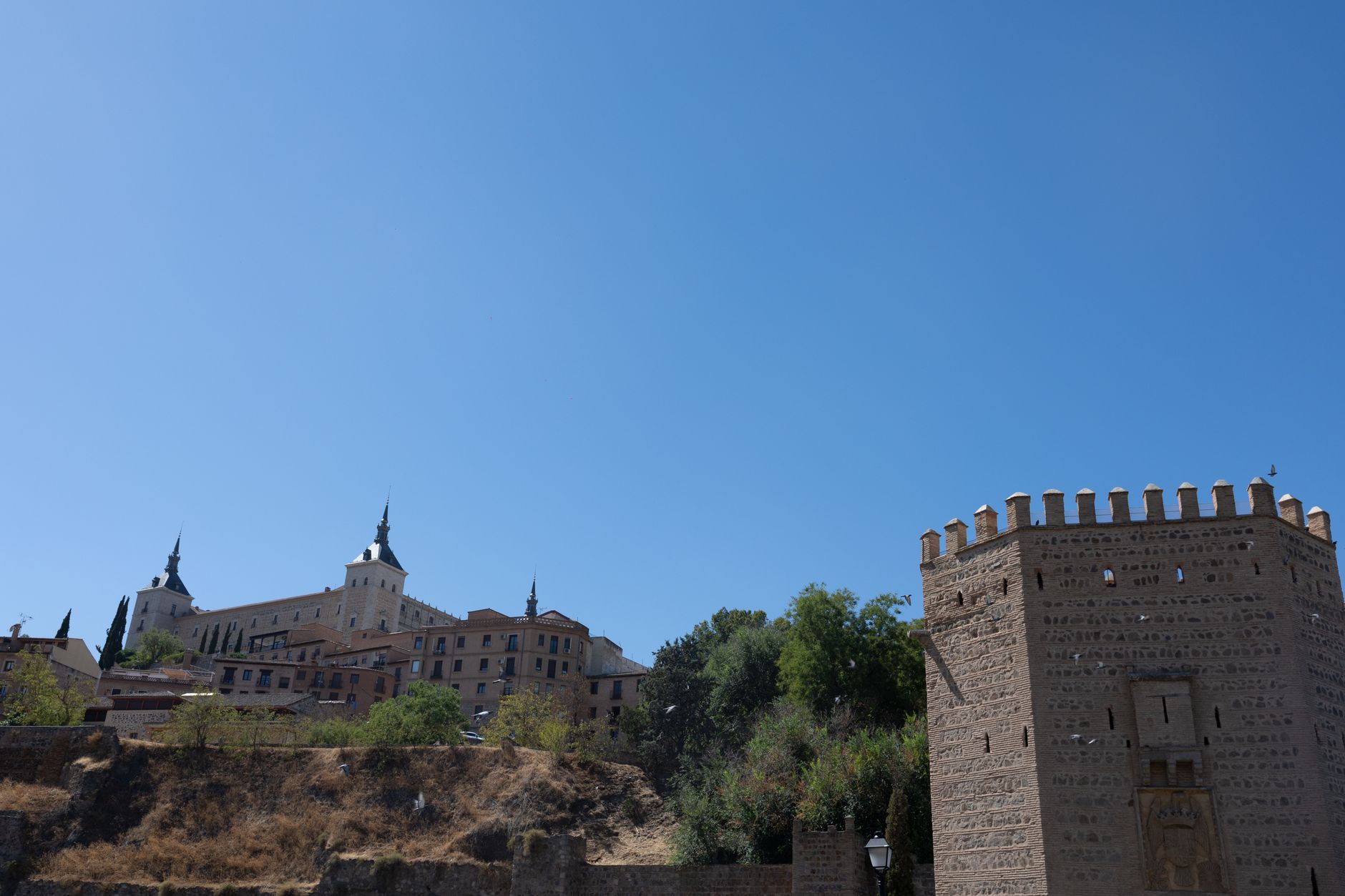
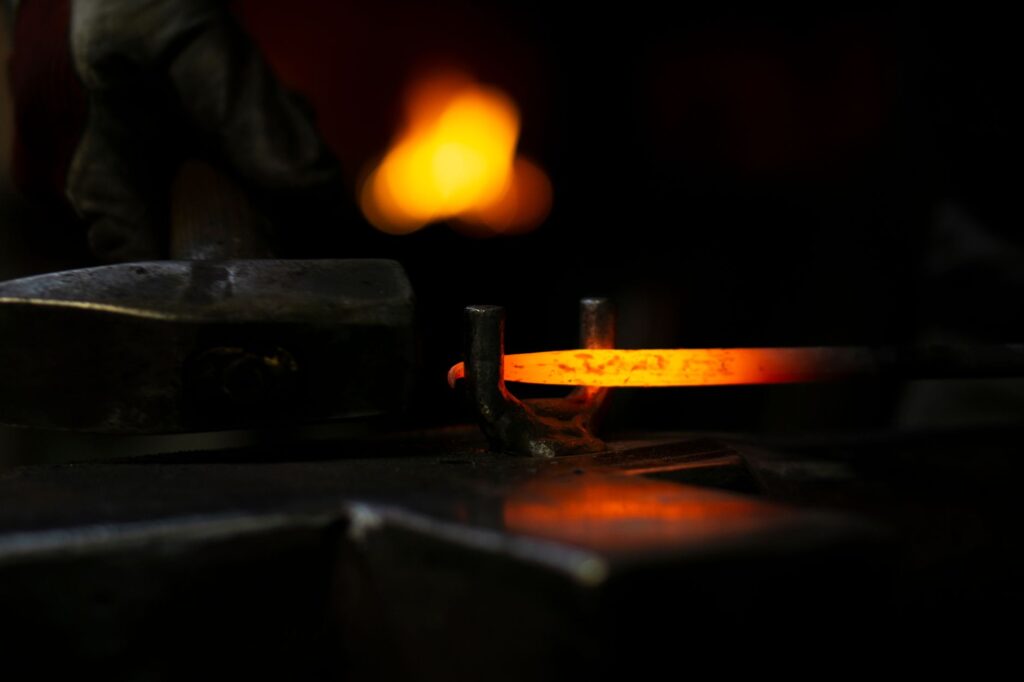
Toledo rises upon a granite promontory sculpted by the Tagus River, a natural fortress where stone holds the echo of overlapping civilizations. In the heart of its old quarter, beyond the tourist bustle of the main monumental routes, a dull, metallic murmur survives, defying the passage of centuries. It is the sound of the hammer striking incandescent iron upon the anvil, a millenary beat that has defined the economic, defensive, and artistic identity of this Castilian capital. Far from being a mere relic of the medieval past, artistic blacksmithing is experiencing a moment of profound intellectual and technical revaluation today, driven by a new generation of artisans who bridge tradition with contemporary design.
The historical analysis of Toledan metallurgy demonstrates that its prestige is not the result of chance, but of a unique convergence of geological resources and accumulated genius. From the Visigothic era to the splendor of the Spanish Golden Age, Toledo’s steel and iron supplied courts, cathedrals, and armies throughout Europe. Today, this legacy is measured not by the quantity of weapons produced, but by the capacity of its workshops to restore European architectural heritage and create pieces of furniture, grilles, and sculptures that converse with the most avant-garde architecture. Entering a Toledan workshop is stepping into a space where physical time stands still and matter surrenders to the absolute dominance of fire and geometry.
Geography of the workshop: among alleys and century-old kilns
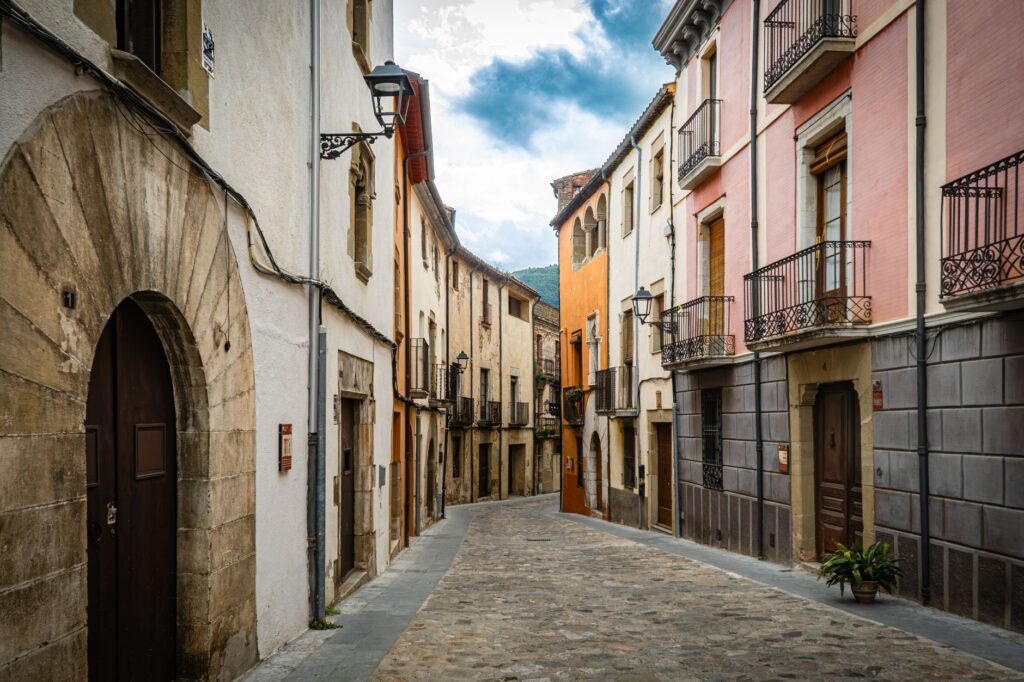
Wandering through the historic neighborhoods of the Jewish quarter or the surroundings of the Bisagra Gate requires understanding how urban geography conditioned the metal industry. Historic workshops were historically concentrated near water currents and city walls, taking advantage of the natural ventilation of the winds descending through the Tagus gorge and the proximity of trade routes. Today, these workspaces hide behind modest noble wood doors that barely betray the titanic activity pulsing within. The kilns, traditionally fueled by high-purity mineral coal, reach temperatures exceeding one thousand degrees Celsius, transforming rigid bars into ductile masses ready to receive the human imprint.
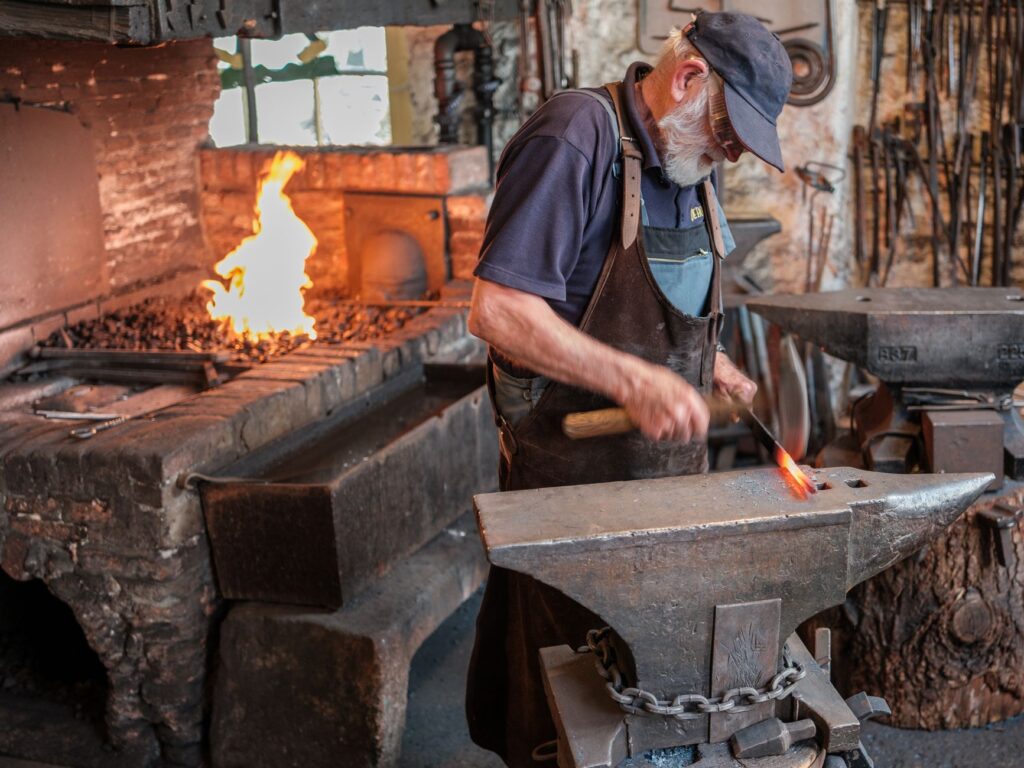
The spatial layout of a traditional workshop responds to an unaltered functional logic. In the center presides the anvil, anchored to a thick holm oak trunk that absorbs the impact of iron sledgehammers. Surrounding it are tongs of various mouths, water troughs for quenching, hornpieces to shape impossible curves, and tool portfolios inherited from parents to children. Natural light enters obliquely through small high windows, originally designed to protect from extreme heat and offer the master blacksmith an exact chromatic contrast with which to measure the color of the metal: from dark cherry red to blinding white, indicating the precise moment of forge welding.
The alchemy of metal: from raw mineral to filigree
The transformation process of iron is a rigorous exercise in applied physics and aesthetic sensitivity. Unlike industrial casting, where liquid metal is poured into pre-established molds, artistic forging requires shaping matter in a solid state through controlled force and the rhythmic repetition of blows. The master artisan must anticipate how the crystal structure of iron will react to each impact, calculating the exact temperature of contraction and expansion to avoid irreparable fractures in pieces that may require weeks of continuous work.
Among the most complex techniques preserved in Toledo’s workshops is cold-over-hot embossing, forge welding—joining two iron pieces through heat and pressure without adding foreign material—and damascening applied to minor structural elements, a technique inherited from the Hispano-Moorish tradition that incrusts gold and silver threads onto grooves of oxidized steel. This meticulousness turns every choir grille, monumental hinge, and authored lamp into an unrepeatable piece, where the imperfections of manual work act as the indelible signature of the creator and a counterpoint to the cold perfection of global serial production.
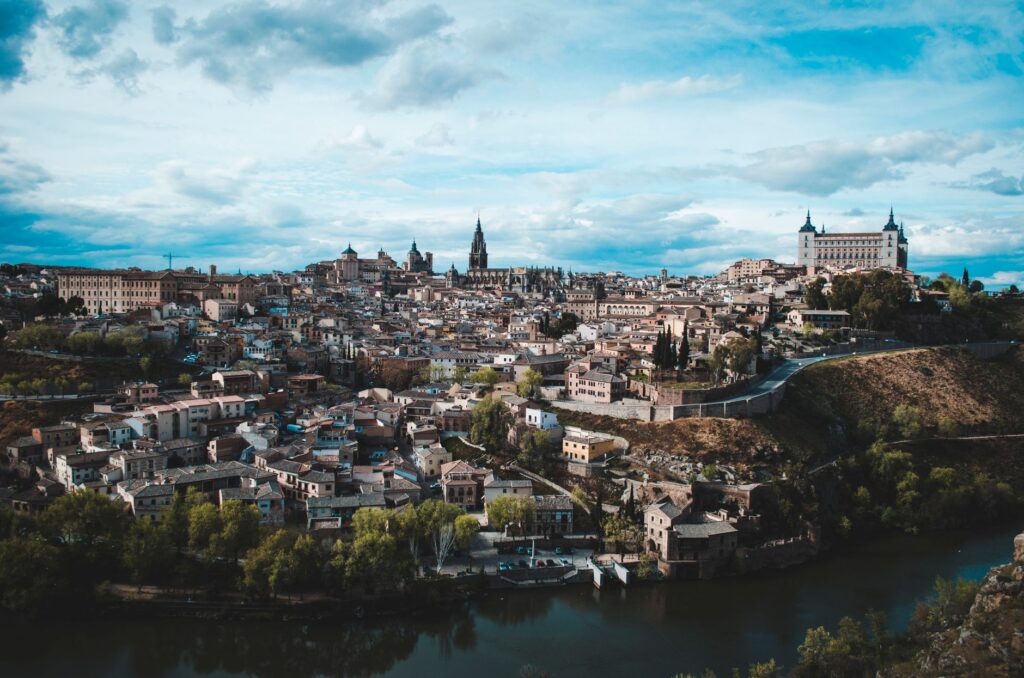
Iron is neither a cold nor an obedient material; it is an indomitable animal that the blacksmith must persuade through patience, heat, and geometry before it accepts a beautiful and eternal form.
The network of masters and the transmission of tacit knowledge
The future of artistic forging in Toledo does not rest on theoretical manuals, but on the oral and bodily transmission of tacit knowledge. The few master blacksmiths remaining active operate as true guardians of an intangible heritage in danger of extinction. The relationship between master and apprentice continues to rely on the rigor of the workshop, where silent observation and constant repetition over years are the only valid methods to master the trade. However, this traditional model faces a demographic and economic crossroads due to the lack of generational replacement and rising raw material costs.
To counter this vulnerability, Toledan workshops have begun weaving strategic alliances with fine arts schools, polytechnic universities, and European restoration centers. Exchange programs and artistic residencies allow young designers and architects from around the world to approach Castilian workshops to learn the laws of metal. This disciplinary crossbreeding has proven that classical forging can hybridize with parametric design and bioclimatic architecture, opening international markets in cities such as Paris, London, and New York, where exclusivity and artisan authenticity command high prices against planned obsolescence.
Monumental restoration and architectural memory
A fundamental part of the activity of Toledan blacksmiths is linked to the conservation of the monumental historical heritage of Spain and the European continent. When a gothic cathedral, a renaissance palace, or a medieval bridge requires urgent intervention in its metallic elements—from the bolts of grand doors to the complex forged iron grilles protecting chapels and altars—heritage protection bodies inevitably turn to these specialized workshops. The intervention does not simply consist of replacing deteriorated pieces, but of analyzing the original chemical composition of the metal, studying wear techniques, and replicating every decorative detail with historical accuracy.
This archaeological restoration work demands deep documentary rigor. The masters consult ancient locksmithing treatises, historical archive plans, and period photographs to understand the constructive context of the original piece. Thanks to this meticulous labor, iconic monuments have recovered their structural splendor without losing the patina of time that grants authenticity to the monument. Wrought iron, far from being a passive element in architecture, acts as the flexible skeleton allowing historical buildings to breathe and resist earthquakes and the inexorable passage of centuries.
Contemporary design and the new Castilian vanguard
In parallel with heritage restoration, the 21st-century Toledan workshop has become a laboratory for contemporary creation. Interior designers and internationally renowned architects commission unique pieces of urban furniture, sculptural helical staircases, and bioclimatic lattices that regulate sunlight in sustainable office buildings from these masters. This evolution demonstrates that the craft possesses unsuspected vitality, capable of reinventing itself without renouncing its secular roots.
The current creative process combines three-dimensional digital drawing with purely manual execution at the forge. The designer projects complex organic forms that challenge the rigidity of metal, and the blacksmith interprets those blueprints through mastery of fire and anvil. The result is a fascinating dialogue between cutting-edge technology and the ancestral force of human muscle. These works, exhibited in international design fairs and contemporary art galleries, place Toledo once more on the global map of creative excellence, proving that the deepest tradition is simultaneously the most modern of tools.
The true modernity of an artisan craft does not lie in the adoption of automated machines, but in its unwavering capacity to move the contemporary spectator through the unrepeatable trace of human effort.
Practical guide
How to get there: Toledo is exceptionally connected to Madrid via high-speed trains (AVE) that make the journey in barely 33 minutes from Atocha station. By road, the A-42 highway connects both cities in approximately one hour of travel. Adolfo Suárez Madrid-Barajas International Airport offers direct connections to major European and American capitals.
When to go: Spring (from April to June) and autumn (from September to November) offer the most pleasant weather conditions to explore the historic center on foot. During the summer months, temperatures can exceed forty degrees Celsius, hindering prolonged outdoor visits and access to traditional workshops lacking climate control.
How to get around: Toledo’s historic center must be explored strictly on foot due to the narrowness of its medieval streets and steep inclines. Public escalators bridge the elevation change from exterior parking lots to the monumental center. To visit peripheral artisan workshops, local taxis or rental vehicles are recommended.
Workshop route: Although many workshops are located in private estates or restricted-access alleys, local artisan associations organize guided tours by prior appointment. It is essential to respect working hours and industrial safety regulations in force within each production space.
Recommended accommodation: Staying in small boutique hotels located in rehabilitated noble mansions within the old quarter, such as Hotel Pintor El Greco or traditional guesthouses preserving Toledan porticoed courtyards, is advised to guarantee a complete immersion in the city’s historical atmosphere.