
Alicante awakens each dawn to the metallic echo of rolling shutters rising at the Central Market, a masterpiece of rationalist and historicist architecture built over the city’s ancient defensive moats. Along the arcades of Avenida de Alfonso el Sabio, the urban pulse is dictated not by clocks, but by the arrival of refrigerated trucks unloading deep-sea catches and vegetables harvested in the fertile plains of the Vega Baja. Inaugurated in 1921 and standing as a silent witness to the social and urban transformations of the Levantine coast, this building operates as a secular cathedral where the ancestral knowledge of offshore fishermen and farmers converges—farmers who still respect lunar cycles for sowing. Here, produce is never a mere commercial commodity, but a living document of an identity shaped by the eastern wind, the salinity of the open sea, and the persistence of a culinary culture that refuses to dissolve into the homogeneity of modern tourism.
The thesis guiding this voyage through Alicante’s gastronomic domains is that true territorial cuisine does not reside in the ephemeral vanguard of culinary laboratories, but in an almost sacred fidelity to the exact proportions of fire, broth, and grain. While international guides celebrate unbridled sophistication, the bowels of the Alicante market reveal a quiet resistance built on unnegotiable produce: Dénia red prawns, the cleanest rockfish for delicate stocks, and dry-land rice varieties that condense both the arid harshness and richness of the province. At every stall, vendors act as involuntary anthropologists, explaining to an increasingly disconnected clientele the subtle differences between a red mullet from rocky bottoms and one from muddy depths, or the importance of purchasing dried ñoras at their exact point of sun-ripened perfection. This report offers a rigorous immersion into that invisible machinery connecting marble market counters with the steep terraced slopes of the Marina Alta.
The Architecture of Abundance: The Morning Ritual at Alfonso el Sabio
Crossing the threshold of Alicante’s Central Market demands a particular sensory readiness. The air is densely layered with intersecting aromas: the sharp iodine of freshly boiled shellfish intertwines with the earthy sweetness of regional oranges and the pungent perfume of suspended herb bouquets. On the ground floor, dominated by the fishmongers’ stalls, vendors display their specimens on beds of crushed ice with an aesthetic precision reminiscent of Baroque still lifes. Wild sea bream share space with line-caught squid and deep-water crayfish, hauled by a fleet maintaining traditional routes off Cape Nao. The layout of the stalls is far from random; it reflects commercial and generational hierarchies consolidated over decades of family-run businesses, where mutual trust between merchant and buyer remains the most valuable currency.
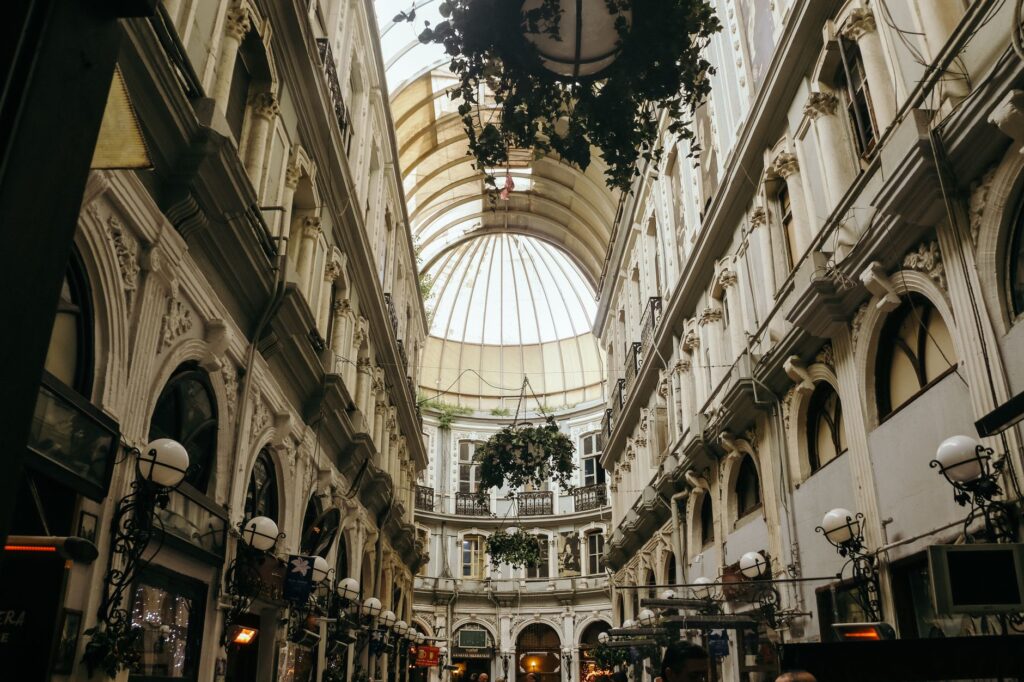
In the inner corridors, the pace accelerates as the morning advances. Local restaurateurs scout for dawn-fresh ingredients, exchanging knowing murmurs with market traders regarding sea conditions or auction fluctuations at the local port. There is no room for improvisation: a successful rice dish demands absolute traceability, beginning with the meticulous selection of raw materials. Just a few steps from the fish stalls, the cured-fish vendors recall the Phoenician and Roman heritage of the coast. Cured tuna roe, salted cod strips, and sun-dried small fish hang like golden curtains, offering a gustatory testimony to an era when preserving seafood was a matter of harsh winter survival rather than a gourmet luxury.
The Invisible Territory: From the Garden to the Marina Alta Terraces
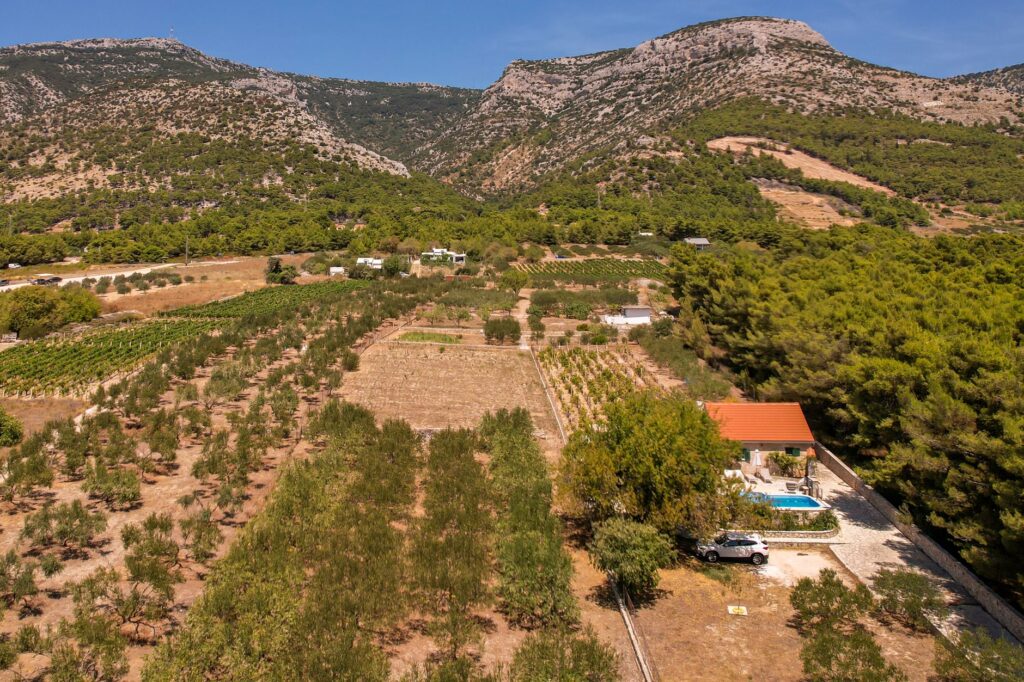
Leaving the urban bustle behind to venture into the Marina Alta is to witness the geographical miracle of a region where the Betic mountain ranges plunge abruptly into the Mediterranean. In this natural amphitheatre protected by peaks such as Montgó, agriculture is practiced on a small scale across dry-stone terraces that defy steep inclines. Here, farmers cultivate local heirloom vegetables such as hanging winter tomatoes and turnip greens, essential ingredients for understanding the profound complexity of regional stews. The soil, rich in limestone and tested by water scarcity, endows these crops with a concentration of sugars and minerals impossible to replicate in intensive lowland farming.
The relationship between the Marina Alta farmer and the Alicante chef is sustained by an unspoken pact of mutual respect. While the terraced slopes supply tender artichokes and young broad beans throughout the winter months, the interior valleys guard the secrets of producing extra virgin olive oil from the native Manzanilla alicantina variety. This oil, with its greenish hues and balanced bitterness, acts as the unifying thread across the province’s culinary registers, from slow-simmered sofritos to the final drizzle crowning an authentic dry rice dish fresh from the vine-shoot fire.
The Alchemy of Rice: Technique, Fire, and Memory
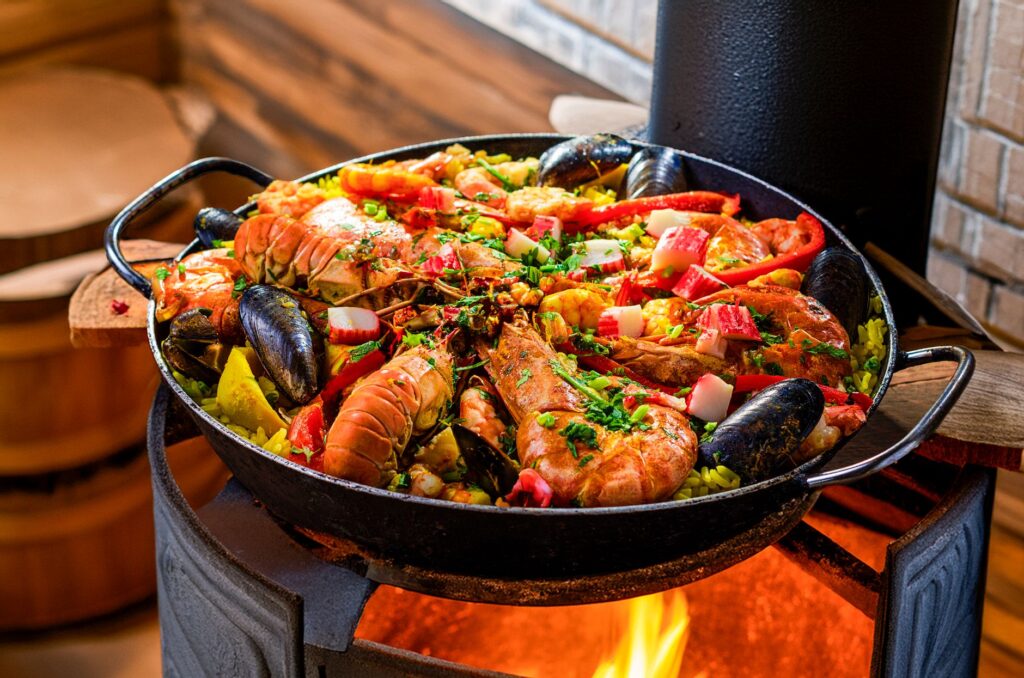
To speak of gastronomy in Alicante without addressing rice technique is to commit an unforgivable omission. Unlike other regions where grains absorb broths uniformly, the Alicante tradition demands precise thermal intensity and the use of polished iron paella pans, a vessel that encourages the caramelization of natural sugars within the sofrito and the creation of the coveted socarrat crust. In traditional workshops and dining rooms across the province, cooking is governed by unwritten yet inflexible rules: the broth must be clean, concentrated from rockfish bones and mantis shrimp, and the boiling time must never exceed eighteen exact minutes to guarantee that the center of the grain retains its characteristic firmness.
The use of vine-shoot firewood, although largely relegated in urban settings, remains alive in rural interior establishments and select coastal temples defending culinary orthodoxy. The live fire imparts a subtle smoky nuance that infuses both oil and rice, elevating a dish of apparent peasant or seafaring simplicity to the category of popular haute cuisine. Local chefs insist that the success of a great rice dish lies not in accumulating exotic ingredients, but in subtraction: eliminating everything that might mask the purity of the primary stock and allowing the ingredient to speak for itself through the uniform heat radiating from the pan’s base.
The cuisine of the Alicante coast does not seek to impress through conceptual artifices; its greatness lies in its capacity to condense the open sea, arid drylands, and human endeavor into a single spoonful of broth or a single grain of perfectly imperfect rice.
This culinary discipline extends equally to fish caldero stocks, where the main fish is cooked separately with potatoes and a mortar-pounded garlic and parsley paste, while the resulting broth is subsequently used to cook a rich, mellow rice served afterward. The sequence follows an ancestral zero-waste logic ensuring that no part of the marine harvest is squandered, transforming historical scarcity into a masterclass of domestic economy and concentrated flavor.
The Marine Larder: The Secret of Clean Stocks
To comprehend the savory depth of Alicante’s cuisine, one must descend to the technical level of stocks. In professional and home kitchens throughout the region, the concept of a white stock or fumet permits no shortcuts or artificial concentrates. The heads of crustaceans, especially the Dénia red prawn, are lightly toasted before joining a simmering pot along with assorted small rockfish—such as weevers, painted combers, and wrasses—which provide the essential collagen required for body and texture without resorting to thickeners alien to tradition.
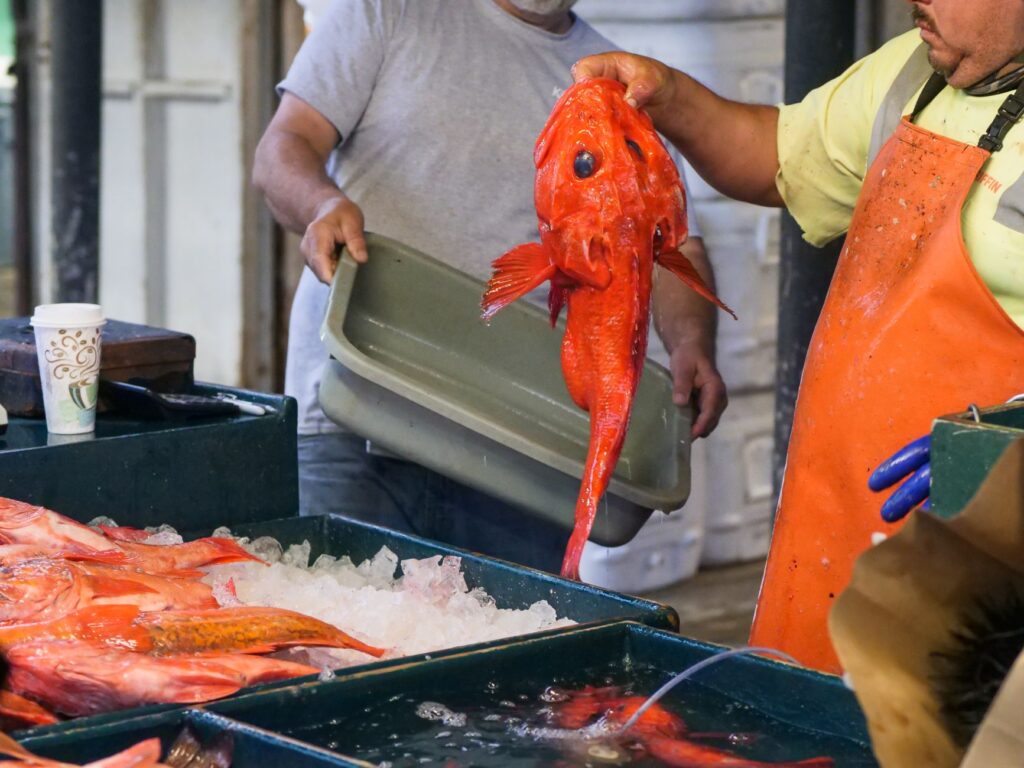
The water used in these stocks is treated with rigorous care; the most purist chefs prefer low-mineral waters to prevent tap lime from altering the delicate extraction of marine flavors. Constant skimming during the initial stages of boiling guarantees a transparent, clean stock free of bitter impurities. This resulting liquid forms the backbone not only of rice dishes, but also of traditional soups such as blanco de pescado or the seafaring casseroles that fishermen once consumed aboard their vessels during long offshore voyages.
The Sweet Heritage: Nougat, Ice Cream, and the Almond Shade
Alicante’s geographical influence does not stop at the coastline or the vegetable plots; it penetrates deeply into the mountainous interior, where the Marcona almond reigns supreme over an ancient agricultural landscape. In towns like Xixona and Busot, almond orchards paint the landscape white every January, anticipating a harvest that supplies both the traditional nougat industry and the thriving network of artisanal ice cream makers who have brought international fame to the province. Turrón, crafted by cooking pure rosemary honey and egg whites in copper cauldrons, represents the culmination of a craftsmanship directly tied to the peninsula’s Andalusian heritage.
Master turrón makers keep manual processes alive during critical production stages, closely monitoring the whitening point of the dough and the seamless integration of roasted almonds. This dry confectionery culture complements the artisanal ice cream tradition, whose original recipes sprang from the need to utilize winter snow preserved in the ice houses of the Sierra Mariola mountains. Today, Alicante’s ice cream makers continue producing treats based on natural horchata infusions, liquid nougat, and lemon granita, maintaining a quality standard that contrasts sharply with global industrial standardization.
Practical guide
How to get there: Alicante-Elche Airport (ALC) offers excellent international and domestic connections. To explore the Marina Alta, renting a vehicle is essential for accessing terraced groves and rural lanes.
When to visit: The autumn months (October and November) and spring (April to June) offer ideal temperatures and allow visitors to experience the market without the crowds of summer tourism.
The Central Market: Located on Avenida de Alfonso el Sabio, it opens Monday through Saturday mornings (7:00 AM to 2:30 PM). Fish and seafood stalls concentrate their peak activity between 8:00 AM and 11:00 AM.
Recommended accommodation: Opt for small boutique hotels in historic quarters such as Altea or Dénia to combine market visits with direct contact with the rural landscape.
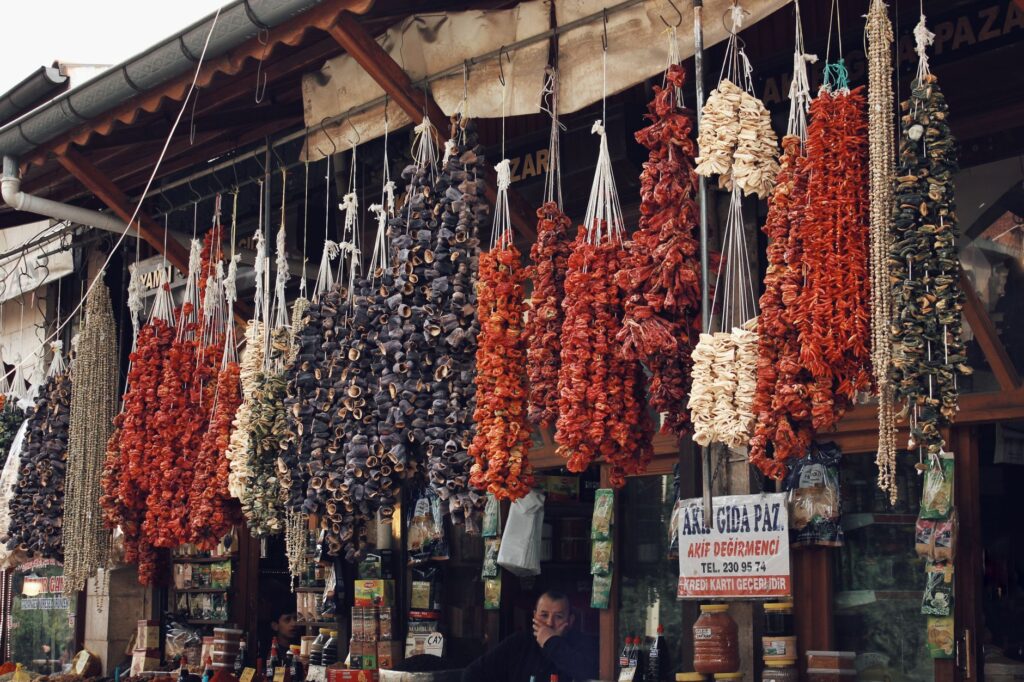
Essential purchases: Dried Guardamar ñora peppers, extra virgin olive oil from native varietals, saffron threads, and artisanal designation-of-origin turrón from Xixona.
Local etiquette rules: In traditional markets, touching produce directly with bare hands is strictly prohibited; respect merchants’ guidance and always request assistance.
The Echo of Slow Fire in the Mediterranean Dusk
When the afternoon light begins to recede from Alicante’s rooftops and the market’s hustle yields to the silence of closed auction halls, the province reclaims a timeless calm that seems to defy twenty-first-century frenzy. In the small interior villages of the Marina Alta, where the chimneys of traditional stone houses begin to exhale the first wisps of white vine-shoot smoke, a daily cycle completes itself without substantial alteration from generations past. There is no urgency in these landscapes; land and sea dictate the rhythm of an existence both humble and proud, sustained by the conviction that essential things—a good broth, a precisely measured grain of rice, rigorous respect for seasonal produce—admit no shortcuts or technological simulations. At journey’s end, the traveler understands that Alicante’s true wealth lies not in its sunlit beaches, but in the tenacious memory of its people, the zealous guardians of a daily liturgy that turns the elementary act of eating into a sublime form of culture and resistance.