
Introduction to the oceanic isolation of the Colombian Pacific
More than five hundred kilometers off the continental coast of Colombia, emerging as an imposing fortress of gray volcanic rock, the Malpelo Flora and Fauna Sanctuary stands against the relentless currents of the Eastern Tropical Pacific. This submerged pinnacle is not merely an isolated geographical accident, but the anchor of a complex oceanic ecosystem where large-scale hydrodynamic dynamics converge. Here, the deep waters of the open ocean crash violently against the submarine walls of the island, generating an upward nutrient flow known as upwelling. This vertical flux of cold, mineral-rich waters transforms the submerged cliffs into a biological corridor of critical importance for numerous pelagic species, especially the silver-coated thresher sharks.
The rigorous study of these populations requires understanding the intricate interplay between submarine topography and the region’s marine climatology. Unlike shallow coral reefs, Malpelo is dominated by vertical drop-offs, abyssal caves, and a dynamic thermocline that oscillates according to seasonal cycles and large-scale events such as El Niño. In this extreme scenario, Alopias pelagicus finds the optimal conditions to develop its migratory routes and cleaning habits. Historical anthropogenic pressure, compounded by illegal, unreported, and unregulated offshore fishing, has turned the surveillance of this isolation into an international scientific priority.
Volcanic geology and submarine morphology of Malpelo
The genesis of Malpelo dates back to the Miocene, resulting from tectonic activity associated with the Nazca Plate and oceanic hotspots. The main island, with barely a square kilometer of emerged land, is the visible peak of a vast basaltic structure plunging thousands of meters down to the seafloor. This vertical architecture creates a series of smaller islets and monoliths known as The Musketeers, which act as natural breakwaters against Pacific swells. The dominant currents, driven by the Equatorial Countercurrent and the Cromwell Current, constantly erode the basalt, carving ledges, crevices, and passageways that serve as daytime refuges for marine fauna.

Beneath the surface, the bathymetry reveals an abrupt drop into the aphotic zone. Scientific divers and researchers descending along walls such as The Cathedral or The Monster’s Shoal experience firsthand the sheer force of these tidal currents. It is precisely this constant agitation that prevents water stagnation and maintains an extraordinarily oxygenated water column. The interaction between sunlight in the upper meters and the twilight of the depths establishes a highly marked ecological zonation, where each depth stratum hosts specialized biological communities adapted to harness the steady flow of suspended organic matter.
Physical oceanography: upwelling dynamics and thermoclines
The engine sustaining the rich biodiversity of Malpelo is the physical oceanography of its immediate surroundings. Deep currents, upon striking the island’s submarine plinth, are deflected toward the surface, dragging masses of water rich in nitrates, phosphates, and silicates. This process of coastal upwelling triggers seasonal phytoplankton blooms, the indispensable foundation of the marine trophic food web. Oceanographic researchers have documented how sea surface temperatures can drop dramatically within hours as cold currents intensify, altering underwater visibility and the spatial arrangement of top predators.

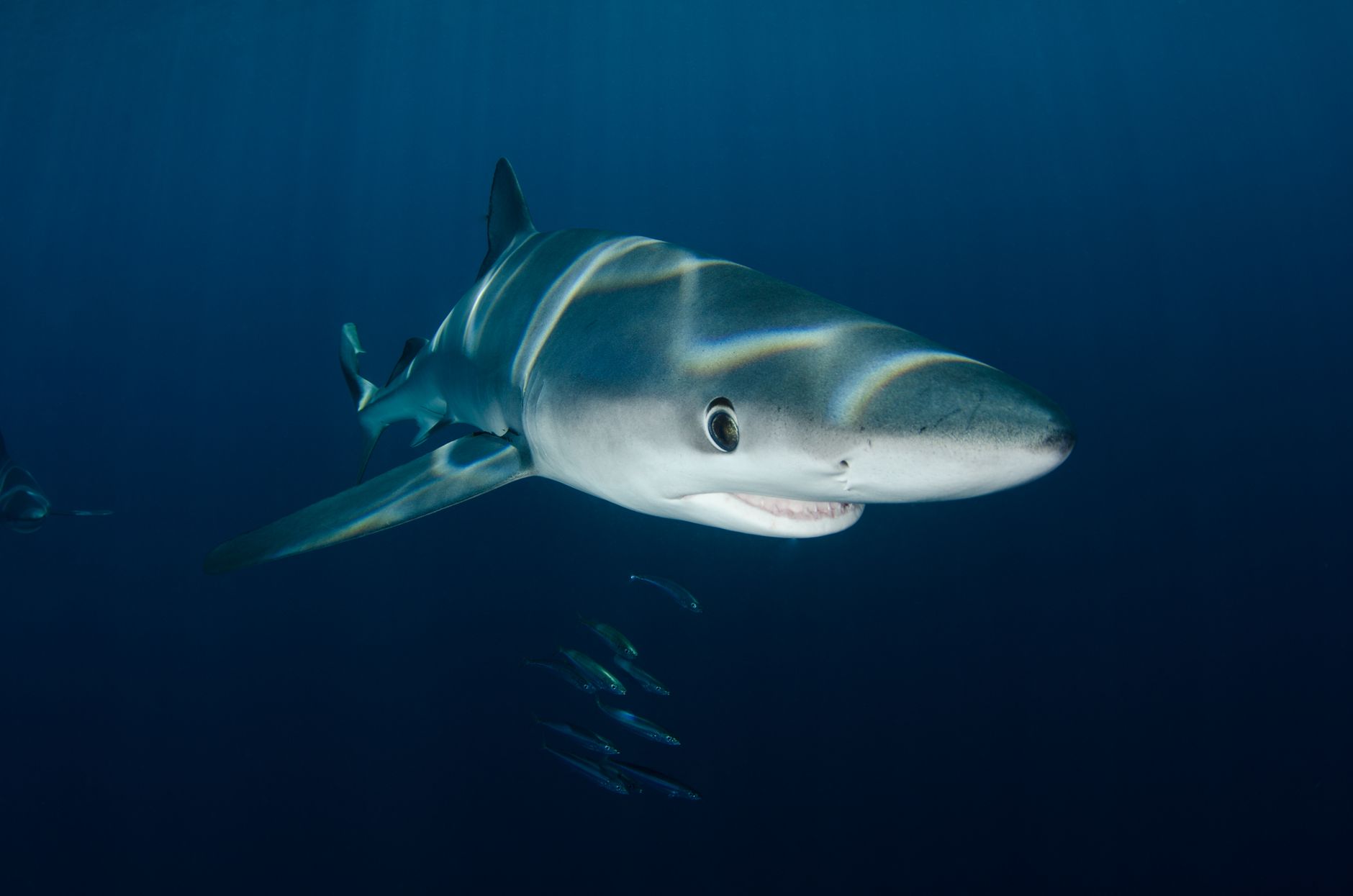
Simultaneously, the thermocline—the invisible boundary separating warm surface waters from deep cold masses—oscillates vertically on a daily basis. The thresher shark, characterized by its remarkably long caudal fin that can reach half its total body length, utilizes these thermal variations to regulate its feeding forays. During the early morning hours, these elasmobranchs abandon the abyssal depths to ascend toward shallower platforms, taking advantage of the morning twilight and favorable currents to ambush prey using their distinctive tail as a stunning whip.
Biology and behavior of the pelagic thresher shark (Alopias pelagicus)
Alopias pelagicus, the pelagic thresher shark, represents one of the evolutionary marvels of the Lamniformes order. Unlike other sharks with benthic habits, this species is perfectly adapted to life in the open ocean, displaying a fusiform morphology and unusually large eyes oriented upward, a clear adaptation for detecting prey silhouettes against the diffuse surface light. Its most prominent feature is the hyper-developed and flexible upper lobe of its caudal fin, which it employs with surgical precision to strike and stun schools of bony fish before consumption.
In the context of Malpelo, the behavior of the thresher shark acquires a fascinating social dimension. Several specific spots around the island act as natural cleaning stations, where cleaner fish—such as the barberfish (Prionurus laticlavius)—remove external parasites from the sharks’ skin and gills. At these stations, rigorously observed through acoustic telemetry and underwater visual censuses, the sharks reduce their swimming speed and adopt nearly static body postures, allowing small fish to perform their symbiotic labor in an exceptional display of interspecific tolerance.
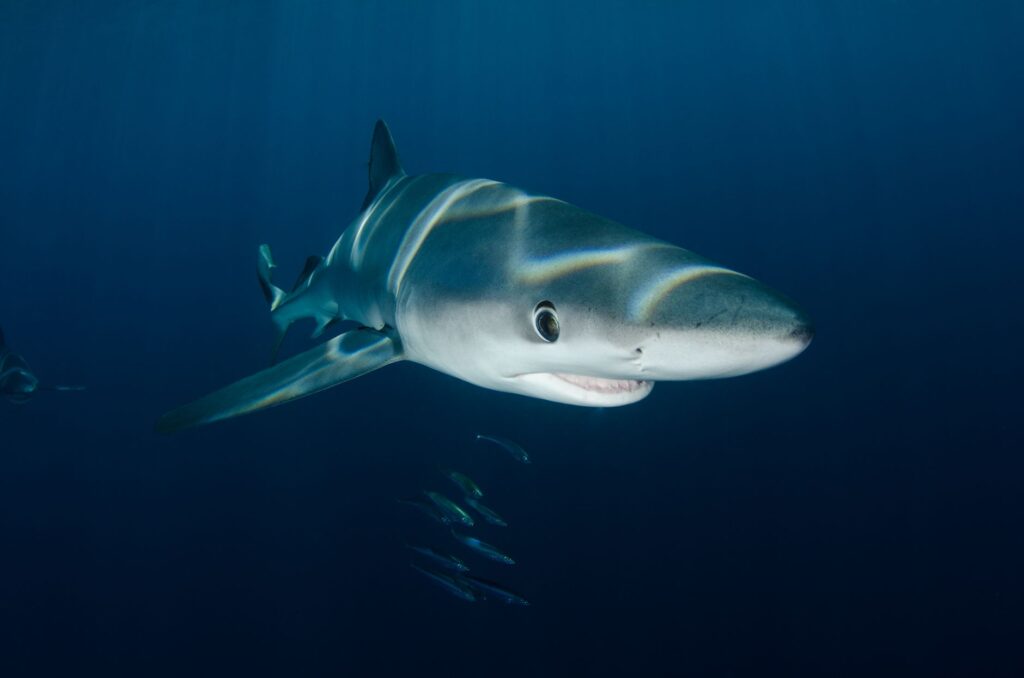
blockquote>The geographic isolation of Malpelo is not merely a barrier against human presence, but the biological catalyst that allows the observation of primitive pelagic interactions unaltered by direct coastal pressure.
Trophic structure and biodiversity associated with the sanctuary
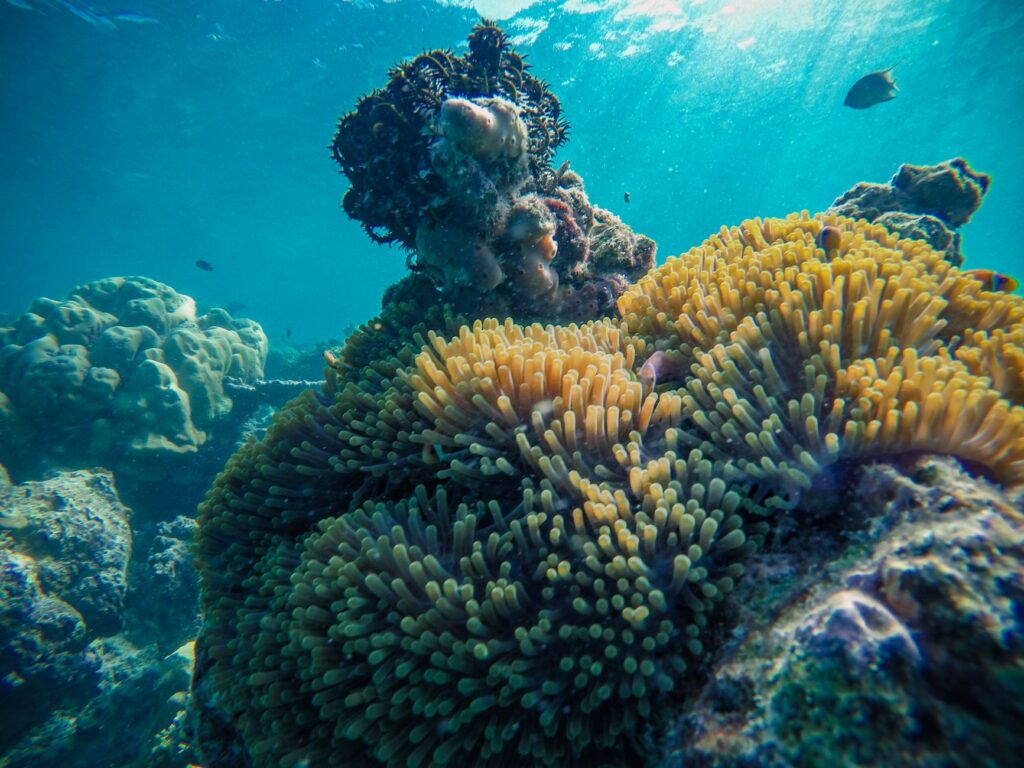
The presence of thresher sharks is the most evident indicator of Malpelo’s trophic health, yet they share this domain with a complex network of marine organisms. Yellowfin tunas, giant trevallies, and dense schools of barracudas constantly patrol the island’s perimeter. In the most sheltered rocky substrates, colonies of black corals and giant gorgonians provide shelter for endemic crustaceans and small damselfish, while large aggregations of scalloped hammerhead sharks (Sphyrna lewini) converge at rocky points, taking advantage of the same plankton-rich currents.
Marine mammals also utilize this oceanic corridor. Humpback whales, during their annual migrations between Antarctica and the warm waters of the Gulf of Panama, frequently transit the vicinity of the sanctuary, using low-frequency sounds to communicate in the surrounding depths. This overlap of large-scale migratory species underscores Malpelo’s function as an indispensable node of biological connectivity for the overall health of the Eastern Tropical Pacific, linking the Galapagos Archipelago, Cocos Island, and Coiba in a transnational conservation network.
Conservation efforts and management of the Natural National Park
The legal protection of Malpelo began to consolidate in 1995 with the declaration of the area as a Natural National Park, a status later expanded significantly to encompass over 27,000 square kilometers of protected marine zone. In 2006, UNESCO recognized its outstanding universal value by inscribing it as a World Heritage Site. However, the effective management of such a remote and vast territory poses monumental operational challenges. Colombian environmental authorities, in close collaboration with the National Navy and scientific non-governmental organizations, patrol the area using satellite radar systems, ocean-going patrol boats, and scientific expeditions to deter illegal longline fishing.
Long-term scientific monitoring has been instrumental in assessing the impact of these protective measures. Satellite tagging programs have demonstrated that certain thresher shark specimens temporarily leave the sanctuary’s boundaries, venturing into international waters where they remain exposed to industrial fishing fleets. These empirical data form the basis upon which conservationists argue the urgent need to expand international high-seas protection regulations, establishing blue corridors to safeguard highly migratory species throughout their entire life cycle.
Practical guide
Planning a scientific or advanced diving expedition to the Malpelo Sanctuary demands absolute logistical rigor, due to the total absence of tourist infrastructure on the island and its surroundings.
- Access and logistics: There are no commercial flights or public transport options to Malpelo. Access is exclusively aboard authorized liveaboard vessels departing primarily from the port of Buenaventura in Colombia. The sea crossing takes approximately 30 to 36 hours in each direction, crossing open ocean with unpredictable swell conditions.
- Requirements and permits: All visitors must process entry permits months in advance through National Natural Parks of Colombia. An advanced diving certification is required (with a minimum number of recorded dives specified by operators), along with proven experience in strong currents and international medical insurance with specific coverage for medical evacuation from remote areas.
- Best time to visit: Oceanographic conditions vary throughout the year. From January to May, waters tend to be clearer and currents slightly more moderate, facilitating underwater visibility. From July to November, the increase in trade winds and upwelling foster higher concentrations of thresher sharks and large pelagics, albeit with a sharper thermocline and lower visibility.
- Recommended equipment: It is essential to have neoprene wetsuits at least 5 millimeters thick, a neoprene hood, and booties, as deep current dives expose divers to water temperatures that can drop below 18 degrees Celsius. Additionally, the use of surface marker buoys (DSMBs) and personal signaling devices is mandatory for all dives.
Final reflections on the future of the sanctuary
Contemplating the sunset over the sharp profiles of Malpelo from the deck of a scientific vessel is an exercise in geographical perspective. On a planet where the human footprint has altered almost all terrestrial and coastal ecosystems, this basalt bastion in the middle of the ocean represents a living testimony of how oceans operated before the industrialization of mass fishing. The long-term survival of the thresher shark and the entire complex biological web gravitating around the archipelago depends on the international community’s capacity to maintain and expand rigor in the management of marine protected areas.
blockquote>Protecting the refuge of Malpelo is not an act of isolation, but an active commitment to preserving the deepest and most complex vital pulses of our blue planet.