
There is a premature melancholy that tends to settle in the chest by mid-August, a conditioned reflex driven by decades of school calendars and office routines that pushes us to declare the summer season over before nature itself has uttered its final word. Yet, for the contemporary traveler seeking the quiet essence of places, the months of August and September represent the true heart of the experience. It is the moment when human tides recede, temperatures turn mild, and destinations reveal their authentic pulse—the one that remains hidden behind the deafening roar of mass tourism. Squeezing this final stretch of summer is not an exercise in haste, but in precision: it is about choosing with discernment the last gastronomic refuges, low-profile yet deeply resonant cultural dates, and landscapes where silence becomes an accessible luxury once more.
This transition between relentless heat and autumnal breeze not only invites rest, but also a conscious review of our consumption and travel habits. Sustainability and the conservation of territories take center stage here, reminding us that the best tribute we can pay to the enclaves we visit is to inhabit them with respect, supporting the local economy, savoring zero-kilometer produce, and understanding that the beauty of a landscape lies in its long-term preservation. Through this journey across memorable tables, accommodations integrated into their surroundings, and festivals that shun stridency, we propose an itinerary to stretch summer to its final and most beautiful consequences.
The Renaissance of Tables: Haute Cuisine and Local Larder by the Sea
The geography of good food changes radically when coastal restaurants free themselves from the pressure of mass service. It is then that chefs recover the time to converse with diners, explain the exact origin of wild fish, or reveal the story behind a recovered garden just meters from the breaking waves. In this context, sustainability ceases to be an advertising slogan and becomes a rigorous praxis based on strict seasonality and absolute respect for marine produce.
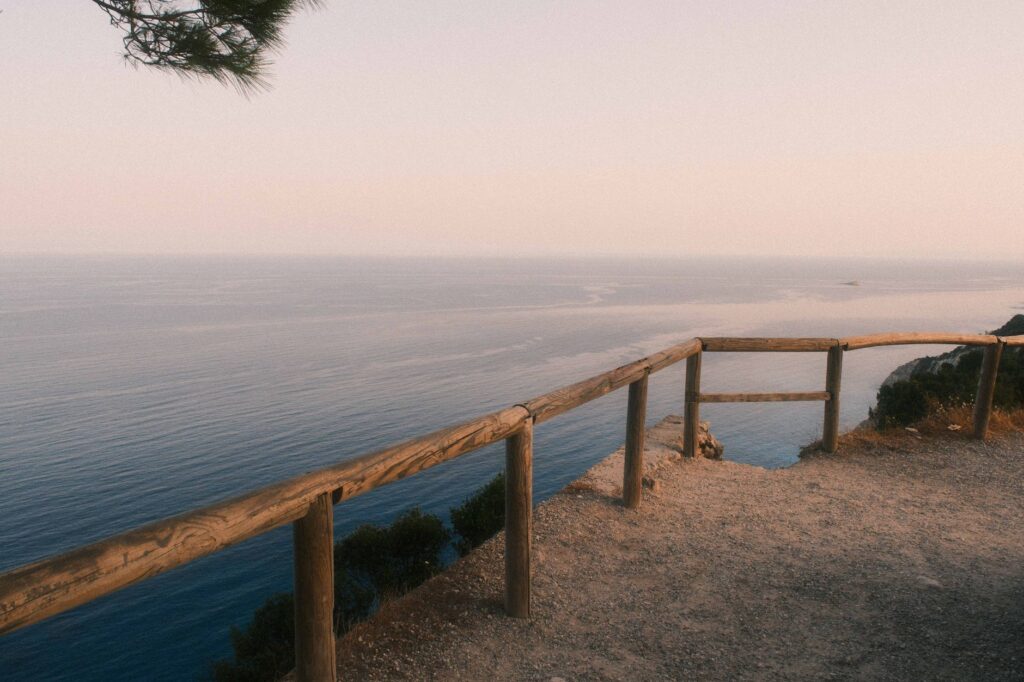
In the Rías Baixas and the most sheltered corners of the Costa Brava, kitchens advocating for artisanal shellfish gathering and regenerative agriculture are experiencing their peak moment. It is no longer about seeking ostentation, but transparency: knowing which boat caught the turbot, which cooperative cultivates the bivalve, and how organic waste returns to the earth in the form of local composting. This direct connection between producer and consumer redefines the August and September gastronomic experience, turning every dinner into an act of support for the rural and fishing fabric.
Refuges of Vernacular Architecture and Sustainable Design
Summer lodging has evolved from the impersonal resort toward a typology that engages in a direct dialogue with architectural and natural heritage. Old farmhouses, ancestral manors, and restored former mills rehabilitated under strict criteria of energy efficiency and bioconstruction have become true sanctuaries of late rest. These spaces prioritize local materials—dry stone, wood treated with natural oils, fired clay—and passive climate control systems over energy waste.
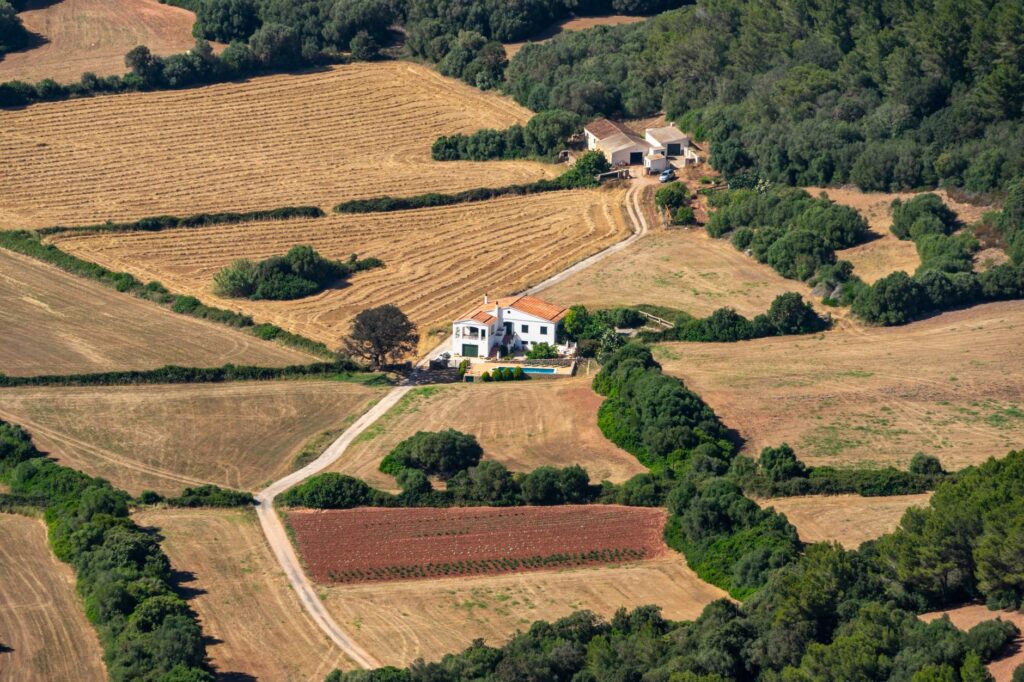
Sleeping in these enclaves during the final weeks of August allows for a genuine disconnection, free of screens and urban noise. Architecture places itself at the service of the landscape, opening large glass windows that frame the agrarian or marine horizon, allowing the sunset light to flood the rooms without artificial lighting. It is a return to the essentials that proves contemporary luxury lies not in excess, but in space, silence, and harmonious integration with the environment.
Low-Impact Culture: Intimate Festivals and Living Heritage
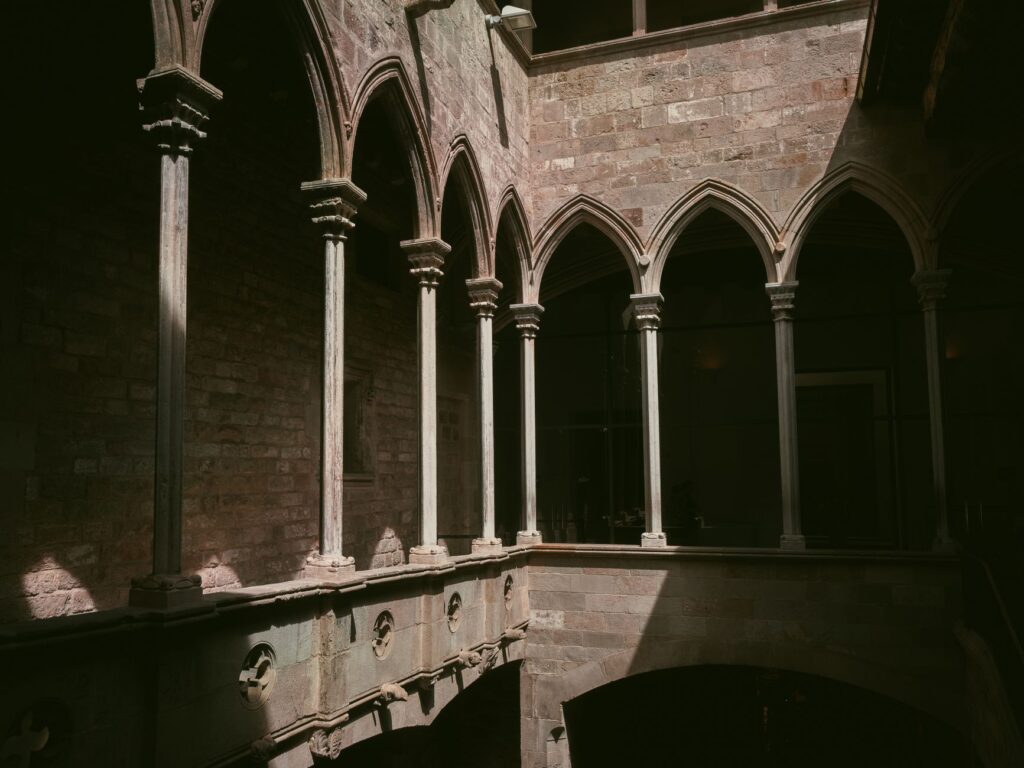
While large-scale mass festivals turn off their lights and pack up their stages, interior territories and historic quarters of medieval towns host small-format cultural cycles. These are propositions where classical music, contemporary jazz, or poetry merge with the natural acoustics of Romanesque churches, monastic cloisters, or ancient underground cellars.
This low-intensity cultural programming fosters respectful tourism that does not collapse local infrastructures, but rather revitalizes them sustainably. Attending a sunset concert in an archaeological site or visiting a contemporary art exhibition in a restored oil mill offers a dimension far superior to standardized leisure. Here, the visitor is not a mere passive spectator, but part of a temporary community that values artistic creation in its most intimate context, respectful of heritage.
The Liquid Ritual: Minimal Intervention Wineries and Botanical Mixology
The end-of-summer toast deserves liquids that tell stories of soil, climate, and human effort. The movement of minimal intervention wines—popularly known as natural or terroir wines—has found its best showcase in August and September. Small winemakers working biodynamically open their doors to show how the terroir is interpreted without chemical additives or cellar corrections.
Simultaneously, contemporary mixology has abandoned industrial syrups in favor of wild botanicals. High-mountain harvested juniper, coastal aromatic herb infusions, and organically grown local citrus compose complex drinks that reflect the biodiversity of the territory. Tasting these creations at dusk, with sea breeze or mountain freshness as a backdrop, is one of the subtlest and most sophisticated pleasures of the season’s final stretch.

The Art of Drifting: Walking and Cycling Routes Without a Fixed Course
When midday heat yields to the caress of five in the afternoon, the ideal moment for drifting opens up. Walking along rehabilitated long-distance trails, pedaling greenways that were once railway lines, or exploring coastal paths allows one to gauge the true scale of the territory. There is no rush to reach a tourist landmark; the objective is conscious movement itself.
These routes prioritize active, zero-emission mobility, connecting train stations with small rural nuclei through infrastructures respectful of local fauna and flora. Walking without a rigid itinerary, the traveler rediscovers the capacity for surprise: a forest clearing to observe migratory birds, an ancient fountain hidden among brushwood, or a textile artisan workshop where time seems to have stopped a century ago.
Practical guide
- How to get there: Prioritize medium and long-distance train travel or carpooling to minimize your carbon footprint on trips to rural and coastal retreats.
- When to go: The second half of August and the entire month of September offer the best combination of favorable weather, lower tourist density, and full availability of local seasonal produce.
- Where to stay: Look for accommodations certified with sustainable tourism labels, bioconstruction, or rural historic heritage restoration.
- Responsible gastronomy: Always check the origin of fish and vegetables on the menu; prioritize establishments adhered to zero-kilometer product networks.
- Mobility at destination: Rent electric bicycles or use marked trail networks to move between villages and coves without overcrowding local parking lots.
- Environmental respect: Avoid single-use plastics, respect nesting areas and protected flora in coves and natural spaces, and manage your waste rigorously.
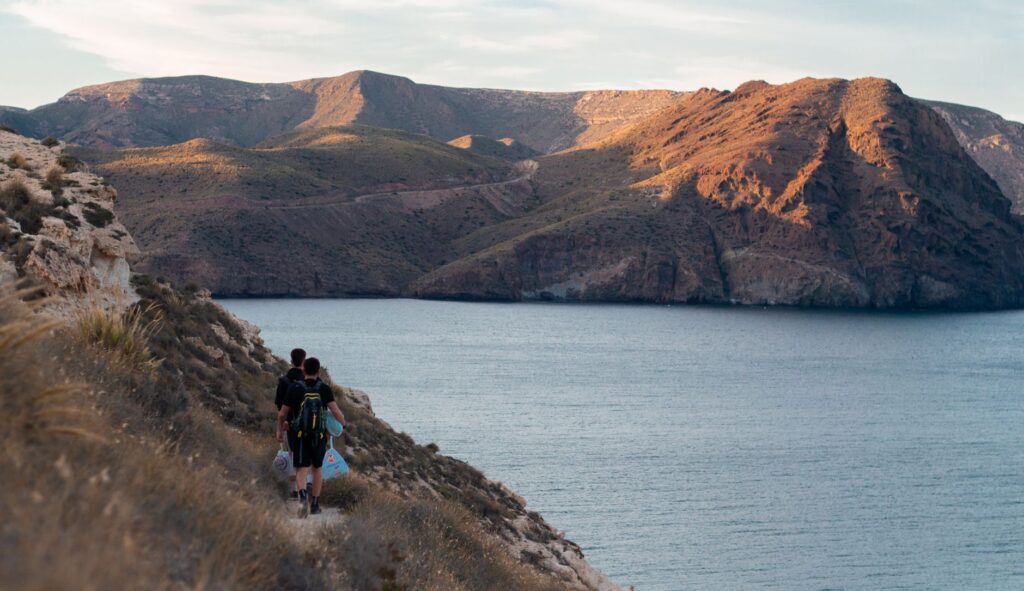
There is a precise instant, right when the sun begins to merge with the marine horizon line in the final days of September, when the light acquires a unique, almost melancholy density, bathing the fields and stone facades with golden and copper reflections. It is the moment when the world’s hustle and bustle completely fades away, and memory begins archiving the moments experienced during the summer. This is not a bitter farewell, but the realization that the best journeys are those that do not end when unpacking bags, but remain latent in our way of looking, eating, and inhabiting the world. Ultimately, squeezing the summer is a reminder that mindfulness and respect for the rhythms of the earth are the only valid passports toward a richer, more leisurely life connected to the essentials.
The true luxury of the contemporary traveler is not the accumulation of destinations checked off a map, but the capacity to stop time and merge with the restful pulse of the territory they inhabit.
Source: Condé Nast Traveler Spain (https://www.traveler.es/galerias/planes-verano-agosto-septiembre-musica-cultura-restaurantes-escapadas)