
The Geography of Arrested Water and the Fluvial Pulse
France’s interior territory conceals a circulatory system that has scarcely altered its cadence over the past two hundred years. Far from the breakneck traffic of modern motorways and the congestion of high-speed rail corridors, the canals of Burgundy—led by the Burgundy Canal and the Nivernais Canal—shape a parallel geography where time is measured by the slow turn of a cast-iron crank and the sound of water slipping through wooden sluice gates. This river network, originally conceived as a commercial artery to relieve the transport of grain, timber, and wine toward Paris, now represents one of Europe’s most fascinating exercises in architectural and landscape preservation.
Approaching this landscape from the perspective of the contemporary traveler requires a radical mental shift. Here, speed is not an asset but a defect. A voyage aboard a converted barge or a lightweight recreational boat forces one to tune into a topography designed by Enlightenment engineers who had to overcome impossible elevation changes through stepped lock systems, hand-carved tunnels in the limestone rock, and complex water-feeding networks supplied by mountain reservoirs. Every kilometer of canal is not merely a communication route, but an open archive of the Industrial Revolution applied to rural France.
Hydraulic Engineering and the Architecture of Elevation
The construction of the Burgundy Canal, formally inaugurated in 1832 after decades of political and financial setbacks, was a titanic milestone. Connecting the Seine river basin to the Rhône required overcoming the watershed divide across the Langres plateau, forcing engineers to devise a system of over a hundred locks on its main slope alone. These structures, built with meticulously squared limestone ashlar blocks, operate on an impeccable gravitational principle requiring no electrical power: the lock keeper—or the boatmen themselves on self-managed sections—operates the gear mechanisms to balance water masses with millimeter precision.
The slowness of the Burgundian canals is not a vestige of the past, but a technology of resistance against modern haste, a reminder that territory only reveals itself to those who accept its geological compass.
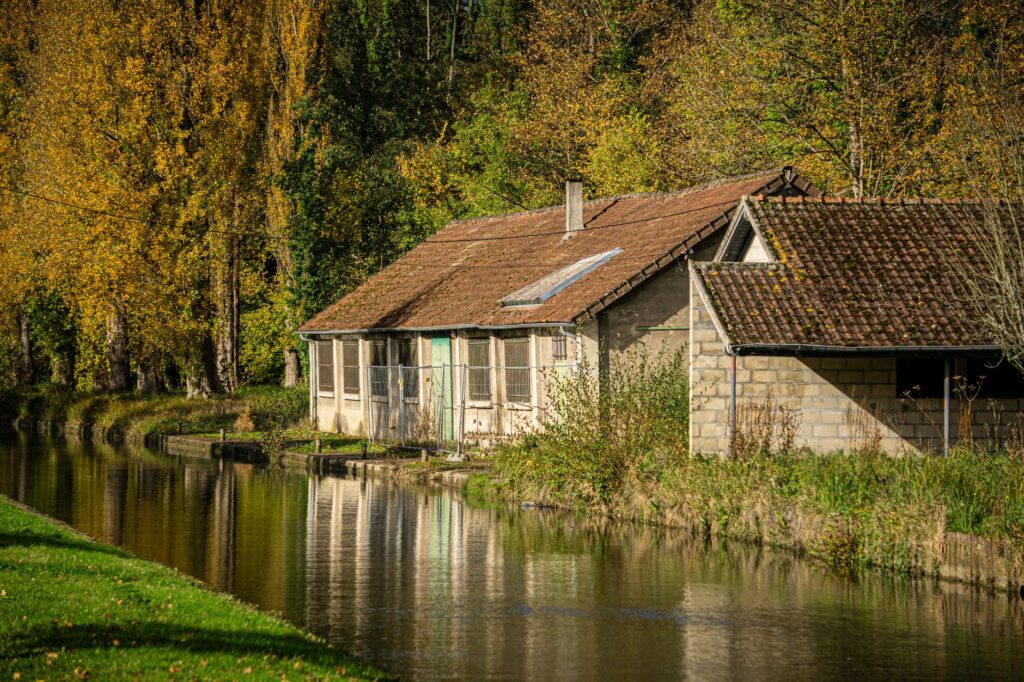
Along this liquid corridor, utilitarian architecture acquires a sculptural dignity. The lock keepers’ houses, standardized under strict functional typologies, punctuate the route as silent guardians of clear stone and flat-tiled or slate roofs. Today, many of these homes have been restored while respecting their original morphology, housing small river management offices or interpretation centers. The region’s limestone, quarried locally, absorbs the shifting light of day, shifting from the ivory-white of midday to golden ochre tones as the sun descends over wheat fields and walled vineyards.
The Riparian Ecosystem and the Greenway
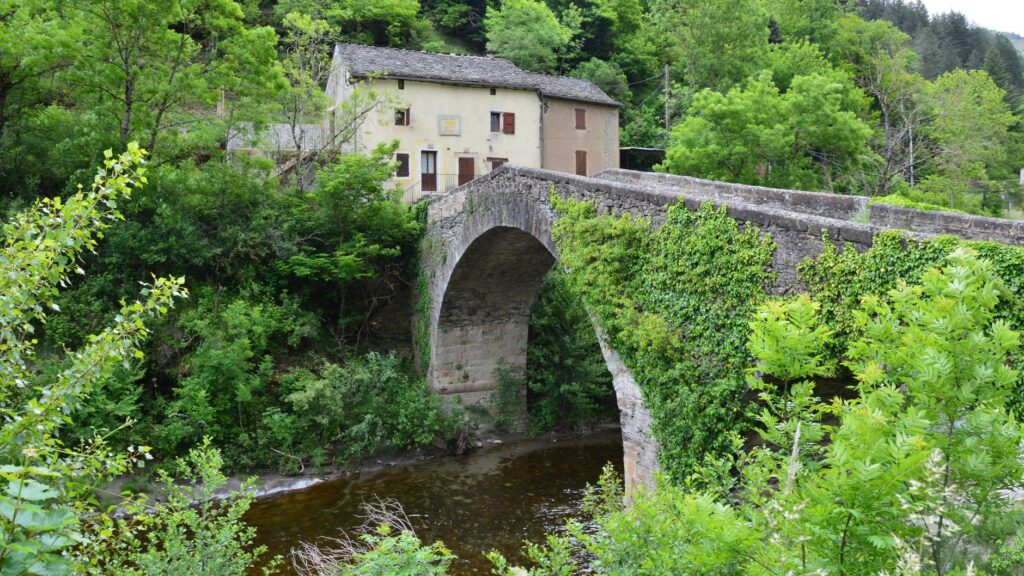
The layout of the Burgundian canals is inextricably linked to towing paths once trodden by horses and men tasked with hauling heavy barges. Today, these tracks have transformed into one of the continent’s best-articulated cycling and hiking routes, known as the Voie Verte. This unpaved path, canopied by a natural vault of centuries-old plane trees, establishes a constant dialogue between water and solid ground.
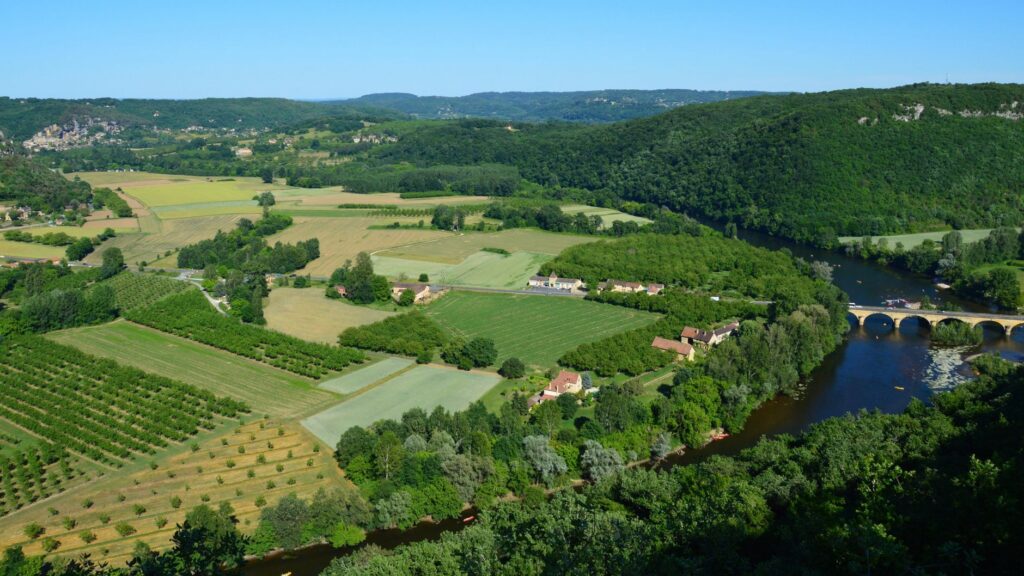
Walking or cycling along the banks of the Nivernais Canal reveals the ecological transition between the deciduous forests of the Morvan and the alluvial plains of the Yonne. This green corridor acts as a biodiversity refuge inhabited by aquatic birds, amphibians, and riparian mammals that have found a secure habitat in the tranquility of the locks. Vegetation management along these banks adheres to strict landscape conservation criteria: indiscriminate logging is avoided, and traditional pollarding is encouraged to prevent tree roots from damaging stone retaining walls while preserving the shade travelers appreciate during summer months.
Inland Ports: Centers of Cultural and Commercial Exchange
Although heavy cargo freight virtually disappeared in the second half of the 20th century, Burgundy’s river ports have reinvented themselves without losing their maritime identity. Enclaves such as Auxerre, Clamecy, or Saint-Jean-de-Losne function today as neuralgic nodes where international recreational boating, artisanal shipyards, and local produce markets coexist. In these docks, life unfolds at the rhythm of sweet tides, with floating communities spending entire weeks moored beneath stone bridges.
Clamecy, historically tied to timber-rafting traditions supplying Paris chimneys, keeps this guild pride alive through specialized museums and summer festivals commemorating the courage of the flotteurs. The weekly markets in these riverside towns serve as meeting points where sailors stock their pantries with local goat cheeses like Crottin de Chavignol, Charolais beef, and sourdough bread baked in traditional wood-fired ovens, weaving a circular economy far removed from mass tourism circuits.
The Underground Heritage: The Feat of Pouilly-en-Auxois
One of the most unique moments in any journey along the Burgundy Canal is the passage through the Pouilly-en-Auxois tunnel, a masterpiece of 19th-century underground engineering. Spanning over three kilometers, this conduit cuts deep through the mountain range, eliminating the need to overcome hundreds of meters of elevation change above ground. For decades, crossing this tunnel in total darkness required ingenious mechanical traction systems, such as electric tugs or submerged chains that hauled barges through without engine fumes suffocating the crews.

Today, recreational boats traverse this dark corridor under strict schedule regulations and modern signaling systems, but the sense of isolation and stony scenography remain intact. The living rock walls, dripping with millennial moisture, return the muffled echo of the engine and the murmur of confined water. It is a physical reminder of the human effort required to tame a complex orography, an interlude of shadow and silence before returning to the open luminosity of river valleys.
Lockside Gastronomy and Terroir Wine
The experience of navigating the Burgundian canals is inseparable from its culinary culture. The larder of fluvial Burgundy draws on freshwater resources and the produce of surrounding valleys. In taverns and restaurants beside former lock-keeper houses, traditional cooking relies on slow preparations: carp in regional white wine, eggs in meurette poached in a dense shallot and bacon sauce, and Burgundy snails seasoned with garlic butter and fine herbs.
The true sophistication of interior Burgundy does not lie in ostentatious luxury, but in the persistence of honest flavors and culinary techniques that respect the rhythms of land and river.
This recipe collection finds its natural counterpart in the region’s wines, from the mineral whites of Chablis to the structured reds of the Côte de Nuits and Côte de Beaune, accessible a short distance from the waterways via brief excursions on bicycles or support vehicles. Local winemakers maintain a close relationship with river operators, organizing private tastings in centuries-old cellars whose underground vaults shelter French oak barrels where Pinot Noir and Chardonnay mature under strict appellation standards.
Practical guide
How to get there: The main access to the Burgundy canal region is via Dijon or Auxerre. From Paris, TER and TGV trains connect to Auxerre in approximately one and a half hours, while Dijon features direct high-speed connections from the capital and Lyon.
When to travel: The official navigation season runs from early May to late October. June and September offer the best weather conditions, with lower boat traffic and ideal temperatures for cycling along the towing paths.
Boat rentals: Several companies specialize in license-free riverboat rentals (permis fluvial), with operational bases in towns such as Migennes, Joigny, and Pouilly-en-Auxois. Basic piloting and lock operation training provided by the company is mandatory before setting sail.
Regulations and locks: Most locks are operated by automated systems or local attendants, with operating hours typically spanning from nine in the morning until seven in the evening, with a midday break. Navigation is prohibited at night and during high-water or weather-alert conditions.
The Traveler’s Rest by the Water
As evening falls, when boat traffic ceases entirely and lock gates are secured until dawn, the landscape of the Burgundian canals acquires an almost metaphysical dimension. Mooring the boat in the shade of a weeping willow, in a solitary stretch where water acts as a perfect mirror for the twilight sky, marks the culmination of a journey that defies the dictatorship of chronological time. In that silence inhabited only by the distant croaking of frogs and the subtle splash of fish, the traveler realizes that true contemporary exploration no longer consists of conquering remote territories, but of recovering the capacity to pause before the invisible beauty of everyday details.