

Contemporary mass migrations rarely announce themselves with trumpets; they usually begin with the monotonous flicker of electronic panels on urban ring roads and the sudden braking that transforms velocity into standstill. When the first Saturday of July unfolds its summery promise, the outbound routes from behemoths like Barcelona and Madrid transform into improvised laboratories of patience. This is not merely a logistical hiccup or a record-breaking statistic at toll booths and highways; it is a sociological phenomenon that lays bare our relationship with time, rest, and territory. In this massive exodus, the asphalt ceases to be a communication channel and turns into a waiting territory, a temporary purgatory where thousands of citizens experience the paradox of seeking freedom through gridlock.
The phenomenon of the summer exodus has been historically documented by media outlets such as La Vanguardia, which in its coverage on July 2, 2022, already noted how traffic jams starting early in the afternoon paralyzed major road accesses. That day was no exception, but rather the confirmation of a ritual repeated year after year. However, beyond the accident chronicles and traffic reports warning of bumper-to-bumper stretches, a fundamental question underlies: why do we continue choosing the exact same moment to seek tranquility? The answer forces us to examine labor structures, the cultural inertia of concentrated rest, and the persistence of a tourism model that standardizes absences.
The Anatomy of a Foretold Collapse
Understanding highway congestion on an outbound Saturday requires analyzing the convergence of multiple structural factors. Modern cities function as precision machines that, for eleven months a year, absorb and expel millions of workers. When summer arrives, the accumulated pressure finds a single escape valve. The A-2 motorway, the AP-7, or the national roads connecting the central plateau with the Mediterranean and the northern coast operate at the absolute limit of their physical capacity. This is no system failure; the system is purposely designed to collapse under the weight of its own temporal rigidity.
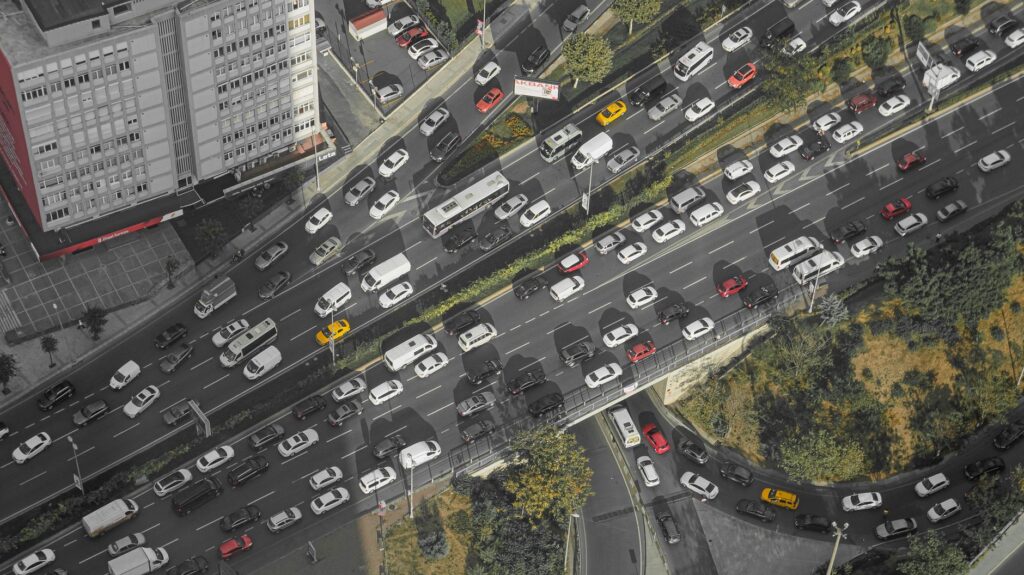
Urban mobility experts remind us that synchronizing collective vacations generates insurmountable bottlenecks. Unlike other countries where staggering the summer calendar is a consolidated reality, in southern Europe we persist in the collective misdeed of relocating all at once. The result is an involuntary choreography of vehicles stalled under the implacable July sun, where the air conditioning becomes the sole refuge and the radio the guiding thread of shared frustration.
Asphalt as a Mirror of Modern Haste
Pausing on the AP-7 or the A-6 during a mass departure operation is, in truth, an exercise in collective introspection. Observing the interior of neighboring vehicles reveals a domestic microcosm loaded with luggage, makeshift gear, and tired faces where the illusion of rest mingles with accumulated fatigue. Sociologist Zygmunt Bauman warned about liquid modernity and our inability to put down roots, but on the outbound highway we witness the opposite: we are hyper-connected to movement, prisoners of an urgency to arrive that cancels out the present.
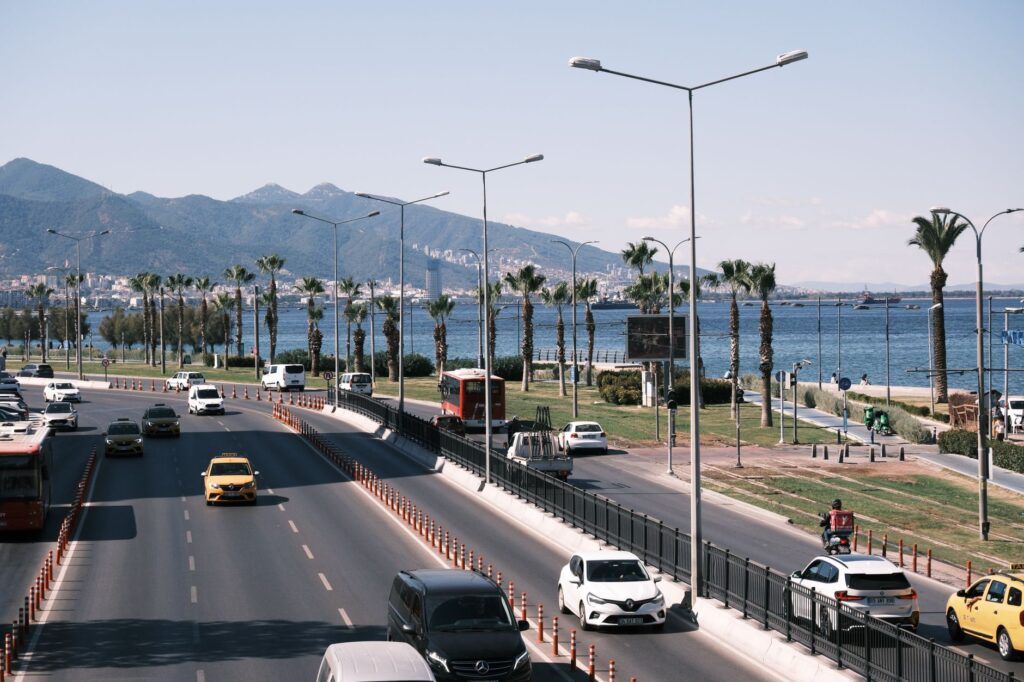
The journey does not begin when you reach the destination, but at the moment you decide to accept slowness as part of the route.
This urgency to disconnect at full throttle generates a paradoxical stress. Well-being, which should be the ultimate goal of the vacation period, is sabotaged from the very first kilometer by the anxiety of arrival. Service stations, traditionally spaces of inconsequential transit, transform into chaotic oases where entire families gather looking for shade, a hot coffee, or a breather for the little ones. In these secondary outposts of the route, the true battle to maintain sanity before stepping onto the beach sand or the mountain freshness is fought.
The Psychology of the Trapped Traveler
How does spending hours trapped in traffic before starting a well-deserved break affect us psychologically? Traffic psychology clinics note that road frustration triggers stress responses similar to those of a hostile work environment. Cortisol levels rise, muscle tension increases, and patience erodes meter by meter. Yet this scenario also offers an unexplored opportunity for mental resilience. Those who manage to transform the wait into voluntary downtime—a space for listening to audiobooks, relaxed conversation, or simply contemplating the secondary landscape—discover that well-being can be anticipated by shifting perspective.
The key lies in shedding the dictatorship of the stopwatch. Public administrations and emergency services tirelessly insist on the need to stagger departures, check vehicle conditions, and maintain hydration, but the driver’s mental health is rarely addressed. Travel well-being does not depend exclusively on traffic flow, but on individual capacity to manage impatience and accept that delay is part of the human adventure.

Alternatives and the Rediscovery of Slowness
Against the dogma of the saturated highway, the need to reclaim secondary roads emerges with force. National and regional roads, once abandoned in favor of high speed and toll roads, offer a scenic and emotional refuge today for travelers willing to sacrifice speed in exchange for beauty. Driving through the peninsular interior during a July Saturday, avoiding congested main axes, transforms the torment of the traffic jam into a journey of cultural discovery.
Anonymous villages, sunflower fields stretching to the horizon, and small rural guesthouses remind us that the territory is inhabited by more than indicator signs and impersonal gas stations. This option not only relieves pressure on main infrastructures but inaugurates a more sustainable, conscious tourism respectful of the traveler’s biological rhythms.
Toward a New Paradigm of Summer Mobility
The challenge facing modern societies is not merely widening lanes or digitizing traffic management through smart panels, but rethinking the very concept of leisure. As long as work-life balance and labor flexibility policies remain anchored in nineteenth-century models, departure operations will continue to reproduce their own rituals of overcrowding. Summer well-being requires gradual decompression, both physical and mental.

Automobile associations and sustainable mobility experts advocate for a cultural shift where displacement ceases to be an annoying formality and integrates into the travel experience. When we understand that the transit is also lifetime, the traffic jam stops being a sentence and becomes a necessary pause in a world that spins far too fast.
Practical guide
How to plan the summer exodus while minimizing stress:
• Avoid critical hours: If possible, travel during the early hours of dawn or postpone departure to Sunday morning.
• Comprehensive prior check: Verify fluid levels, tire pressure, and air conditioning status to prevent breakdowns during gridlock.
• Hydration and provisions: Carry enough water, fresh fruit, and healthy snacks in the cabin, especially when traveling with children or the elderly.
• Alternative routes: Use real-time navigation apps but consider diverting your trajectory to secondary roads if the blockade exceeds thirty minutes.
• Rest guidelines: Make mandatory stops every two hours or two hundred kilometers, using the time to stretch your legs and clear your mind.

Useful resources and information sources:
• Always consult official traffic channels (equivalent national or regional agencies) before starting the engine.
• Listen to local radio stations en route to receive last-minute notices regarding road incidents and recommended detours.
The Horizon of Reunion
At the end of the road, when the engine is switched off and the fresh coastal or mountain air replaces the monotonous hum of the asphalt, true transformation occurs. The hours lost in the traffic jam dissolve before the prospect of the days ahead. The journey, with its tensions, waits, and small truces, proves that well-being is not a static state, but the result of knowing how to transit between chaos and calm. It is at that threshold that human beings recover their proper measure, reminding us that stopping—even by force—is sometimes the only way to move forward toward oneself.
Source in EN: La Vanguardia – Traffic gets complicated on the roads on the first Saturday of departure (https://www.lavanguardia.com/sucesos/20220702/8382047/complica-trafico-carreteras-primer-sabado-salida.html)