
The Blue Artery Between Snow-Capped Peaks and Terraced Vineyards
Lake Geneva is far more than a crescent-shaped geographical depression reflecting the jagged peaks of the Alps and the rolling outlines of the Jura mountain range; it is a high-density basin where everyday mobility intertwines with a technical heritage found nowhere else on Earth. Spanning over five hundred and eighty square kilometers shared between the Swiss cantons of Vaud, Geneva, and Valais, alongside the French department of Haute-Savoie, this aquatic expanse demands an exceptional logistical deployment. Here, daily commutes do not rely on a single infrastructure, but rather on a perfectly synchronized intermodal mesh combining high-precision railways, electric urban buses, and a centenarian fleet of paddle steamers that continue to operate as an essential backbone of public transit.
Analyzing mobility across the Geneva basin requires understanding how one of the most affluent regions in Europe tackles the challenge of moving hundreds of thousands of commuters without gridlocking its lakeside roadways. Chronic congestion along the A1 motorway connecting Geneva to Lausanne has forced cantonal and federal authorities to rethink the role of water and rail as a single circulatory system. Within this landscape, the Compagnie Générale de Navigation sur le lac Léman (CGN) ceases to be merely a tourist attraction and becomes a critical driver in decentralizing terrestrial traffic, linking communities that would otherwise find themselves cut off by the saturation of primary highway axes.
The Belle Époque Fleet as an Operational Backbone
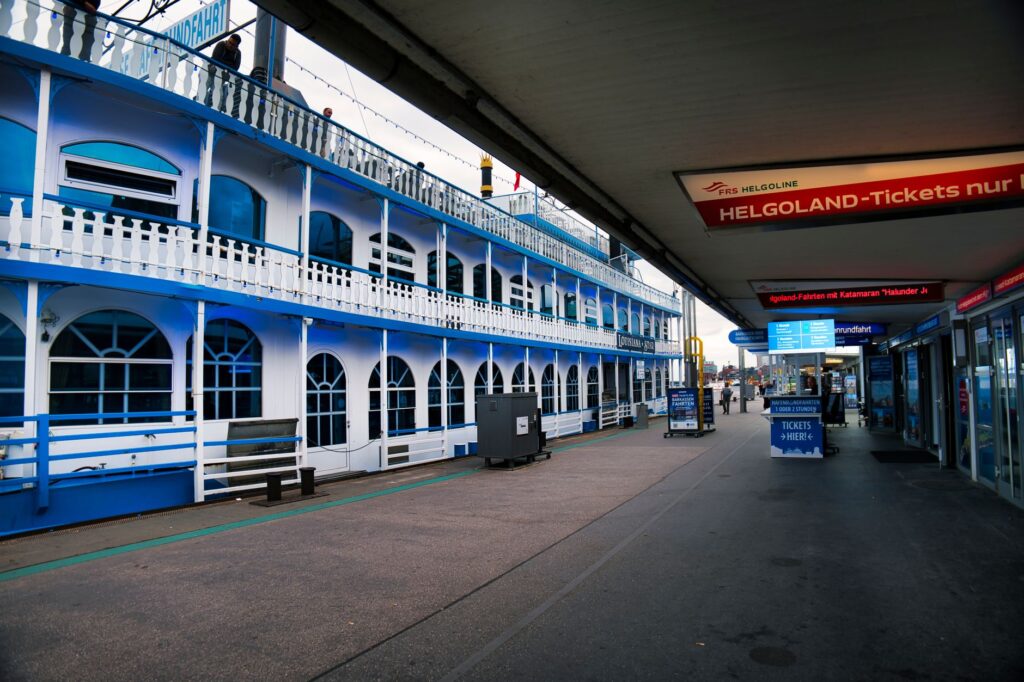
The floating heart of Lake Geneva is composed of eight historic paddle steamers built between 1904 and 1927, popularly known as the Belle Époque vessels. These craft, featuring imposing black smokestacks, oscillating engines, and Louis Philippe-style salons, are not static museum pieces; they operate on regular schedules within the official public transport timetables managed by CGN. During morning and evening peak hours, these giants of iron and timber transport workers and students who prefer the aquatic traverse over the gridlock of national route 9. Fare integration is total: a regional transit pass allows boarding these giants of inland navigation with the exact same ease used to validate an urban bus ticket in Lausanne.

Nevertheless, maintaining this fleet represents a monumental technical challenge for contemporary naval engineering. The shipyards of Ouchy and CGN’s workshops in Lausanne serve as the sole remaining sanctuaries preserving nearly extinct artisanal crafts, ranging from the traditional caulking of teak decks to the bronze casting of replacement parts for the colossal side paddle wheels. Added to this heritage preservation effort is technological modernization: the oldest vessels have undergone extensive overhauls to adapt their boilers to stringent environmental standards, drastically reducing emissions of nitrogen oxides and fine particulates—a mandatory requirement for operating within a protected natural environment surrounded by alpine biosphere reserves.
The Role of SBB and the Northern Shore Railway Grid
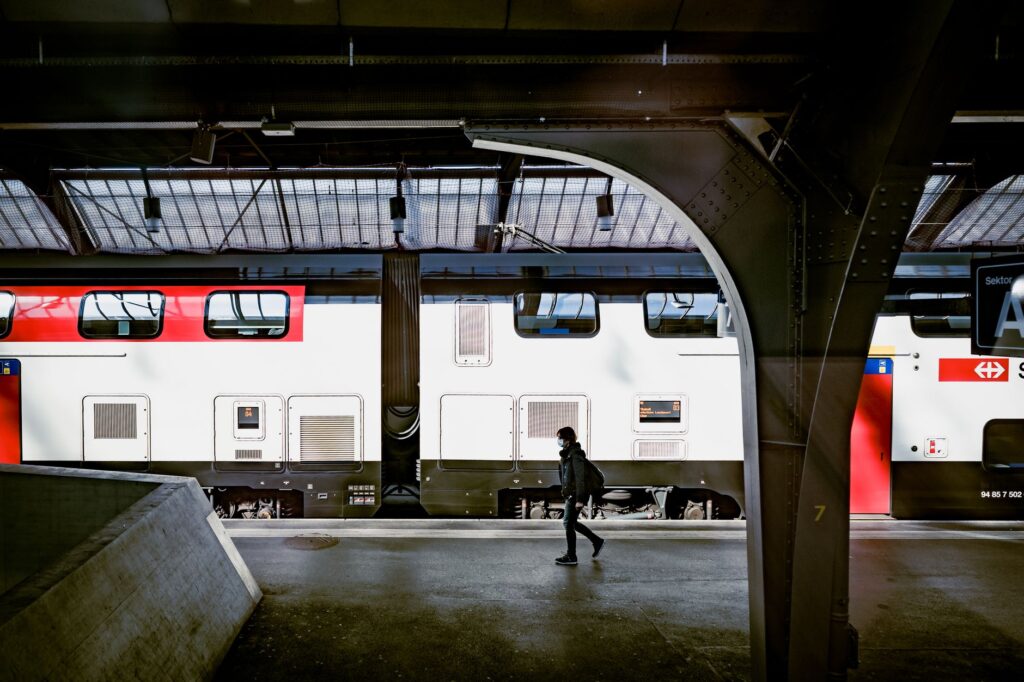
Operating in parallel with lake traffic, the main railway line of Swiss Federal Railways (SBB/CFF) running along the northern shore between Geneva and Brig acts as the great lintel of alpine mobility. This rail corridor sustains one of the highest train frequencies on the continent, with commuter services (RER Vaud and Léman Express) operating at intervals of just a few minutes during peak demand. Intermodality at strategic nodes such as Nyon, Morges, and Vevey has been engineered so that transfers between high-speed or regional trains and local buses or ferries occur in under five minutes, minimizing commuter friction time.
The complexity of this rail network lies in its constant adaptation to the demographic growth of the Lemanic arc. Expansion works at Lausanne station and the modernization of signaling interlocks along the coastal line have required multi-million-dollar investments to prevent bottlenecks that would otherwise paralyze the economies of three cantons. Unlike other metropolises where public transport comprises segregated networks, the Geneva basin system operates on the principle of symmetrical clockface scheduling: trains arrive and depart at the exact same minute every hour, synchronizing millimetrically with CGN steamers docking at smaller ports, guaranteeing a fluidity that defies the complex topography of local winds and mountain gradients.
The Winds of the Leman: When Meteorology Dictates Navigation Rhythms
The daily operation of the transport network on Lake Geneva is permanently conditioned by capricious alpine meteorology. Two primary winds dominate the dynamics of the lake basin and dictate the safety and punctuality of both ferries and small service craft: the Bise and the Vent. The Bise, a cold, dry wind blowing from the northeast, brings violent gusts capable of kicking up considerable waves across the wide expanse known as the Grand Lac, drastically complicating docking maneuvers in exposed ports such as Thonon-les-Bains or Evian-les-Bains on the French coast.
Conversely, the Vent, a warm and humid southwest wind, frequently brings sudden thunderstorms that reduce visibility and force captains to modify routes or activate emergency protocols in coordination with CGN’s control center in Lausanne. Crews undergo advanced meteorological training to interpret subtle shifts in barometric pressure and the appearance of the Chablais peaks. This direct reliance on natural elements endows lake transport with an almost timeless character, serving as a reminder that despite extreme Swiss technological precision, the raw power of nature continues to set boundaries on human intervention in the aquatic realm.
The Invisible Border: Cross-Border Cooperation and the Léman Express
One of the most significant recent achievements in the region’s transport infrastructure is the launch of the Léman Express, Central Europe’s largest cross-border rail network. This project unified the networks of SBB in Switzerland and SNCF in France, connecting Geneva with French localities such as Annemasse, Cluses, and Evian through an underground urban link in the heart of Geneva known as the CEVA (Cornavin-Eaux-Vives-Annemasse). Prior to this integration, crossing the border for employment reasons meant hours of queuing at saturated border checkpoints such as Moëllesulaz or Saint-Julien-en-Genevois.
The impact of the Léman Express has rewritten commuting patterns, allowing thousands of French residents in Upper Savoy to travel daily to the financial and industrial hubs of Geneva without setting foot on asphalt. However, managing this binational behemoth is not without bureaucratic and operational friction. Differences in railway labor agreements, signaling systems, and maintenance protocols between the Swiss federal administration and the French public utility require permanent coordination committees to prevent cross-border strikes or rolling stock mismatches that could compromise the millimetric punctuality characterizing the region.
Sustainability Challenges and the Fleet’s Energy Transition
In line with the ambitious climate goals of the Swiss Confederation and the European Union, transportation on Lake Geneva is undergoing a historic energy transformation. Total electrification of the CGN fleet and the urban buses connecting to the piers forms the core of a strategy to achieve carbon neutrality across the entire lake basin by 2030. New vessels joining secondary routes no longer rely on traditional diesel engines; instead, they utilize hybrid and fully electric propulsion systems powered by high-capacity batteries recharged via alpine hydroelectric energy during overnight layovers at base ports.
This green retrofit process entails formidable technical challenges, such as sizing fast-charging stations at historic piers without disrupting the heritage protections governing structures under cantonal law. Likewise, managing batteries at the end of their lifecycle and optimizing hull energy efficiency under strong river currents demand constant research in collaboration with the École Polytechnique Fédérale de Lausanne (EPFL). The overarching objective is to demonstrate that technological modernization must never contradict the preservation of the cultural landscape that has made this region a global benchmark for sustainable tourism and urban livability.
Practical guide
How to Get There: Geneva International Airport (GVA) features a railway station integrated directly into the terminal, from where direct train services depart toward Lausanne, Montreux, and the rest of the Lemanic network every few minutes.
Rail Network and Fares: The transport system operates on a regional fare community model (unireso in Geneva, Mobilis in Vaud). Day passes or regional tickets allow seamless combinations of trains, urban buses, and CGN steamers without requiring separate tickets.

Historical Navigation: To travel aboard Belle Époque paddle steamers, consult seasonal timetables provided by CGN (cgn.ch). Main routes connect Lausanne-Ouchy with Evian and Thonon, as well as Geneva with the terraced wine-growing villages of the Nyon coast.
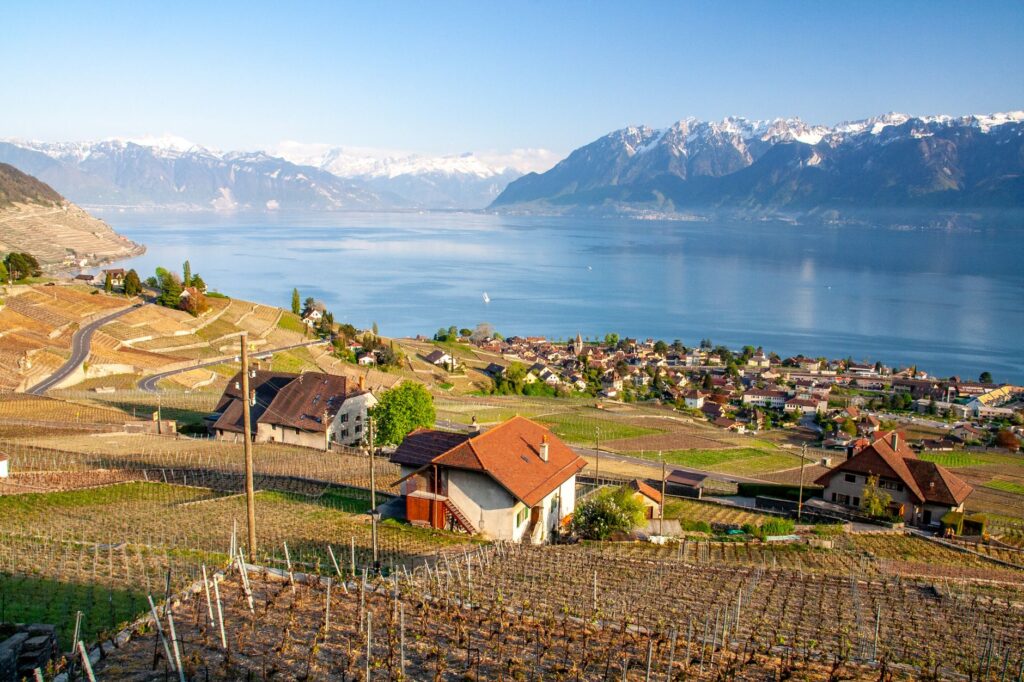
Best Time to Visit: The spring and autumn months offer the highest light stability and lower tourist crowds, allowing travelers to appreciate the historic stone viaducts and terraced vineyards of the Lavaux region in absolute tranquility.
Epilogue on the Gentle Waters of the Alpine Twilight
When the sun dips below the ridges of the Jura and the final golden glimmers ignite the centennial stone viaducts flanking the Vaud coast, Lake Geneva adopts an apparent stillness that contrasts sharply with the operational frenzy of its piers. At the Vevey quay, the silhouettes of a Belle Époque steamer cut against the dark horizon, venting residual steam from its modernized boilers while passengers disembark in silence, absorbing the crisp breeze drifting down straight from the Rhone glaciers. This delicate equilibrium between twenty-first-century industrial precision and the serene elegance of a centennial tradition proves that true sustainable mobility does not consist in accelerating the world’s pace, but in integrating respectfully with the timeless rhythms of the land that sustains it.