
Introduction to the Mirror of Water and Asphalt
Lake Garda is far more than a mere alpine postcard or a simple water reservoir carved by glaciers during the Pleistocene. In its operational dimension, it is a complex intermodal arena where surface transport defies vertical cliffs, tunnels carved directly into living rock, and unpredictable lacustrine currents. Mobility within this basin represents a delicate balance between the centuries-old tradition of inland navigation and the massive pressures of contemporary tourism, forcing engineers, captains, and local authorities to coordinate transport networks connecting three distinct provinces and administrative regions with millimetric precision.
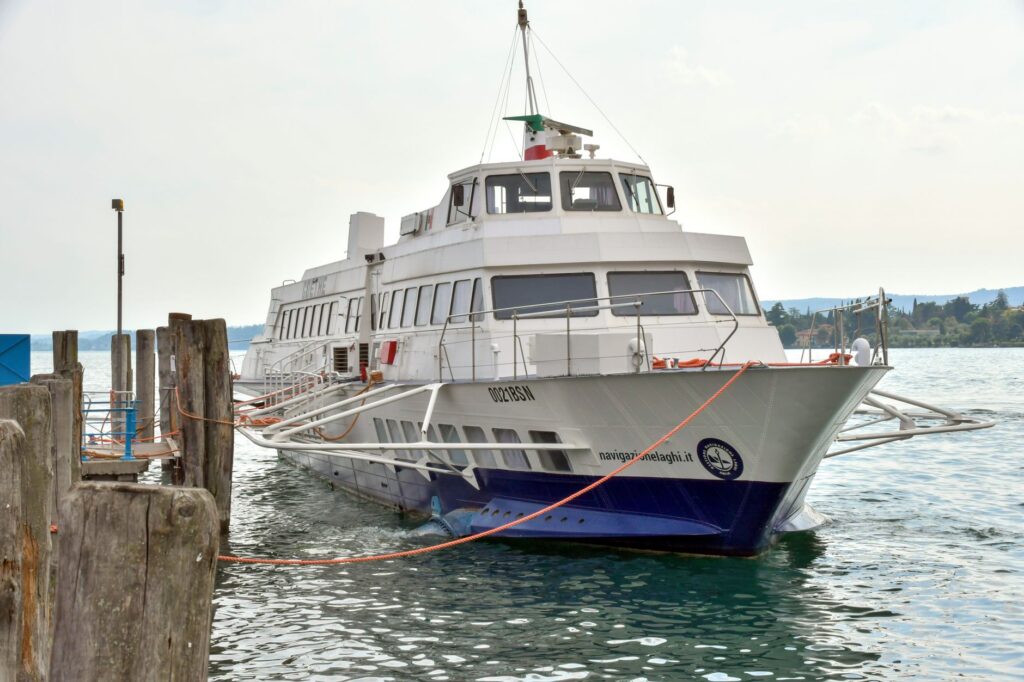
While motorists face seasonal traffic jams along the legendary Gardesana Oriental road, a vital alternative operates beneath the surface and across the waters. The ferries and catamarans of Navigazione Laghi act as authentic circulatory arteries, carrying not only camera-toting visitors but also residents, utility vehicles, and essential freight that would otherwise overwhelm the road infrastructure. This report examines the invisible machinery that allows the territory to function far beyond the peak summer season.
The Nautical Backbone: History and Operation of Ferries
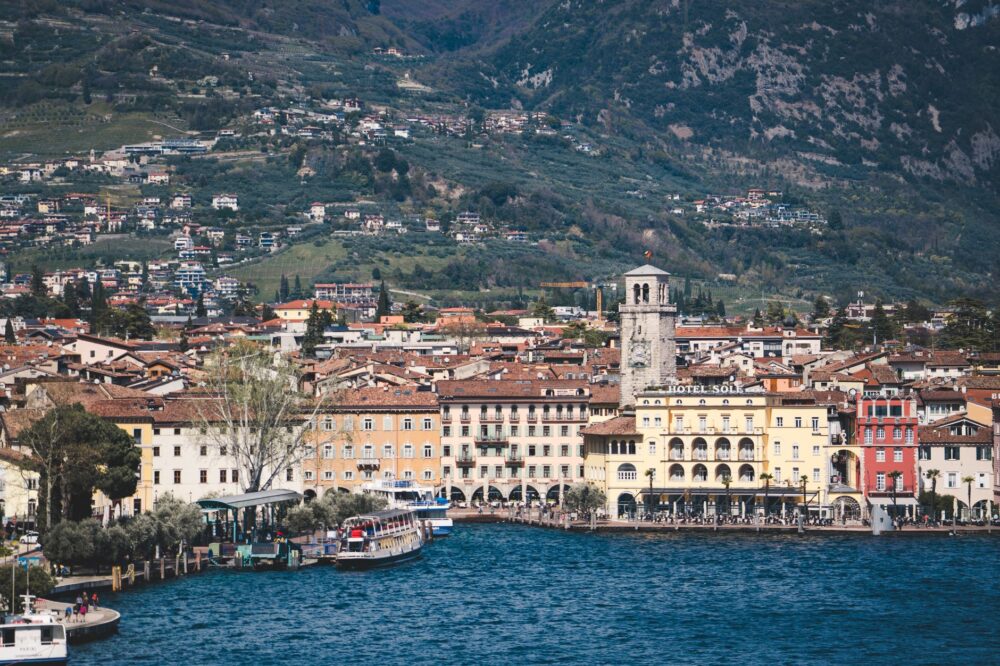
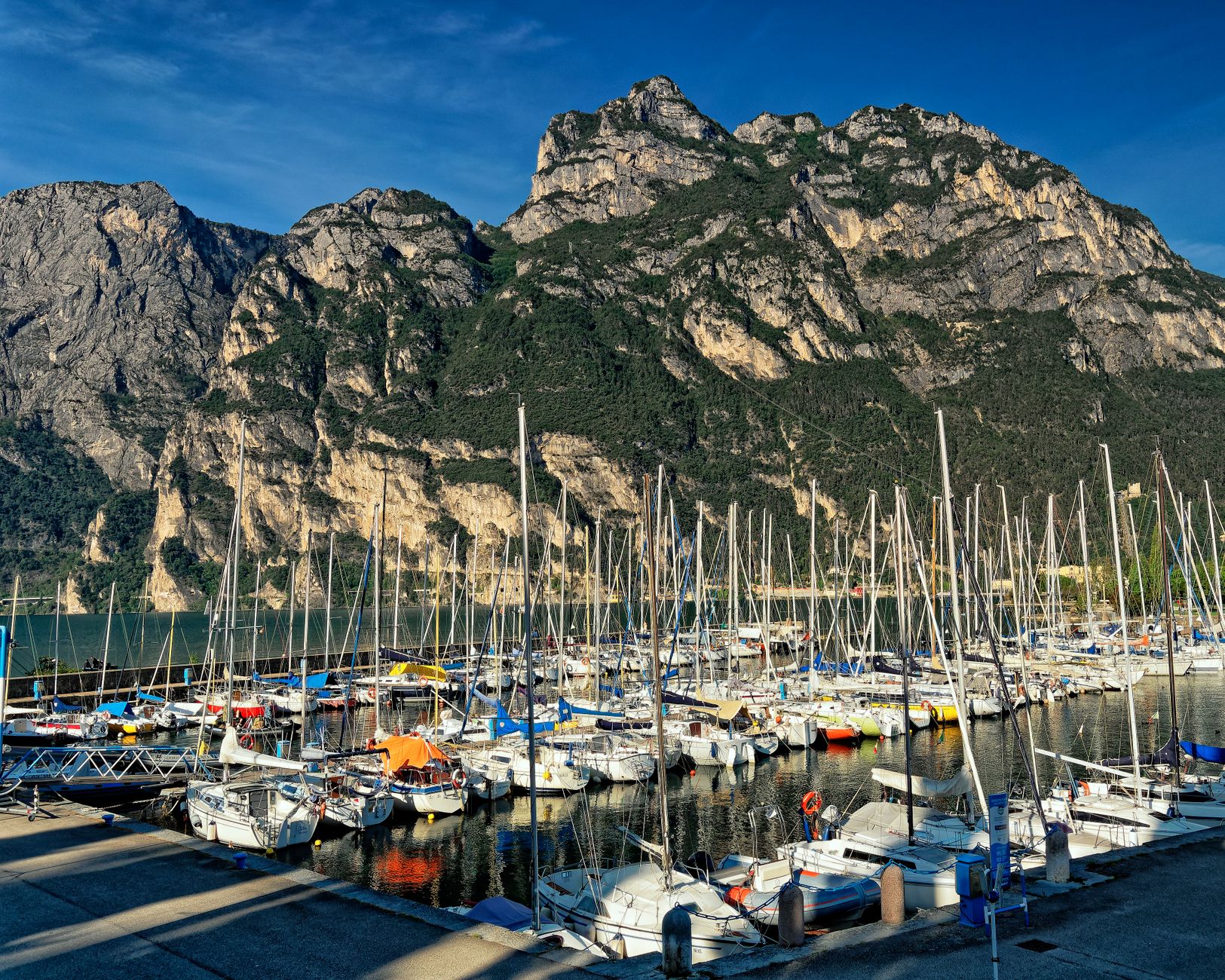
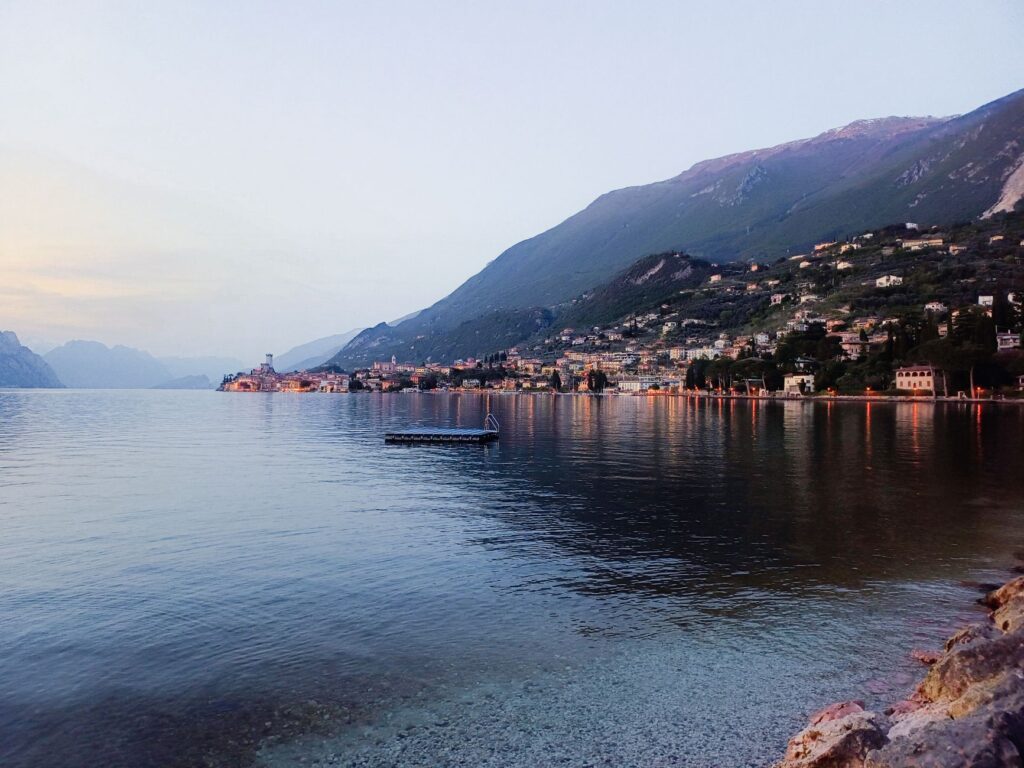
Commercial and passenger navigation on Garda boasts a heritage dating back to the 19th century, when Austro-Hungarian steamships first began plying its waters. Today, the fleet combines restored historical vessels with modern high-speed catamarans. Coordinating this system requires dealing with a capricious geography: while the southern end of the lake opens into gentle morainic hills, the northern stretch strangles between vertical rock walls over a thousand meters high, where dominant winds like the Pelér and the Ora impose severe navigation conditions.
Navigazione Laghi captains operate under strict safety regulations, managing historic docks where port infrastructure has barely changed since the Belle Époque. Docking maneuvers in tightly enclosed harbors like Limone sul Garda or Malcesine demand exceptional skill, especially when sudden lateral gusts threaten to blow vessels loaded with passengers and cars off course. This service is far from a mere tourist luxury; it is an essential public service guaranteeing social cohesion between shores separated geographically yet united by history.
Technical Challenges of the Modern Fleet
The ecological transition has reached Garda’s waters with the gradual introduction of hybrid units and rigorous hull maintenance to minimize shoreline erosion. Energy efficiency in an enclosed lake basin is a top priority to prevent acoustic and chemical pollution in fragile ecosystems. Naval engineers face the challenge of designing vessels capable of operating both in the shallow waters of the south and the deep trenches of the north.
Furthermore, tariff integration with railway networks and regional buses remains an evolving work in progress. Frequent commuters rely on combined passes allowing them to step off a train in Desenzano del Garda or Peschiera del Garda directly onto a ferry deck, an integrated mobility model serving as a benchmark for other European lake basins.
The Gardesana: Engineering Roads at the Edge of the Abyss
If navigation represents fluidity, the road network circling the lake embodies the tension between daring civil engineering and constant geological hazards. Built largely during the interwar period, the Gardesana Occidental road and its eastern counterpart are engineering marvels winding through sinuous galleries blasted directly into limestone cliffs. Driving these routes demands absolute focus due to narrow lanes and the constant risk of falling rocks.
Provincial authorities in Brescia, Verona, and Trento invest millions annually to install containment nets, seismic sensors, and rockfall barriers. Road safety along this corridor is an ongoing challenge, particularly during heavy rains or alpine thaws. Despite these hurdles, the road remains the primary artery for heavy transport and commercial distribution supplying lakeside municipalities.

The Impact of Seasonal Traffic and Saturation
During summer months, traffic volumes far exceed the nominal capacity of infrastructure built nearly a century ago. Bottlenecks multiply at critical points like Gargnano or Torri del Benaco, where large commercial vehicles and tour buses must execute millimetric maneuvers to pass each other. This saturation has sparked recurrent debates over restricting private traffic or creating subterranean bypasses.
Institutional responses have ranged from implementing smart toll systems to promoting interconnected bike lanes, such as the ambitious Garda Cycle Path. Promoting active mobility in such a rugged environment is a titanic task, yet completed sections demonstrate that it is possible to divert recreational tourism toward low-impact non-motorized transport options.
Regional Buses: The Daily Pulse Between Valleys and Shores
Beyond the scenic coastal routes, a dense bus network operated by companies like ATV (Azienda Trasporti Verona) and Arriva Lombardia sustains the mobility of students, workers, and local residents. These lines connect lake shores with major railway hubs and key cities like Verona, Brescia, and Trento, while also penetrating adjacent alpine valleys such as Val di Ledro or Valle Sabbia.
The punctuality of these services is constantly threatened by the very traffic congestion affecting private cars, forcing planners to test solutions such as temporary priority lanes and timetables aligned with school calendars. Timetable integration between buses and ferries is vital to prevent prolonged waits at piers, a gear requiring daily coordination among various private and public operators.
The true measure of an efficient transport system in an alpine setting is not how many tourists it can move in August, but how it ensures a local resident can reach the reference hospital in November without wasting half a day in the process.
This human and operational perspective highlights the importance of keeping secondary routes active even when direct economic profitability is minimal. Without these services, depopulation in surrounding mountain areas and tourist hyper-specialization along the shores would reach levels unsustainable for the region’s social fabric.
Railway Connections and Gateway Portals
Garda’s transport system does not operate in a vacuum; it depends critically on major rail lines grazing its southern and northern extremes. The stations of Peschiera del Garda and Desenzano del Garda, situated on the Milan-Venice high-speed line, act as primary gateways for millions of annual travelers. Rail intermodality enables a passenger arriving from Rome or Milan to reach the lake’s edge within hours, reducing the need for private cars on long-distance journeys.
At the northern end, the historic Brenner line and the projected base tunnel indirectly connect the region with northern Europe, facilitating a steady flow of Central European visitors. Service synchronization between Trenitalia regional trains and local bus networks is the operational Achilles’ heel: when a train is delayed, the entire connection chain toward the interior of the lake destabilizes, revealing the fragility of tight timetables.

The Transition Toward Sustainable Mobility and the Electric Future
Faced with environmental pressures and aging infrastructure, regional governments launched the «Garda 2030» program, a comprehensive strategy to decarbonize transport across the basin. Fleet electrification for ferries is advancing steadily, accompanied by the installation of fast-charging points for electric vehicles along major roadways and peripheral park-and-ride lots.
Additionally, unified digital platforms are being deployed to allow residents and tourists to plan and pay for combined train, bus, ferry, and bicycle trips through a single mobile application. Digitizing mobility in an area with such heterogeneous demographics presents cultural and technical barriers, but it remains the only viable path to absorb projected tourism growth without sacrificing the quality of life for permanent residents.
Practical guide
How to get there: The main railway entry points are Peschiera del Garda and Desenzano del Garda stations, directly connected to Milan, Venice, and Verona via frequent high-speed and regional trains.
Inland navigation: Navigazione Laghi operates regular routes year-round, with increased frequency and diverse itineraries (including vehicle transport) between April and October. It is recommended to check current timetables on their official website, as schedules vary by season and weather conditions.

Tickets and fares: Daily and zonal passes combining ferry rides are available. For road transport, ATV and Arriva manage integrated tickets purchasable at tobacco shops, mobile apps, or directly onboard with a surcharge.
Driving rules: Driving along the Gardesana road requires extreme caution due to narrow tunnels and cyclist traffic. Heavy vehicles face time restrictions on certain challenging stretches.
Epilogue: The Silent Beat of Water and Asphalt
When evening falls and the massive influx of visitors retreats to hotels or leaves the basin via southern highways, Lake Garda recovers a millennial solemnity. Along the deserted docks of Riva del Garda or Sirmione, the gentle lapping of water against wooden pilings contrasts with the distant echo of nighttime traffic in mountain tunnels. This constant contrast between the fury of natural elements, the daring of human engineering, and the fragility of ecosystems defines the true identity of a territory in perpetual motion.
Watching the silhouette of a ferry cross dark waters under moonlight reminds us that mobility here is not a mere logistical formality, but a silent pact between man and landscape. Sustaining this fragile balance requires technical rigor, environmental sensitivity, and an unwavering commitment to the communities calling these alpine shores home, ensuring the great mirror of Lake Garda continues to reflect both its historical past and sustainable future.