Introduction to the Melanesian Frontier and Its Fragmented Geography
The Republic of Vanuatu stretches across a volcanic and coral arc spanning over thirteen hundred kilometers in the heart of the South Pacific Ocean. This archipelago, comprising some eighty main islands, presents a geography as imposing as it is fragile, where the distance between atolls is measured not only in nautical miles, but in the technical complexity of a transport system constantly challenged by ocean fury and capricious insular topography. To understand the reality of Vanuatu, one must delve into its intermodal system, a network where general cargo coastal cabotage, short-haul aviation over compacted coral airstrips, and traditional watercraft propelled by human skill in enclosed lagoons coexist.
Geographic isolation has historically shaped the identity of its rural communities, which depend on a fragmented logistics network for the supply of basic goods, medical evacuations, and the commercialization of agricultural commodities such as copra and cocoa. Far from conventional tourist routes, this report examines the operational framework that keeps economically and socially alive communities separated by oceanic abysses exceeding three thousand meters in depth, unraveling the challenges of an infrastructure reinventing itself amidst tropical storms and structural budget constraints.
The Maritime Backbone: Cargo and Passenger Cabotage in the Koro Sea
Maritime traffic constitutes Vanuatu’s true economic lifeline. Lacking a state-owned fleet of large ferries connecting all islands regularly, responsibility falls upon a private and heterogeneous fleet of coastal freighters known locally as copra boats. These vessels, of modest length and with multifunctional holds, set sail weekly from the main port of Port Vila on Efate and Luganville on Espiritu Santo, carrying everything from bags of cement and fuel to passengers sleeping on deck mats during multi-day journeys.
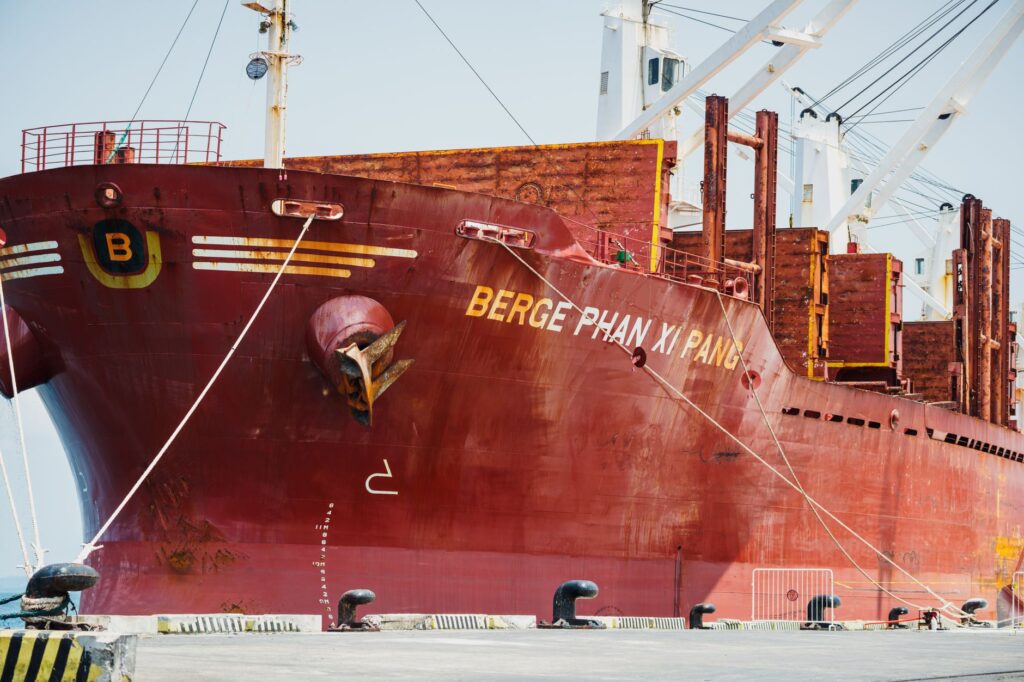
Operations in secondary ports possess a handcrafted precision. Lacking deep-water docks on most outer islands, freighters must anchor in open water beyond the barrier reefs. There begins a complex transshipment maneuver where fiberglass outboards and dinghies approach the ship’s side to offload cargo bundle by bundle, defying unpredictable currents and swell generated by trade winds. This nautical liturgy requires captains with deep empirical knowledge of coral channels, where a miscalculation of a few meters can result in the definitive grounding of the hull upon madreporarian formations.
The sea is not a border separating Vanuatu, but the only liquid highway where the survival of each island depends on the punctual arrival of the next freighter.
Weather conditions add a critical layer of uncertainty to navigation. During the tropical cyclone season, typically running from November to April, maritime authorities suspend departure permits for smaller vessels, completely isolating entire islands for weeks. The lack of safe harbors along inter-island routes forces shipowners to maximize satellite surveillance and coordinate their paths with regional meteorological centers in Fiji and New Zealand, ensuring vessels seek shelter in the shadow of major volcanic cliffs before winds reach hurricane force.
Coral Airstrips: Short-Haul Aviation on the Periphery
When the sea becomes impassable, light aviation becomes the only emergency bridge available. Vanuatu’s airport network consists of a handful of paved airfields on the main islands and over twenty secondary airstrips built directly on fossilized coral plateaus or cleared volcanic terrain on islands such as Tanna, Malakula, or Ambae. These infrastructures lack conventional control towers and rely on single-sideband radio communication and the visual expertise of local pilots.
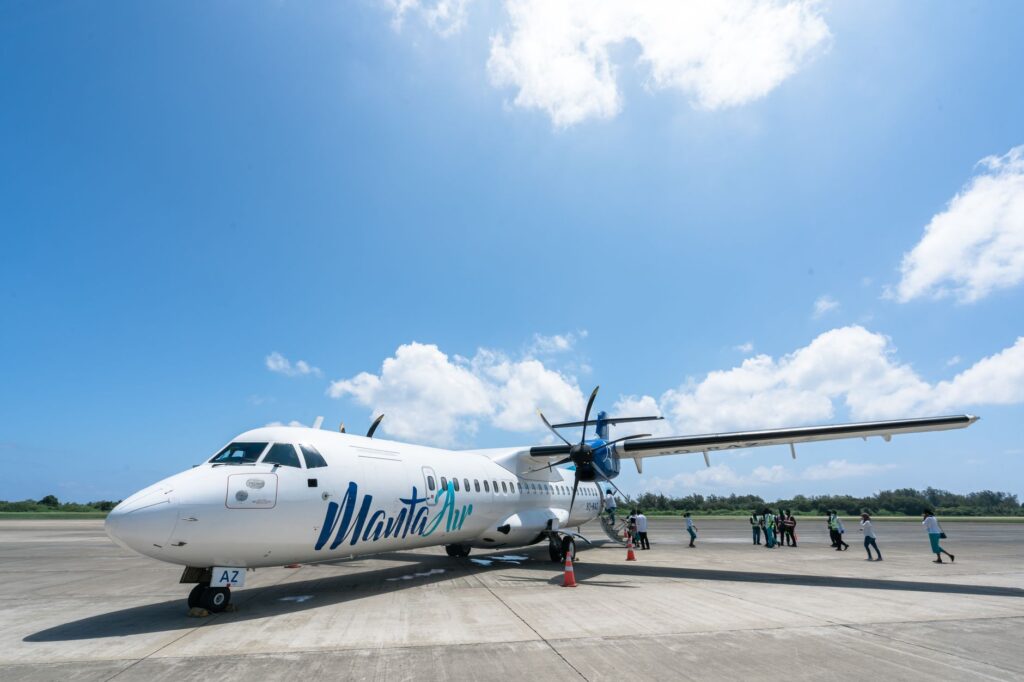
Operating fixed-wing turboprop aircraft on these strips demands rigorous logistical design. Planes must carry return fuel from main supply hubs, as most outer airfields lack approved storage tanks. Furthermore, maintaining runway surfaces represents a constant challenge: erosion caused by torrential rains and the invasion of tropical vegetation forces local crews to manually compact crushed coral periodically to prevent damage to landing gears during taxiing and takeoff.

Domestic air cargo flights not only transport passengers but fulfill a vital sanitary function. The emergency aeromedical evacuation program coordinated between the Ministry of Health and private operators allows the transfer of critical patients from isolated health posts to the reference hospital in Port Vila. However, the lack of nighttime lighting on the vast majority of runways strictly limits these operations to daylight hours, turning every afternoon flight into a race against time to avoid sunset over the marine horizon.
The Logistics of Copra and Local Markets in the High Islands
Goods transport in Vanuatu is intrinsically linked to the economic cycle of copra, the dried coconut kernel that forms the primary source of cash income for rural families. The logistics chain begins in family plantations, where farmers transport heavy sacks on animal back, in wheelbarrows, or via human porterage along muddy paths winding through humid jungles down to coastal collection points.
Once on the coast, gathering is synchronized with the schedules of inter-island freighters. Local merchants act as logistical and financial agents, purchasing production on credit or through barter and storing it in sheds protected from ambient humidity until the vessel appears on the horizon. This commercial exchange sustains the subsistence economy, enabling communities to acquire rice, flour, metal tools, and fuel for community diesel generators.

In the steeper volcanic islands, such as Pentecost or Ambrym, motorized land transport is practically nonexistent due to the absence of paved roads and the presence of steep slopes crossed by river ravines. In these enclaves, interior connectivity relies on a network of ancestral pedestrian trails maintained communally through collective labor. Farmers and artisans traverse these paths daily, demonstrating that walking mobility remains the foundational pillar supporting the archipelago’s social cohesion.
Traditional Transport and Community Roles in Coastal Management
Alongside motorized transport, Vanuatu’s coastal communities preserve a rich heritage of traditional navigation based on the construction and use of outrigger canoes. These watercraft, hand-carved from noble woods such as banyan or local mahogany, are indispensable for artisanal inshore fishing and safe transit between nearby islets and mangroves where motorboats suffer frequent damage from shallow depths and coral heads.
The management of these traditional nautical routes is governed by a customary system of marine tenure known as *tabu*. Local chiefs regulate access to navigation channels and fishing grounds, ensuring traditional watercraft use does not disrupt coral reef ecological balances. This traditional ecological knowledge is passed down across generations, integrating local astronomy, tidal current reading, and seabird behavior to predict offshore navigability conditions.
The ancient design of outrigger canoes demonstrates that adapting to the insular environment does not require high technology, but a deep and respectful reading of the physical laws of the ocean.
Community empowerment also manifests in the maintenance of minor transport infrastructures. Through local development committees, villagers organize brush-clearing days around traditional jetties and collaborate in the visual marking of reef passages using white stone cairns visible from the sea, notably reducing accident rates for smaller watercraft during high tide.
Practical guide
Planning an exploration or research journey along Vanuatu’s intermodal system requires absolute logistical rigor and considerable schedule flexibility due to unstable connections.
Maritime Transport: Coastal freighters operate from the main wharves of Port Vila and Luganville. There are no online booking systems; tickets are purchased directly at local shipping agency offices or on board with the purser. Carrying private supplies of water, food, and deck sleeping mats is essential.
Domestic Aviation: Air Vanuatu and private charter operators manage island flights. Baggage allowances are extremely strict (usually between 10 and 15 kg per passenger, including hand luggage) due to the weight limitations of light aircraft.

Currency and Payments: The official currency is the vatu (VUV). Outside Port Vila and Luganville, ATMs are nonexistent and credit cards are not accepted; traveling with sufficient cash in low-denomination banknotes is mandatory.
Health and Safety: Comprehensive travel insurance explicitly covering emergency medical air evacuation from remote islands is indispensable. Malaria prophylaxis and a complete first-aid kit are strongly recommended.
Epilogue: The Liquid Memory of the Archipelago
At dusk, when the final rays of sunlight set Tanna’s volcanic peaks ablaze and the silhouette of a freighter slowly fades toward the north, Vanuatu reveals its true essence. It is not merely a remote destination, but a human ecosystem where distance and isolation are not insurmountable obstacles, but the very fabric uniting its inhabitants. In this Melanesian frontier, the persistence of maritime routes, the audacity of pilots over coral strips, and the ancestral memory of inshore navigators configure a symphony of resilience. Here, every journey is an act of faith and every harbor arrival, a daily victory against the unfathomable immensity of the Pacific Ocean.