The Florida Gridlock: When Extreme Weather and Mechanics Challenge the Skies
A combination of severe storms and a disabled aircraft on a Miami runway paralyzes regional air transport, exposing the vulnerabilities of the American connection network.
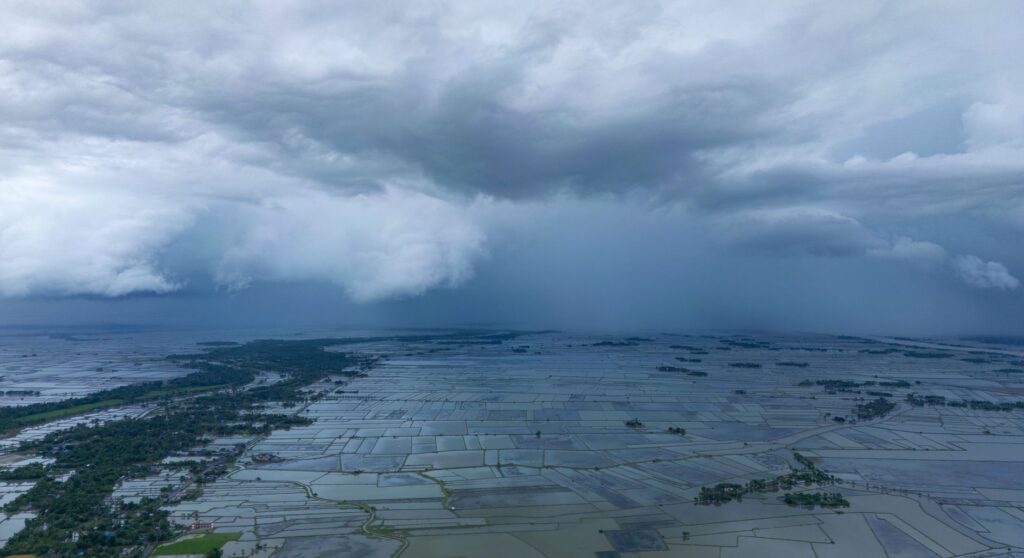
South Florida awakened under a heavy atmosphere, where leaden skies foreshadowed a critical day for civil aviation. The severe storms that struck Miami-Dade County were not an isolated phenomenon, but rather the climax of a persistent frontal system that collided with the state’s characteristic subtropical humidity. This thermal clash generated rapidly developing convective cells capable of dropping inches of rain per hour and unleashing hurricane-force wind gusts that forced the immediate suspension of ramp operations.
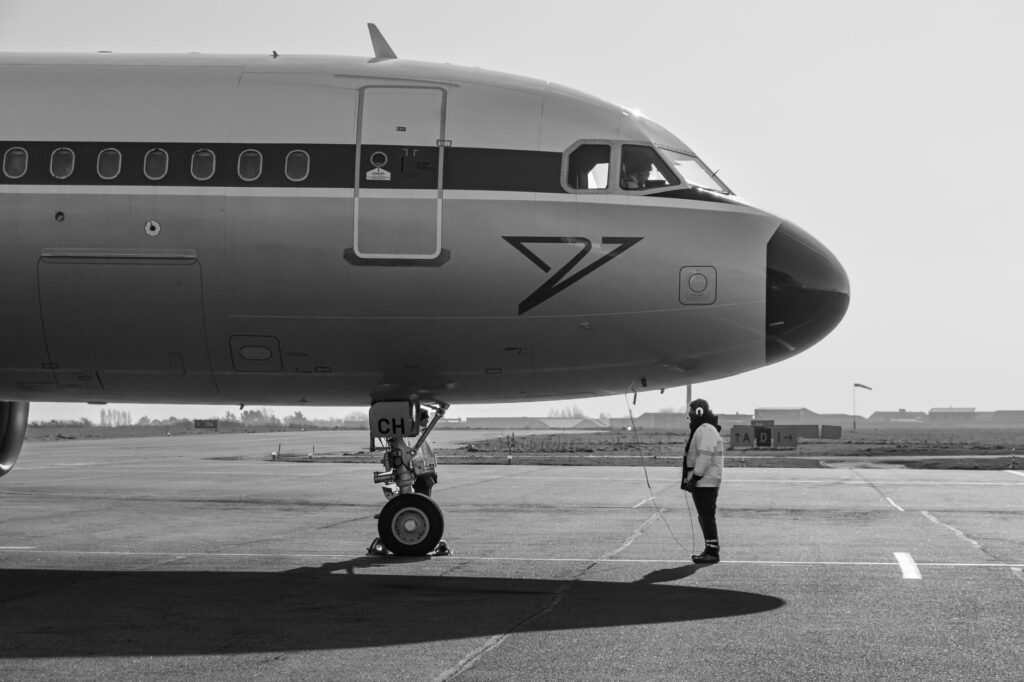
However, adverse weather acted merely as the catalyst for a larger crisis. Compounding the fury of the elements was an operational incident in the heart of the main airfield: a commercial aircraft suffered a critical mechanical failure right in the middle of the active landing runway, leaving it immobilized. This fateful combination of climatic factors and technical failure paralyzed the logistical machinery of one of the busiest connection hubs in the Americas.
Modern aviation operates with razor-thin time margins; when weather and mechanics collide, the domino effect is both inevitable and devastating for passengers.
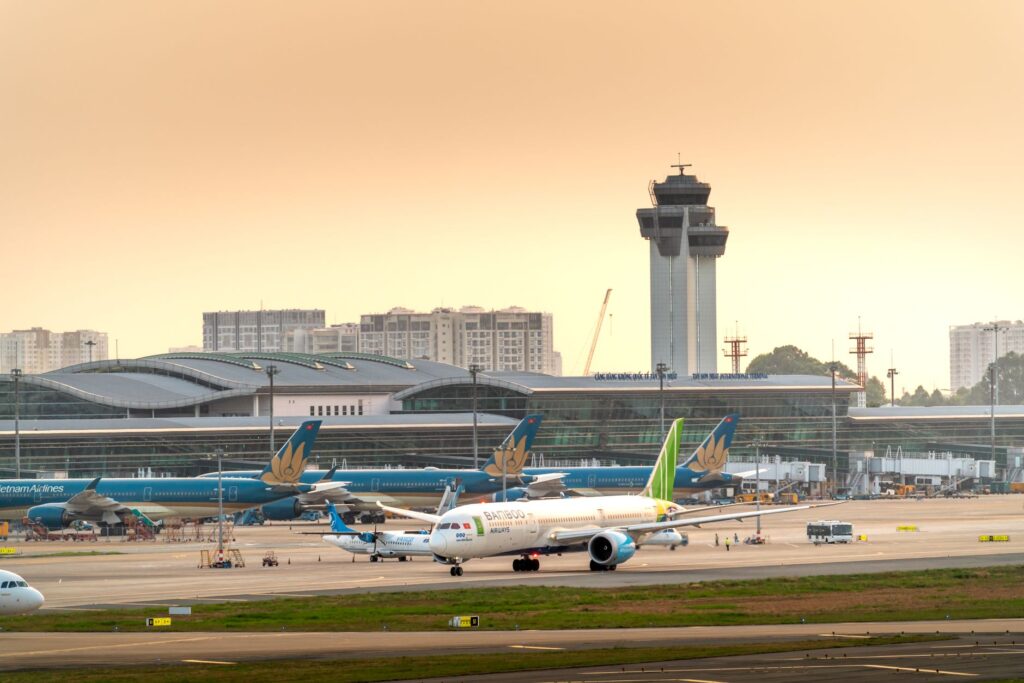
The consequences of this dual event quickly rippled beyond airport perimeters, affecting flag carriers, low-cost operators, and thousands of travelers depending on these routes to connect North America with the Caribbean and Latin America. Departure and arrival screens rapidly turned into a sea of delay and cancellation notices, unleashing scenes of frustration across terminal buildings.
Radiography of a System at its Limit
To understand the magnitude of the collapse in South Florida, one must examine the very architecture of contemporary air transport. The region’s international airports operate permanently near maximum capacity. Under normal conditions, this high density of traffic is managed with surgical precision by air traffic controllers, but the system lacks the flexibility needed to absorb large-scale unforeseen events.
When storms force modifications to approach and departure routes, airspace capacity drops drastically. Aircraft must hold in holding patterns for extended periods, consuming critical fuel reserves and forcing the rescheduling of crew and equipment rotations for the rest of the day.
Added to this operational complexity was the disabled aircraft, an insurmountable physical obstacle that temporarily closed one of the airport’s main arteries. Technical crews had to deploy under dangerous weather conditions to tow the stranded aircraft, a slow and delicate process requiring heavy machinery and millimeter-level coordination between the airport authority and airline engineers.
The Human Factor Within the Terminals
While technical teams dealt with the emergency on the runways, the true drama unfolded inside the passenger terminals. Thousands of travelers were left stranded without access to their luggage, trapped in endless lines in front of customer service desks. The lack of real-time information exacerbated the discomfort, generating an atmosphere of uncertainty among tourists and business travelers alike.
Airlines faced the colossal challenge of re-accommodating affected passengers in a scenario where subsequent flights were already operating at full capacity. Compensation and assistance policies were put to the test, laying bare disparities in the response capabilities of different carriers during force majeure situations.
Ground employees, directly exposed to user discontent, had to manage the crisis with limited resources. Despite emergency protocols, terminal infrastructure was overwhelmed by the accumulation of people spending the night in boarding areas, transforming commercial waiting rooms into improvised transit camps.
Infrastructure and Climate Resilience
The episode in South Florida places an urgent debate on the table regarding the resilience of transport infrastructure in the face of extreme weather events, whose frequency and intensity continue to rise due to global climate change. Low-lying coastal airports face specific vulnerabilities ranging from flash floods to destructive winds.
Urban planners and transport experts point out that future investments must focus not only on expanding terminals, but on modernizing drainage systems, adopting advanced traffic management technologies, and creating more agile contingency protocols to remove disabled aircraft in record time.
Likewise, intermodality emerges as pending homework for the region. The almost exclusive reliance on road and air transport leaves travelers without viable alternatives when flight operations are completely suspended, underscoring the need to integrate high-speed transport networks connecting the peninsula’s major urban centers.
Economic Impact on the Continental Network
A delay of these proportions at a key hub like Miami transcends the local scope, immediately rippling across the entire transportation network of the United States and the continent. Aircraft scheduled to operate routes toward New York, Chicago, or Dallas remained grounded, disrupting planned itineraries for subsequent days.
The economic losses associated with these disruptions are substantial, affecting both airlines—which must shoulder costs for extra fuel, compensation, and rescheduling—and the local tourism sector, which experiences last-minute cancellations and a temporary dip in visitor arrivals.
Global connectivity is a fragile ecosystem; a failure in a strategic node like Florida shakes the supply chains and mobility of an entire hemisphere.
Economic authorities and aviation guilds are demanding a deep review of coordination mechanisms between airlines and airport administrators to minimize the financial and operational impact of future severe weather events and mechanical emergencies.
Lessons Learned for Modern Aviation
The crisis in South Florida serves as a case study on the necessity of anticipation in air transport management. The superposition of a climate emergency and a technical failure proves that traditional contingency plans are no longer sufficient to safeguard current operations.
Among the key conclusions drawn by analysts is the urgency of improving digital communication channels with passengers. Reliance on traditional information boards and congested customer service phone lines proved to be the weakest points during the early hours of the gridlock.
Furthermore, emphasis is placed on establishing stricter regulations regarding maximum response times for removing disabled aircraft from runways, reducing critical infrastructure downtime through cutting-edge technology and specialized rapid-response teams.
Practical guide
Preventive monitoring: Check weather conditions and meteorological alerts at your origin and destination cities at least 24 hours before your flight.
Official app usage: Download your airline’s mobile application to receive instant notifications regarding gate changes or cancellations.
Passenger rights: Familiarize yourself with the airline’s compensation and assistance policies in case of prolonged delays or cancellations due to force majeure.
Carry-on luggage: Pack essential medications, electronic devices, and a change of clothes in your cabin baggage for last-minute emergencies.
Ground alternatives: Identify ground transportation options or nearby rail connections in case a quick contingency plan is required.
Travel insurance: Purchase policies that cover travel interruptions and unexpected expenses derived from adverse weather conditions.
Itinerary flexibility: Consider booking flexible fares that allow travel dates to be modified without severe penalties during unforeseen events.
Final Reflection on the Horizon of Travel
In an increasingly interconnected world, the promise of global mobility periodically clashes with the relentless reality of nature and engineering. The collapse in South Florida is merely a reminder of our vulnerability before the elements and the complexity of the systems we have built to navigate the skies.
Behind every canceled flight screen lie human stories of postponed reunions, missed meetings, and patience tested in impersonal terminals. Yet, the resilience of the airport system, driven by the tireless efforts of thousands of ground and air workers, proves that aviation always finds its way back to normalcy.
As we step into an era of mounting climate challenges and unprecedented passenger flows, the true measure of transport progress will not lie solely in aircraft speed, but in the strength, empathy, and resilience with which we respond when the sky decides to bar our path.
Source in EN: thetraveler.org – Severe storms and disabled jet snarl South Florida travel (https://news.google.com/rss/articles/CBMijwFBVV95cUxPLU9tR044WXdMUVFhOGZLWGN4MmluMFBHMEc4bkwtWktnbTRqYkVGM0tYYm5oUlJkN2NNZmpCMmh6U3FBZDl2aUtnTWlZc1lCQnEtZUlkOHdqMTkwSDBWQUpBV18tSnJfVktWb3hfVnZfY3QwYm5EZzhuYXBtaWdNQjBJM2Q4Tlo4XzBDMTcwRQ?oc=5)
ATLAS LUME · BEFORE YOU GO
A story that continues at the destination
DocumentsCheck visas, health requirements and document validity with official sources.
BookingsConfirm the final price, taxes and conditions directly with the provider.
Responsible travelRespect local communities, heritage and ecosystems.