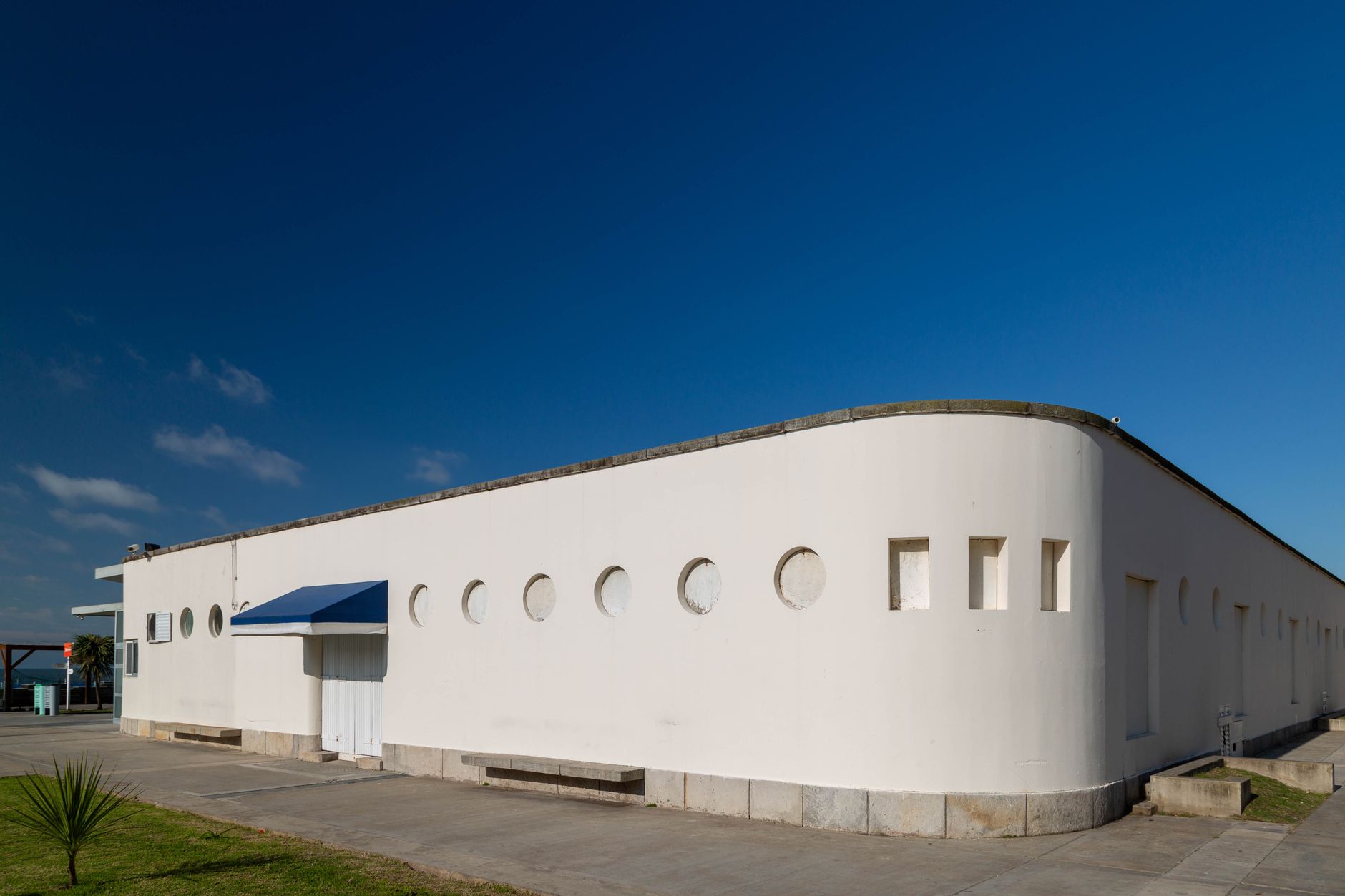

That stretch of northern Portugal’s coastline, where the Cávado River yields its waters to the Atlantic among endless sandy beaches and belts of maritime pine, sheltered for decades an unusual experiment in reconciliation between the coastal landscape and the Modern Movement. Esposende, traditionally associated with river fishing and a northern bourgeoisie seeking summer retreat, became in the mid-20th century the canvas where a new generation of Portuguese architects could test the tenets of rationalism. Far from the official monumentalism promoted by the Estado Novo, these marshy and dune-covered lands welcomed summer residences and public facilities that today form an exceptional catalog of contemporary open-air architecture.
Approaching Esposende from a contemporary perspective requires shifting one’s gaze beyond conventional tourist postcards to delve into the inner history of a territory shaped by Atlantic weathering. The emergence of architectural modernity in this corner of the Braga district did not respond to a centralized urban plan, but rather to the conjunction of enlightened commissioners—industrialists from Porto and liberal professionals—and designers who saw International Style as a tool for formal and spatial emancipation. The result is a dispersed yet coherent itinerary, where each volume engages in a unique dialogue with the harsh ocean light and sandy topography.
The genesis of an avant-garde refuge
During the 1940s and 1950s, the coastal strip between Apúlia and Fão began to populate with summer constructions that radically broke with Minho’s picturesque vernacular architecture. Porto’s industrial bourgeoisie, especially tied to the textile and metallurgical sectors, found in this natural setting an ideal sanctuary to escape urban commotion. These commissioners, endowed with aesthetic curiosity unusual for the era, trusted young architects freshly graduated from the Schools of Fine Arts in Porto and Lisbon—creators who had breathed European renovation airs through specialized magazines and CIAM congresses.
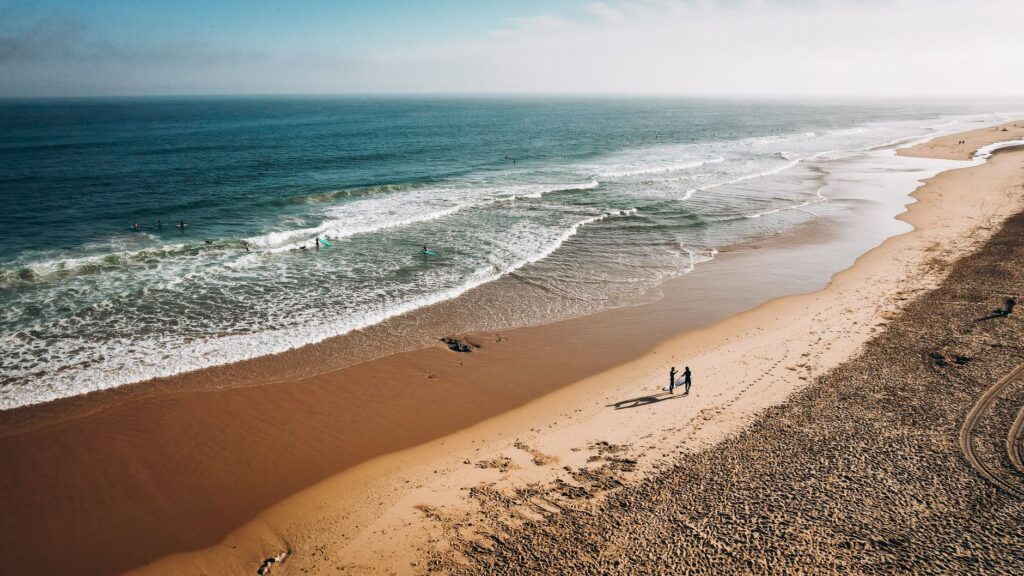
In this context, the figure of visionary architects began to redefine the landscape. Constructions no longer sought to imitate the past or hide behind opaque walls; instead, they opened to the exterior via expansive windows, cantilevered terraces, and free plans that integrated the surrounding pine forest into domestic life. Architecture thus became an instrument of direct communion with nature, respecting dune elevations and using local materials reinterpreted through the prism of industrial functionality and constructive rigor.
Viana de Lima and rationalist audacity
One of the capital names in Esposende’s modern transformation is unquestionably João Andresen Viana de Lima, an undisputed figure of the modern movement in Portugal. His work on the Esposende coast represents the most refined application of Le Corbusier’s principles adapted to the Atlantic climate. Viana de Lima understood that coastal architecture needed to be lightweight, elevated on pilotis when necessary to protect against humidity, and equipped with flat roofs serving as solariums or viewpoints over the marine horizon.
His residential projects in the municipality stand out for geometric purity and skillful handling of visuals. Main rooms were strategically oriented to capture overhead light and tidal movement, while solar protection elements—such as wooden louvers and concrete overhangs—generated a constant play of chiaroscuro. Viana de Lima’s volumetric rigor demonstrated that modernity was not at odds with warm habitability, creating spaces where bourgeois comfort dialogued harmoniously with the austerity of exposed materials.
Fernando Távora and the lesson of place
If Viana de Lima contributed internationalist brilliance, Fernando Távora introduced a profound reflection on historical continuity and organic insertion into the landscape in Esposende, laying the foundations for what would later be known as the Porto School. Távora, mentor to universal figures like Álvaro Siza, argued that modernity should draw nourishment from vernacular tradition without falling into folkloric mimicry.
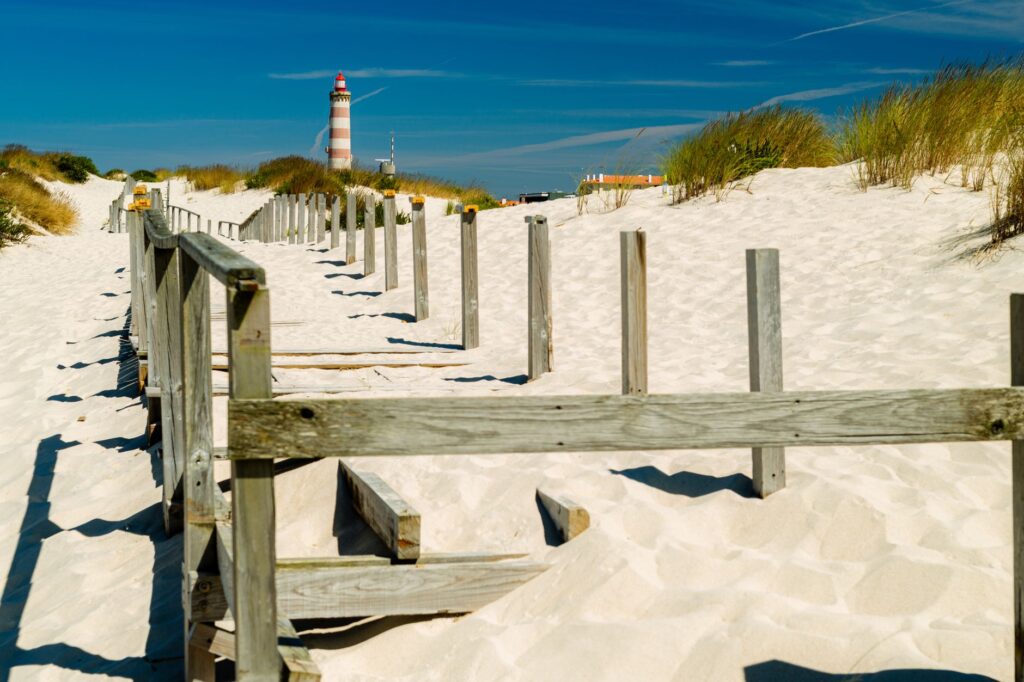
In his interventions in this area, Távora analyzed with surgical precision how local fishermen and farmers had occupied the territory for centuries. From that anthropological reading, his designs reinterpreted the proportions, rhythms, and materiality of northern Portugal. The buildings projected by Távora in the municipality adapt with absolute naturalness to terrain slopes, using local granite stone combined with white walls and slender metal joinery. This synthesis between the ancestral and the contemporary constituted a masterclass on how to transform a territory without distorting its primordial identity.
Alcino Soutinho and the consolidation of human scale
The third major influence in this open-air modern museum bears the signature of Alcino Soutinho. An advanced disciple of the Porto vanguard, Soutinho knew how to imbue his buildings in Esposende with a deeply human and domestic scale without sacrificing the formal rotundity of the modern movement. His commissions in the coastal strip and inland municipal cores reflect a projective maturity where the relationship between interior space and the surrounding garden reaches great subtlety.
Soutinho paid special attention to constructive details: from joinery design to pavement modulation, everything responded to a will for total integration. His works introduced a more fluid dialogue between inhabited volumes and surrounding public space, paving the way for modern architecture to cease being an isolated object in nature and become an active part of the territorial fabric. The presence of Soutinho’s work completes a triangle of projective excellence that few municipalities in the Iberian Peninsula can boast.

The pulse of the landscape: dunes, pine forests, and rare architecture
Traversing Esposende today involves moving through a fragile, dynamic ecosystem where modern architecture acts as witness to an era of constructive optimism. As one moves away from the urban center and heads toward the parishes of Marinhas, Belinho, or Apúlia itself, the landscape shifts register. Traditional windmills, formerly used to grind grain taking advantage of marine winds, visually coexist with these daring rationalist villas, generating a landscape contrast of high documentary value.
Esposende’s modern heritage does not survive thanks to museological fossilization, but rather through daily use and the silent resistance of its structures against the aggressiveness of sea breezes.
The dunes, protected today via wooden walkways that prevent erosion, hide these architectural gems behind stone pine and maritime pine forests. Many have changed hands or been rehabilitated by heirs who have managed to maintain the integrity of original designs, while others struggle against the passage of time and summer real estate pressures. This delicate balance between conservation and use turns the journey into an exploration of cultural discovery where every turn of the wooden path yields a formal revelation.

Practical guide
How to get there: Esposende is located about 45 kilometers north of Porto and 35 south of Viana do Castelo. The fastest access route is the A28 highway, connecting both Galician and Portuguese cities with the northern coast.
Best time to visit: Spring months (May and June) and early autumn (September and October) offer excellent light for architectural photography and avoid summer beach overcrowding.
Recommended itinerary: It is advisable to start the route at the interpretation center of the Litoral Norte Natural Park to understand the geographical context, continuing toward the residential areas of Apúlia and works signed by Viana de Lima and Fernando Távora near the coast.
Accommodation and gastronomy: There are small design hotels and rehabilitated rural tourism houses in the surroundings. Tasting fresh Atlantic fish, especially grilled white seabream and sea bass, accompanied by regional green wines, is essential.
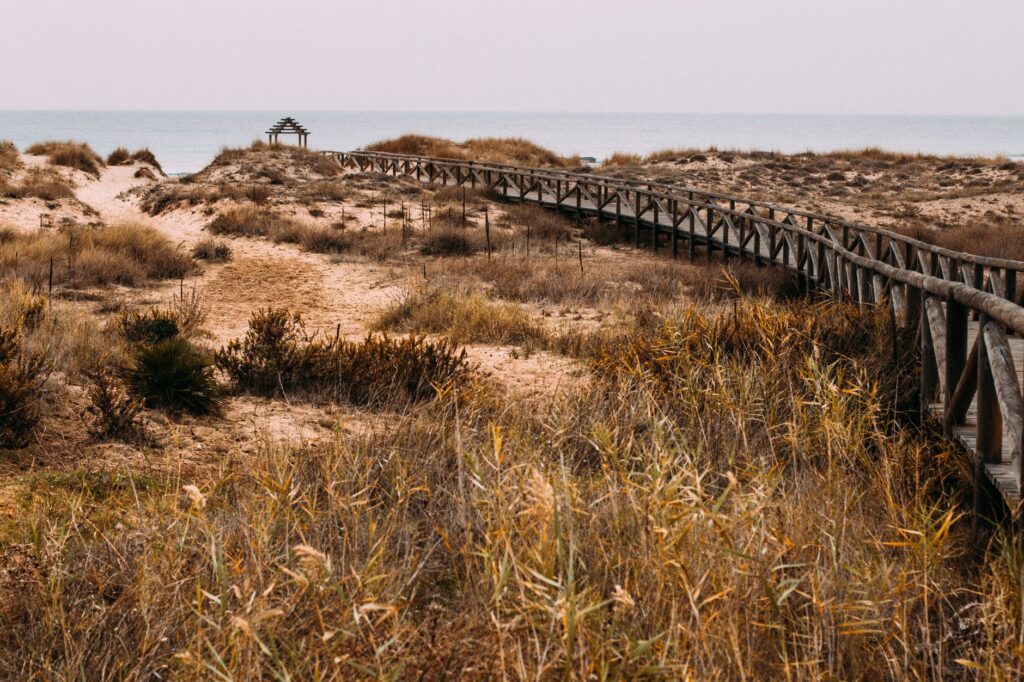
Precautions: The dune environment is a highly fragile protected space. Walking exclusively on enabled trails and respecting private property of particular residences making up the itinerary is mandatory.
Atlantic epilogue: the inhabited memory of stone and glass
At dusk, when the sun descends over the Atlantic horizon and dyes the white walls of these modernist villas in ocher and mauve tones, Esposende reveals its true poetic dimension. It is no longer merely a stylistic catalog or an art history lesson; it is, above all, a monument to the human capacity to inhabit the landscape with respect, intelligence, and audacity. The long shadows of pine trees projected onto concrete terraces remind us that modernity, more than an aesthetic dogma, was a lucid and deeply human way of looking to the future from the exposure of the present.
Source in EN: El País (https://elpais.com/elviajero/escapadas/europa/2026-09-14/recorriendo-esposende-un-museo-moderno-al-aire-libre-unico-en-portugal.html)