
A Horizon of Rails Beneath the Californian Sun
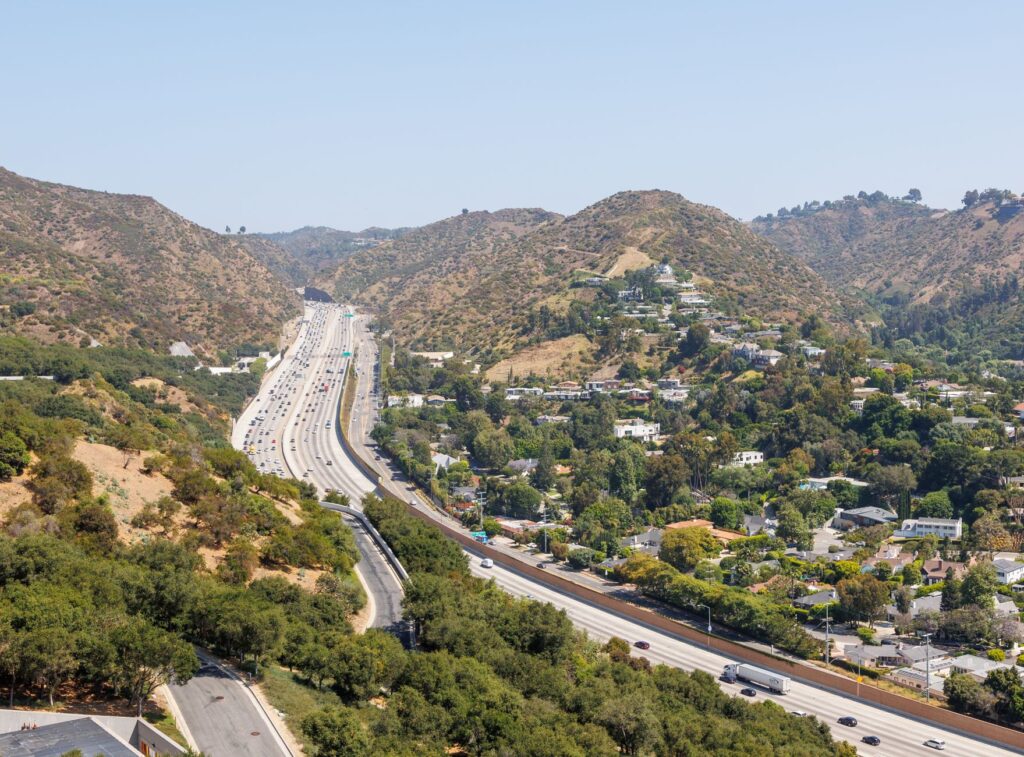
When thinking of Los Angeles, United States, the mental image is often immediately associated with congested freeways, endless rows of vehicles, and a sea of asphalt stretching toward the horizon. Yet beneath that surface dominated by the private automobile beats a historical and expanding rail network that defines a significant portion of daily mobility for its residents. At the heart of this metropolis, urban trains, underground subways, and commuter locomotives offer a different perspective of a territory shaped by speed and distance.
The history of rail transport in this region of southern California dates back to the late nineteenth and early twentieth centuries, when the legendary Red Cars of the Pacific Electric Railway and the Yellow Cars wove one of the most extensive interurban transit networks in the world. Those bright red carriages connected beaches, citrus groves, and emerging urban centers long before the automotive boom and asphalt completely redesigned the urban landscape. Today, examining the traces of that past makes it possible to understand how the city attempts to recover part of its historical connectivity through modern subway and light rail lines.
The Monumentality of Union Station and Its Architectural Legacy
Considered the last great railway station built in the United States, Union Station is an authentic architectural symbol located in the historic center of Los Angeles. Inaugurated in 1939, this terminal masterfully combines Spanish colonial revival and art deco architectural styles, creating a space where sunlight filters through large windows, illuminating ornate tile floors and coffered wooden ceilings. Walking through its main concourse is akin to pausing time and connecting with a golden era when train travel implied elegance, mystery, and adventure.
Beyond its obvious aesthetic and heritage value, Union Station currently functions as an indispensable multimodal hub accommodating Amtrak, Metrolink, and county subway trains. Thousands of passengers pass through its platforms daily, linking destinations as diverse as San Diego, Chicago, or the residential suburbs of Ventura County. The preservation of this historic building demonstrates that transportation infrastructure can transcend its strictly utilitarian function to become a premier civic and cultural monument.
The Daily Pulse of the A Line and the Rail Renaissance
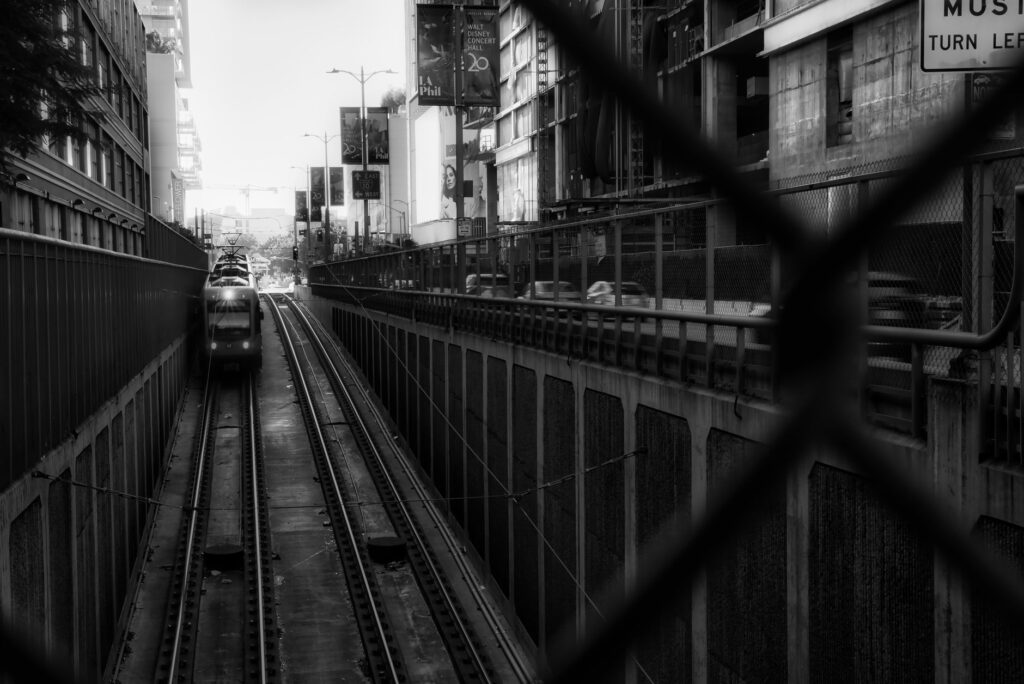
The public transit system managed by the Los Angeles County Metropolitan Transportation Authority has undergone a profound transformation in recent decades. Among its main arteries stands the A Line, a light rail corridor connecting downtown with Long Beach, traversing neighborhoods of immense social and cultural diversity. This daily journey reflects the true face of the city, where students, workers, and casual travelers share carriages in a constant flow that defies the gridlock of the interstate highways.
Unlike car journeys, which demand constant attention to the steering wheel and signage, train travel allows passengers to observe the architectural and scenic evolution of the city. From the financial skyscrapers of downtown to the industrial and residential zones of the south, railway tracks act as an unspooling thread that untangles apparent urban complexity. Local residents use these lines not only for economy or punctuality, but as a necessary pause within the frenetic rhythm characterizing life in southern California.
The Challenges of Metropolitan Mobility and Sustainable Expansion
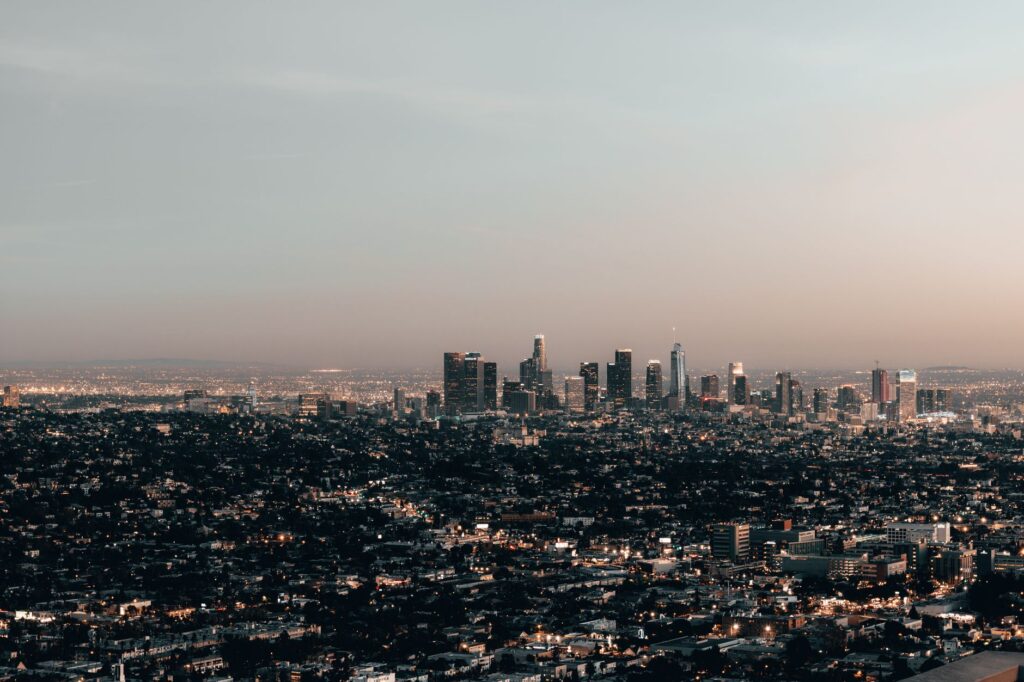
Connecting a surface as vast as Los Angeles County represents a titanic challenge for urban planners. The historical dependence on the automobile has left a deep imprint on neighborhood design, where distances are usually measured in driving minutes rather than walkable meters. Nevertheless, ongoing rail expansion projects, such as westward extensions and preparations for major global events, seek to consolidate a more integrated, clean, and accessible public transit network for the entire population.
Train usage in this environment is not without operational and social challenges. Fare integration, station safety, and the need to reduce travel times compared to private transport remain constant debates on the public agenda. Despite these difficulties, institutional commitment to railway transport responds to an inescapable environmental and demographic urgency in a region where air quality and road congestion have historically impacted the quality of life of its inhabitants.
Railway Heritage and Its Preservation in the Urban Fabric
The legacy of railway tracks in Los Angeles extends far beyond grand stations and major commuter lines. Across various points of the city, former industrial freight spurs have been converted or are being studied for transformation into green corridors and pedestrian walkways, following a global trend of public space recovery. These metallic vestiges remind us that the Californian economy grew to the rhythm of coal, steel, and freight transport arriving from the ports of Los Angeles and Long Beach.
Rail transport in this metropolis is not a mere relic of the industrial past, but an indispensable tool for redesigning the urban future of millions of people.
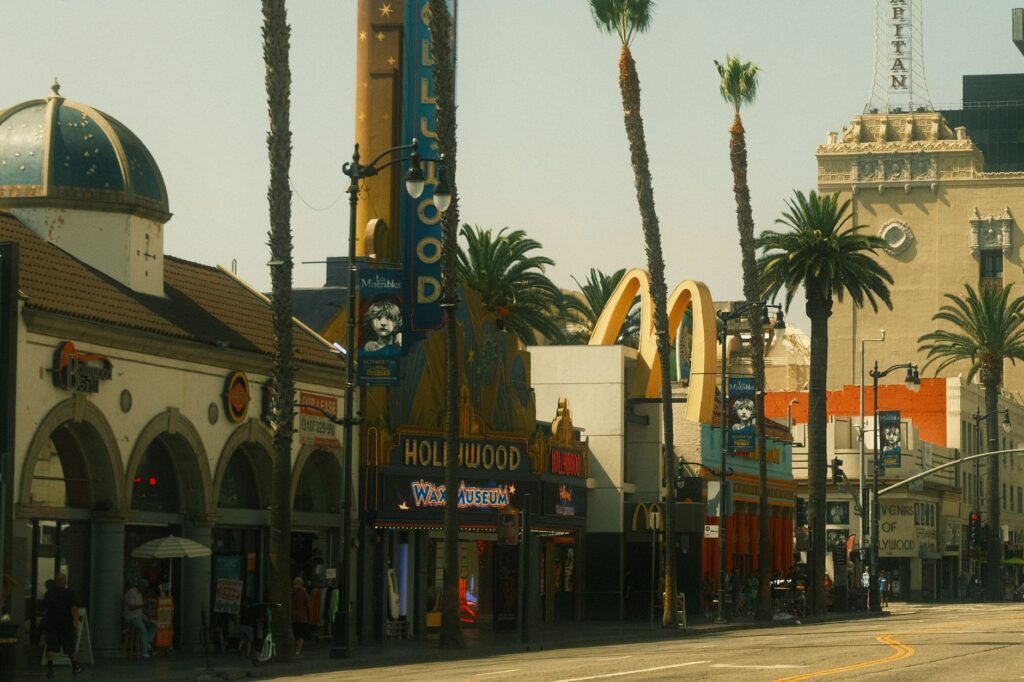
Likewise, local entities and civil associations work tirelessly to preserve photographic archives, historic carriages, and original blueprints documenting the evolution of Angeleno public transit. Museums dedicated to railroading and temporary exhibitions allow new generations to understand how their ancestors moved, fostering a sense of belonging and collective identity that transcends the anonymity characteristic of modern large cities.
The Traveler Experience: Landscapes, Rhythms, and Contrasts
For the traveler arriving in Los Angeles with the intention of exploring the city beyond traditional tourist circuits, using the train offers a genuine immersion into local daily life. Each station is a microcosm where accents from around the world, street food stalls, and urban artistic expressions converge. Boarding a commuter train toward the San Fernando Valley or the coast allows one to contemplate the geometric transition of residential neighborhoods, public parks, and the hills defining the Angeleno basin.
This unhurried rhythm contrasts sharply with the stressful experience of driving local highways. While the landscape unfolds beyond the windows, the passenger is granted a space for reading, reflection, or simple observation of social dynamics. It is precisely in this duality that the primary appeal of touring southern California on rails lies: discovering that beneath the unattainable myth of the meca of cinema and the motor, a diverse community moves and coexists to the rhythm of public transport.
Practical guide
How to get there: Los Angeles International Airport (LAX) connects to the city center via free shuttle buses (FlyAway) and bus connections linking to the metro network at Aviation/LAX station.
Tickets and fares: The metropolitan transport system uses the rechargeable TAP card, valid for Metro buses and trains. It can be purchased at vending machines in any station and allows economical transfers within a set timeframe.
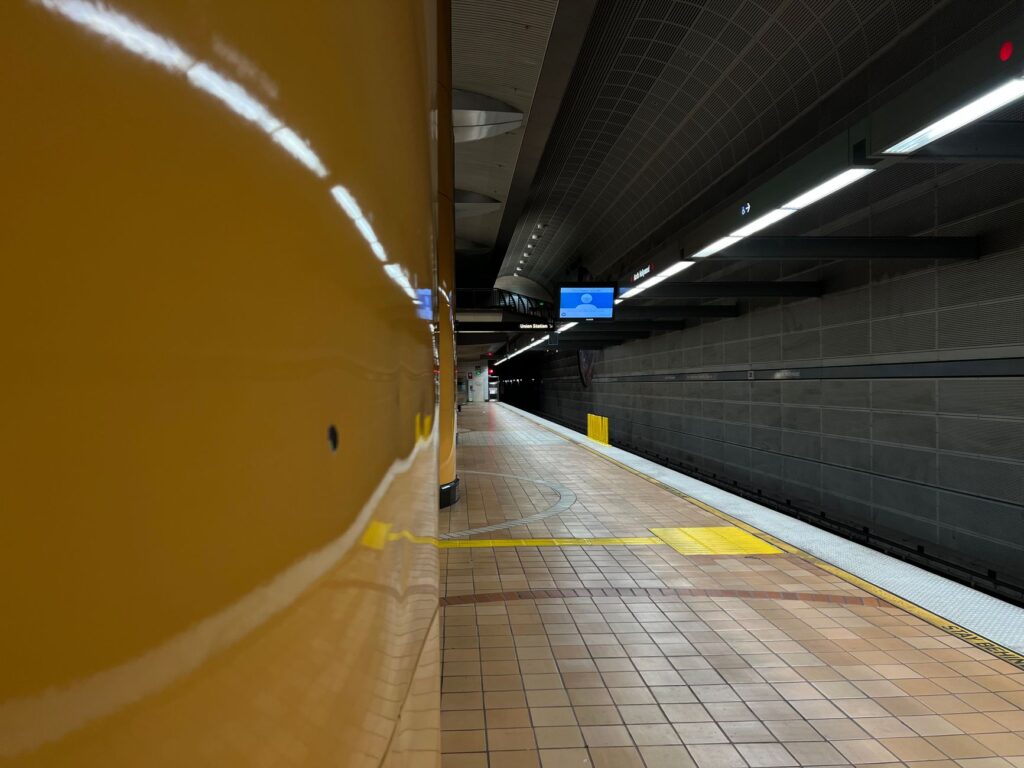
Main stations: Union Station is the core hub for long-distance connections (Amtrak and Metrolink) and links to Metro B, D, and A lines.
Safety and schedules: Trains generally operate from 4:00 in the morning until midnight, with reduced frequencies during late night hours on specific lines.
Useful tips: Plan your journeys in advance using official mobility applications to avoid delays caused by network maintenance work.
Epilogue on the Rails of Tomorrow
The transformation of Los Angeles through its railway network is a process in constant evolution, demonstrating the adaptive capacity of one of the most complex metropolises on the planet. Between the nostalgic memory of centennial streetcars and the modernity of new underground lines, the city continues to write a fundamental chapter in its mobility history. At the end of the journey, the rails not only connect distant geographies, but unite the daily stories of those who inhabit and discover this vast land beneath the Californian sun.