


Upon disembarking at the port of Douglas, the capital of the Isle of Man, the traveler is not met with the roar of a modern metropolis, but with the rhythmic clatter of a time that refuses to fade. In this corner of the Irish Sea, infrastructure is not merely a means of transit; it is a living testament to 19th-century engineering that, far from becoming a static museum piece, continues to operate as the backbone of the island’s transport and tourism. The smell of burning coal and the screech of iron on steel define a geography where steam and pioneering electricity dictate the pulse of the community.
The Isle of Man possesses one of the densest and most functional heritage transport networks in the world. Here, the concept of connectivity is understood through three primary systems: the Isle of Man Steam Railway, the Manx Electric Railway (MER), and the Snaefell Mountain Railway. Together, they form an iron triangle connecting the agricultural south, the administrative center, and the rugged north, allowing for a unique reading of the Industrial Revolution applied to an insular territory of just 572 square kilometers.
The Beyer Peacock Legacy: Steam Uniting the South
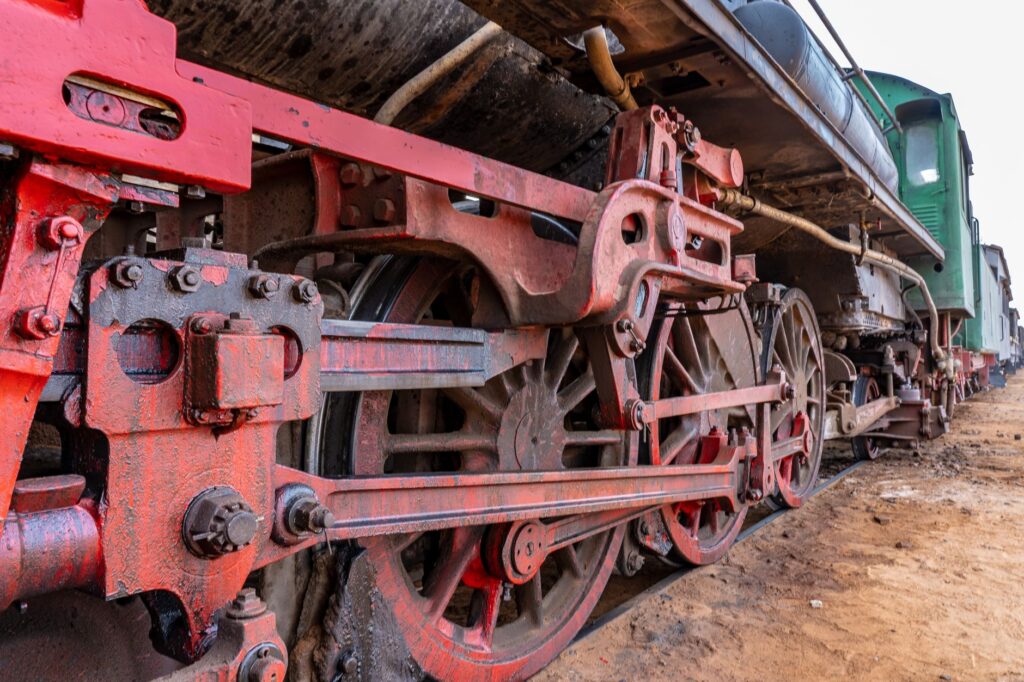
The Isle of Man Steam Railway, opened in its southern section in 1874, is a marvel of narrow-gauge engineering (3ft / 914 mm). Unlike other European heritage railways that rely on modern replicas, Man operates with its original rolling stock. The locomotives, mostly built by the Manchester firm Beyer, Peacock & Co., retain their original names—such as the celebrated No. 1 Sutherland or No. 4 Loch—and continue to haul wooden carriages that seem to have stopped the clock in the Edwardian era.

The journey from Douglas to Port Erin is not just a scenic trip; it is a lesson in resource management and artisanal maintenance. The Douglas workshops are the heart of this operation, where engineers and mechanics forge parts that no longer exist in any industrial catalog. This technical resilience has allowed the line to survive economic crises and the rise of the automobile, maintaining a regular service that traverses green meadows and skirts cliffs with an elegance that asphalt cannot replicate.
“Steam on Man is not a forced nostalgia, but a technical language that the island has chosen to speak so as not to forget its own human scale.”
The southern route is particularly revealing for its integration with the landscape. Passing through Castletown, the ancient capital, the train stops in the shadow of Castle Rushen, creating a scene where medieval architecture and industrial power coexist without friction. It is at these stopping points that the social function of the railway is observed: local families, hikers, and mechanical enthusiasts share space in polished wooden compartments, joined by the slow rhythm of a boiler that needs time to breathe.
Manx Electric Railway: The 1893 Electric Vanguard
While the south belongs to steam, the island’s northeast is dominated by the Manx Electric Railway (MER). Opened in 1893, this system was one of the first successful applications of electric traction in large-scale public transport. Connecting Douglas with Laxey and Ramsey, it covers eighteen miles of coastline offering some of the most spectacular views of the Irish Sea. What makes the MER exceptional is that it still utilizes the original trams and trailers from the 1890s, making it the longest and best-preserved vintage electric railway in the British Isles.

The MER’s engineering is a bold response to the island’s topography. The line winds through the slopes of the glens (narrow, wooded valleys), overcoming gradients that would have been impossible for conventional steam at the time without massive earthworks. The trams, with their open sides known as ‘toastracks’, allow for total immersion in the environment. The sound of the pantograph brushing the copper wire and the hum of the vintage motors are the soundtrack to a journey that passes through Groudle Glen and skirts the dizzying cliffs of Bulgham Bay.
The Laxey Connection and the Great Wheel
Laxey is the Gordian knot of the Manx transport system. Here, the traveler can step off the electric tram to admire the Lady Isabella, the largest working waterwheel in the world, built in 1854 to pump water from lead and zinc mines. This structure of red masonry and iron is the ultimate symbol of Manx technical ambition. The presence of the wheel next to the transfer station underscores the thesis that the island was, and remains, a laboratory for energy solutions.
- Synchronization: MER schedules are designed to allow immediate connection with the mountain railway.
- Conservation: Maintaining late 19th-century motors requires specific training passed down through generations of operators.
- Versatility: In addition to passengers, the MER has historically served for freight and mail, integrating the isolated northern villages.
Snaefell Mountain Railway: Ascending to the Island’s Roof
Departing from Laxey is the Snaefell Mountain Railway, the crown jewel of vertical engineering on the island. Opened in 1895, this 3.5-mile railway ascends to the summit of Snaefell, the highest point on Man (2,034 feet). To overcome the extreme 1:12 gradients, engineers implemented the Fell system, which uses a central third rail for braking and additional traction—a technical solution found today in only a handful of places worldwide.

The ascent is an ecological and visual transition. One moves from the subtropical gardens of the coast to a windswept alpine moorland. On a clear day, from the summit, it is said one can see the six kingdoms: Man, Scotland, England, Ireland, Wales, and the Kingdom of Heaven. But beyond the view, what impresses is the robustness of the electric cars, which maintain their Victorian aesthetics while facing the harsh weather conditions of the North Atlantic with astonishing reliability.
The Douglas Bay Horse Tramway: The Final Link
The Manx network cannot be understood without mentioning the Douglas Bay Horse Tramway. Established in 1876, it is the last horse-drawn tramway in continuous operation in the world. Along the Douglas promenade, sturdy Shire and Clydesdale horses pull historic cars, connecting the ferry terminal with the electric railway station. While some may see it as a tourist attraction, for the city, it is an essential component of its mobile heritage.
This system represents the transition between animal and mechanical power. Seeing a horse tram cross in front of the Victorian hotels of the bay is a reminder that urban mobility had a biological origin. The island has protected this service not only for its historical value but because it defines the scale of Douglas: a city navigated at the pace of a horse’s stride, allowing for a social interaction that modern transport has largely eradicated.
“The infrastructure of Man teaches us that progress does not always mean replacement; sometimes, true progress is the intelligent preservation of what already worked.”
Maintenance and Future: The Challenge of Authenticity
Keeping a 19th-century transport network operational in the 21st century brings monumental challenges. The scarcity of original spare parts forces the Isle of Man Heritage Railways administration to operate its own foundry and carpentry workshops. Every part, from locomotive pistons to carriage wood panels, is manufactured according to original blueprints. This commitment to technical authenticity ensures the traveler’s experience is genuine, but also secures the survival of endangered artisanal trades.
The future of these lines is debated between sustainability and tradition. Biofuels are being explored to reduce the carbon footprint of steam locomotives without altering their mechanical operation. The island understands that these railways are its greatest cultural and economic asset, attracting thousands of visitors seeking a travel experience that appeals to the senses and intellectual curiosity.

Practical guide
To explore the Isle of Man’s railway network with rigor, it is essential to plan the trip around heritage events. The best time to visit is between April and October, when all systems are in full operation. It is highly recommended to purchase the Go Explore card, which allows unlimited travel on all trains, trams, and buses on the island, facilitating fluid mobility without the need for individual tickets.
Access to the island is primarily by air (Ronaldsway Airport) or via the Isle of Man Steam Packet Company ferry from Liverpool or Heysham. Once in Douglas, the central steam station is the ideal starting point. For photography enthusiasts, the stretch between Laxey and Ramsey offers the best opportunities to capture the electric tram against the sea backdrop. It is advisable to dedicate at least three full days to cover the three main lines and visit the Douglas workshops, which occasionally offer guided tours for specialized groups.
The Echo of Iron on the Horizon
As evening falls in Port Erin, while the last steam locomotive maneuvers to reverse its course, the town’s silence is filled with the hiss of remaining steam. It is a moment of deep emotional resonance, where one perceives that technology, when cared for with devotion, acquires a soul of its own. These rails do not just transport people; they carry the collective memory of an island that decided its past was too valuable to leave behind. In the glow of polished brass and the heat of the boiler, the Isle of Man guards the secret of eternal connectivity, reminding us that the most fascinating journey is not always the fastest, but the one that allows us to feel the weight of history beneath our feet.


