


A New Bridge on the Global Aviation Map
The emergence of new airlines in international skies does not merely respond to commercial strategies or first-class cabin luxuries. On occasions, the opening of a route traces with millimetric precision the invisible flows that sustain the global economy. When Riyadh Air set its sights on Manila, the move transcended mere tourism or business connectivity to install itself at the core of a demographic and labor phenomenon of vast magnitude. It is not simply a matter of connecting two airports, but of consolidating an air corridor that transports hundreds of thousands of people annually in search of livelihood.
The Philippines has historically established itself as one of the world’s foremost nations exporting talent and labor. Healthcare professionals, engineers, hospitality staff, and domestic workers form an essential diaspora whose remittances sustain entire families in the archipelago and energize the national gross domestic product. On the other side of the route, the Kingdom of Saudi Arabia is undergoing an accelerated process of economic diversification and structural transformation driven by its Vision 2030, an ambitious roadmap demanding unprecedented human resources, both skilled and unskilled.
In this scenario, commercial aviation acts as the indispensable connective tissue. The arrival of a new corporate actor on the Manila-Riyadh corridor intensifies competition, optimizes transit times, and redefines the conditions under which a floating population travels—a population that until now relied on an oligopoly of legacy carriers. The phenomenon reveals how air transport diplomacy becomes the silent thermometer of bilateral relations between Southeast Asia and the Middle East.
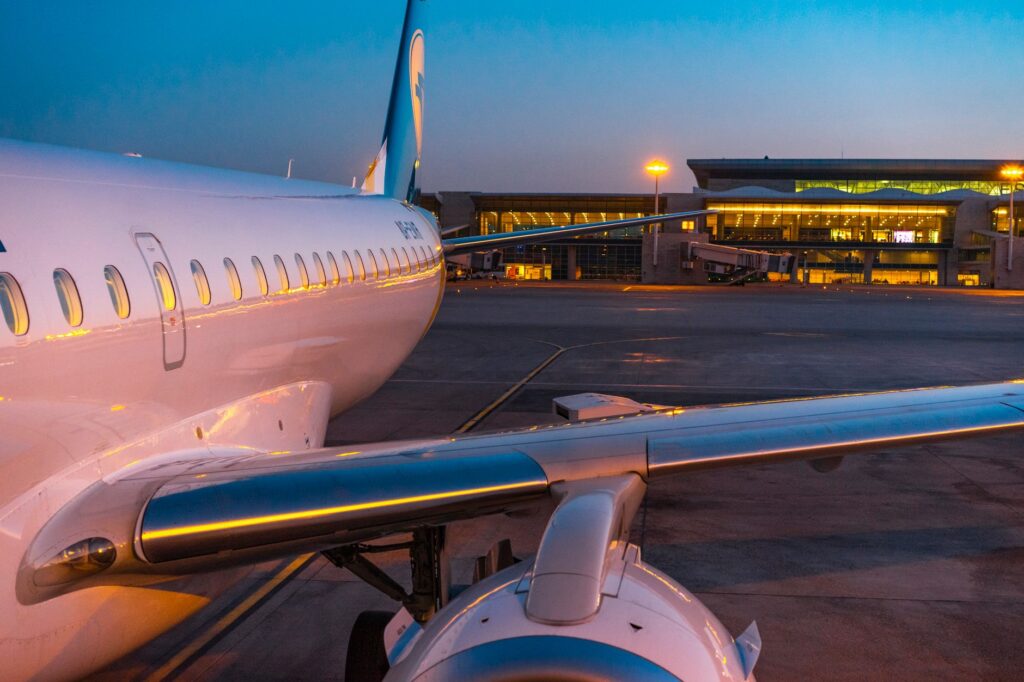
The Anatomy of a Silent Exodus
To understand the scale of this air corridor, one must step inside the terminals of Manila’s Ninoy Aquino International Airport during the early morning hours. There, hundreds of men and women bid farewell to their loved ones burdened with canvas luggage and documentation meticulously organized in plastic folders. For many, this flight represents the culmination of months of bureaucratic procedures, interviews with placement agencies, and strict medical examinations.
The profile of the traveler on this route is diverse. On one hand, nursing and healthcare technical staff abound, highly valued in Gulf hospitals for their high qualification and English proficiency. On the other, thousands of workers join the construction, security, and domestic services sectors, which are experiencing unprecedented building booms in the new metropolises of the Saudi desert. Geographical distance is measured in flight hours, but emotional separation is tallied in years of remotely renewed contracts.
Employment agencies and technical training centers in provinces like Pampanga, Cavite, or Cebu operate in gear with international demand. The promise of stable wages in foreign currency mitigates the impact of local inflation and the scarcity of formal employment in the archipelago. However, this migratory flow also raises recurring challenges regarding labor protection, fundamental rights, and consular oversight.
Corporate Diplomacy and Gulf Geopolitics
The landing of airlines like Riyadh Air in key Southeast Asian hubs is no coincidence. It forms part of a broader geopolitical and economic offensive led by Riyadh to position itself as a global aviation node, competing directly with traditional giants like Emirates or Qatar Airways. The Saudi state-owned airline, characterized by its technological commitment and vanguard visual identity, seeks to capture a market segment combining high-level corporate transit with the massive volume of ethnic and labor traffic.

Bilateral negotiations between Manila and Riyadh have advanced in parallel with these commercial interests. In recent years, the labor ministries of both countries have reinforced cooperation mechanisms to guarantee transparent contracts, guaranteed minimum wages, and effective grievance channels against potential abuses. The airline thus becomes the floating ambassador of a country attempting to project an image of modernity and openness to the exterior.
Contemporary commercial aviation no longer merely connects cities; it vertebraes the labor markets of the twenty-first century and transfers the tensions and hopes of the global economy to thirty thousand feet of altitude.
For the Philippine government, diversifying transport options toward the Middle East is a strategic priority. With more airlines operating the route, fare monopolies are reduced—a critical factor for workers who typically bear the cost of repatriation or vacation tickets out of their own pockets.

The Human Factor Behind Traffic Statistics
Behind every time slot published on departures and arrivals screens lies a biography marked by sacrifice and resilience. Conversing with passengers boarding flights bound for Saudi Arabia reveals the psychological weight of labor migration. Mothers leaving small children in the care of grandparents, young university graduates finding no opportunities at home, and mature professionals seeking to consolidate the family pension fund.
Airlines play a fundamental role in mitigating this exhaustion. Culturally adapted onboard service, Tagalog entertainment options, multilingual crews, and flexible baggage policies are details making all the difference on a nine-hour journey separating two diametrically opposed cultural realities.
Upon arrival at King Khalid International Airport in Riyadh, workers face an urban environment in full effervescence. Urban mega-projects, futuristic financial centers, and new residential zones absorb this labor force living in specialized communities, maintaining an umbilical link to their homes through constant video calls and digital bank remittances.

Regulatory Challenges and Social Sustainability
The exponential growth of this air corridor raises inevitable questions regarding its long-term sustainability. How to ensure the economic boom of Gulf projects translates into dignified and lasting working conditions? International organizations and human rights NGOs insist on the need to closely monitor compliance with bilateral employment agreements.
Likewise, the commercial aviation sector faces the pressing challenge of reducing its carbon footprint on long-haul routes. The incorporation of next-generation fleets, more efficient in fuel consumption, is both an environmental and economic requirement for newly created airlines aspiring to operate under global sustainability standards.
Constant oversight by Philippine consular authorities in Riyadh remains the primary safety net for an expatriate community exceeding one million people. The effectiveness of this network depends largely on institutional communication fluency and transport companies’ commitment to the early detection of contractual irregularities.
Practical guide
Useful information to understand and contextualize travel within the air corridor between the Philippines and Saudi Arabia.

- Main routes: Direct and connecting flights between Ninoy Aquino International Airport (MNL) in Manila and King Khalid International Airport (RUH) in Riyadh.
- Estimated duration: Direct flights range between 9 and 10 hours, depending on air corridors and weather conditions.
- Required documentation: Valid passport with a minimum validity of six months, work or residence visa issued by Saudi authorities, and certification from the placement agency authorized by the Philippine DMW (Department of Migrant Workers).
- Health formalities: Verification of mandatory vaccinations and compliance with medical protocols required by the Saudi Ministry of Health.
- Air connectivity: Operated by the Saudi flag carrier and Gulf companies, with a progressive increase in frequencies due to high seasonal demand.
The Pulse of a Shared Future
The consolidation of the route between Manila and Riyadh synthesizes the contradictions and opportunities of contemporary globalization. In a world where borders harden for unregulated flows, formal labor corridors become vital arteries nourishing both the development of receiving economies and the subsistence of sending communities.
When aircraft take off from Manila’s runway crossing the South China Sea toward the Persian Gulf, they transport much more than passengers with valid passports. They carry the expectations of a young society seeking its place in the world and the accelerated transformation of a region redesigning its future on the foundations of international effort. The success of this air connection will not be measured solely in corporate profits or market share, but in the capacity to dignify every human journey crossing the skies of East and West.
Source in EN: MiGFlug / Source in EN: MiGFlug (https://news.google.com/rss/articles/CBMie0FVX3lxTE5DMXItRV9DRmRKMG01cnZobFJmWlZVMWsyeF9wTUUxeF9YVVBZZjF3dU5fNWhaTmVsOVNKbm10SGRreVpNUXRoZGxJU194T3A5eDRORi13SVFHdURCdTE4V21WSlhzcVd6Z3VKQXRyTHh6SDhVZ0tYRjVZZw?oc=5)


