
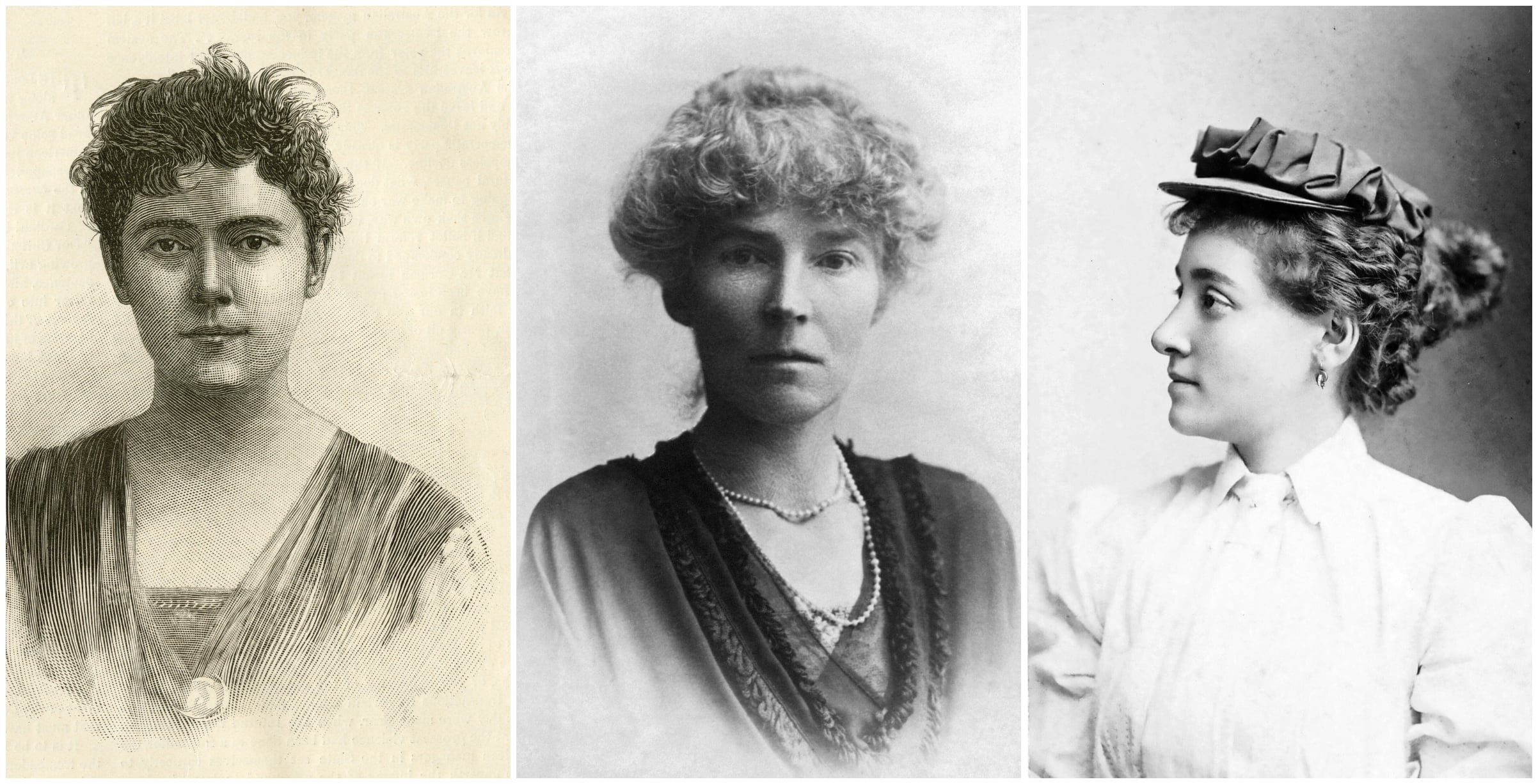

At the end of the 19th century, the mere idea of a woman traveling alone constituted an act of social insubordination. Victorian standards demanded endless trunks, rigid corsets, and the constant company of a male protector. Yet an exceptional group of pioneers chose to subvert these rules, not only by crossing geographical borders, but also by shedding the superfluous luggage that symbolized their own oppression. Traveling light was, fundamentally, a declaration of independence.
This feature examines how those women transformed the way the world moved, facing institutional hostility and widespread disbelief with cunning, determination, and unprecedented audacity. Their stories are not mere transit anecdotes, but fundamental milestones in the history of modern emancipation.
The Radical Minimalism of Nellie Bly
When journalist Nellie Bly proposed to the editors of the New York World that she emulate the fictional feat of Phileas Fogg, the initial response was skepticism. They told her a woman could never travel alone and would need at least a giant trunk to transport her belongings. Bly’s retort went down in history: she proved she could do it faster and with a single handbag.
On November 14, 1889, Bly departed from Hoboken with a heavy coat, a single change of dress, some undergarments, and a small travel bag weighing just a few kilograms. Her minimalism was not a fashion statement, but a tactical necessity. By dispensing with traditional baggage, she could board and disembark from trains and ships with feline agility, without relying on porters or the bureaucracy that slowed down travelers of the era.
The Logistics of Speed
To achieve her goal, Bly designed a meticulously timed route across Europe, the Suez Canal, Ceylon, Hong Kong, and the Pacific. Her only bag contained strictly what was needed to survive cold and heat, plus a notebook and an inkwell. This lightness allowed her to bypass weather setbacks and port delays that would have ruined any expedition weighed down by bourgeois comforts.
During her journey, the journalist discovered that carrying less weight equated to having greater control over her own destiny. While businessmen hauled chests full of formal suits, Bly moved lightly, integrated into the dizzying rhythm of modern transport. She completed her round-the-world trip in 72 days, 6 hours, and 11 minutes, shattering the record set in Jules Verne’s novel.
Jeanne Baret and the Weight of Deception
A century before Bly’s feat, another woman undertook an extraordinary journey under a false identity. Jeanne Baret became the first woman to circumnavigate the globe aboard the ship La Boudeuse, part of Louis Antoine de Bougainville’s scientific expedition. To achieve this, she had to adopt the name Jean and conceal her biological sex in a profoundly misogynistic environment.
Baret’s luggage consisted not of elegant suitcases, but of linen binding to compress her chest, rough men’s clothing, and superhuman physical endurance. Her work as an assistant to botanist Philibert Commerson involved carrying heavy plant specimens, field tools, and notebooks under extreme weather conditions, all while living in constant fear of discovery.
Botany as an Alibi
Baret’s daily routine during the expedition combined scientific rigor with absolute secrecy. Amid the lush vegetation of Tahiti and the coasts of Mauritius, she collected thousands of plants alongside Commerson. Her capacity to withstand the hardships of travel far surpassed that of many veteran sailors.
Although her secret was eventually uncovered—according to period records, the natives of Tahiti were the first to notice her true identity due to differential treatment—Baret’s legacy endured in scientific nomenclature. Several plant species were named in her honor, implicitly recognizing a contribution that official history took centuries to fully claim.
Isabella Bird and Cultural Immersion
British traveler Isabella Bird suffered from chronic physical ailments that doctors of the era attributed to hysteria and female weakness. Yet her health improved miraculously as soon as she hit the road. On horseback, mules, or on foot, Bird explored the most inaccessible regions of the Middle East, the Rocky Mountains, Japan, and China, proving that the best medicine was unbiased exploration.
Unlike wealthy tourists who demanded luxury hotels, Bird adopted local customs of transport and lodging. In her travels through Persia or Korea, her luggage was reduced to what could fit in saddlebags: basic medical instruments, tea, a notebook, and clothing suitable for enduring mud and snow.
“The true traveler does not seek the comfort of home reflected in distant mirrors, but the inner transformation produced by the elements.”
Her ethnographic perspective and rejection of Western comfort allowed her to write books that remain reference works. Bird understood that to comprehend a culture, it was not enough to observe it from an imperial litter, but necessary to share the dust of the roads with its inhabitants.
Freya Stark and the Route of the Nomads
During the interwar period, Freya Stark ventured into the most remote territories of the Middle East, exploring the forbidden valleys of Luristan and the castle routes of Alamut. Stark traveled with the bare minimum, often staying in Berber tents or humble adobe dwellings alongside local communities.
Her luggage reflected an absolute prioritization of survival and communication: detailed maps, essential medicines, a spyglass, and a few changes of light clothing. For Stark, carrying luxury items was an unnecessary offering to bandits and a psychological barrier preventing trust with local populations.
Writing as a Compass
Stark used her long journeys to write detailed diaries that later became literary essays of great aesthetic depth. Her mastery of local languages—she spoke Arabic, Persian, and Turkish fluently—more than made up for any material shortcomings.
The author argued that a traveler’s true elegance lay in adaptability. In her chronicles, the desert is not a hostile stage to be conquered by technological force, but a space of silence requiring respect and humility.
Alexine Tinne and Scientific Opulence
At the opposite extreme to Bly’s minimalism was Dutch aristocrat Alexine Tinne, who financed and led ambitious expeditions across the Nile River and the central Sahara in the mid-19th century. Tinne spared no expense: her luggage included cutting-edge photographic instruments, special carriages, imperial tents, and a considerable entourage.
However, the logistical complexity of her baggage did not stem from frivolous caprice, but from exceptional scientific and artistic rigor. Tinne gathered botanical samples, conducted meteorological measurements, and captured pioneering images of African peoples with an ethnographic sensitivity well ahead of her time.
The Price of Ambition
The scale of her caravans attracted the attention of raiders and local desert tribes, in an extremely complex geopolitical context. Despite the fatal risks that ultimately claimed her life in the Sahara, Tinne’s work proved that women could also lead large-scale scientific expeditions, competing in ambition with Europe’s major geographical societies.
Ida Pfeiffer and the Penniless Globe-Trot
Viennese traveler Ida Pfeiffer began her journeys late in life, after raising her children and being widowed, with extremely meager economic resources. Without fortune or institutional sponsorship, Pfeiffer explored Southeast Asia, the Middle East, the Americas, and central Africa by funding her journeys through the sale of natural history specimens and the publication of her diaries.
Her luggage was a model of economic pragmatism: a small wooden box for preserving insects, a vial of alcohol, blotting paper, a notebook, and two simple dresses. Pfeiffer slept in huts, ate what locals ate, and used cargo ships to cross oceans.
“Curiosity to know the world is more powerful than the fear of the elements and economic hardship.”
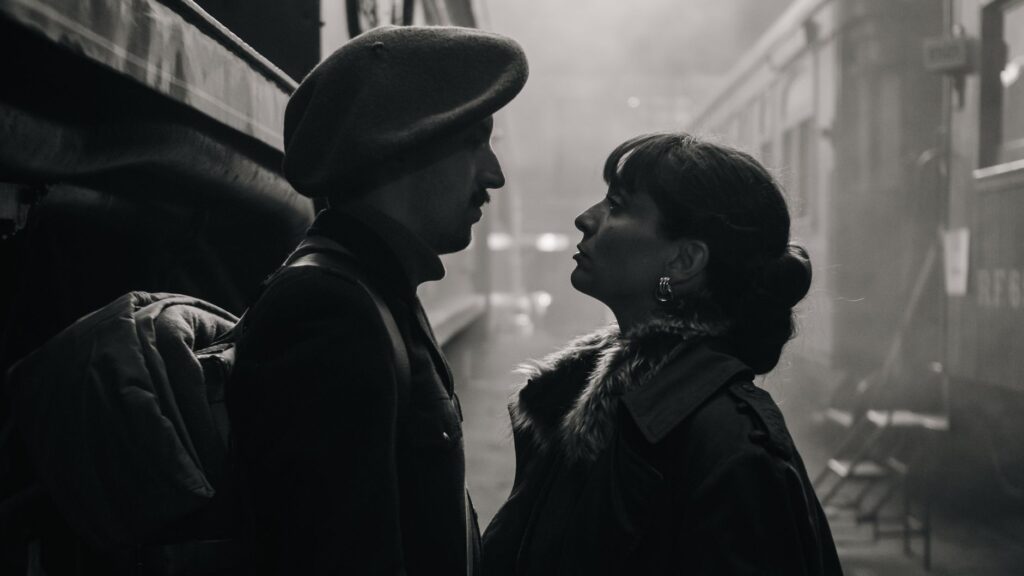
Her example inspired thousands of middle-class European women who believed travel was an exclusive privilege of wealthy male elites.
Practical guide
How to get there: The historical routes of these pioneers can be retraced today via international flights to major hubs like New York, Cairo, or Colombo, connected to local rail networks.
When to visit: Autumn and spring offer the most favorable weather conditions for traversing historical overland routes without extreme temperatures.
Travel requirements: It is essential to check current visa regulations for each country and secure comprehensive international travel insurance.
Packing tip: Much like Nellie Bly or Ida Pfeiffer, travelers are encouraged to bring only carry-on luggage to gain agility and avoid airline baggage disputes.
Estimated budget: Medium and long-distance travel costs depend on chosen transport; opting for local public transit drastically cuts daily expenses.
Recommended reading: Around the World in Seventy-Two Days by Nellie Bly and Isabella Bird’s travel diaries offer direct immersion into this pioneer mindset.
Accommodation: Prioritizing small family-run hotels and independent lodging fosters sustainable tourism and supports local economies.
Legacy and Memory of the Invisible Travelers
Studying these journeys allows us to rewrite the history of tourism and exploration not as an exclusively male discipline, but as a plural domain of conquest. The empty suitcases, austere saddlebags, and improvised trunks of these women carried not only clothing, but also the seed of a new freedom.
Today, when the global tourism industry leans toward hyper-comfort and excessive luggage, remembering Nellie Bly, Jeanne Baret, or Ida Pfeiffer invites us to rethink our own relationship with movement. Less weight, more curiosity, and an open gaze remain the best tools for stepping into the unknown.
Source in EN: El Viajero in EL PAÍS (https://elpais.com/elviajero/2026-08-31/el-equipaje-imposible-de-las-primeras-mujeres-viajeras-de-la-historia.html)


