
Introduction to the Central Asian Transcontinental Corridor
The railway transport system crossing the Republic of Mongolia represents one of the most complex achievements of logistical engineering applied to extreme conditions of altitude, thermal amplitude, and geographic isolation. Commonly known as the Mongolian branch of the great transcontinental corridor, this steel axis connects the Siberian steppes with northern China, traversing over a thousand kilometers of steppe plateaus and arid deserts. The infrastructure is not merely a passenger transport medium, but the economic backbone sustaining the domestic and foreign trade of a landlocked nation whose population density is diluted across immense horizons.
Analyzing the viability and operation of this artery implies understanding how a railway capable of withstanding thermal fluctuations of over eighty degrees Celsius between freezing winters and scorching summers was engineered. From central offices in Ulaanbaatar to border checkpoints at Naushki and Zamiin-Uud, railway traffic management requires meticulous coordination between Soviet-origin technical regulations and the operational standards of the People’s Republic of China. This report examines infrastructure, operational challenges, rural community integration, and logistical keys for traveling through this ancient territory.
Historical Origins and the Geopolitics of Steel in the Steppe
The genesis of Mongolia’s main railway line dates back to the 1940s and early 1950s, a period when strategic cooperation between the Soviet Union and the newly founded People’s Republic of China demanded the creation of a direct overland corridor. Until then, trade and supply exchange relied on camel caravan routes and dirt tracks impassable during seasonal snowstorms, locally known as dzud. The decision to build a 1,520 mm broad-gauge rail link responded to both commercial needs and imperatives of military security and the projection of Soviet influence in the heart of Asia.
Soviet and Mongolian engineers faced formidable topographic challenges: leveling rocky terrain, constructing embankments capable of supporting heavy steam and later diesel locomotives, and erecting bridges over swift rivers such as the Selenga and the Tuul. Construction was carried out with mixed labor and limited technical resources, turning every kilometer laid into a victory against harsh weather. The official inauguration of the northern section in 1949 and its southern extension to the Chinese border in 1956 radically transformed the Mongolian economy, enabling the maritime export of subsoil minerals and the importation of manufactured goods.
Track Architecture and the Challenge of Russian Gauge in Mongolian Territory
One of the most fascinating technical aspects of Mongolian railway infrastructure is the adoption of the Soviet broad-gauge standard (1,520 mm), which directly contrasts with the international standard gauge (1,435 mm) used in China. This track gauge difference is not a mere technical detail; it constitutes a logistical barrier demanding complex transfer and adaptation processes at the country’s southern border. At Zamiin-Uud station, freight and passenger trains must undergo bogie-switching operations or massive cargo transshipments to continue their journey toward Beijing.
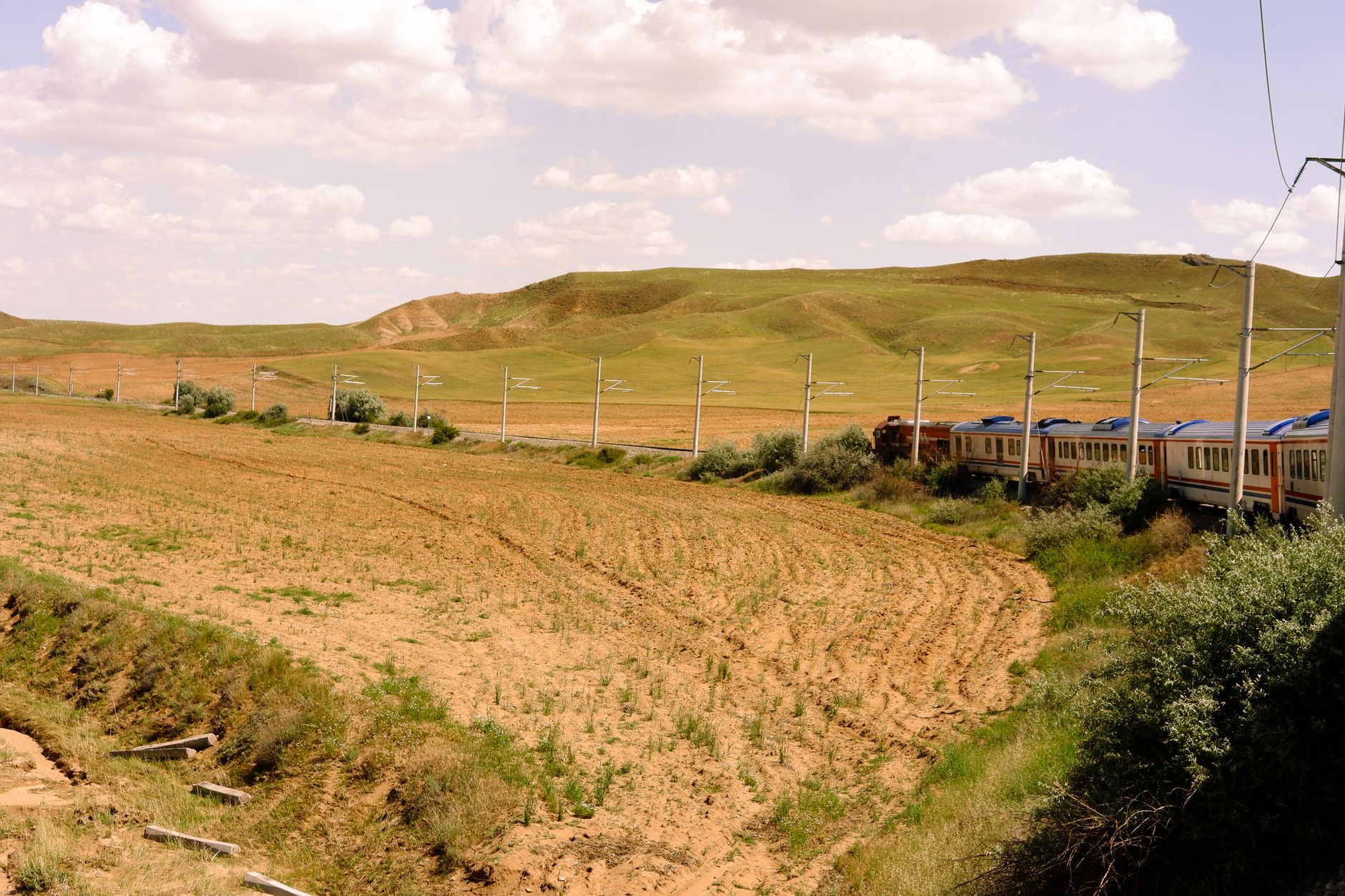
Maintaining the track in the Mongolian environment requires highly specific civil engineering techniques. Engineers must combat the effects of deep soil freezing during winter and subsequent ground expansion in spring, a phenomenon that can misalign sleepers and cause derailments if undetected. To mitigate this, ballast beds composed of high-density crushed stone and subsurface drainage systems designed to channel meltwater away from the track platform are utilized. Maintenance crews patrol sections daily in motorized railcars, inspecting rail welds and fastening bolts under rigorous weather conditions.
Operational Logistics and the Border Bottleneck
Traffic flow along the main line depends on efficiency at two major border nodes: Naushki in the north, connecting with the Russian Railways network, and Zamiin-Uud in the south, bordering Erenhot in China. At these points, customs bureaucracy and phytosanitary controls combine with the technical complexity of gauge-changing. For passenger trains, the bogie-exchange process at the Chinese border can take several hours, during which carriages are elevated using coordinated hydraulic jacks while passengers remain on board or step down onto the border station platforms.
The border is not merely an administrative line on the map, but a technical friction point where two distinct railway philosophies converge, requiring flawless synchronization among Mongolian, Russian, and Chinese operators.
In freight transport, the volume of coal, copper, and fluorspar extracted from Mongolian deposits generates heavy freight trains operating around the clock. Managing these convoys requires modern signaling systems, although semi-automatic block technologies inherited from the Soviet era still operate in many secondary sections. Gradual automation of control posts and the introduction of higher-horsepower diesel locomotives have increased axle-load capacity, reducing transit times between Ulaanbaatar and border dry ports.
The Human and Economic Landscape: Stations Structuring the Void
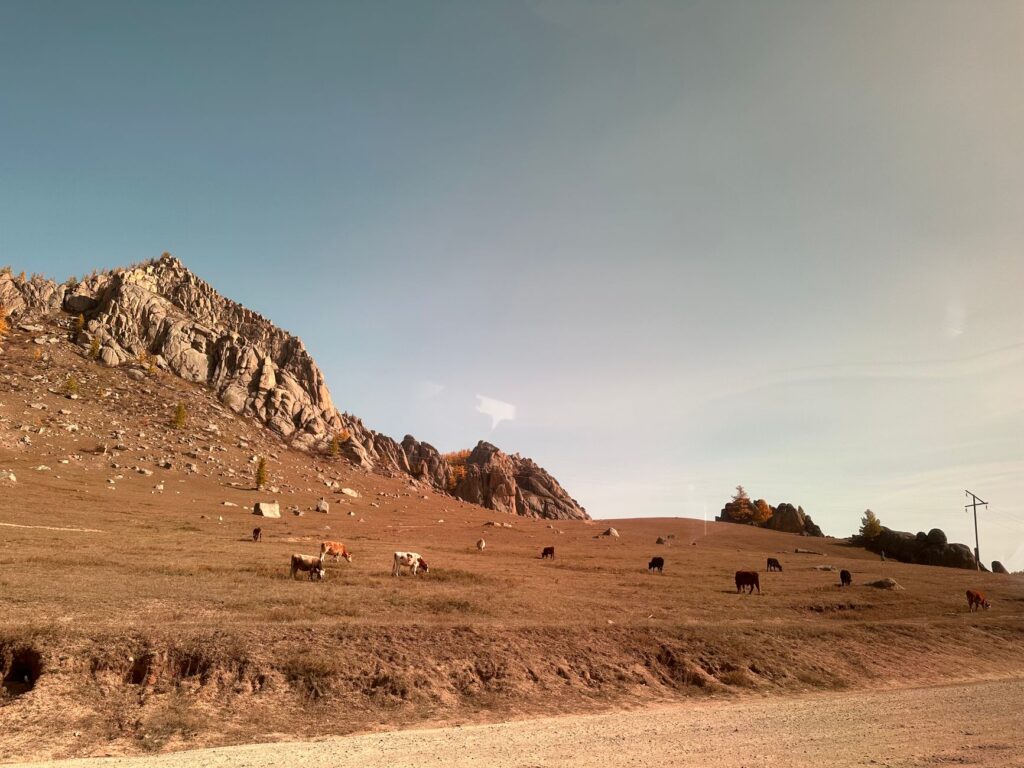
Along more than a thousand kilometers of route, railway stations function as oases of civilization and neuralgic centers for the nomadic pastoralist communities inhabiting the surrounding steppe. Settlements like Darkhan and Choir were born or expanded thanks to the railway passage, becoming industrial and logistical hubs where livestock products are processed and fuels and fresh foods are distributed to the most isolated rural regions.
For pastoralist families, the train represents the most reliable link to the capital and specialized medical services. At minor stops, where the convoy barely halts for a few minutes, passengers exchange news with locals who approach the tracks on horseback or all-terrain motorcycles. This daily interaction reflects the unique symbiosis between twentieth-century industrial technology and the ancestral nomadic lifestyle, which continues adapting to rhythms imposed by regular locomotive passages.
Practical guide
- Getting There: Primary access to the Mongolian rail network is via flights to Chinggis Khaan International Airport in Ulaanbaatar, connecting to the central railway station via official taxis or urban buses.
- When to Travel: Months from June to September offer milder temperatures and extended daylight hours, while winter (November to February) presents extreme temperatures dropping below minus forty degrees Celsius.
- Documentation and Visas: A passport valid for at least six months and corresponding visas for transit and final destination countries (Mongolia, Russia, China) are required, arranged in advance through respective embassies.
- Ticket Classes: For long-distance journeys, booking berths in four-person compartments (kupe) is recommended to ensure greater security and personal luggage space.
- Currency and Payments: Major stations and international trains accept credit cards, but carrying cash in Mongolian tugrik is essential for minor purchases at rural stalls and secondary stations.
The Final Pulse of the Desert and Rail Memory
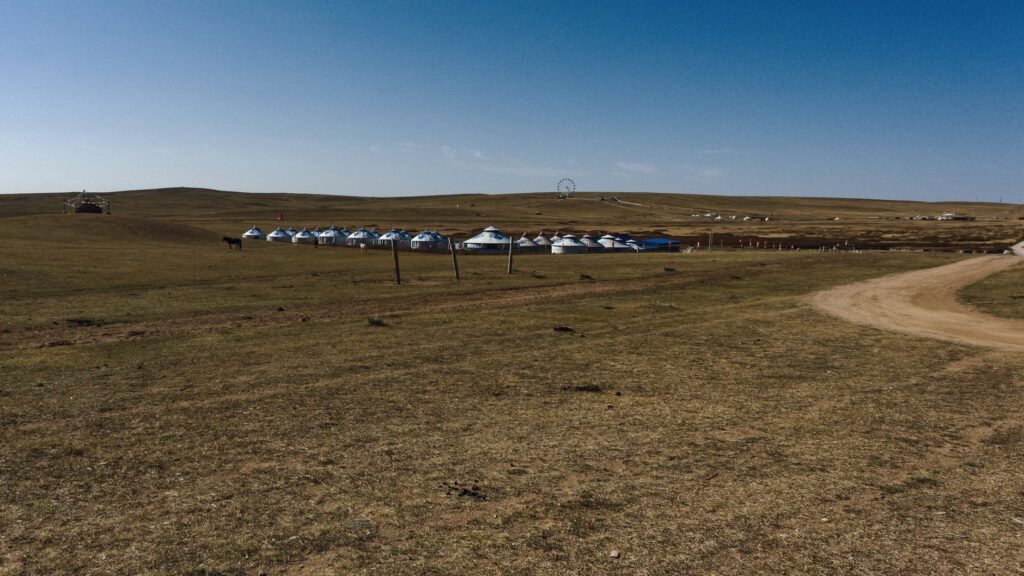
When the convoy leaves Ulaanbaatar’s final suburbs and enters the golden undulations of the Gobi Desert, the travel rhythm seems to slow down until it synchronizes with the monotonous beat of rail joints. Vast expanses of arid land, occasionally dotted with Bactrian camel herds and solitary silhouettes of white yurts, evoke a timeless sense contrasting with the locomotive’s mechanical precision. In this unforgiving environment, where nature imposes its rule of silence and vastness, the railway acts as a guiding thread uniting civilizations, histories, and human destinations across Asian immensity.
Traveling along this ancient route is not merely moving from one map point to another, but experiencing the reflective slowness of a world where the horizon is the sole constant protagonist.
As evening falls, low light over dunes and rocky outcrops dyes the landscape in copper and violet tones, while heat accumulated in the steel carriage walls yields to the sudden chill of the steppe night. Passengers, gathered in corridors or sharing hot tea in metal-holder glasses, silently watch the infinite parade of outer darkness. In that moment of anonymous communion, the railway engineering work reveals its true dimension: a monument to human effort bridging the world’s solitude.