
At daybreak, the mountain valley of Yunomine wakes wrapped in a dense mist that rises not only from the overcast sky, but directly from the riverbed of the Yunotani. Plumes of mineral-rich sulfurous steam drift across damp cobblestones, threading through timber footbridges and cedar eaves that define this secluded village in Wakayama Prefecture. For over twelve centuries, pilgrims from every stratum of Japanese society—from retired Heian-era emperors to nameless farmers—have traversed the stone-paved trails of the Kumano Kodo with a purpose far deeper than mere physical pilgrimage: to submerge their weary bodies in subterranean thermal waters and undergo misogi, the ritual cleansing that precedes entrance into the grand shrines of the Kii Peninsula.
In a world saturated with fleeting wellness fads and prefabricated spa escapes, southern Honshu preserves an approach to rejuvenation where nature is never a passive backdrop, but an active catalyst for physiological and mental restoration. Here, genuine well-being is neither scheduled in hourly slots nor measured in cosmetic applications; it unfolds as a discipline of quietude that merges immersion in singular mineral waters with shinrin-yoku (forest bathing), framed by ancient Japanese cedar (Cryptomeria japonica) and evergreen oak forests that naturally release airborne phytoncides capable of resetting the autonomic nervous system.
The Sacred Geology of Kii: Where Magmatic Water Becomes Ritual
The Kii Peninsula is a formidable mountain knot where tectonic boundaries channel deep geothermal energy straight to the surface at temperatures frequently exceeding ninety degrees Celsius. Unlike the volcanic landscapes dominated by majestic visible cones like Mount Fuji, the vulcanism of Kii is entirely subterranean, concealed beneath an impenetrable canopy of temperate rainforest. This unique geological reality gave birth to an ancient animist worldview: early Shinto practitioners perceived these steaming waters not as thermal anomalies, but as kami—living Earth spirits offering purification and physical renewal.
When esoteric Buddhism merged with local animist traditions through the mountain asceticism of Shugendo, Kumano became revered as an earthly manifestation of Amida Buddha’s Pure Land. Shedding one’s travel-stained garments to enter the steaming springs represented a symbolic death and bodily rebirth. Today, travelers walking these shaded paths discover that this contemplative dimension remains completely intact: the deliberate minimalism of local bathhouses directs all attention toward the thermal mass of the water, the texture of volcanic stone, and the constant murmur of mountain currents.
Yunomine Onsen: Eighteen Centuries of Immersion and Renewal
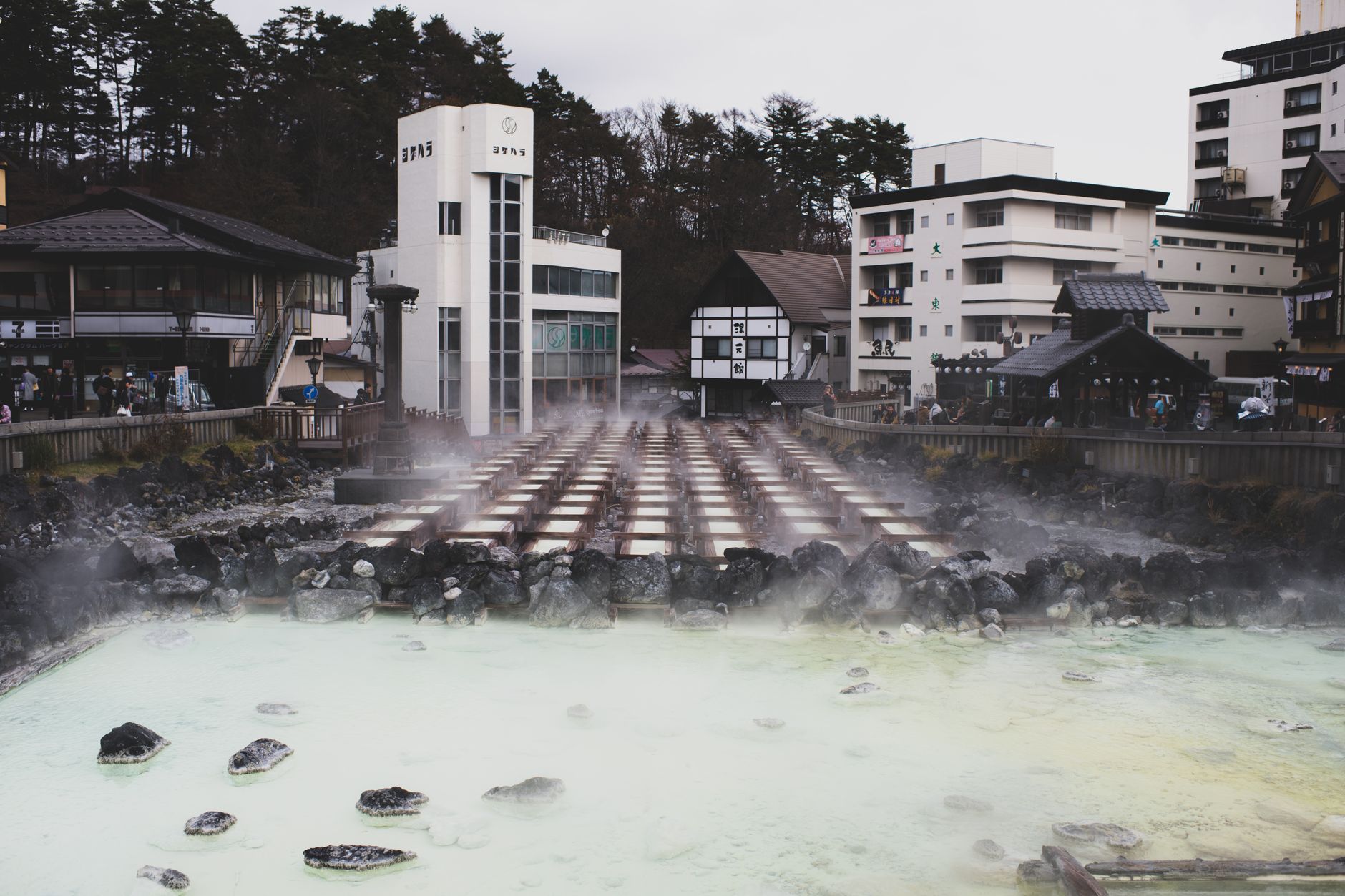
Documented in ancient imperial chronicles as having been founded in the 4th century by Emperor Ingyo, Yunomine Onsen stands as one of the oldest recorded thermal stations in Japan. The settlement clusters tightly along a central river channel where local residents and visitors still lower bamboo baskets of fresh eggs and seasonal root vegetables into boiling mineral water at a public cooking well known as Yuzutsu. This everyday integration of thermal water underscores a profound, sustainable symbiosis with the land: volcanic heat warms the homes, enriches local food culture, and heals human bodies.
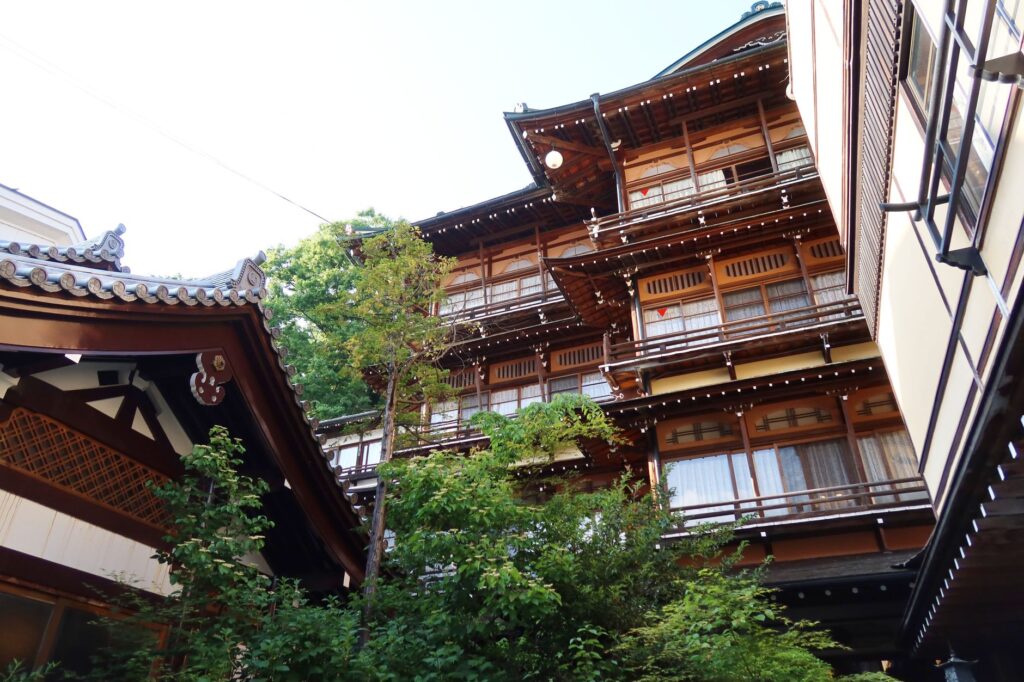
Strolling through Yunomine at dusk, as paper lanterns begin to cast an amber glow against the weathered cedar facades of multi-generational ryokan, evokes an immediate sense of timeless shelter. The local water belongs to the sodium hydrogen carbonate and sulfur class, possessing a delicate alkalinity that softens skin tissue while delivering therapeutic relief for chronic joint inflammation, peripheral neuralgia, and muscular fatigue accumulated across the steep mountain passes.
Tsuboyu: An Intimate Encounter in the World’s Oldest Public Bath
Perched directly upon the rocky riverbed of Yunomine sits a tiny, rustic wooden cabin: Tsuboyu. It holds the rare distinction of being the only UNESCO World Heritage-listed thermal bath anywhere on Earth in which the public can still bathe. Sized to accommodate only one or two people at a time, this unadorned shack of raw timber planks encloses a natural rock basin where mineral water surges directly from the earth’s crust without intermediary piping.

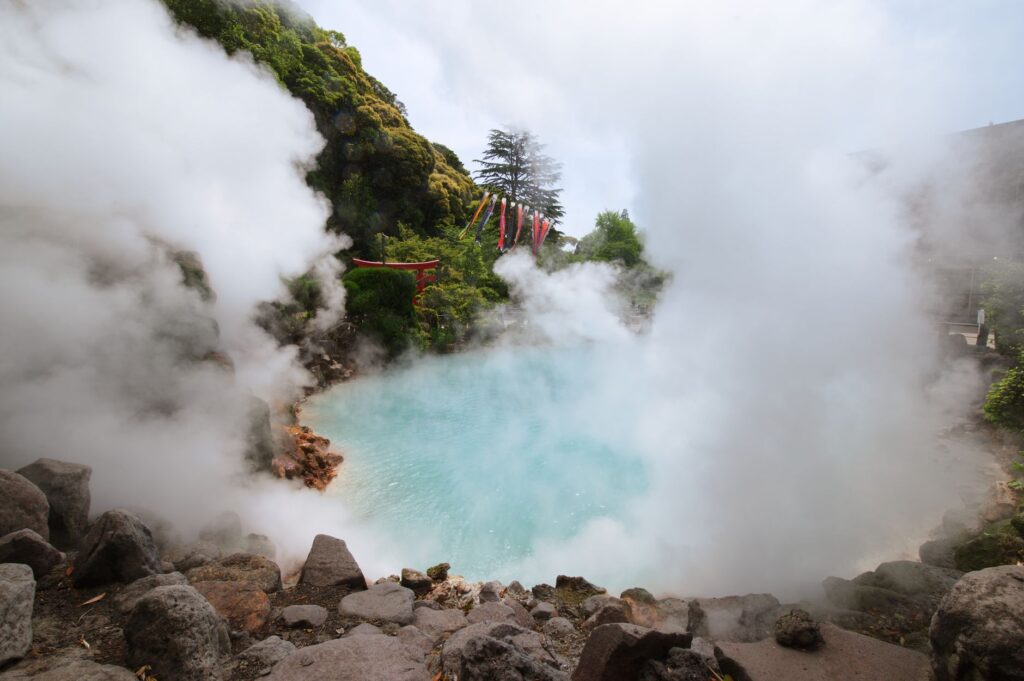
Access to Tsuboyu rejects digital reservations and modern commercialism. It operates on an uncompromising first-come, first-served system: bathers purchase a numbered wooden token at the local ticket office and wait their turn along the riverbank for a strictly observed thirty-minute soak. Inside, secured by a single wooden latch, the experience borders on the sacred. The water within Tsuboyu changes color up to seven times in a single day, shifting between milky white, translucent turquoise, and soft slate gray in response to barometric pressure, air temperature, and the refraction of ambient light through suspended minerals.
«To immerse oneself in Tsuboyu is not to seek leisure, but to encounter an elemental truth: yielding to the earth’s intense geothermal heat is the purest possible reminder of our own vitality.»
Local lore tells of the 14th-century warrior Oguri Hangan, who, stricken with a debilitating disease that left him paralyzed, was hauled across the mountains in a small wooden cart and miraculously recovered his mobility and vision after repeated immersions in Tsuboyu’s mineral pool. Beyond myth, modern balneology confirms that the high sulfur and mineral concentration induces immediate peripheral vasodilation, lowering arterial blood pressure and promoting a state of profound parasympathetic relaxation.
Kawayu Onsen and Sennin-buro: Carving a Private Thermal Pool from the Riverbed
Just a short distance from Yunomine, along the crystalline reaches of the Oto River, lies Kawayu Onsen—a destination showcasing an entirely different dimension of Japanese thermal tradition. In Kawayu, geothermal water above seventy degrees Celsius flows directly beneath the gravelly riverbed. During warmer months, guests simply grab a short-handled shovel, walk down to the riverbank, and excavate a shallow basin in the river stones; subterranean hot water immediately wells up and mixes with the brisk, crystal-clear river current, allowing each person to calibrate their own customized thermal bath.
During winter, when the Oto River’s volume drops, the village community uses heavy machinery to dam a vast section of the riverbed, creating the legendary Sennin-buro—a giant communal outdoor bath large enough for hundreds of bathers. Soaking in this warm expanse under a crisp January sky, while white steam rises into the mountain darkness and frosty alpine air cools the face, delivers one of the most sublime sensory contrasts available in the Japanese archipelago.
Shinrin-yoku Along the Kumano Trails: The Science of Forest Immersion
Holistic health along the Kii Peninsula is deeply rooted in both water and earth. The network of ancient pilgrimage routes comprising the Kumano Kodo provides the ideal terrain for the intentional practice of shinrin-yoku, or forest bathing. Formalized in Japan during the 1980s as a preventative public health framework against urban overwork, forest therapy finds its quintessential expression among these sacred cedar-lined ridges.
Wakayama’s old-growth forests are dominated by monumental Japanese cedar and fragrant hinoki cypress. These trees emit volatile organic antimicrobial compounds known as phytoncides—primarily alpha-pinene, d-limonene, and sabinene—to defend against insects and fungal decay. When inhaled by walkers at an unhurried, mindful pace, these compounds stimulate measurable physiological responses: regular inhalation of forest phytoncides significantly increases the activity of human Natural Killer immune cells, while lowering salivary cortisol levels and stabilizing autonomic nervous activity.
The Art of Slow Movement and Sensory Awakening
To fully experience the restorative benefits of forest therapy, local Kumano guides encourage visitors to abandon athletic pacing in favor of sensory receptivity. Along classic trails like the Nakahechi route between Hosshinmon-oji and the great shrine of Kumano Hongu Taisha, the focus shifts entirely to multi-sensory presence:
- Conscious Tactile Contact: Feeling the cool, velvety moss on the ancient stone stairways of Daimon-zaka and resting hands against centuries-old tree bark.
- Diaphragmatic Breathing: Synchronizing walking cadence with deep, deliberate breaths that draw in oxygen enriched by essential forest aerosols after morning rain.
- Natural Soundscapes: Absorbing the acoustic rhythm of mountain rivulets and the soft rustle of wind through high cedar canopies.
- Visual Soft Focus: Allowing the eyes to rest effortlessly on infinite variations of natural green, reversing visual fatigue caused by prolonged screen exposure.
Ryokan Architecture and Kaiseki Dining: Restoration Through Seasonal Rhythm
The wellness journey in Wakayama relies fundamentally on the traditional ryokan as an acoustic and aesthetic refuge. Staying in these heritage wooden inns throughout the Kumano valleys means inhabiting a spatial harmony shaped by natural rice-straw tatami flooring, sliding paper shoji screens, and the deliberate absence of artificial noise. Walking barefoot over natural woven mats produces an immediate grounding sensation, while the subtle, dry fragrance of igusa rush acts as a gentle, continuous olfactory relaxant.
The culinary offerings that accompany these stays—whether multi-course kaiseki or temple-inspired shojin ryori—cater with nutritional precision to the body’s recovery after mountain trekking and thermal baths. In Wakayama, evening meals highlight ingredients harvested directly from surrounding mountains and pristine riverways:
- Sansai (Wild Mountain Greens): Foraged fiddlehead ferns (zenmai), butterbur sprouts, and wild root vegetables that supply potent antioxidants and bitter compounds to aid digestion.
- River Fish and Local Tofu: Sweet ayu trout salt-grilled over radiant binchotan white charcoal, alongside silken tofu crafted using pure thermal mineral water.
- Kishu Umeboshi: Wakayama’s famed pickled plums, celebrated for concentrated citric acid that rapidly metabolizes lactic acid accumulated during physical exertion.
- Onsen-steamed Rice: Local rice varieties cooked in thermal spring water, resulting in an exceptionally silky texture enriched with subtle trace minerals.
The Water Protocol: Etiquette, Minerals, and Communal Reverence
Engaging responsibly with Japanese onsen requires an understanding of cultural protocols established to maintain pristine water purity and sustain shared serenity. The thermal bath in Japan is never a place for washing the body, but a sanctuary for quieting the mind once the body is entirely clean. Before stepping into any communal pool, bathers must sit at the low perimeter shower stalls, washing thoroughly with soap and rinsing away all lather with warm water.
Equally important are physiological precautions to prevent thermal stress or dehydration caused by high mineral concentrations. Balneology specialists in Wakayama advise limiting single soaks to ten or fifteen minutes, interspersed with rest periods and continuous hydration with green tea or fresh spring water. Those with cardiovascular sensitivities should avoid neck-deep immersion in pools exceeding forty-two degrees Celsius, opting instead for hanshin-yoku (half-body soaking) to maintain gentle circulation without overtaxing the heart.
Travel Guide to the Kii Peninsula: Logistics, Seasons, and Stewardship
Planning a restorative journey to the Kii Peninsula requires embracing the slower pace of regional Japanese transit. The primary rail artery is the JR Kinokuni Line, connecting Shin-Osaka Station with Kii-Tanabe in approximately two and a half hours via the Kuroshio Limited Express. From Kii-Tanabe, dependable local bus networks operated by Ryujin and Meiko navigate deep into the mountainous interior, reaching Yunomine, Kawayu, and Kumano Hongu Taisha in about ninety scenic minutes.
The ideal seasons to experience this harmony of hot springs and mountain forests are early spring (March and April), when wild cherries bloom across emerald ridges and crisp air enhances hot soaks, and late autumn (October and November), when Japanese maples blaze with crimson foliage. While winter brings cold mornings, the seasonal opening of the Sennin-buro river bath in Kawayu offers an unforgettable open-air sanctuary.
Preserving this fragile ecological and cultural sanctuary demands conscious environmental stewardship from every traveler: staying strictly on designated paths along the Kumano Kodo to prevent soil erosion around ancient root systems, strictly avoiding chemical soaps near natural waterways, and observing silent contemplation within thermal baths. In the deep river valleys of Wakayama, true restoration is not a luxury purchased—it is an ancient gift of stone, rainfall, and forest received with gratitude.