
Located just thirty kilometers northeast of Hanoi, the province of Bac Ninh unfolds as a rich tapestry of alluvial plains, ancient temples, and traditions that have stoutly resisted the encroachment of modernity. Historically recognized as the heart of the Kinh Bac cultural region, this province—the smallest by land area in Vietnam—boasts a density of historical and spiritual heritage that easily rivals the great dynastic capitals of Southeast Asia. Yet, for decades, its cultural wealth was largely relegated to quick day-trips, where travelers merely scratched the surface of its ancestral legacy before returning to the capital.
Today, Bac Ninh is undergoing a profound transformation of its tourism model. Local authorities, in close collaboration with historians, artisans, and local communities, have embarked on an ambitious restructuring of their travel routes and tourism products. The goal is not simply to attract higher numbers of visitors, but to craft immersive experiences that encourage longer stays, seamlessly connecting spiritual tourism, UNESCO-protected intangible heritage, and the traditional craft workshops that thrive along the banks of the Duong River. This renewal aims to turn passive sightseeing into an active dialogue between travelers and the local community.
The Rebirth of the Kinh Bac Cultural Cradle
To fully appreciate the significance of this tourism overhaul, one must understand the unique identity of Kinh Bac. This region has long been considered the cradle of the Red River Delta civilization. It was here that the earliest forms of Vietnamese Buddhism took root, bronze casting techniques were perfected, and one of East Asia’s most sophisticated vocal art forms was born: Quan Ho folk singing. Bac Ninh’s unique geography, crisscrossed by historic rivers, facilitated a steady exchange of goods and ideas, establishing the province as a vibrant hub of cultural and artistic innovation.
The province’s new strategy seeks to reclaim this cultural leadership by diversifying its travel circuits. Rather than presenting isolated destinations, the new itineraries are structured as cohesive narratives. Travelers can now trace regional history from early dynastic periods through the colonial resistance, utilizing recently upgraded roads that connect the province’s key districts. This holistic approach ensures that each stop takes on a deeper meaning, understood as a vital piece of a shared historical ecosystem.
Redesigning the Routes: From Static Monuments to Living Experiences
At the core of Bac Ninh’s tourism reform is the creation of interconnected thematic itineraries. Previously, visitors would independently visit But Thap Pagoda or Do Temple without a narrative thread connecting them. The new routes designed by the provincial Department of Culture, Sports, and Tourism group these monuments under conceptual themes such as «The Route of Faith and Ancient Architecture» or «The Path of Ancestral Crafts Along the Duong River.»
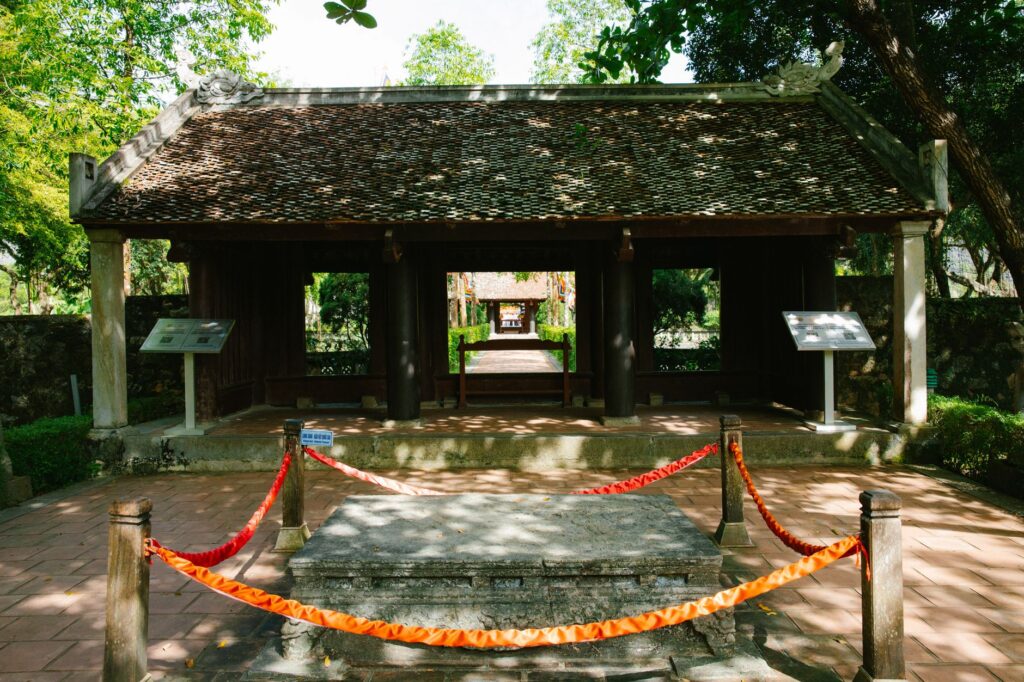
These routes do more than just streamline travel times; they incorporate mandatory stops at local interpretation centers where visitors can engage directly with the keepers of local traditions. For instance, a visit to Do Temple, dedicated to the eight emperors of the Ly Dynasty, is now enriched with courtly theatrical performances and ancient calligraphy workshops. In this way, architectural heritage ceases to be a static backdrop and becomes a space for active learning and community participation.
«Tourism in Bac Ninh is no longer about passive observation; it is an immersive dive into Vietnam’s collective soul.»
The Resonance of Quan Ho: A Living UNESCO Heritage
Inscribed on UNESCO’s Representative List of the Intangible Cultural Heritage of Humanity in 2009, Quan Ho love duets serve as the emotional anchor of Bac Ninh. This vocal art form, characterized by its structured lyrical dialogue between male (liền anh) and female (liền chị) singers, was traditionally performed at spring festivals and informal gatherings. Its technique, requiring flawless vocal modulation and subtle resonance, reflects a highly refined social etiquette rooted in mutual respect and warm hospitality.
The innovation in local tours has moved Quan Ho out of formal performance halls and back into its traditional spaces: the communal houses and temple courtyards of ancient villages. The new itineraries allow travelers to visit legendary singing villages like Viem Xa, where they can listen to these beautiful melodies performed a cappella, without modern amplification, in the natural acoustic environments for which they were composed. Visitors are also invited to learn the basics of the non-verbal language and social protocols that accompany these songs, turning a simple performance into a profound human connection.
Clay and Folk Art: Immersive Journeys in Phu Lang and Dong Ho
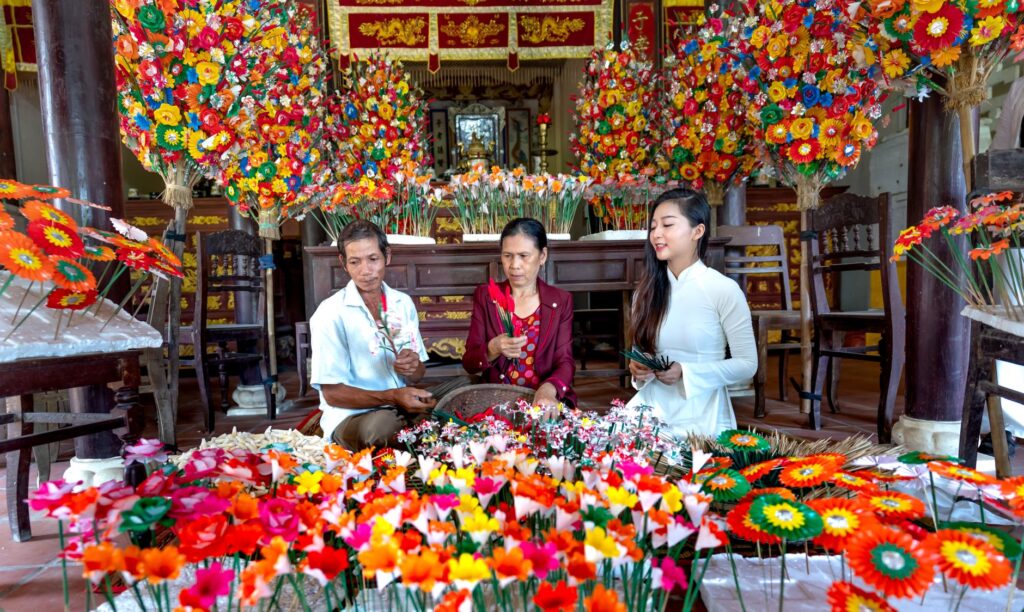
Bac Ninh’s rich craftsmanship is another key pillar integrated into the newly designed travel routes. The village of Dong Ho, famous for its woodblock prints on traditional bark paper (do paper), represents one of the country’s oldest graphic arts. These prints, which depict scenes of daily rural life, folklore, and wishes for prosperity, are crafted using entirely natural pigments sourced from seashells, bamboo leaf charcoal, and local flowers.
Just a few kilometers away, the pottery village of Phu Lang offers a striking visual and sensory contrast. Here, the landscape is defined by tall brick chimneys and stacks of clay vessels drying in the sun. Unlike other ceramic centers in Vietnam, Phu Lang preserves the use of traditional wood-fired kilns and a signature brown glaze made from wood ash and local red clay.

- Hands-on printmaking workshops: In Dong Ho, tourists can now carve their own woodblocks and apply natural pigments to do paper under the guidance of third-generation master artisans.
- Clay molding in Phu Lang: Visitors actively participate in throwing and glazing ceramic pieces, gaining a hands-on appreciation of the physical effort required by traditional pottery.
- Inter-village cycling routes: Newly paved paths allow travelers to wind through agricultural fields, connecting these craft villages by bicycle while minimizing the environmental impact of tourism.
Sacred Spaces: The Spiritual Grandeur of But Thap and Phat Tich
The spiritual depth of Bac Ninh is powerfully expressed in its Buddhist monuments. But Thap Pagoda, nestled alongside the Duong River dike, is one of the finest surviving examples of 17th- and 18th-century wooden architecture in Vietnam. The complex is renowned for its stone Bao Nghiem tower, which resembles a giant writing brush pointing skyward, and for housing the extraordinary statue of the thousand-hand, thousand-eye Guanyin, a masterpiece of lacquered wood sculpture embodying universal compassion.
Meanwhile, Phat Tich Pagoda, resting quietly on the slopes of Lan Kha Mountain, transports visitors back to the early days of Vietnamese Buddhism in the 11th century under the Ly Dynasty. The site is famous for its monumental sandstone Buddha statue, which has survived centuries of conflict and restoration. The newly redesigned tour programs have introduced guided sunrise meditation sessions in the gardens of Phat Tich, offering travelers a peaceful space for quiet reflection that beautifully balances the active cultural exploration of the trip.
«Quan Ho singing is not a relic of the past, but a living dialogue between generations.»
Connectivity and Sustainable Growth: The Hanoi Corridor
Proximity to the capital city of Hanoi is a double-edged sword for Bac Ninh. While it facilitates easy weekend travel, it also exerts significant pressure on local resources and makes it difficult to retain tourism spending within rural communities. To address this, the province’s tourism innovation plan focuses on developing small-scale, sustainable accommodation options, such as family-run homestays in traditional artisan villages.
Furthermore, the use of electric vehicles is being actively promoted for internal transport within historic districts, minimizing noise and air pollution near sensitive temples and pagodas. Training local residents in tourism management and hospitality is another key component of this strategy, ensuring that the economic benefits of increased visitor numbers are distributed fairly and directly to those who preserve the province’s unique cultural heritage.
Practical guide
Getting there and around
Bac Ninh is located approximately 40 minutes by car from central Hanoi. It is easily accessible via public bus number 54 from the Long Bien bus station, or through private car services and ride-hailing apps. To explore the craft villages along the Duong River, renting a motorbike in Hanoi or hiring a local driver in Bac Ninh city is highly recommended.
When to visit
While the province is a year-round destination, the best time to visit is during the spring months (February to April) when the region’s most important traditional festivals take place, including the famous Lim Pagoda Festival, where Quan Ho singing is performed at its grandest scale. The autumn months (September to November) offer mild, dry weather, perfect for exploring the artisan villages by bicycle.
Etiquette and cultural guidelines
When visiting temples, pagodas, and family shrines, it is essential to dress modestly, covering shoulders and knees. Speak in quiet tones and remove your shoes when entering designated indoor spaces. When interacting with local artisans and singers, always ask for permission before taking photos, and show your appreciation for their craft by purchasing products directly from their family workshops.
The Whispering Rivers of the North
As evening falls, the waters of the Duong River reflect the golden hues of sunset over the rice fields surrounding But Thap Pagoda. In the distance, the faint echo of a bamboo flute and the gentle voices of a Quan Ho rehearsal remind travelers that in Bac Ninh, time is measured not in minutes, but in harvest cycles, shared songs, and the steady spin of the potter’s wheel. The province’s tourism innovations do not seek to disrupt this ancient rhythm, but rather to open a respectful window so the world can witness, understand, and help preserve the very heart of Vietnam’s cultural identity.
Source: Vietnam.vn