Introduction to the Guaraní Larder
The cuisine of Paraguay cannot be fully understood solely through its recipes, but rather by comprehending its territory—an intersection of ecoregions where red soil and sprawling waterways shape the rhythm of daily life. Unlike other South American nations whose gastronomy was radically transformed following the arrival of viceregal influences, the Paraguayan recipe book retained with unusual firmness the linguistic and alimentary foundation of its indigenous peoples. The Guaraní language is not merely the official tongue unifying conversations in the markets of Asunción; it is also the taxonomic key to decoding why a specific ingredient is baked, boiled, or fermented in a precise manner.
Traveling through Paraguay with a keen appetite requires shedding urban haste. In street stalls and grand ancestral homes where the tatakua—the traditional brick and mud oven—is still ignited daily, food acts as a living archive. Here, cassava does not play the role of a mere side dish, but functions as the true daily bread, a universal substitute appearing at every table from breakfast until dinner. This feature explores the pillars of a culinary culture resisting the passage of time, documenting its markets, techniques, and essential dishes for any traveler seeking to grasp the country’s deep soul.
Corn and Cassava as Sacred Foundations
To grasp the backbone of the Paraguayan table, one must observe the absolute prominence of two elements: corn and cassava. Far from being treated merely as agricultural resources, these crops carry a symbolic and historical weight tracing back to the cosmogonic myths of Guaraní culture. Corn (avatí) is divided into multiple local varieties, each designated for a precise culinary purpose, whether for coarse flours, fine milling, or preparing doughs destined for the searing heat of the oven.
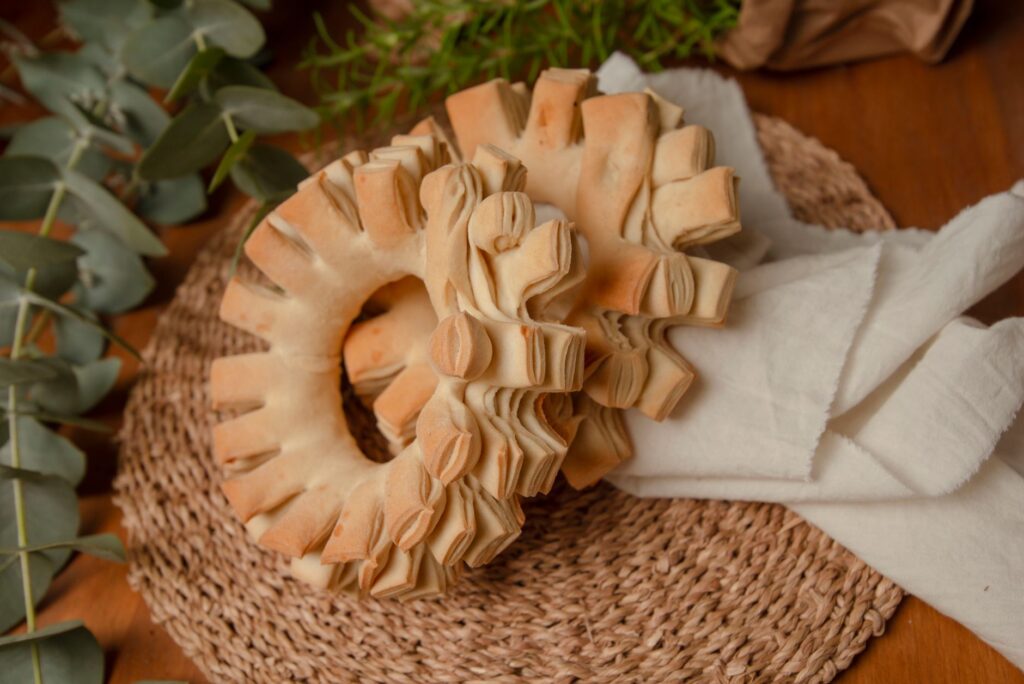
Paraguayan cuisine is an act of cultural resistance where the Guaraní language names every single ingredient with the exact same reverence as it did five centuries ago.
Cassava (mandihó), on the other hand, is harvested fresh every dawn and arrives at local markets piled high in massive bundles. Boiling it is a daily ritual: it is simmered in salted water until it achieves a buttery texture that melts upon contact with the palate. This fibrous and versatile root accompanies virtually any savory dish, serving as the perfect counterweight to the rich and protein-heavy preparations characterizing traditional rural Paraguayan diets.
Sopa Paraguaya and Chipá: Icons of Heat and Oven
Among the most singular creations of the Southern Cone stands sopa paraguaya. Despite bearing the word soup in its name, it is not a liquid broth, but a solid, savory cornbread of dense consistency crafted from corn flour, fresh cheese, milk, pork lard, and finely chopped onions. Its origin is wrapped in popular lore, the most recurrent being a tale recounting a presidential cook’s mistake during the López era, who accidentally added too much corn flour to a chicken broth, solidifying the result into a dish that fascinated the leader.
The Daily Ritual of Chipá on Urban Street Corners
Simultaneously, chipá dominates mornings and afternoons across every corner of the country. Prepared with cassava starch, Paraguayan cheese, lard, eggs, and anise, these circular rolls are baked hot in modest street stalls tended by chiperas—women balancing traditional baskets atop their heads. The aroma of freshly baked chipá permeates bus terminals and central plazas, shaping an irreplaceable olfactory soundtrack for any visitor exploring Paraguayan streets.
Robust Stews and Chaco Meats
When subtropical weather intensifies or demanding field labor requires sustained energy, Paraguayan gastronomy turns to its hearty stews and meat preparations. Vorí vorí is perhaps the pinnacle of this category. It is a thick chicken or beef broth enriched with small spheres of corn flour and cheese cooked directly within the steaming liquid, absorbing all juices and yielding a comforting, singular texture.
- Creole chicken vorí vorí infused with fresh garden herbs.
- Traditional Paraguayan puchero featuring seasonal vegetables and boiled cassava.
- Open-fire barbecued meats utilizing select cuts from Chaco cattle ranching.
Beef, driven by the thriving cattle industry of the Chaco and the Eastern region, holds a central place in Sunday family lunches. The Paraguayan asado, slowly cooked over glowing embers or stakes, prioritizes the natural flavor of the meat without complex marinades, almost invariably accompanied by tomato, onion, and boiling cassava salads.
Traditional Sweets and the Pause of Tereré
The conclusion of a typical meal in Paraguay is frequently marked by honest pastry-making, where sugarcane honey and tropical fruits play starring roles. Mbejú, though technically a savory-sweet snack made from cassava starch and cheese consumed at any hour, paves the way for desserts such as rice pudding perfumed with local vanilla or traditional sweet green papaya preserved in syrup, commonly served alongside a slice of fresh cheese to balance the sweetness.

Tereré as a Social and Anthropological Technology
No approach to the Paraguayan table is complete without understanding the cultural dimension of tereré. Declared Intangible Cultural Heritage of Humanity by UNESCO, this infusion of yerba mate prepared with cold water and medicinal herbs (yopará) is not merely a refreshing drink to combat Amazonian heat; it is a social institution. The guampa, bombilla, and thermos circulate hand-to-hand in circles of trust, breaking down hierarchies and establishing a horizontal space for conversation and daily truce.
Supply Markets: Where True Gastronomy Beats
To witness the authenticity of these flavors, one must step away from conventional gastronomic circuits and venture into Asunción’s Mercado 4 or the colorful municipal markets of Encarnación and Concepción. These labyrinths of corrugated metal and wooden stalls serve as the stage where smallholder farmers, herbal remedy vendors for tereré, and cooks preparing steaming dishes since five in the morning converge.
Paraguayan popular markets function as a living museum of the senses, where each aisle reveals the persistence of ancestral family recipes.
Within these spaces, one observes the rigorous selection of ingredients: Paraguayan cheese wrapped in banana leaves, fresh pork lard balls, and bundles of medicinal herbs like perdudilla or ambay. Walking these aisles reveals that Paraguayan cuisine does not pander to passing trends, but responds to a rigorous ecological and social adaptation passed down orally from generation to generation.
Practical guide
Planning a culinary journey through Paraguay requires keeping certain local dynamics in mind to fully enjoy the gastronomic experience without setbacks.
When to Go and Essential Markets
The southern autumn and winter months (from May to August) offer milder temperatures for exploring markets and enjoying hot stews. Visiting Mercado 4 in Asunción and Encarnación’s commercial circuit is mandatory.
Table Etiquette and Customs
Tereré is invariably shared in rounds where the person stoking the water (the cebador) holds the responsibility of maintaining the temperature and the turn order. Rejecting mate or tereré offered with hospitality can be considered discourteous.

Health and Transportation Recommendations
Consuming bottled water is advised alongside prioritizing street food stalls displaying high turnover rates among local patrons. To travel between regional markets, mid-distance buses are economical and reliable.
Sensory Epilogue Facing the Paraguayan River
At dusk, as the breeze begins to settle over the dark waters of the Paraguayan river, the city seems to pause to hold its final daily dialogue around the cold mate gourd. The silhouettes of fishermen merge with the horizon while the smoke from the last tatakuas slowly dissipates among the mango trees. There are no artifices in this cuisine; its value resides precisely in its unwavering fidelity to the land that witnessed its birth. For the traveler who knows how to watch and taste attentively, every bite of chipá, every sip of tereré, and every bowl of vorí vorí transforms into a definitive gateway to the living memory of a land guarding its most savory secrets closely.
Source in English: Living Traveling with Intelligent Travel (https://inteligenciaviajera.com/comida-tipica-de-paraguay/).