The Discreet Doors of Toledan Knowledge
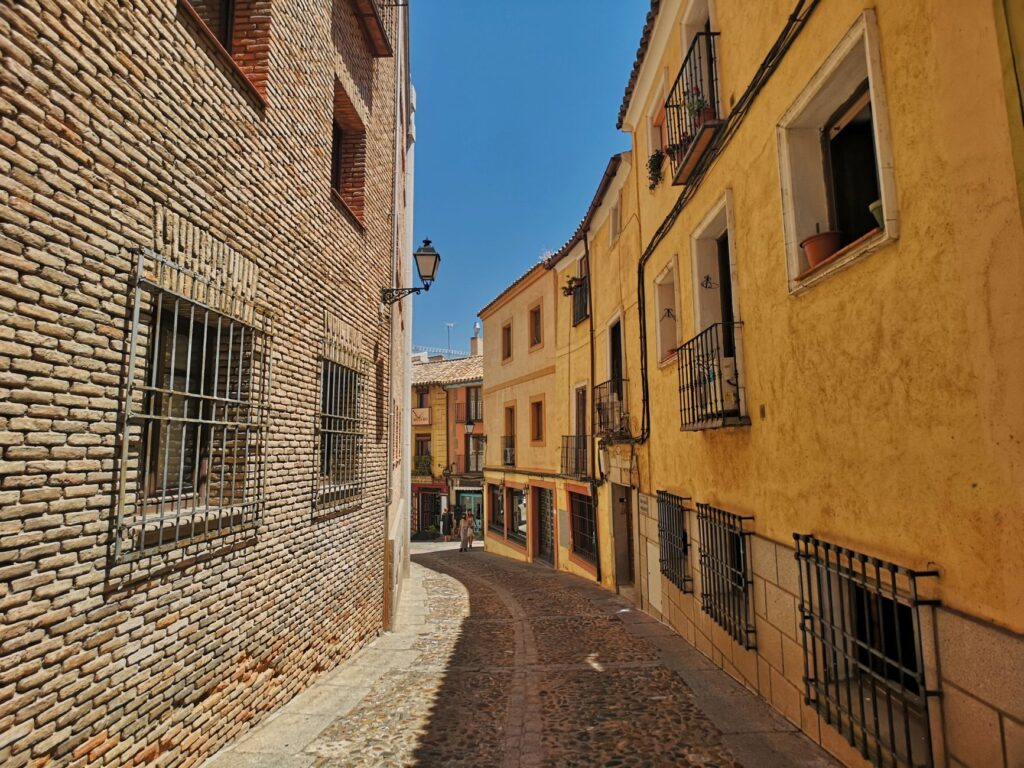
In the labyrinth of steep alleys climbing from the Tagus River up to the walled heart of Toledo, time seems measured by the measured pulse of church bells and the dry rustle of aged paper. Far from the hustle of conventional tourist routes, stone entryways hidden behind heavy wooden doors shelter one of the most demanding and fragile craft traditions in Europe: the binding and restoration of parchment manuscripts. Here, in the artisan studios that inherited the cultural syncretism of three distinct traditions, a small group of master craftspeople dedicate their entire days to deciphering the secrets of the medium, restoring structural integrity to codices that have survived centuries of humidity, war, and neglect.
The choice of Toledo is far from accidental. During the Middle Ages and the Renaissance, this city served as the great bridge for the transmission of classical knowledge thanks to its renowned School of Translators. Today, that vocation for preservation persists in the hands of professionals who combine historical research with surgical precision. Stepping into one of these workshops is crossing a threshold where the air smells of fish glue, tannin-tanned leather, and beeswax. There are no digital screens or mechanical noises; only the rhythmic compass of a needle piercing a skin rib and the muffled sound of a wooden press tightening folds destined to become eternal.
The Alchemy of Parchment and Skin Preparation
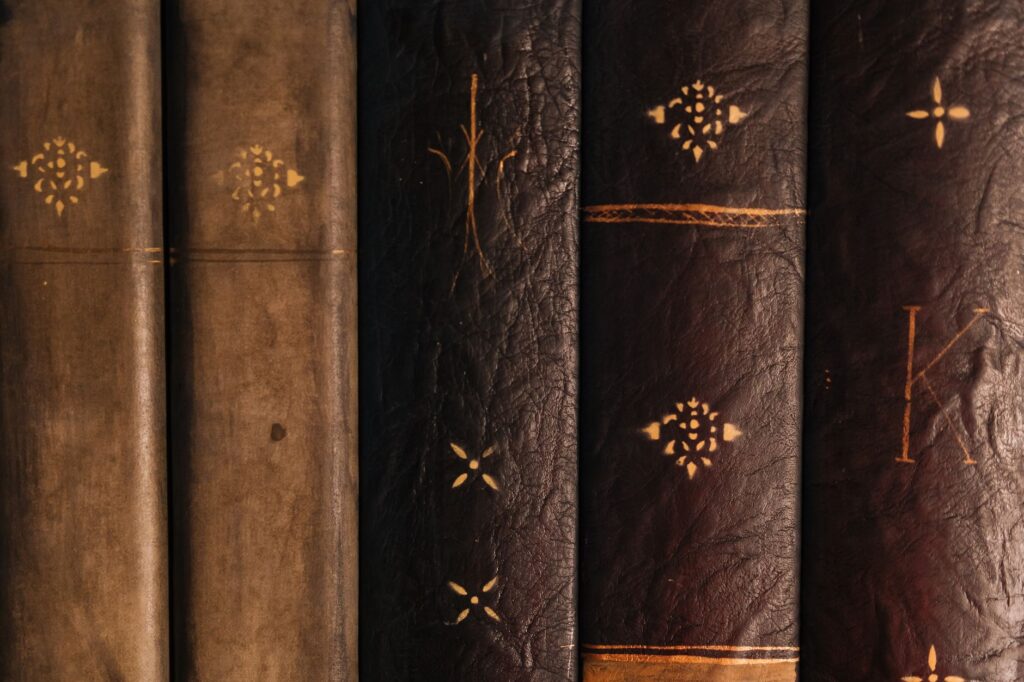
The soul of any quality historical binding lies in the choice of its wrapper. Unlike common bovine or caprine leather, authentic parchment—traditionally crafted from goat, sheep, or calf skins subjected to a lengthy process of liming, stretching, and scraping with curved blades—demands absolute respect. Toledan masters welcome pieces onto their tables that retain the natural scars of the animal, vein marks, and pores that testify to the authenticity of the material. Working with parchment requires extreme sensitivity, as it is a hygroscopic substrate: it contracts, expands, and responds unpredictably to variations in temperature and humidity within the workshop.

To master this capricious surface, the bookbinder must become an intuitive chemist. The preparation of glues and natural adhesives is carried out over low heat, measuring proportions with the exactness once practiced in monastic scriptoria during the thirteenth century. Plastics and industrial synthetic glues are entirely rejected, considered mortal enemies of ancient rag paper. Each skin is dampened with natural sea sponges, stretched over pine boards using wooden tensioners, and sanded millimeter by millimeter until it reaches the exact thickness required to fold over the edges of cardboard without fracturing.
Parchment cannot be mastered; it must be listened to. Every skin tells a biological story that conditions how the book will breathe over the next five hundred years.
Hidden Sewings and the Forgotten Art of Double Ribs
Once the text block—the leaves of laid paper or parchment that make up the book—is prepared, the process moves forward to one of its most delicate phases: sewing. In Toledo’s workshops, techniques such as sewing over double parchment ribs or braided hemp remain fully active, a method ensuring that pages pivot with absolute smoothness when the volume is opened, distributing tension evenly along the spine. Each signature is joined to the next using cross-stitches that demand exceptional vision and a tactile memory developed over decades of practice in the studios.
This is the territory where patience becomes the only effective tool. A folio-format book with five hundred pages can demand several weeks of continuous work just in the sewing phase. Natural linen threads, waxed by hand to prevent friction and premature wear, are pulled with precise force: if left too loose, the spine will wobble and lose stability; if pressure is excessive, the paper perforations will yield under the weight of centuries. It is a dynamic equilibrium that masters pass down from generation to generation through direct observation, without manuals capable of replacing the touch of fingertips on textile fiber.
Centuries-Old Tools and the Weight of Forged Steel
The furnishings of these studios constitute a living museum of artisanal technology. Boxwood standing presses, late-nineteenth-century forged iron screw presses, and brass finishing plates for blind stamping coexist with smaller yet equally vital tools. Whalebone or deer antler folders—polished to transparency through constant use—precision dividers, and steel awls with turned wooden handles line the workbenches, having polished the palms of dozens of artisans.
Each instrument has an irreplaceable function. Bone folders, for instance, mold dampened parchment at the corners without leaving shiny marks or tearing the fiber. Finishing irons, heated over traditional braziers, are applied with measured speed to set gold titles using genuine 23-karat gold leaf. In this process, there is no room for digital correction; a slight tremor of the pulse, a tenth of a second of excess heat in the metal, ruins a cover into which entire days of preparatory labor have been invested. The demand is absolute, and respect for the tool is the first commandment learned by any apprentice crossing the threshold of the workshop.
The Dialogue with Time: Restoration Versus Falsification
One of the most intense ethical debates running through Toledo’s workshops is the boundary between respectful restoration and anachronistic reconstruction. Masters collaborating with cathedral archives and university institutions defend an unshakeable maxim: intervention must always be reversible and visible to the expert eye. This means that when a missing fragment of parchment is replaced in a sixteenth-century binding, the grafted material differs subtly from the original, avoiding the temptation to falsify the object’s antiquity.
This approach demands profound knowledge of art history and codicology. The artisan is not a mere repairman of flaws, but a researcher who must understand why a specific adhesive failed, what type of ink the scribe used, and how the region’s climate influenced the degradation of paper flyleaves. Every book leaving Toledan workshops returns to its original shelf equipped with a small technical sheet and a material witness documenting each intervention, ensuring future conservators can trace the exact biography of the volume.

Intimate Geography: Essential Corners of Book Art in Toledo
To grasp the scale of this living heritage, one must explore the city paying attention to architectural details and small specialized shops surviving in the historic quarter. The route begins around the Primate Cathedral, where paper merchants, antiquarian booksellers, and binders linked to the ecclesiastical chapter historically concentrated. Although many of these spaces have vanished, a few independent studios keep their doors open on evocative streets like Santa Isabel or near San Vicente Square.
Points of interest include the surroundings of the Museum of Visigothic Councils and Culture, housed in the former church of San Román, whose environs retain the atmosphere of old artisan neighborhoods. Likewise, visiting second-hand bookstores in the upper zone is advisable, where one can still examine discarded volumes showcasing different techniques of popular Spanish binding, from flap-style parchments to half-leather bindings with kidskin spines. These establishments act as a natural bridge between the antiquarian book market and the workshops where restorers return structural dignity to these pieces.
Practical guide
How to get there: Toledo is located just 30 minutes from Madrid via the Avant high-speed train departing from Atocha station. It is also accessible by road via the A-42 highway in approximately one hour.

Best time to visit: Spring and autumn offer optimal temperatures for walking the slopes of the historic quarter without the thermal fatigue of Castilian summers. Furthermore, the dry climate of these seasons is ideal for conserving paper and parchment within workshops.
Access to workshops: Most artisan workshops are private workspaces receiving visitors strictly by prior appointment arranged in advance, respecting the periods of concentration required by the masters.
Recommended accommodation: To maintain harmony with historical heritage, staying in small boutique hotels located in restored former noble palaces within the Jewish quarter or the Canons’ neighborhood is advised.
Preparatory readings: Consulting the «Manual of Book Binding and Restoration» by major Spanish artisan guilds and monographs published by the Royal Academy of Fine Arts and Historical Sciences of Toledo is highly recommended.
The Active Silence of Hands Preserving the Future
As evening falls, when the last groups of visitors leave the walled enclosure and silence reclaims its dominion over Toledo’s centenarian stones, the bookbinding workshops extinguish their desk lamps. Left on the workbench are scraps of parchment shavings, a damp brush resting on the edge of an earthenware bowl, and a freshly sewn book resting under a marble slab. That stillness is not a symptom of decline, but proof of tenacious resistance against digital obsolescence and the excessive speed of our time.
In a world obsessed with the ephemeral and the replaceable, the patient labor of these master bookbinders represents a statement of principles. Every volume restored with linen threads and parchment covers stands as a tangible reminder that human culture requires physical refuges where matter and memory continue walking together, sustained by the silent dexterity of hands that refuse to forget what we were and what we still can read.