
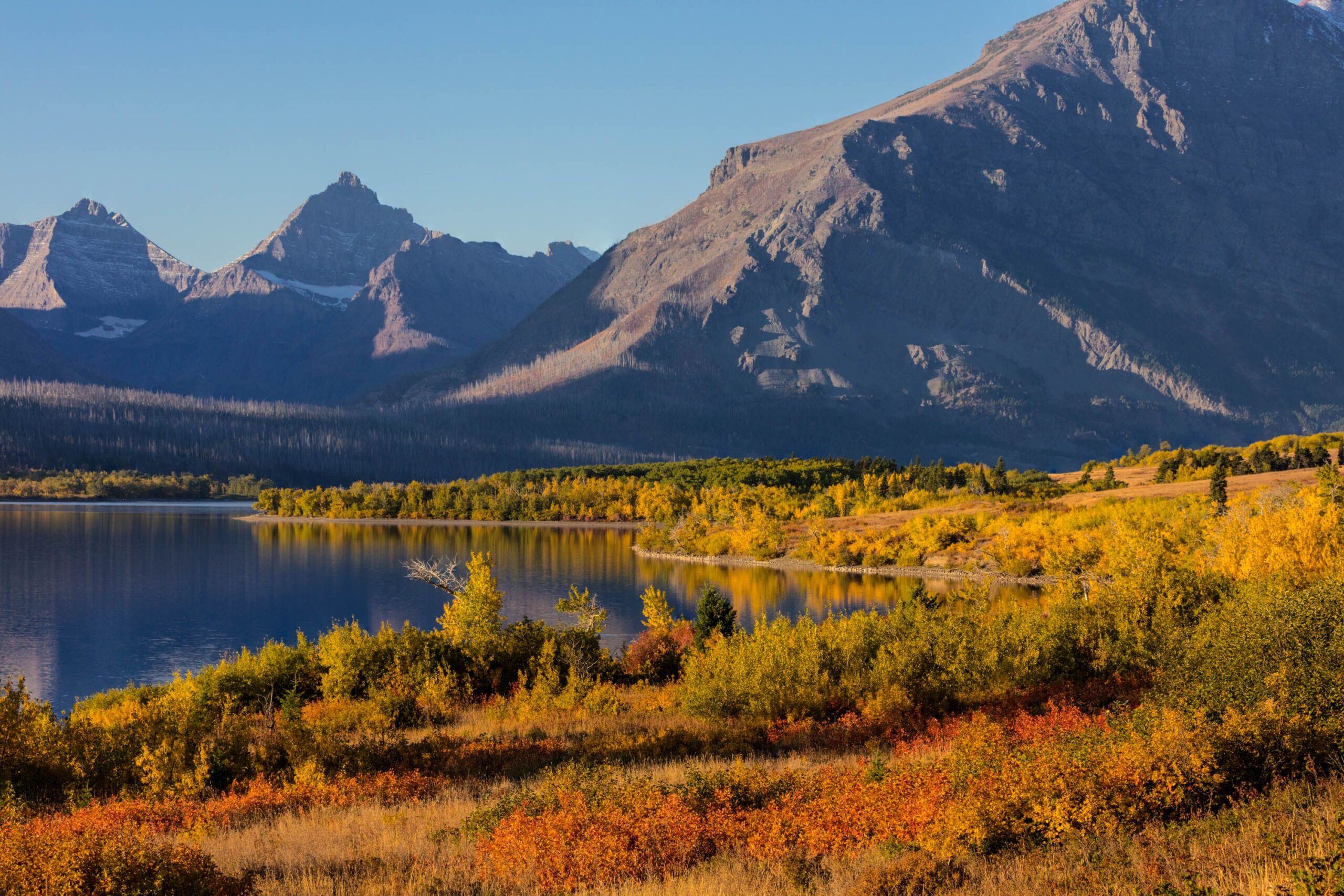

When the sweltering heat of summer retreats and the seasonal crowds abandon the trails, America’s National Parks undergo a silent but profound metamorphosis. It is not merely a change in temperature; it is a total reconfiguration of the landscape where the light becomes more oblique and soft, wildlife regains its prominence, and the vegetation surrenders to one last spectacular display of color before the winter dormancy. Autumn is not simply a transitional season in these ecosystems, but the moment when nature reveals its true architecture, free from the distortion of mass tourism.
Visiting these sanctuaries between September and November offers a radically different experience. In northern latitudes, the air becomes crisp, allowing for visibilities that seem impossible in July. In the South and West, the mercury’s drop opens doors that were closed by extreme heat, allowing for deep explorations of canyons and deserts. This is a chronicle of eleven destinations where autumn is not an end, but a visual and spiritual climax that redefines our connection with the wild.
Shenandoah: The Blaze of the Skyline Drive
In Virginia’s Blue Ridge Mountains, Shenandoah National Park becomes the epicenter of autumn on the East Coast. The famous Skyline Drive, a scenic 105-mile road running along the ridge of the mountains, offers a cinematic perspective of the changing season. Here, oaks, maples, and ashes do not change color in unison; the transformation begins at the highest peaks and gradually descends into the valleys, creating a gradient that lasts for weeks.
Hiking sections of the Appalachian Trail that cross the park allows you to feel the crunch of dry leaves under your boots, a sound that becomes the soundtrack of the journey. Visibility from the overlooks allows for views of the Shenandoah Valley shrouded in a bluish haze that contrasts with the intense reds and electric oranges of the flora. It is a time of peak activity for white-tailed deer and black bears, which prepare urgently for the months of scarcity.
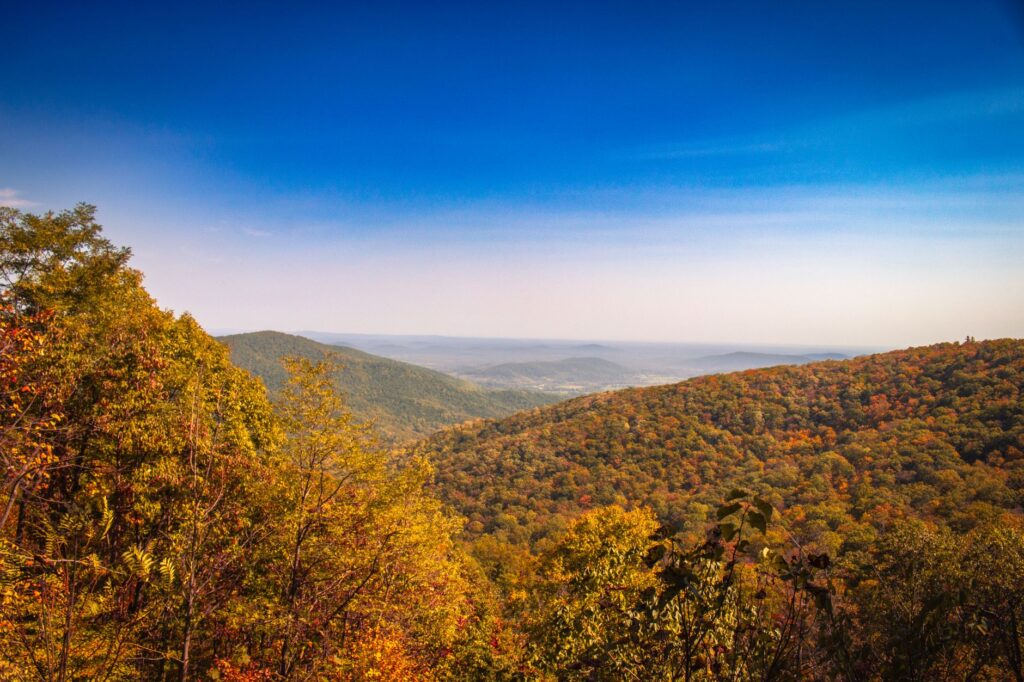
«Autumn in Shenandoah is not a landscape; it is a state of mind that seeps through your pores with the scent of humus and filtered light.»
Big Bend: The Desert’s Truce in Chihuahua
While the north cools down, Big Bend, on the Texas border with Mexico, finally becomes habitable for the average hiker. After months of temperatures exceeding 100 degrees, autumn brings mild days and cool, starry nights. It is the season of the «second spring,» where late summer rains can trigger unexpected blooms of cacti and desert plants.
The Santa Elena Canyon, with its 1,500-foot limestone walls, is best explored now, when the Rio Grande flows with a calm that invites reflection. The diversity of ecosystems in Big Bend is staggering: from arid plains to the Chisos Mountains, where pine and oak forests offer a cool refuge and views stretching hundreds of miles into Mexican territory. It is a place of absolute silence, broken only by the wind whistling through volcanic formations.
Acadia: The Nation’s First Sunrise
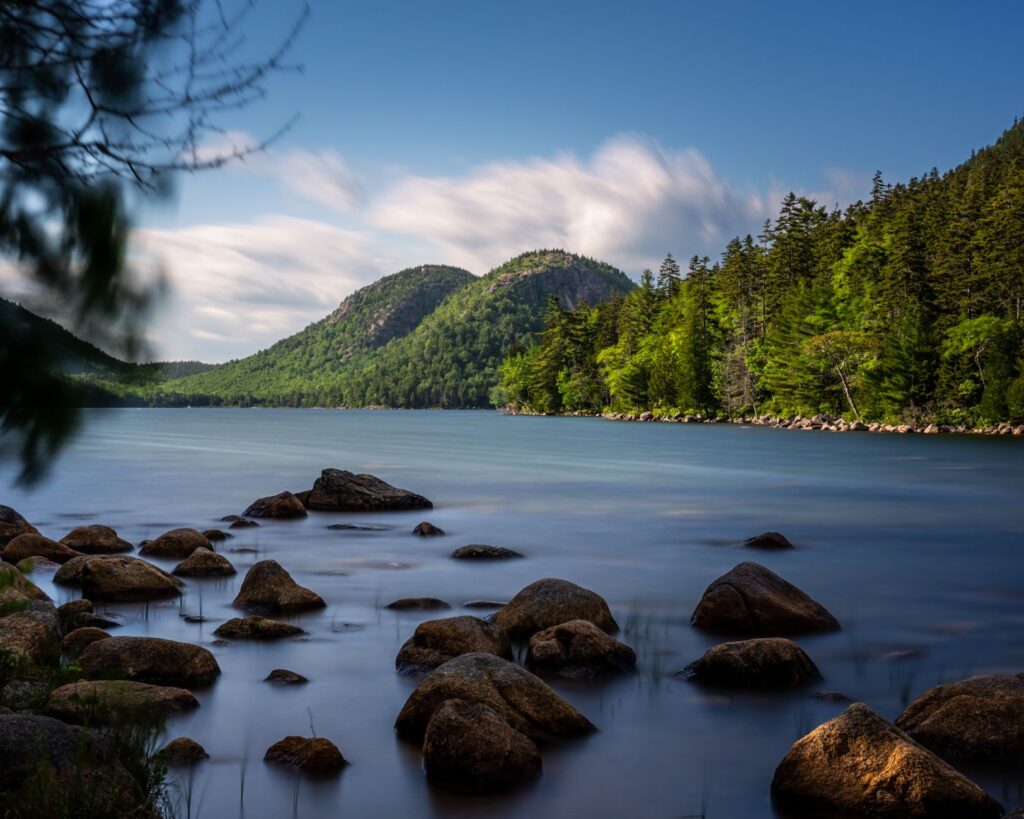
Located on the rugged coast of Maine, Acadia National Park is the first place in the United States to see the sunrise during part of the year. In autumn, this privilege is accompanied by one of the world’s most famous foliage displays. The contrast between the deep blue of the North Atlantic and the forests of yellow birches and scarlet maples creates a color palette that looks artificially saturated.
Climbing to the summit of Cadillac Mountain at dawn is a rite of passage. The salty air mixes with the scent of conifers, and the morning light illuminates the islands of Frenchman Bay like jewels on a dark mantle. The carriage roads, designed by John D. Rockefeller Jr., are ideal for cycling under tunnels of golden trees, bypassing vehicle traffic and connecting with the peace this coastal refuge offers before the first snows.
Great Smoky Mountains: Mist and Biodiversity
On the border between Tennessee and North Carolina, the Great Smoky Mountains live up to their name as autumn mists settle in the valleys. This is the most visited national park in the U.S., but in autumn, its vastness allows for corners of absolute solitude. The diversity of tree species here is greater than in all of Europe, ensuring an unparalleled chromatic complexity.
From the Clingmans Dome overlook, the park’s highest point, you can observe how the color change is organized by altitude strata. Hardwood forests in the lowlands hold their green longer, while the peaks are already ablaze in ocher tones. The historic cabins of Cades Cove add a cultural element, recalling the lives of the pioneers who inhabited these valleys before the park’s creation, now surrounded by wild turkeys and a light that seems frozen in time.
Zion: Gold Against Crimson
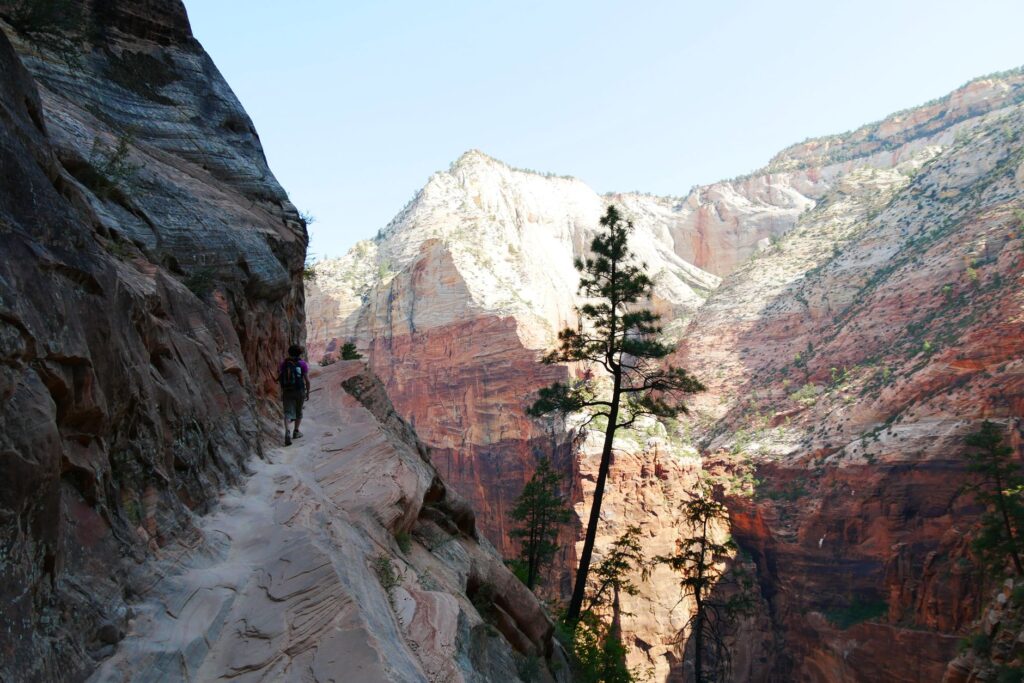
In Utah, Zion National Park offers a unique visual spectacle: the cottonwoods lining the Virgin River turn a brilliant yellow, creating a violent and beautiful contrast with the red sandstone walls of the canyon. Unlike the eastern parks, the color here is not on the slopes but at the bottom of the valley, creating a river of gold flowing between stone ramparts.
Autumn is the ideal time to hike The Narrows, as the river’s flow is usually lower and more stable, though the water begins to chill. The sunlight, being lower on the horizon, bounces off the canyon walls creating an orange glow that illuminates the deepest corners. It is a sensory experience where the touch of cold rock and the sound of crystal-clear water define the day.
Rocky Mountain: The Symphony of the Rut
In Colorado, autumn has a characteristic sound: the bugling of the elk. The mating season, or rut, draws these majestic animals to the meadows of the lower valleys, such as Moraine Park. Males compete for females in a display of strength and acoustics that resonates throughout the park. It is a spectacle of wildlife in its purest and most visceral state.
Meanwhile, forests of aspens cover the slopes with a mantle of pure gold. Unlike other trees, the aspens in a colony change color simultaneously because they share the same root system. When the wind blows, the leaves vibrate and produce a soft metallic sound, almost like a whisper, giving the species its name. Walking through these forests is like moving through the interior of a golden cathedral.
«To watch a great bull elk emerge from the morning mist in the Rockies is to understand that human time has no jurisdiction in these lands.»
Grand Teton: Reflections on the Snake River
The granite spires of the Teton Range in Wyoming need no adornment, but autumn provides them with an incomparable frame. The shrubs of the plains turn a deep rust color, and the willows and cottonwoods along the Snake River transform into strokes of intense yellow. Photographers from around the world flock to Oxbow Bend to capture the perfect reflection of Mount Moran in the calm waters, framed by autumn foliage.
It is also the time when grizzly and black bears are most active, foraging for berries and food for hibernation. The atmosphere is one of quiet urgency. The days are short but intense, and snow often makes its first appearances on the peaks, creating a contrast of white, gray, and gold that defines the aesthetic of the American high mountains.
Cuyahoga Valley: The Midwest’s Refuge
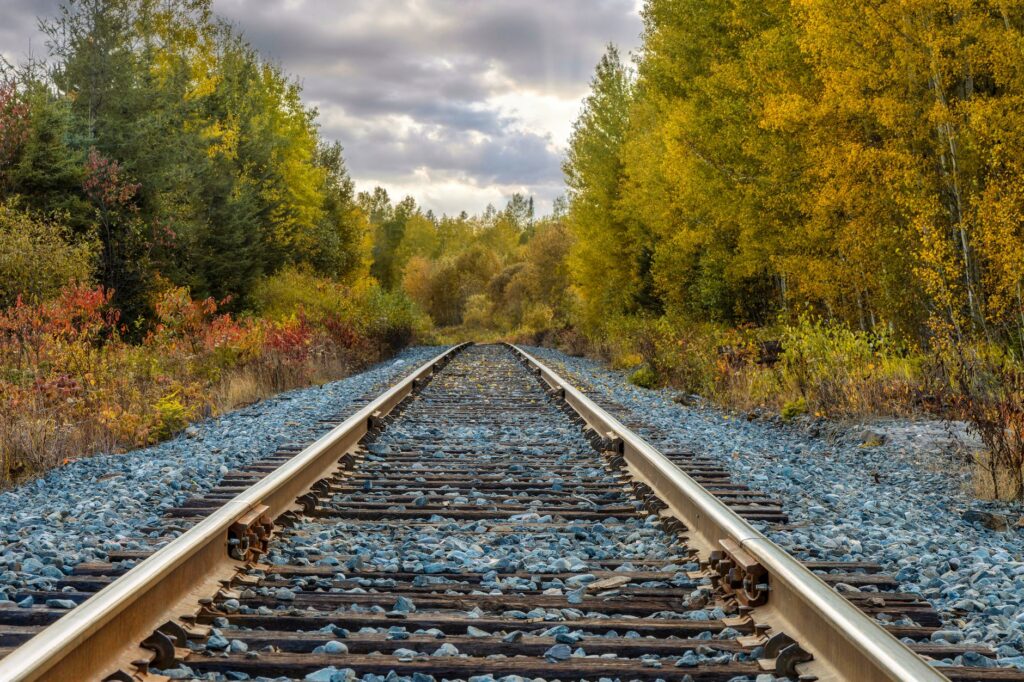
Often overshadowed by the giants of the West, Cuyahoga Valley National Park in Ohio is an autumnal gem. Its landscape of rolling hills, lush forests, and the winding Cuyahoga River lends itself to leisurely explorations. The best way to see it is via the Cuyahoga Valley Scenic Railroad, a historic train that traverses the heart of the park, allowing for leaf-peeping from a vintage railcar.
Waterfalls, such as Brandywine Falls, regain their vigor with autumn rains, and the surrounding ferns and mosses become more vibrant. It is a park that celebrates the human scale, with accessible trails and an intimate connection to the region’s agricultural and transportation history, all wrapped in the warm tones of the Midwest’s oaks and red maples.
Olympic and Mount Rainier: The Northwest’s Autumn
In Washington State, autumn manifests differently. In Olympic National Park, temperate rainforests like the Hoh Rain Forest see bigleaf maples, covered in emerald green moss, drop their massive yellow leaves onto the carpeted floor. It is a contrast of textures and colors that seems straight out of a fairy tale.
At Mount Rainier, the subalpine meadows that were filled with wildflowers in summer transform into a tapestry of reddish and purple hues. Wild huckleberries and other low-lying plants create a carpet of fire at the feet of the glacier-clad volcano. The combination of perpetual ice with the ephemeral color of the tundra is one of the most powerful visions in North American nature.
Yosemite: Solitude Reclaimed
Yosemite in autumn is an exercise in minimalism and peace. The great waterfalls may be reduced to trickles, but the valley is freed from human pressure. Dogwoods provide touches of pink and red beneath the immense granite walls of El Capitan and Half Dome. The afternoon light, lower and warmer, bathes the rock formations in a golden hue that climbers and photographers call «the golden hour.»
It is the perfect time to cycle the valley or hike to Glacier Point without the July crowds. The air is fresh, the sky is a deep and constant blue, and there is a more direct communion with the geological scale of the place. Autumn here is not a death, but a sigh of relief from the landscape.
Practical guide
- Timing: Peak foliage varies each year based on temperature and rainfall. Websites like the Foliage Network offer real-time maps. Generally, the north (Acadia) peaks in early October, while the south (Big Bend, Zion) does so in late October or November.
- Gear: Layers are essential. Temperatures can swing 40 degrees between noon and night. Don’t forget waterproof footwear, as morning dew and autumn rains are common.
- Wildlife Safety: Autumn is the season for rutting and winter preparation. Maintain strict safety distances (at least 25 yards from deer and 100 yards from bears).
- Reservations: Although there are fewer people, some services close in late October. Always check road conditions (especially in Rocky Mountain and Mount Rainier) before heading out.
At the end of the day, when the sun sets behind a granite ridge or sinks into the Atlantic, autumn in the National Parks reminds us of the beauty of the ephemeral. There is nothing permanent about these colors, and that is precisely the source of their value. It is an invitation to observe closely, to walk in silence, and to be grateful for the generosity of a land that, before sleeping, decides to give us its best version.
Source: Condé Nast Traveler


