Introduction to Central Europe’s Great Collector
The Danube is far more than a mere geographic feature; it constitutes one of the most complex natural and artificial engineering works on the European continent. Spanning nearly 2,850 kilometers from the Black Forest to the Black Sea, this river has historically functioned as the backbone of civilizations, empires, and economies. Today, its true value lies in its capacity to sustain a highly technified, intermodal transport system where cargo and passenger navigation converge under strict sustainability standards.
Understanding the magnitude of this waterway requires looking beyond its gentle surface. Over recent decades, the development of colossal infrastructure has transformed a historically capricious riverbed into a millimetrically regulated liquid highway. From the Main-Danube Canal to the complex lock systems bridging the terrain’s elevation changes, the river represents a permanent challenge for naval engineers, logistics operators, and environmental managers striving to balance economic efficiency with the preservation of uniquely fragile riparian ecosystems.
The Backbone of Inland Navigation: Locks and Regulation
The primary technical challenge posed by the Danube is the enormous variation in its discharge and the geographic drop between its source and its mouth. To guarantee a constant draft ensuring the safe transit of high-tonnage barges and river cruise ships, authorities across riparian nations have deployed a monumental network of dams and locks. These facilities act as giant water elevators, raising or lowering entire vessels in a matter of minutes.
Among the most prominent engineering milestones are the binational Iron Gates dams, situated on the border between Romania and Serbia. This gorge, where the river carves its way through the Carpathians and the Balkans, historically hosted one of the most hazardous stretches for navigation due to its rapids and submerged reefs. The construction of hydroelectric plants in the second half of the twentieth century not only tamed the currents but raised water levels, burying ancient hazards and opening a continuous commercial corridor linking the North Sea to the Black Sea.

The taming of the Danube through monumental locks has not been without ecological debates; nevertheless, it currently defines the logistical viability of the entire Central European basin.
Maintaining this infrastructure requires constant investment and seamless international coordination. Organizations such as the Danube Commission oversee the standardization of navigation rules, signaling, and periodic dredging. Without these invisible yet critical technical efforts, sediment accumulation would rapidly neutralize the depth required to maintain competitiveness against land-based freight transport.
The Geodesic Milestone: The Main-Danube Canal
If the locks of the central Danube facilitate local navigation, the Main-Danube Canal represents the pinnacle of continental integration. Formally inaugurated in the late twentieth century after decades of planning, this 171-kilometer canal connects the North Sea basin with the Black Sea basin, materializing the historical dream of uniting Western Europe’s great rivers with those of the East.
This artificial artery traverses the Bavarian terrain via a system of sixteen locks overcoming the European Watershed, the canal’s highest point. For cargo vessels and passenger ships, this enables an uninterrupted journey from Rotterdam to Constanta. The economic impact of this route has been transformative for the interior regions of Germany and Austria, which now enjoy direct access to international maritime trade without depending exclusively on Northern European ports.

However, managing the canal poses considerable operational challenges. Water supply at higher elevations depends on pumping stations and artificial reservoirs designed to compensate for hydric deficits during summer droughts. Hydraulic engineers continuously monitor water levels to prevent draft restrictions that force shipping lines to reduce cargo loads—a phenomenon that has unfortunately grown more frequent due to recent climate variability.
Intermodality and Ports: Logistical Nodes on the Riverbank
The efficiency of a waterway is measured not only by the conditions of its channel, but by the quality of its terrestrial connections. The river ports of the Danube have evolved from simple traditional loading docks into modular logistical platforms where high-performance railways and high-capacity highways converge.
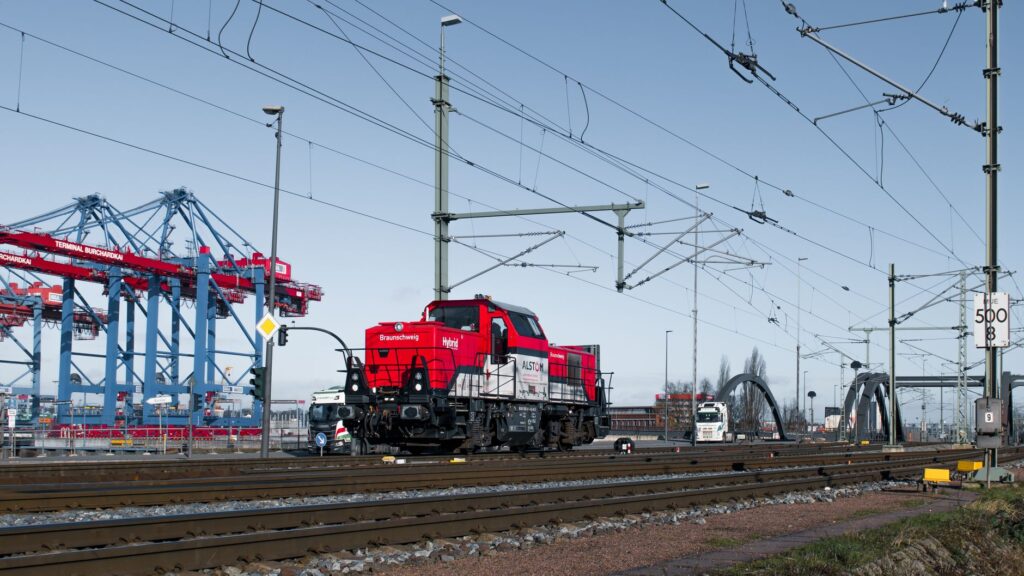
Enclaves such as the Port of Vienna or the Linz port complex in Austria, alongside Budapest in Hungary and Ruse in Bulgaria, operate as nerve centers for the distribution of raw materials, steel products, and containers. Heavy-tonnage crane infrastructure and direct rail yards enable the transfer of cargo from container ships to freight trains within hours, optimizing Central European industrial supply chains.
This modal synergy is fundamental for meeting European transport decarbonization targets. While a standard river convoy can displace the equivalent of hundreds of trucks with a fraction of the carbon dioxide emissions per ton-kilometer, integration with rail ensures the necessary capillarity to reach interior consumption centers lacking direct riverbank access.
River Tourism: Cruises and the Rediscovery of Landscape
Alongside freight transport, the Danube sustains a river tourism industry mobilizing hundreds of thousands of travelers annually. River cruises offer a perspective radically different from traditional mass tourism, enabling a leisurely immersion in the architectural, enogastronomic, and natural heritage of imperial capitals and small riparian communities.

The most sought-after stretches for this tourism modality include Austria’s Wachau Valley, a UNESCO World Heritage site, where terraced vineyards and medieval castles overlook the current. Operating these floating hotels demands millimetric precision: captains must coordinate port calls in often congested urban docks, respecting strict time windows and adjusting ship superstructure heights to safely pass beneath historic stone bridges when water levels rise sharply.
Navigating the Danube at cruise speed forces a deceleration of the mental rhythm, allowing travelers to comprehend European geography not as a sum of borders, but as a cultural continuum shaped by water.
Unlike massive ocean liners, the human scale of these vessels fosters a distinct traveler profile interested in local history, wetland ecology, and riparian ethnography. The local economies of historic cities such as Bratislava, Novi Sad, or Belgrade benefit from this steady influx of high-value visitors who prioritize heritage authenticity over standardized leisure.
Environmental Challenges and Flow Management
The future of the Danube river corridor is inextricably linked to the health of its ecosystems. The fragmentation of aquatic habitats caused by dams and levees has altered the migratory routes of iconic fish species such as sturgeon, while the disconnection of historical floodplains reduces the river’s natural capacity to mitigate floods and purify water.
In response to these imbalances, European Union environmental agencies and riparian states are promoting ambitious ecological restoration projects. Initiatives such as building fish passes at major dams and reconnecting oxbow lakes and secondary wetlands aim to return part of the river’s original natural dynamics without compromising commercial navigation safety.
Likewise, recurrent episodes of extreme low water during dry summers force a rethinking of water management policies. Draft restrictions not only impact shipping companies’ balance sheets but underscore the vulnerability of a resource shared by ten countries with frequently divergent economic and agricultural interests, demanding river diplomacy anchored in rigorous scientific data and constant technical cooperation.
Practical guide
Planning a journey or logistical analysis along the Danube corridor requires understanding the diversity of regulatory frameworks and infrastructure coexisting across its more than two thousand navigable kilometers.
Main Transport and Intermodal Nodes
The river transport system is structured around key logistical terminals equipped for intermodal transfer:

- Port of Passau (Germany): Southeastern gateway to the European river network and confluence with the Inn River.
- Port of Linz (Austria): Advanced industrial hub with direct high-capacity rail connections.
- Port of Budapest (Hungary): Primary container distribution center in the middle basin.
- Port of Constanta (Romania): Sea-river mega-terminal on the Black Sea, the route’s natural endpoint.
Optimal Seasons for Navigation and Tourism
Weather conditions and hydrological regimes determine the viability of river itineraries:
- Spring (April to June): High discharge period due to Alpine snowmelt; green landscapes require attention to bridge clearance restrictions.
- Summer (July to August): Peak tourist cruise traffic; occasional risk of low-water draft restrictions in German and Hungarian sections.
- Autumn (September to November): Mild climate ideal for cultural tourism in the Wachau Valley and the Balkans; excellent general hydrological stability.
Tips for Operators and Travelers
Essential operational aspects to make the most of the Danubian corridor:
- Always verify updated draft forecasts through official Danube Commission platforms (donaukommission.org).
- Combine river legs with train journeys using parallel European rail networks (such as Austrian and Hungarian high-speed corridors) for a complete intermodal experience.
Epilogue: The Silent Wake Over Imperial Waters
When the sun slips behind the flat horizons of the great Hungarian plain or illuminates for the last time the stone fortresses perched on Serbian cliffs, the Danube reveals its true timeless nature. Far from the hustle and bustle of the large industrial metropolises it feeds and the mechanical precision of its computerized locks, the river continues to flow with the same millenary persistence that witnessed the rise and fall of empires.
Observing its course from the deck of a moving vessel is an entry into a liquid memory where the most advanced engineering of the present converges with the silent weight of European history. Locks open and close, freight trains cross metal bridges with Swiss-like punctuality, and riparian villages continue their daily routines untouched by global frenzy. The Danube remains, in its silent majesty, the unalterable pulse uniting and giving meaning to the vast geography of the old continent.