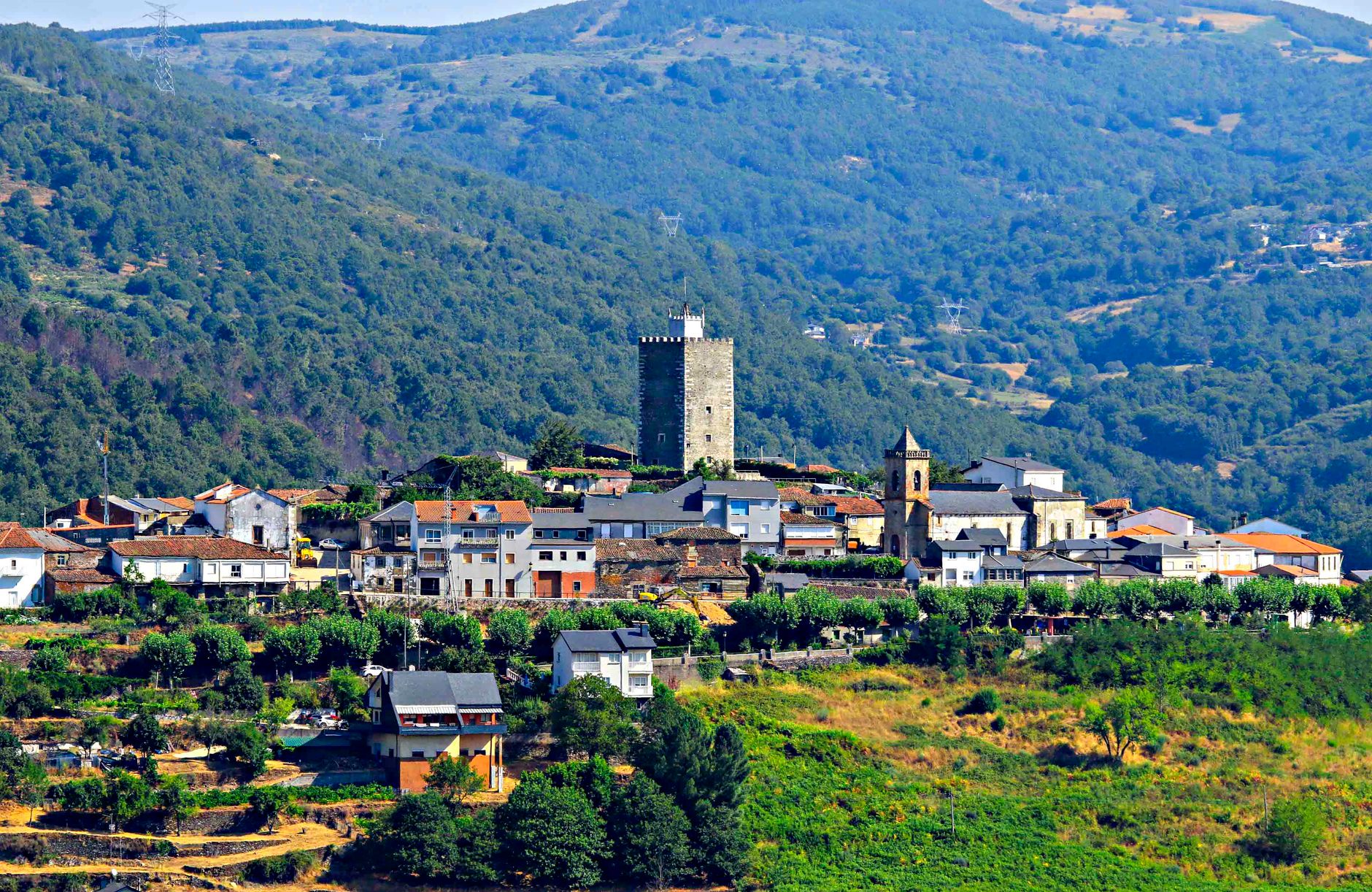

Architecture of Atlantic Light and Industrial Design
In the heart of Lugo’s coastal region, where the Xove River flows into an estuary marked by constant mist and the intense green of Galician hills, stands the industrial and ceramic complex of Sargadelos. Founded in the late 18th century by Antonio Raimundo Ibáñez, this enclave was not merely a pottery factory, but the epicenter of an enlightened experiment aimed at equipping Galicia with an indigenous industry rooted in local resources. Today, the historic kilns and contemporary design studios continue this legacy, transforming local kaolin into porcelain pieces that engage in a direct dialogue with Celtic art, vernacular architecture, and avant-garde graphic design.
The revitalization currently underway in Sargadelos responds to an urgent need to reclaim material purity in a market saturated with homogeneous mass-produced goods. Artisans and designers operating in the modern workshops do not merely replicate the classic catalogs conceived by Isaac Díaz Pardo in the mid-20th century; they actively investigate new ceramic paste formulations and heavy-metal-free glazes. This transition demonstrates that tradition is not a museum fossil, but an operating code capable of reinventing itself in the face of contemporary ecological and aesthetic challenges.
The Alchemy of Kaolin and the Precision of Cobalt Blue
The soul of Sargadelos lies in the purity of its raw materials and the technical rigor of its firing processes. The kaolin extracted from Galician deposits, characterized by its pristine whiteness and high refractoriness, constitutes the base upon which mineral pigments are applied. Among them, cobalt blue has become the undisputed chromatic emblem of the house, a deep hue evoking both classic oriental ceramics and the Atlantic melancholy of Galician landscapes.
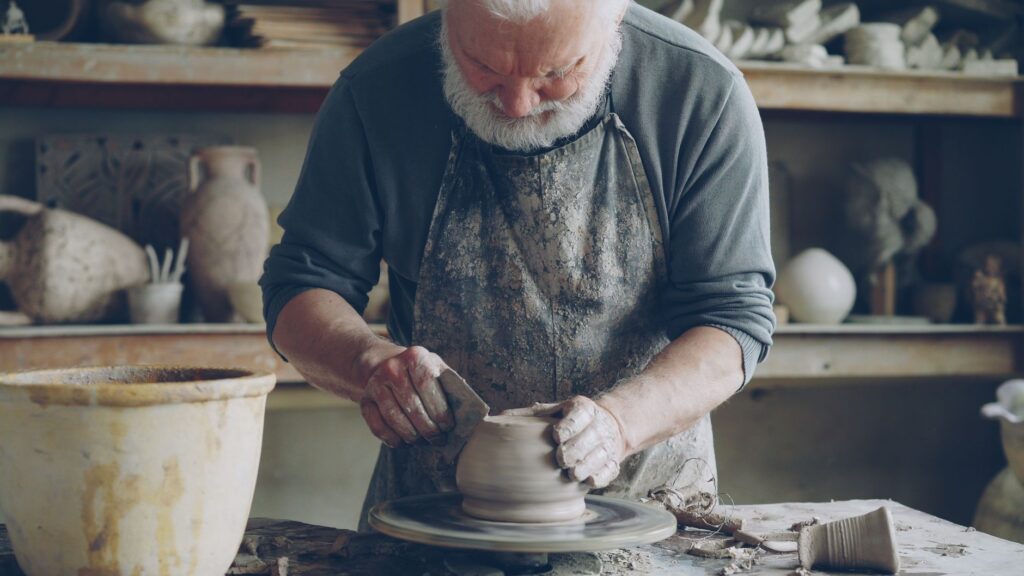
Every porcelain piece undergoes a rigorous technical itinerary that begins with the wet decantation of clays and culminates in high-temperature kilns exceeding 1,300 degrees Celsius. The mastery of the thrower and the painter lies in anticipating material shrinkage during firing, a physical phenomenon requiring millimeter-precise calculations. The manual stroke, executed with marten-hair brushes on the bisque-fired piece, endows each object with a unique vibration that digital printing technologies can never replicate.
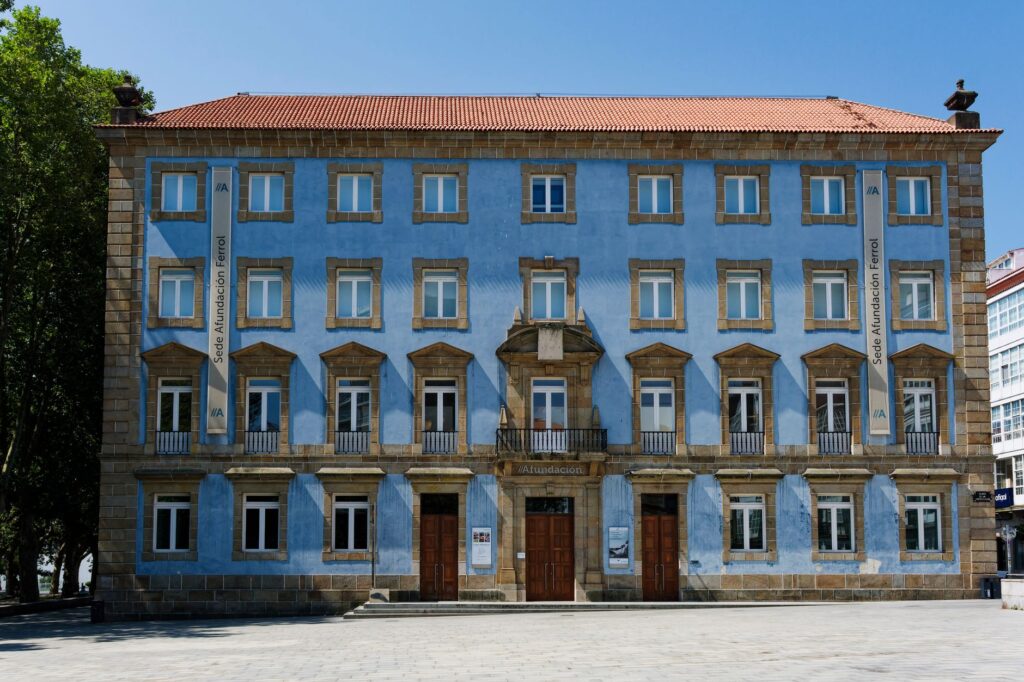
Castreño Geometry and the Avant-Garde Legacy of Isaac Díaz Pardo
One of the most fascinating chapters in the history of Sargadelos is its deep connection with the Galician cultural renewal movement driven by intellectuals like Isaac Díaz Pardo and Luis Seoane during the past century. Their vision transformed utilitarian tableware into a medium for disseminating archaeological forms recovered from pre-Roman hillforts and Galician petroglyphs. Greek frets, stylized zoomorphic figures, and anthropomorphic structures became integral to the imagination of modern peninsular design.
Sargadelos ceramics do not merely decorate spaces; they inhabit them with the force of an ancient narrative that refuses to dissolve into global standardization.
This symbiosis between archaeology and industrial design remains alive in today’s workshops, where creators examine historical archives to reinterpret discontinued pieces through contemporary lenses. The sacred geometry of Celtic torcs and the architectural lines of Galician manor houses translate into clean, functional volumes stripped of superfluous ornamentation, consolidating an unmistakable visual language in international decorative arts.

The Contemporary Workshop: Between Digitalization and the Manual Gesture
Visiting the Sargadelos complex in Cervo allows observers to witness the harmonious coexistence of modern industrial machinery and inherited artisanal skill. While the pressing of certain bases and the grinding of glazes benefit from advanced technologies to ensure durability and resistance, final finishes still require human intervention. Immersion glazing and the application of ceramic decals demand a tactile sensitivity acquired only after decades of craft.
New creators joining the workshops face the challenge of updating collections without betraying the brand’s visual identity. The balance between technical rigor and formal audacity defines the creative pulse of this new chapter. Experiments with matte textures, reactive glazes responding unpredictably to kiln heat, and sculptural volumes transcend mere domestic utility to enter the realm of contemporary art.
Sustainability and Material Sovereignty on the Coast of Lugo
At a time marked by the urgency of relocating supply chains and reducing carbon footprints, Sargadelos’ production model stands out for its territorial rootedness. Practically all inputs required for porcelain manufacturing originate within a radius of less than one hundred kilometers, from clays and feldspars to the energy used in drying processes. This material sovereignty guarantees ethical traceability and revitalizes the rural economy of A Mariña.
Furthermore, workshops have implemented rigorous water purification and recirculation systems, alongside the valorization of ceramic waste, which is reintroduced into initial grinding phases as grog. This ecological commitment proves that the survival of traditional trades is inextricably linked to environmental innovation, turning the factory into a European benchmark for sustainable cultural production.
Cultural Impact in the Landscape and Proximity Tourism
The Sargadelos complex is not solely a manufacturing center, but a landmark within Galicia’s architectural and industrial landscape. The original buildings, designed with a sober rationalist aesthetic, integrate organically into a natural environment dominated by centuries-old groves and river courses. This landscape integration attracts cultural tourists interested in understanding the material roots of Galician creativity, far from mass-market sun-and-sea circuits.
Visitors touring the facilities gain access to historical exhibition rooms and observe artisans at work from elevated walkways, a model of transparent openness fostering social appreciation for manual labor. The dissemination of industrial heritage thus consolidates as a fundamental pedagogical tool to raise awareness among younger generations about preserving local knowledge against planned obsolescence.
Collecting and Permanence in the Era of the Ephemeral
Acquiring a Sargadelos piece today transcends an ordinary mercantile act; it involves incorporating a fragment of material history firmly anchored in aesthetic resistance into the domestic sphere. In a global context dominated by digital immediacy and accelerated obsolescence, high-temperature fired porcelain offers geological durability. Numbered limited collections and classic designs continue to appreciate within international circuits of 20th- and 21st-century design collecting.
True contemporary luxury lies in the slowness of processes that respect the rhythms of the earth and the skill of human hands.
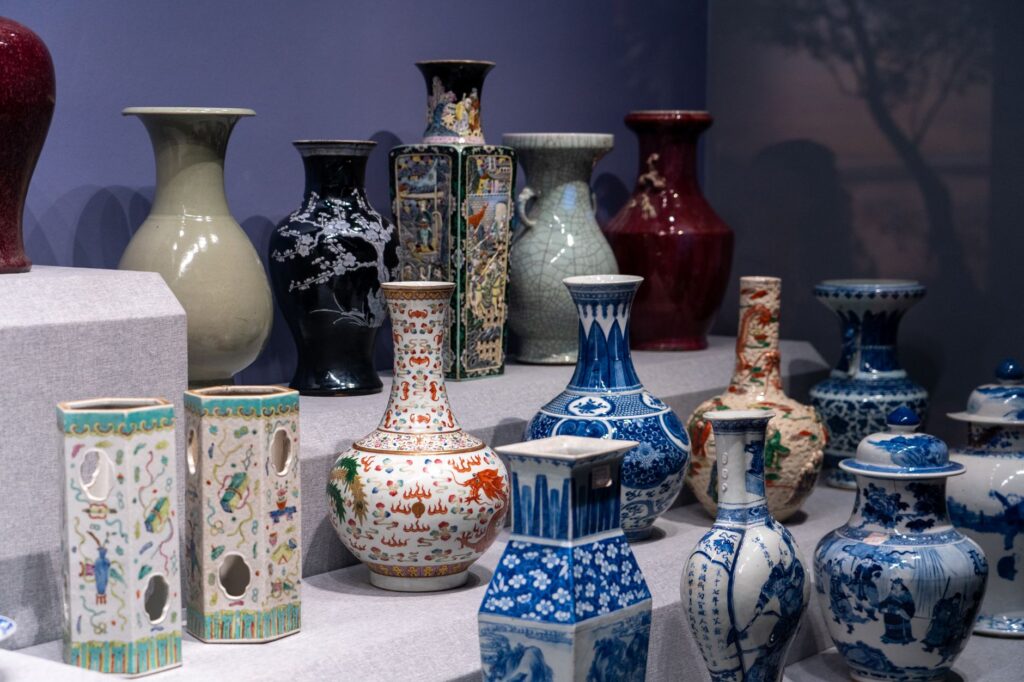
Experts in decorative arts agree that the survival of these peripheral workshops represents a cultural triumph over global aesthetic homogenization. Each plate, cup, or sculpture leaving Cervo’s kilns carries a complex narrative converging mineral chemistry, the memory of hillfort communities, and the intellectual audacity of the Galician avant-garde.
Practical guide
How to get there: The industrial complex and historic workshops of Sargadelos are located in the municipality of Cervo, in the province of Lugo. The most efficient way to arrive by private vehicle is via the Cantabrian Highway (A-8), taking the exit for Burela/Cervo and continuing along the LU-142 road. The nearest airport with international connections is Santiago de Compostela (SCQ), approximately two and a half hours away by drive.
When to visit: The Lugo coast offers a temperate Atlantic climate year-round, though spring months (May to June) and early autumn (September to October) guarantee a more tranquil experience, avoiding summer tourist crowds while enjoying the changing light characteristic of the northern coast.

Recommended accommodation: For a complete immersion in the area’s architectural heritage, staying in one of the rehabilitated manor houses converted into rural tourism hotels near San Cibrao or Viveiro is recommended, where traditional Galician architecture merges with contemporary comfort.
Complementary routes: Combining a visit to the Sargadelos factory with a walking tour of the nearby archaeological site of Castro de Borneiro or Castro de Fazouro is advised, offering firsthand insight into the iconographic sources that inspired the brand’s aesthetic renaissance.
Shopping and guided tours: The facilities feature an interpretation center and official stores where pieces from classic and contemporary collections can be acquired. Booking guided tours of the historic workshops in advance via the entity’s official website is recommended to guarantee access to active production areas.
Epilogue: The Indelible Trace of Fire and Time
As evening falls, when Atlantic mist begins descending over the hills of Cervo and envelops Sargadelos’ red brick chimneys, the complex recovers a solemn silence interrupted only by the murmur of water in the Xove River. Inside the kilns, the cycle of fire continues its invisible march, transforming the fragile white dust of kaolin into a vitrified matter capable of defying the passage of decades. This is not merely ceramics, but the materialization of a collective memory that has successfully turned the clay of its soil into a standard of aesthetic dignity, cultural resistance, and shared future.