
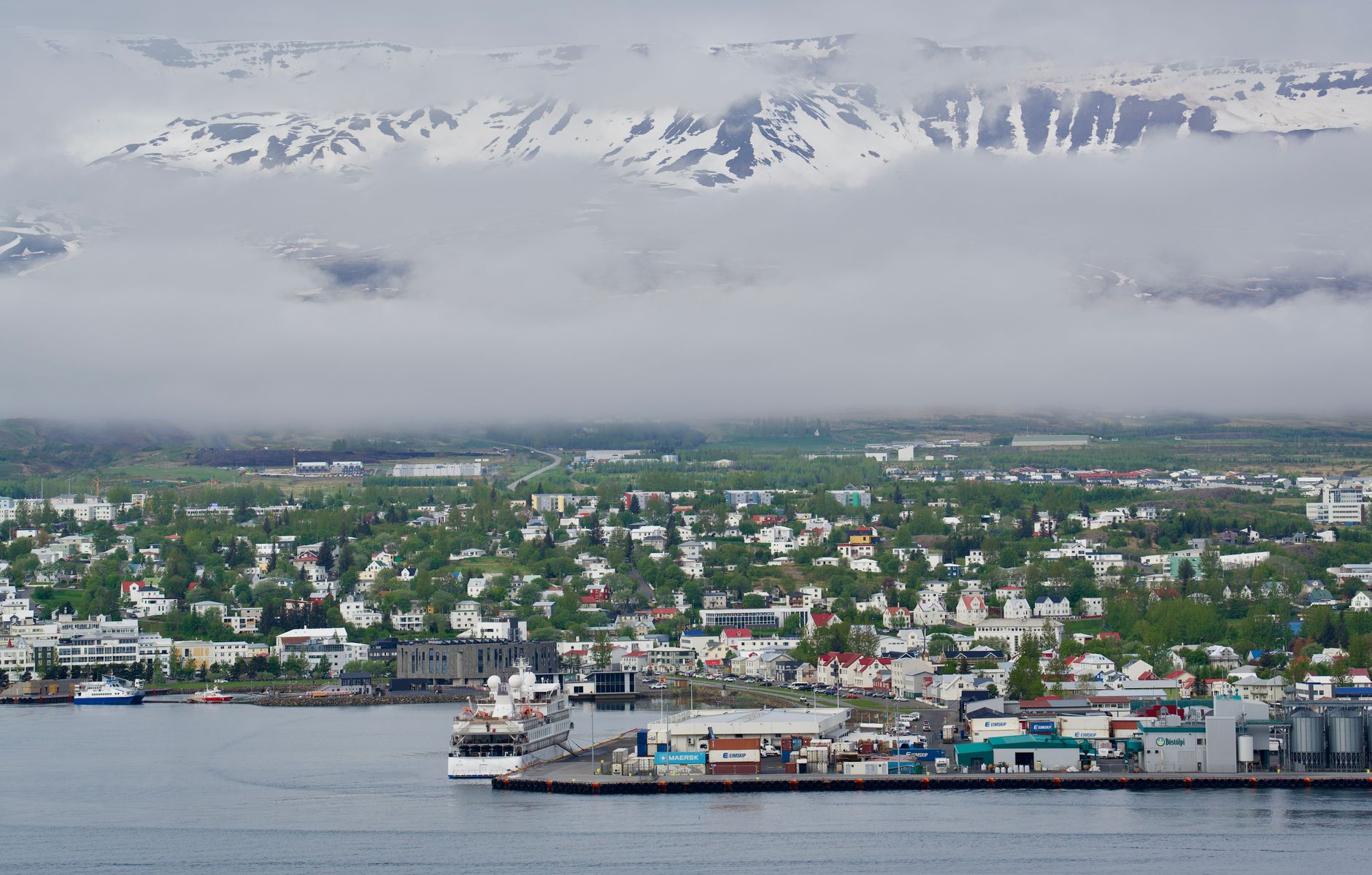

A High-Latitude Settlement at the Edge of the Fjord
On Iceland’s northern coast, where the waters of the Eyjafjörður fjord carve a natural shelter among snow-capped mountain peaks, stands Akureyri. This enclave, home to more than nineteen thousand residents, acts as a cultural and administrative gravity center far removed from the influence of Reykjavík. Far from being a mere stopover for exploring the Icelandic geography, the town possesses its own pulse, expressed through residential streets, independent bookstores, and workshops where wood and wool continue to interpret the demands of the subarctic climate.
The urban layout combines the sobriety of mid-20th-century buildings with architectural remnants of wood clad in corrugated metal, a resource imported in past eras to protect walls from extreme humidity. Walking down avenues like Hafnarstræti reveals a spatial arrangement designed to withstand northern winds without giving up an openness toward the sea. Brightly colored facades contrast with the grayish palette of the surrounding slopes, offering a visual counterpoint that defines the urban aesthetics of this northern region.
The historical consolidation of this maritime and trading hub has relied heavily on the capacity of its inhabitants to adapt to the topography. Sheltered by the surrounding slopes, the urban core expands gradually along the coastline, maintaining an intimate scale where pedestrian interaction remains strong. Local identity is intrinsically linked to this spatial configuration, where architecture and geography engage in a continuous dialogue.
Daily Life Through Changing Cycles of Light
The experience of inhabiting Akureyri is profoundly conditioned by astronomical cycles. During summer, the sun barely dips below the horizon, allowing social life to extend late into the night in public parks such as Lystigarðurinn, the northernmost botanical garden in the world. This green space, founded in the first half of the past century, not only preserves plant species capable of acclimatizing to extreme latitudes but also serves as an intergenerational meeting ground where neighbors share strolls and conversations under a diffuse, golden light.

In contrast, winter months reduce hours of daylight and plunge the town into a bluish twilight compensated by the warm indoor lighting of homes and local cafes. Far from retreating into isolation, the community fosters intense cultural activity encompassing local choirs, exhibitions by resident visual artists, and textile design displays inspired by insular fauna and geology. This daily resilience against darkness turns culture into the true axis of social cohesion.
The rhythm of daily life adapts smoothly to these shifting natural parameters. Neighborhood gatherings, community workshops, and local artistic endeavors thrive precisely because the changing environment encourages shared indoor and outdoor experiences. Residents view these seasonal transitions not as obstacles, but as distinct chapters in the ongoing narrative of community life.
Architectural Heritage and Urban Memory
Akureyri’s built heritage reads as a historical document where each decade has left its material imprint. Akureyri Church, designed by the influential architect Guðjón Samúelsson, dominates the urban profile from atop a monumental staircase. Its modernist design, which reinterprets the shapes of basalt columns so characteristic of Icelandic geology, has become the undisputed symbol of the town. Surrounding this landmark, older neighborhoods preserve single-family homes with gabled roofs and glass porches designed to harness every available ray of sunlight.
The conservation of these buildings does not respond to a tourist set-design exercise, but to a community-driven will to preserve the family and working memory of those who transformed a fishing and trading port into a hub of services and artistic creation. Former port warehouses have been gradually converted into ceramic studios, contemporary art galleries, and carpentry workshops where traditional household goods are repaired, ensuring manual trades remain a viable professional and creative outlet for younger generations.
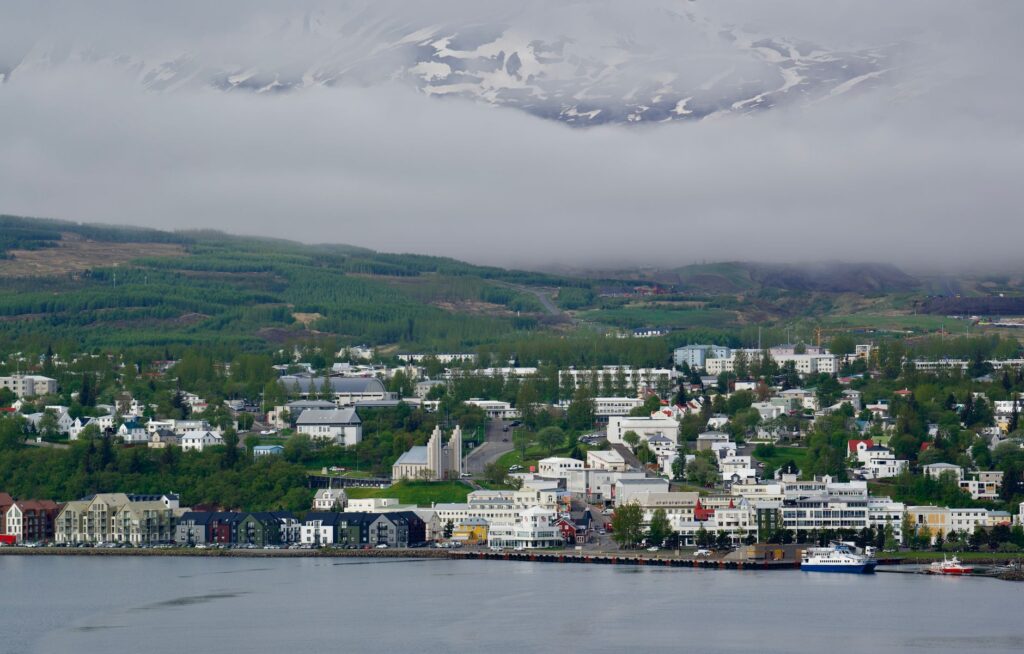
Preserving these architectural elements requires specialized maintenance techniques suited to the maritime climate, emphasizing the importance of traditional carpentry and metalwork. These restoration efforts are often led by local craftsmen who pass down their empirical knowledge, ensuring that the visual identity of the historic neighborhoods remains authentic and structurally sound.
Sustainability and Responsible Visitor Choices
The steady increase of travelers choosing northern Iceland has posed an evident challenge for the preservation of local resources and the tranquility of residential neighborhoods. Faced with this landscape, municipal authorities and citizen groups promote a tourism model based on temporal and geographic dispersion, as well as strict respect for the natural environment. Visitors are encouraged to use public urban transit, which efficiently connects different points of interest without overloading narrow streets with private vehicles.
Likewise, purchasing artisanal goods made from local materials and dining at restaurants prioritizing hyper-local ingredients—such as lamb raised in interior valleys or fresh fish from the fjord—constitutes essential practices ensuring tourism activity directly benefits the community economy. The guiding premise in Akureyri is simple yet demanding: the traveler must integrate into the pre-existing rhythm of the town rather than demanding an adaptation to their own accelerated leisure expectations.
Community-led initiatives frequently organize workshops and informational sessions for visitors, explaining the delicate ecological balance of the surrounding subarctic ecosystems. By fostering awareness regarding waste management, energy conservation, and respect for local wildlife, the town ensures that tourism remains a constructive force rather than an intrusive burden on the local infrastructure.

The heritage of Akureyri is not observed from the distance of a glass case; it is experienced by walking its snowy sidewalks and sharing the respectful silence of its common spaces.
The Botanical Garden and Spaces of Citizen Encounter
Beyond its ornamental value, Lystigarðurinn functions as a living laboratory studying the resilience of arctic and subarctic flora. Tended with care by local gardeners for generations, this enclosure houses thousands of species surviving rigorous winters thanks to microclimates generated by the valley topography. For Akureyri residents, crossing its gates is equivalent to seeking a botanical refuge where nature’s rhythm sets a pause against contemporary agitation.
In the vicinity of the garden, community centers and small reading rooms promote activities aimed at keeping alive the island’s literary tradition, famous for its exceptionally high rate of book publication and reading per capita. Artisanal bookbinding workshops and public reading clubs demonstrate that historical geographic isolation has stimulated a rich internal intellectual life, where the written word serves a vertebrating function for local identity.
These cultural spaces also host seasonal exhibitions featuring local poets, historians, and visual artists, reinforcing the connection between the natural landscape and human expression. Such continuous engagement ensures that the intellectual heritage of the region is actively transmitted across generations.
Flavors of the Fjord and Culinary Traditions
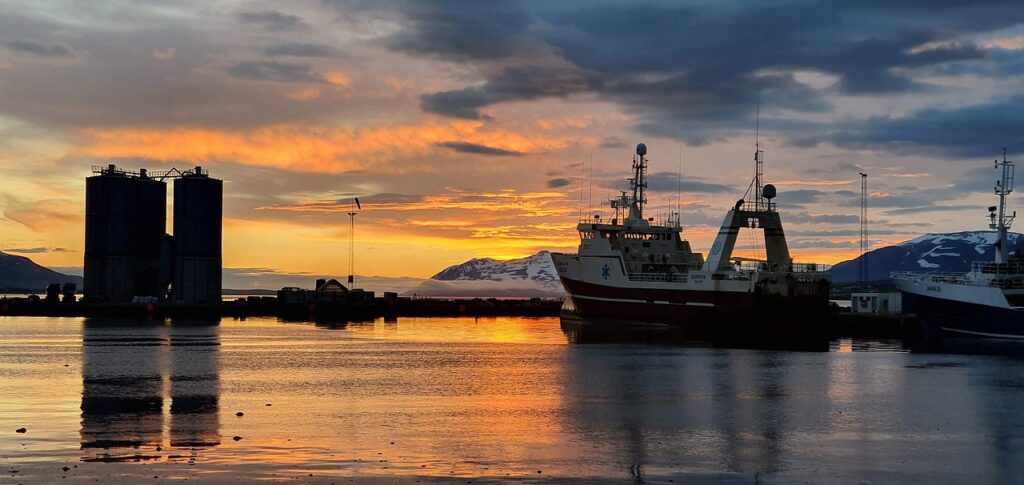
Akureyri’s gastronomy reflects the harshness and generosity of an environment where survival traditionally depended on fishing and sheep farming. Today, restaurants and bakeries in the urban center reinterpret these foundations using contemporary techniques that elevate native produce. Dried fish, dense lamb soups, and fermented dairy products coexist with author-driven proposals exploring marine algae and wild berries harvested in neighboring valleys.
Dining in the town involves understanding that each dish tells a story of climatic adaptation and patience. Local markets and small grocery shops offer preserves and specialties crafted by small producers in the Eyjafjörður region, allowing the visitor to connect with the value chain sustaining daily life in this northern corner.
Culinary artisans in the area continuously experiment with sustainable foraging and traditional preservation methods, such as smoking and curing, blending historical necessity with modern gastronomic innovation. This approach highlights the deep connection between the local diet and the seasonal availability of natural resources.
Practical guide
How to get there: Akureyri features a domestic airport (AEY) regularly connected to Reykjavík via short-duration scheduled flights. It is also accessible by road via Route 1 (Ring Road), which encircles the island, though extreme caution is advised during winter months due to frequent snowfall.
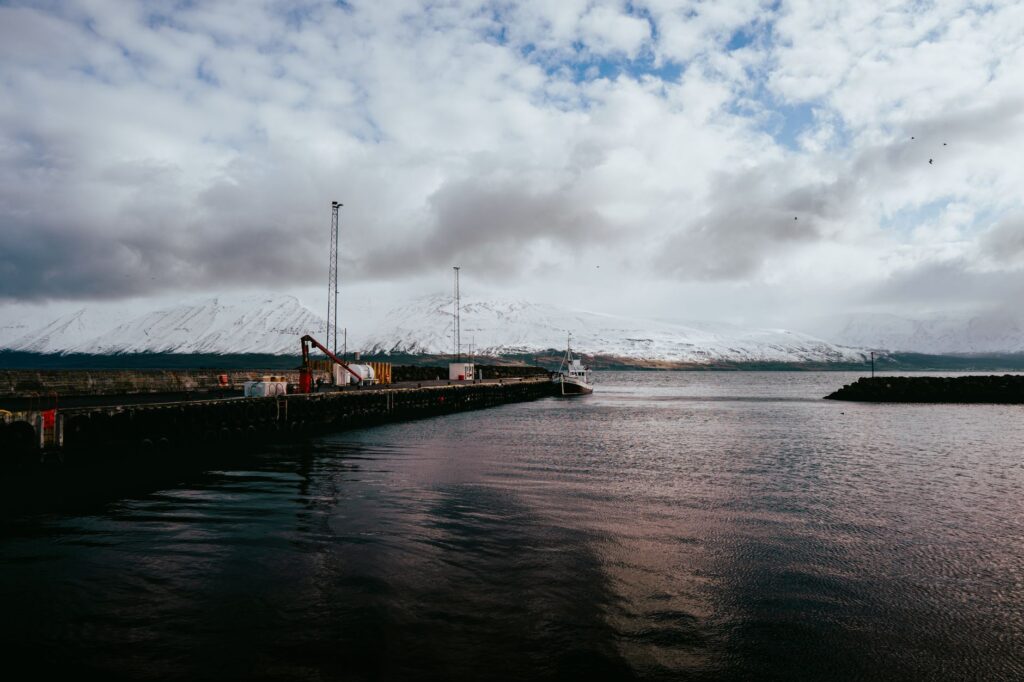
When to visit: Summer months (June to August) offer greater road accessibility and the midnight sun phenomenon. Winter (November to February) is ideal for viewing northern lights and enjoying indoor cultural life, though it requires vehicles equipped with winter tires.
Etiquette recommendations: Respect the peace of residential areas. It is customary to remove shoes when entering certain cultural or community spaces. Use marked trails in natural areas to avoid eroding the fragile arctic soil.
Visual Memory and Arctic Horizon
The journey through Akureyri concludes naturally before the immensity of the Eyjafjörður fjord, where changing northern light casts ephemeral reflections upon dark water. At this point of convergence between water, mountain, and wooden architecture, the town reveals its true nature: a home built with patience and respect at the edges of the inhabited world, where every resident safeguards a memory renewed with each seasonal cycle.


