Introduction to the Great Steppe Corridor
Mongolian territory has historically presented a colossal challenge for transportation engineering. With an extremely low population density and a geography dominated by vast steppes, unforgiving deserts, and mountain ranges, connectivity in this region of the Asian continent is not merely a matter of tourist convenience, but a vital logistical necessity. In this context, the railway corridor crossing the country, popularly known as the Mongolian branch of the great transcontinental network, stands as a steel backbone defying the immensity of the landscape. Rail infrastructure constitutes the most reliable lifeline for the movement of passengers and freight across this territory, overcoming limitations imposed by dirt roads that often become impassable during harsh boreal winters.
Analyzing the Mongolian rail network requires understanding the complex interplay between the region’s geopolitical history, technical standards inherited from the Soviet era, and current operational realities. Unlike Western high-speed networks, this system prioritizes extreme durability against temperatures frequently dropping below minus forty degrees Celsius. Stations along the route are not mere transit stops, but autonomous logistical nodes guaranteeing the supply of energy, water, and basic mechanical maintenance in the middle of nowhere. Geographical isolation sets the pace for every convoy, compelling crews to operate under strict protocols of self-sufficiency and technical safety.
Engineering Against Extreme Geography
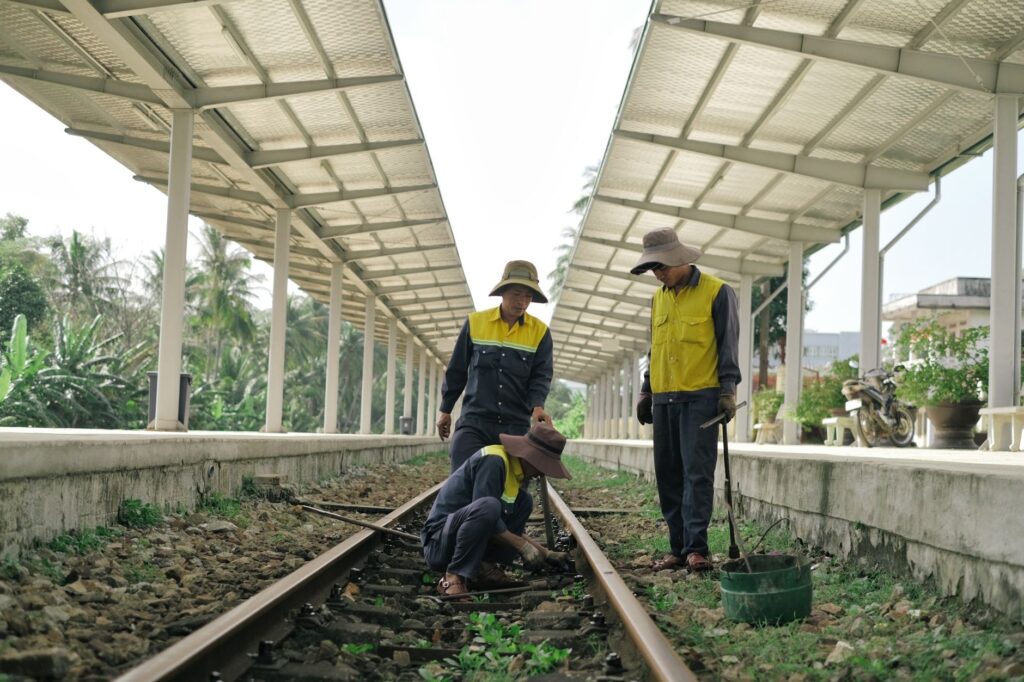
Building and maintaining railway tracks across the steppes and high plateaus of Mongolia involves battling soil subjected to extreme cycles of freezing and thawing. This geological phenomenon, known as seasonal permafrost or severe thermal expansion, deforms ballast foundations and demands constant labor in leveling and replacing ties. Track maintenance crews operate under adverse weather conditions for much of the year, utilizing specialized heavy machinery to replace entire sections of track before metallic components freeze completely. Foundation stability is the result of decades of empirical trials and technical adaptations tailored to the extreme continental climate.
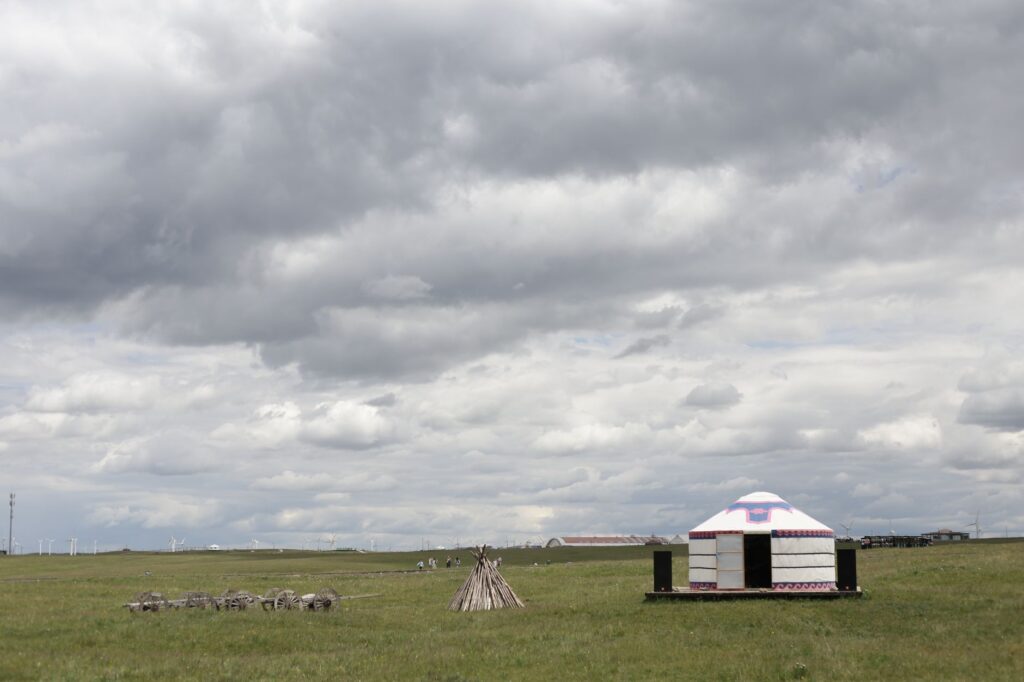
Beyond thermal variations, the topography presents considerable challenges to the south, where the route brushes against the sands of the Gobi Desert, and to the north near the taiga forests. Snow accumulation driven by gale-force winds necessitates the kilometer-long installation of wind barriers and the frequent deployment of locomotives equipped with heavy-duty front snowplows. Route management avoids steep gradients whenever possible, prioritizing multi-kilometer straight sections where the momentum of heavy freight and passenger trains can be maintained with optimized energy consumption. Every bridge and culvert along the route has been designed to withstand not only the weight of current convoys, but also the sudden flash floods of seasonal rivers during brief summer thaws.
The railway track in the Mongolian steppe is not merely a mode of transport; it is a conducting thread keeping isolated communities alive and sustaining transcontinental trade between two economic giants.
The Gauge-Change Challenge at Borders
One of the most complex aspects of railway connectivity in this international corridor lies in the discontinuity of track gauges. While China’s railway network employs the standard international gauge of one thousand four hundred and thirty-five millimeters, the rail systems of Mongolia and Russia utilize the broad gauge of one thousand five hundred and twenty millimeters, a legacy of the Russian and Soviet empires. This technical divergence mandates meticulous logistical operations at border checkpoints, where every passenger and freight car must undergo mechanical transfer or hydraulic lifting. Rail interoperability thus becomes a technical bottleneck requiring tight coordination among operators of different nationalities.
At the Zamyn-Uud border station, international trains are uncoupled and elevated using powerful hydraulic jacks inside specialized industrial hangars. The bogies—the wheel and axle assemblies—are swapped for those compatible with the neighboring country’s track gauge, a process taking several hours per convoy. This maneuver demands absolute precision and specialized technical expertise to ensure braking and suspension systems are perfectly calibrated before resuming the journey. Operational synchronization at the border demonstrates that modern railway engineering must still grapple with physical barriers imposed by geopolitical decisions made over a century ago.
Life Onboard: Autonomy and Rhythm in the Corridor
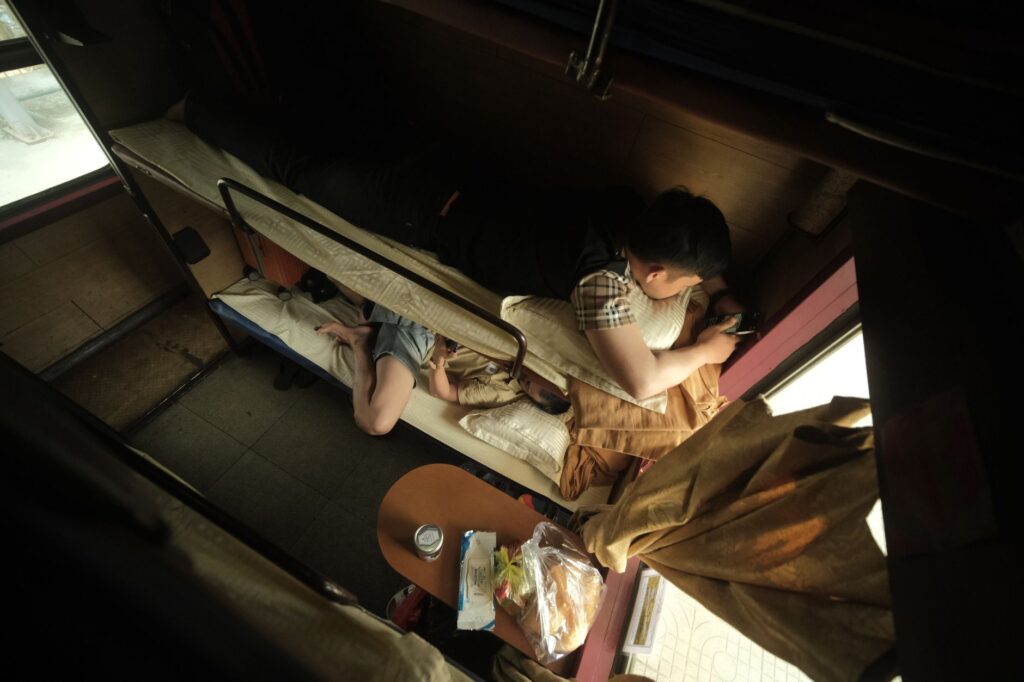
Traveling on convoys traversing the Mongolian steppe over several days imposes a very specific dynamic, where time appears to slow down to the metallic clatter of rail joints. Sleeper cars, heated via coal boilers located at the ends of each carriage, act as floating communities where local passengers, merchants, and international travelers share spaces during extended journeys. Passenger self-sufficiency is an unwritten rule: traditional samovars stationed in the hallways continuously supply boiling water for tea, coffee, and the preparation of dehydrated foods stored in luggage.
The onboard crew fulfills a multifunctional role extending far beyond ticket inspection; they act as administrators of carriage thermal wellbeing, guardians of order, and communication links to the outside world in areas lacking mobile phone coverage. Stops at intermediate stations, though brief, generate a bustling ephemeral atmosphere as passengers step onto platforms to acquire local goods sold by itinerant vendors. The journey’s rhythm reflects the immensity of the crossed territory, where the visual monotony of flat horizons is interrupted only by sporadic nomadic yurt camps and herds of wild horses.
Station Infrastructure and Intermediate Logistical Nodes
Across more than a thousand kilometers of track crossing the country, railway stations function as true urban oases. Many of these facilities were erected during the mid-twentieth century under sober monumental architecture contrasting with surrounding low-density settlements. These nodal points concentrate local economic activity, facilitating the transfer of essential goods such as flour, fuel, construction materials, and mineral coal. The supply network depends critically on the punctuality of general service trains, which act as the sole regular lifeline for rural communities far from paved roads.
Modernization of these nodes has been slow yet steady, incorporating digital signaling systems and satellite communication improvements to coordinate train crossings across an infrastructure that remains single-track in expansive sections. This means trains must wait in specific sidings to allow oncoming convoys to pass, a procedure demanding rigorous rail traffic management from central operators in Ulaanbaatar. Track-time optimization remains a constant priority to prevent cumulative delays along a route where distances between stations can exceed fifty kilometers.

Sustainability and the Future of Steppe Mobility
In recent decades, the debate over transport infrastructure development in Mongolia has focused on balancing mining-driven economic growth with preserving fragile steppe ecosystems and wildlife migration corridors. Railways occasionally act as physical barriers for emblematic species like the saiga antelope or the Mongolian gazelle. Environmental impact mitigation has begun integrating into new rail expansion projects through the construction of overpasses and specialized wildlife crossings, maintaining ecological connectivity without compromising operational train safety.
State railway operators are also implementing energy-efficiency measures to reduce emissions from the high-power diesel locomotives dominating the route, exploring hybridization options and modernizing prime movers. Despite regional air transport growth, rail remains irreplaceable due to its unmatched capacity to move heavy freight volumes at competitive costs. The strategic value of rail guarantees it will remain the main artery of the nation’s socioeconomic development for decades to come, adapting to international trade demands.
The future of Central Asian connectivity depends on the ability to modernize inherited railway infrastructure without losing the operational resilience required to survive in one of the planet’s harshest environments.
Practical Information for Travelers and Rail Researchers
Planning a study trip or long-distance journey across the Mongolian rail network requires rigorous understanding of local logistical and regulatory procedures. Key aspects for a successful crossing include:

- Tickets and reservations: Passes for international and main domestic routes must be secured weeks or months in advance through the state railway company or authorized agencies, particularly during summer months and the Naadam festival.
- Documentation and visas: Holding valid visas for all countries involved in the transcontinental journey is mandatory, alongside verifying specific customs requirements for importing and exporting goods and currencies at borders.
- Climatology and equipment: Thermal differentials between the outdoors and heated carriage interiors demand layered clothing. Carrying non-perishable food provisions and personal hygiene items is recommended due to limited onboard availability.
- Digital connectivity: Mobile phone and internet signals are virtually nonexistent across long stretches between major towns, making it advisable to pre-download offline maps, literature, and work tools.
Conclusion: The Dormant Legacy of Rails in Asia
The railway corridor crossing the Mongolian steppe represents far more than a simple communication line between distant geographical points; it stands as an enduring testament to human capacity for weaving transport networks in the planet’s most challenging environments. Combining resilient engineering, complex border management, and deeply rooted railway culture, this system continues proving its relevance in the twenty-first century. The persistence of rail travel in this corner of Asia offers a fundamental lesson regarding the importance of maintaining robust, reliable infrastructure amid climate uncertainty and global geopolitical shifts.
Ultimately, venturing into Mongolia’s railway network means understanding that true connectivity is measured not solely in speed, but in resilience, consistency, and the ability to cast metal bridges across oceans of solid land. The steel backbone will continue setting the region’s pulse, uniting infinite horizons to the unhurried yet inexorable rhythm of iron wheels rolling across the steppe.