
The Confluence of Modernity and Coastal Heritage on the Vietnamese Littoral
On the banks of the Han River with open views of the South China Sea, Da Nang stands out as one of the most dynamic urban centers in central Vietnam. Far from being a mere transit point between the imperial vestiges of Hue and the commercial atmosphere of Hoi An, this city of over one million inhabitants has forged a distinct personality that merges traditional seafaring rhythms with ambitious urban transformation. Its geographical position historically established it as a strategic port, known in Western history as Tourane, where maritime currents fostered commercial and cultural exchange long before the arrival of contemporary travelers.
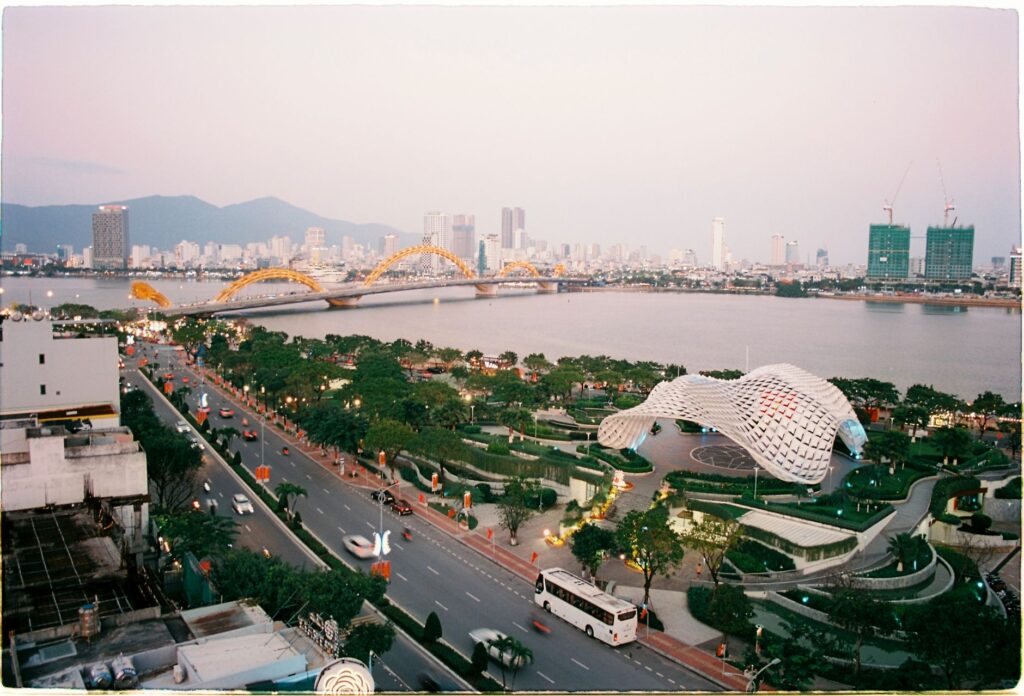
The urban layout of Da Nang reflects this constant duality. On one hand, wide avenues and avant-garde bridges cross the river channel, symbolizing the future-oriented vocation of a metropolis looking toward sustainable economic growth. On the other hand, inner alleys and peripheral neighborhoods retain a human scale, featuring local markets where the hum of morning transactions blends with the aroma of mi quang noodle soup and fresh fish. The sea breeze, constant throughout the year, tempers the tropical temperatures and accompanies journeys on foot or by bicycle along the city’s main arteries.
The Son Tra Peninsula and the Natural Sanctuary of the Marble Mountains
North of the gulf, the Son Tra peninsula acts as a gigantic green shield protecting Da Nang from typhoons while offering a natural counterpart to the urban asphalt. Popularly known as Monkey Mountain, this lush reserve harbors dense vegetation inhabited by the red-shanked douc langur, one of the most threatened primate species on the planet. Trails winding through the morning mist toward the Linh Ung pagoda reveal a deeply rooted spiritual facet, presided over by an imposing statue of the Lady of Mercy keeping watch over the coastline from above.
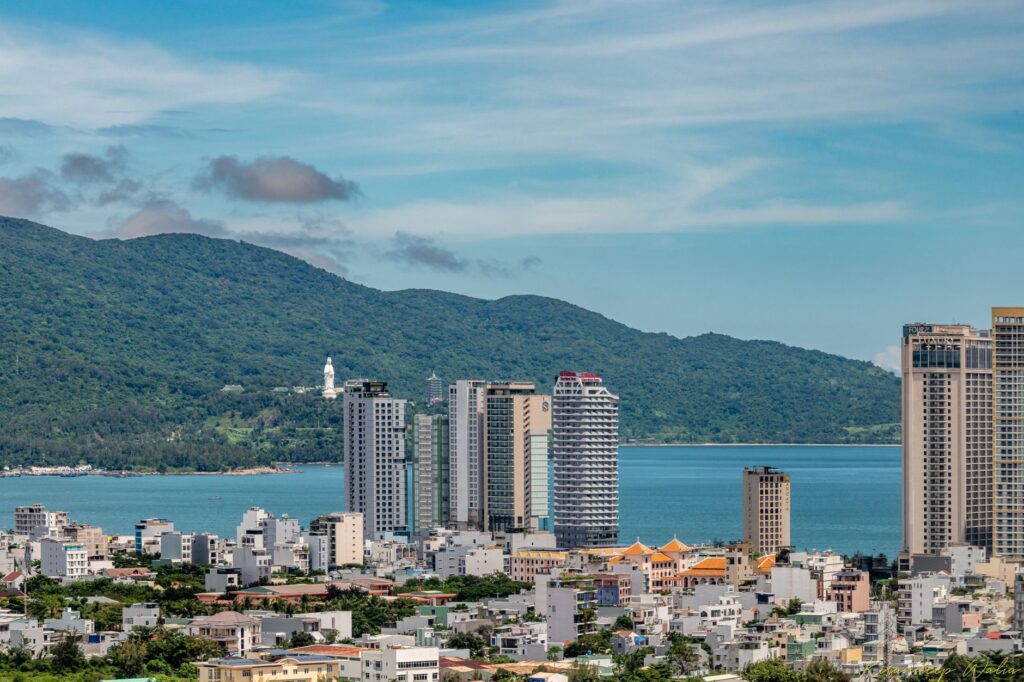
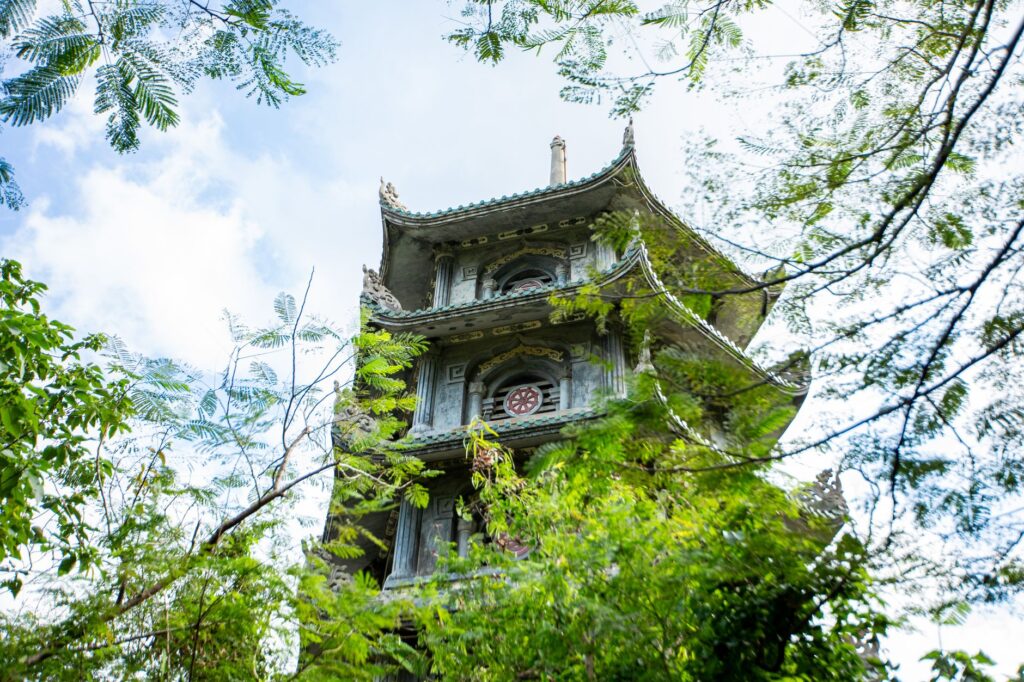
A few miles to the south, emerging almost miraculously from the coastal plain, the Marble Mountains (Ngu Hanh Son) complete the region’s geological landscape. This cluster of five limestone hills, named after the traditional elements—metal, wood, water, fire, and earth—conceals natural caves transformed into Buddhist and Hindu sanctuaries over the centuries. Stone carved by local artisans at the foothills perpetuates a sculptural tradition passed down from generation to generation, connecting the raw material of the earth with religious devotion.
The Daily Pulse of the Markets and the Culinary Heritage of the Han River
Community life in Da Nang finds its highest expression in open-air markets and street food stalls occupying street corners from dawn. The Han Market, strategically situated near the river promenade, is a hive of activity where everything from highland agricultural produce to textiles and local specialties is traded. Here, observing the daily rhythm reveals how residents integrate ancestral customs with the comforts of modern life, maintaining a strong sense of community belonging.
Local gastronomy is the most faithful reflection of this cross-section of influences. Dishes such as banh xeo, a crispy rice crêpe filled with bean sprouts, pork, and shrimp, or the aforementioned mi quang, characterized by thick yellow noodles and a concentrated bone broth, summarize the culinary philosophy of central Vietnam. Fresh ingredients, harvested in peri-urban gardens or reaped from the gulf waters, combine with aromatic herbs and fermented sauces that balance salty, sweet, and spicy flavors.
The cuisine of Da Nang does not seek artifice; it relies on the honesty of seafood and the craftsmanship of hands that have spent centuries respecting the earth and water.
Urban Architecture and the Transformation of the Han River Bridges
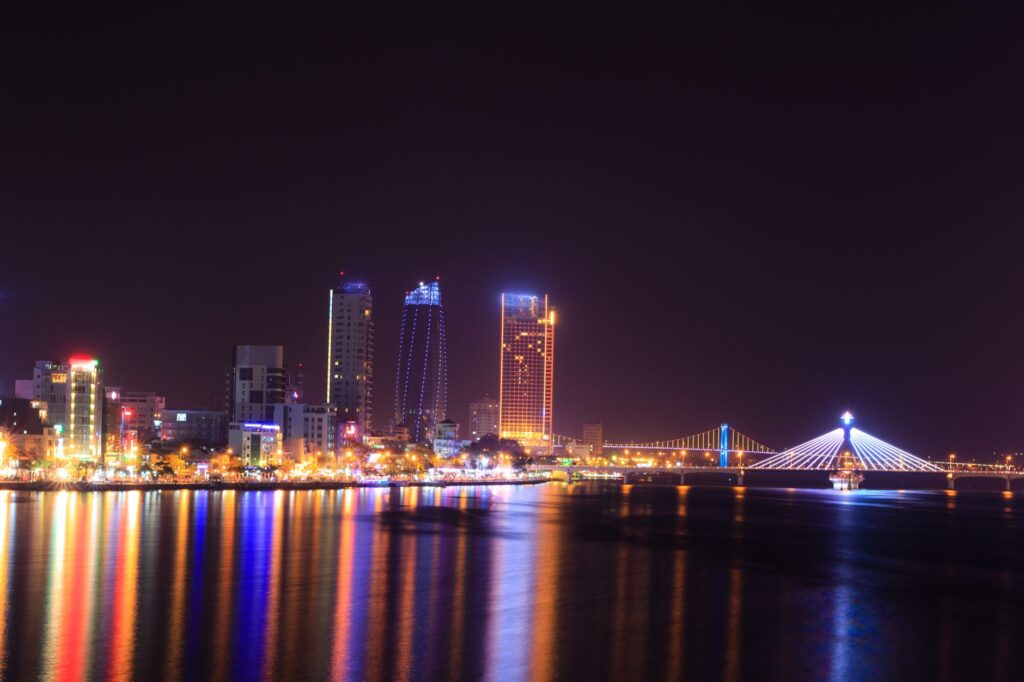
If there is one element that defines the visual identity of contemporary Da Nang, it is its commitment to architectural engineering applied to public space. The bridges crossing the Han River are not mere transportation infrastructure, but urban landmarks that structure the city’s social life. The Dragon Bridge, designed with a golden metallic structure winding over the water, becomes a weekend gathering point for families and onlookers who come to witness its water and fire show, an event celebrating community vitality.
A short distance away, the Tran Thi Ly suspension bridge and the Han River swing bridge showcase distinct aesthetic and technical solutions uniting the two banks of an expanding city. As evening falls, artificial illumination transforms these structures into sculptures of light reflected on the water, creating a popular nocturnal walk for both residents and visitors seeking harmony between modernity and the natural setting.
The Coastal Strip and the Coexistence of Fishermen and Visitors
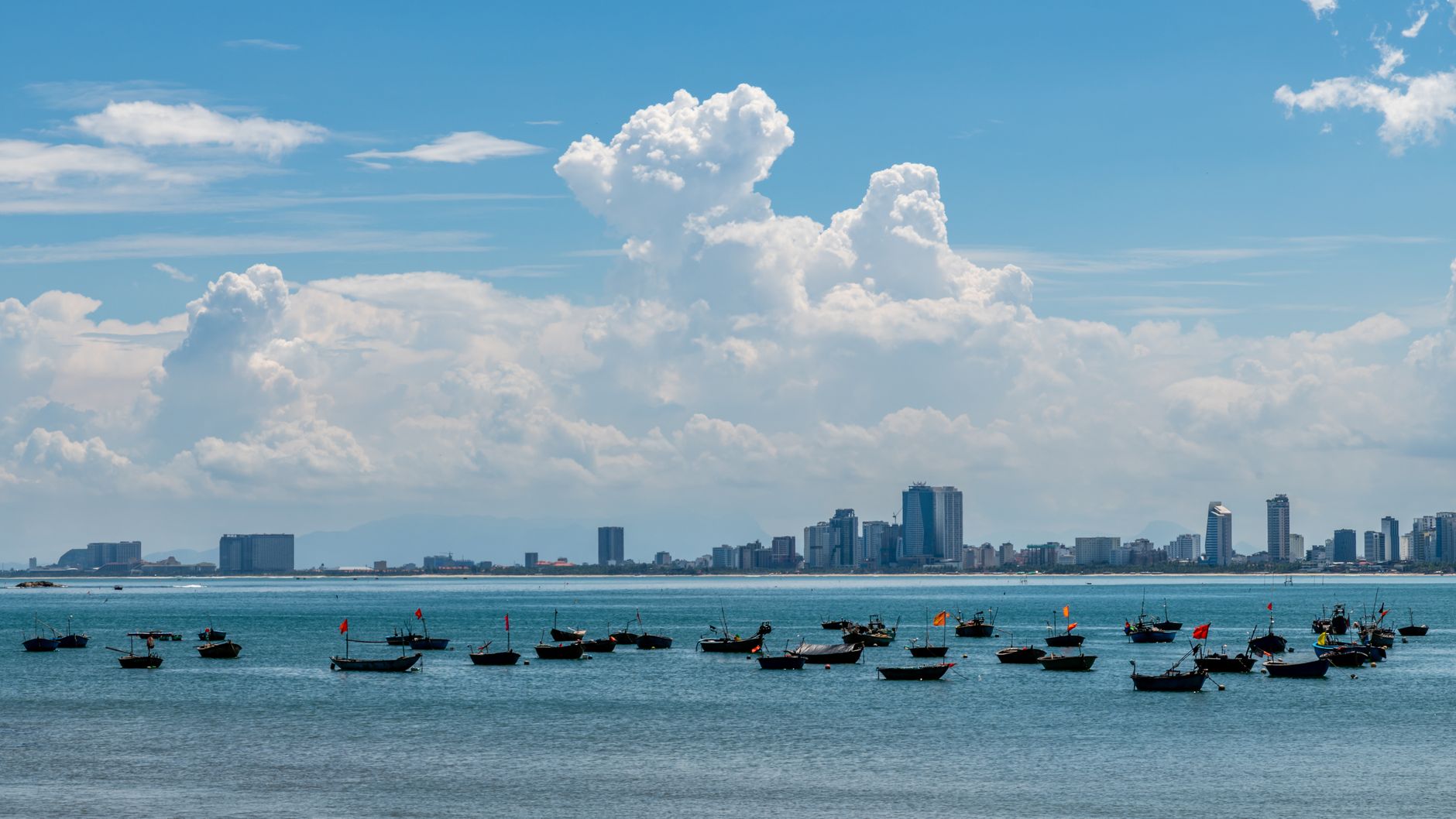
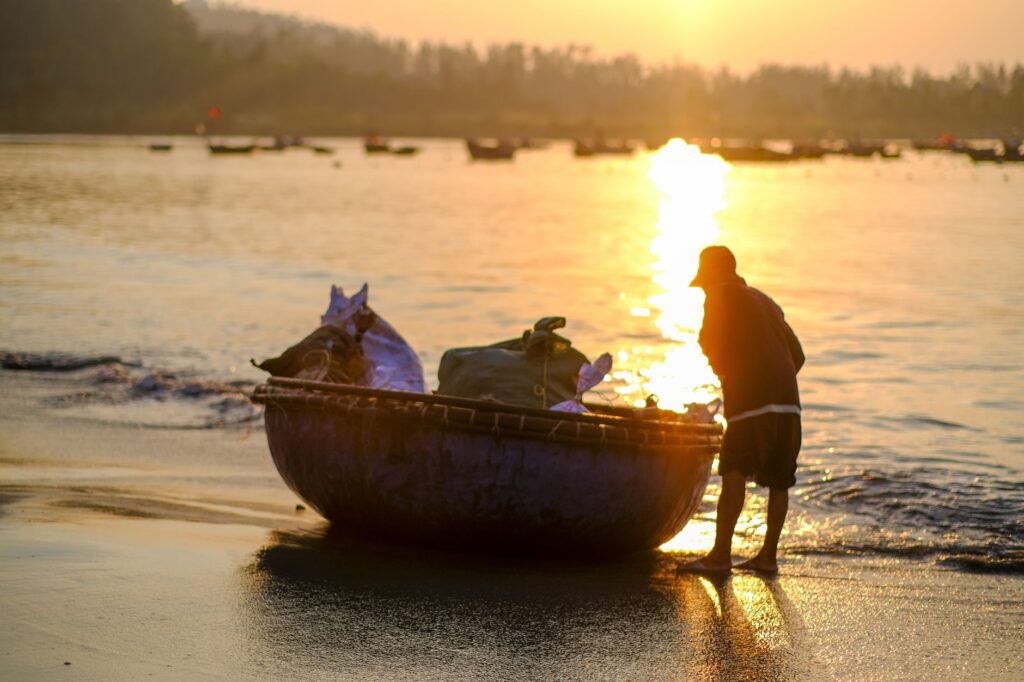
The white sand beaches stretching from the Son Tra peninsula to the outskirts of Hoi An have historically shaped Da Nang’s relationship with the sea. Beaches such as My Khe and Non Nuoc are not only recreational spaces but also settings where traditional economic activity operates in parallel with the tourism sector. At dawn, before beachgoers occupy the sand, local fishermen can be seen preparing their circular wicker baskets, known as thung chai, ready to venture out to sea for the night catch.
This peaceful coexistence between the tourism industry and maritime subsistence defines the hospitable yet reserved character of the area’s residents. Respect for tides, deep knowledge of seasonal winds, and the preservation of artisanal fishing techniques constitute an intangible heritage surviving despite the rapid urban development characterizing the Vietnamese littoral in recent decades.
Historical Heritage and Memory in the Central Coast Surroundings
Beyond the current urban fabric, Da Nang serves as the ideal basecamp for exploring the rich historical past of central Vietnam. Less than an hour’s drive inland lie the sanctuaries of My Son, a complex of Hindu temples built by the Champa civilization between the 4th and 14th centuries. The red brick towers, partially reclaimed by the tropical jungle, offer eloquent testimony to a maritime kingdom that dominated trade in Southeast Asia, with cultural influence still evident in the region’s architecture and traditions.
Likewise, the proximity of the Hai Van Pass, an impressive mountain route winding along adjacent cliffs before descending toward Thua Thien-Hue province, recalls the strategic value this natural border has held for centuries. From the top of the pass, panoramic views over Da Nang bay and the Son Tra peninsula provide an irreplaceable perspective on the geographical scale of Vietnamese territory.
Practical guide
When to travel: The best time to visit Da Nang includes the dry months from February to August, when rainfall is low and sea conditions are optimal for navigation and swimming. The rainy season and occasional typhoons extend from September to January.
How to get there: Da Nang International Airport (DAD) operates frequent connections with major Vietnamese cities and international Asian hubs. The national railway network also connects the central station with Hanoi and Ho Chi Minh City.
Urban transport: Renting bicycles and motorbikes is the most common method for moving around flexibly. For short trips, ride-sharing mobile applications and official taxis offer regulated fares.
Accommodation: Hotel options are divided between the resorts along the My Khe coastal strip and urban hotels near the Han River, suited to various budgets and travel styles.
Responsible gastronomy: Visitors are encouraged to prioritize family-run local establishments to taste traditional dishes such as mi quang and banh xeo, directly supporting neighborhood economies and promoting the consumption of local produce.
Final Reflection on the Marine Horizon of the Central Coast
The true essence of Da Nang is not found solely in its most photographed monuments or modern infrastructure, but in the capacity of its people to maintain a balance between progress and memory. Observing sunset from the river promenade, with the silhouette of the Marble Mountains cutting against the glowing sky, leaves an enduring impression on those seeking to understand the soul of Vietnam through its everyday landscapes and quiet dignity.