

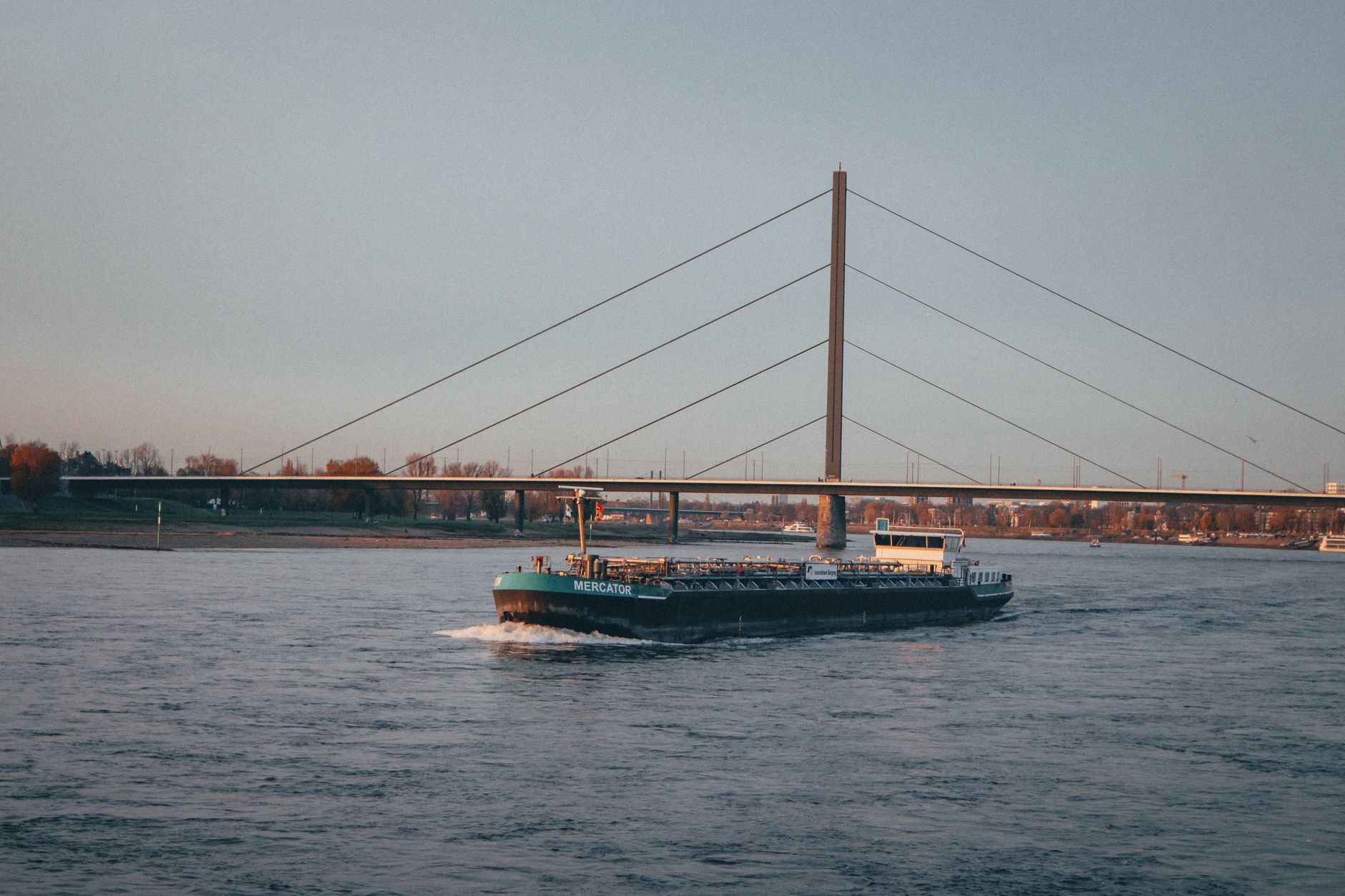
The Liquid Artery Connecting the Heart of Europe
The Rhine is not merely one of the longest and most imposing rivers on the European continent; for centuries, it has served as the backbone supporting much of Western trade, mobility, and cultural exchange. From its source in the Swiss Alps to its mouth in the North Sea, this aquatic colossus traverses or borders countries such as Switzerland, Liechtenstein, Austria, Germany, France, and the Netherlands. Throughout its course, the waterway has evolved from a simple natural transport route into a highly sophisticated logistics system where river engineering and passenger travel converge to shape a unique journey experience.
In the contemporary sphere, the significance of Rhine navigation extends far beyond the mere circulation of heavy freight. Fluvial transport routes represent a low-emission transit model compared to road freight, which has spurred renewed institutional and tourist interest in its waters. The large fleets of river cruise ships and passenger ferries plying its daily currents form a connected mobility network integrated with Europe’s major railway lines. Understanding the functioning of this infrastructure requires examining the complex interaction among logistics operators, port authorities, and the riparian communities that depend on its flow.
The contemporary challenge facing the Rhine fluvial system stems from extreme climatic variability. Extended periods of drought and the retreat of alpine glaciers impose severe restrictions on vessel drafts, forcing engineers and planners to rethink water management. This report examines how port authorities in Duisburg, Cologne, and Rotterdam coordinate operations to mitigate the impacts of climate change while safeguarding the safety of the thousands of travelers who choose river tourism as a sustainable alternative to tour Europe.
Geography and Navigation Axes: From the Alps to the North Sea
The journey of the Rhine is naturally divided into several distinct sections, each with unique geographic and logistical characteristics. The Upper Rhine, flowing from Lake Constance to Basel, features a steep gradient and complex hydroelectric infrastructure. In this initial stretch, commercial navigation requires sophisticated lock systems that overcome terrain elevation changes, allowing vessels to ascend or descend in a controlled manner without drastically altering the ecological flow of the environment.

Beginning at Basel, the Middle Rhine winds through the legendary Lorelei rock gorge, a section designated as a UNESCO World Heritage site where mountainous terrain and medieval castles dominate the horizon. Operationally and scenically, this is the most celebrated section, yet it presents considerable challenges due to narrow channels and unpredictable currents. Commercial and tourist vessel captains must hold specialized licenses and deep local knowledge to navigate these winding waters safely.
Finally, the Lower Rhine widens as it enters the German plain and the Netherlands, transforming into a massive delta emptying into the North Sea via the ports of Rotterdam and Antwerp. Here, the scale of logistics infrastructure reaches titanic proportions. Artificial canals and river branches intertwine with container terminals, shipyards, and passenger docks, creating a global connectivity node where river vessels, high-speed trains, and intercontinental air connections converge.
River engineering and channel maintenance require a constant deployment of civil engineering and cutting-edge technology. Periodic dredging operations are indispensable to prevent sediment accumulation that would obstruct deep-draft vessels. International bodies such as the Central Commission for the Navigation of the Rhine (CCNR) establish strict regulations on channel maintenance, guaranteed minimum depths, and the technical specifications of authorized international vessels.
Fluvial Engineering and Channel Maintenance
Maintaining an operational waterway of the Rhine’s magnitude requires a constant deployment of civil engineering and cutting-edge technology. Periodic dredging operations are indispensable to prevent the accumulation of sediment that would obstruct the passage of deeper-draft vessels. International bodies such as the Central Commission for the Navigation on the Rhine (CCNR) establish strict regulations regarding channel maintenance, guaranteed minimum depths, and technical specifications for vessels authorized to navigate international waters.
Over recent decades, river engineering has pivoted toward a more sustainable approach known as integrated water management. Instead of fully canalizing and confining the river with concrete walls, modern engineers promote the restoration of floodplains and controlled overflow zones. These areas act as natural sponges during seasonal high waters, reducing catastrophic flood risks in riparian cities and improving aquatic ecosystem health.
Digitalization has also transformed river traffic management. River Information Services (RIS) and advanced radar systems enable captains to monitor water levels, weather conditions, and traffic density in busy bottlenecks in real time. This digital connectivity minimizes waiting times at locks and ports, optimizes fleet energy consumption, and guarantees punctuality for both freight transport and passenger itineraries.
The Tourism Ecosystem and River Cruises
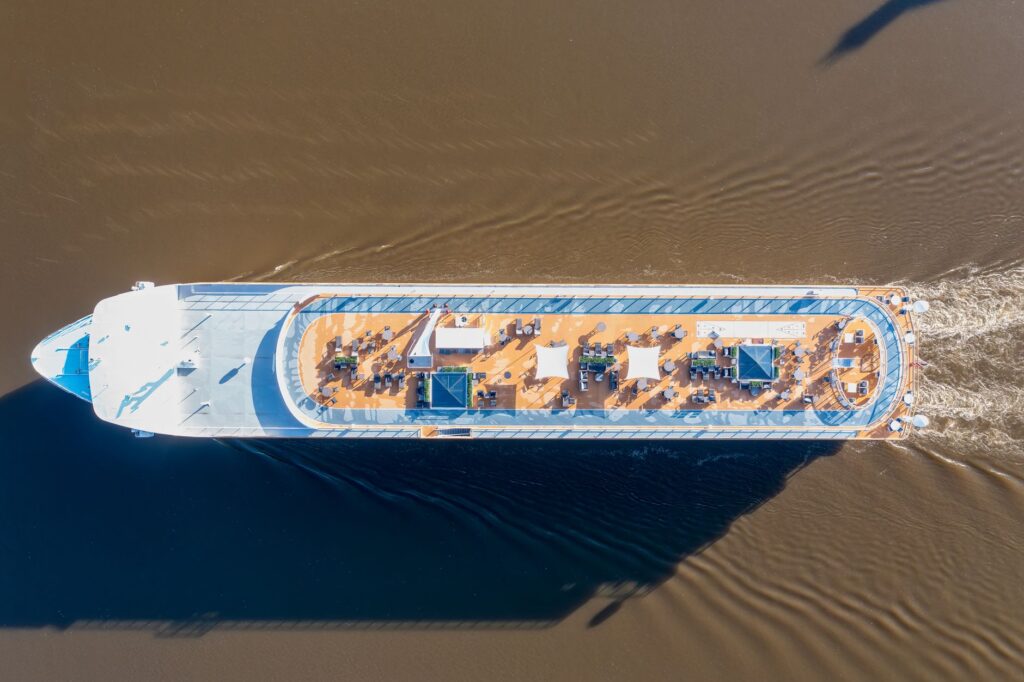
Tourism along the Rhine constitutes one of Europe’s most consolidated vacation industries. Unlike mass tourism associated with large hotel resorts, river cruises offer a slow-paced cultural immersion experience where urban and rural landscapes slowly pass before the traveler’s eyes. Cruise lines operate modern fleets specifically designed with reduced air drafts and collapsible profiles to pass beneath historic bridges crossing the river without altering existing architectural infrastructure.
The profile of travelers choosing the Rhine typically seeks a balance between onboard comfort and heritage exploration ashore. Scheduled stops in cities like Mainz, Koblenz, Düsseldorf, or Strasbourg allow passengers to disembark directly into the historic urban core, fostering a proximity tourism model that directly benefits the local economy of shops, museums, and riverside restaurants.
However, this sector faces growing operational and environmental pressures. Traditional diesel engine emissions and the energy consumption of floating hotels have compelled authorities to mandate the implementation of hybrid propulsion technologies, cleaner fuels, and shore-power connections (cold ironing) at docks to shut down auxiliary engines during overnight port stays.
Intermodality: When Water Connects with Rail and Road
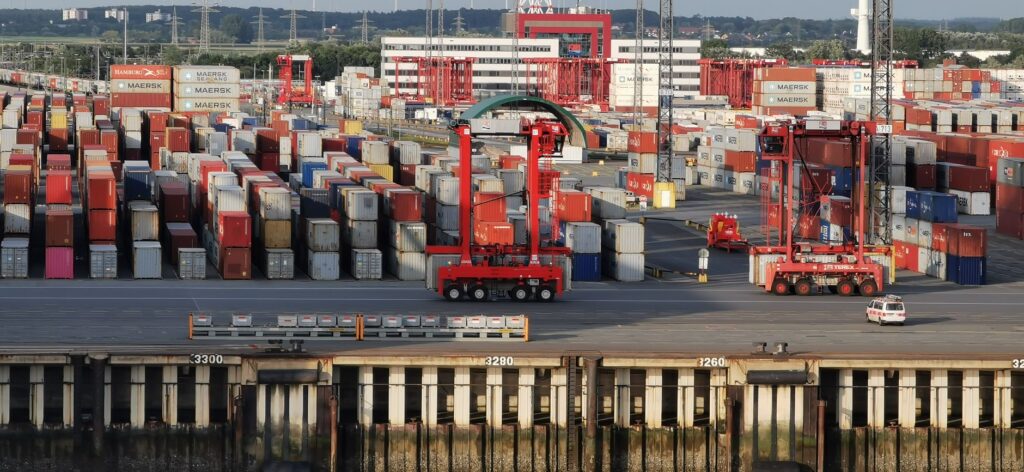
The efficiency of the Rhine corridor depends not solely on the river itself, but on its seamless integration with the continent’s other transport networks. Major river ports such as Neuss, Duisburg, and Basel function as authentic multimodal hubs where goods and passengers transfer smoothly between ships, freight trains, and regional distribution trucks.
The railway corridor running parallel to the Rhine Valley is among the busiest worldwide. The spatial coincidence between the waterway and trunk railway lines allows travelers to combine river cruising segments with high-speed rail journeys, such as German ICE services or cross-border European trains. This synergy drastically reduces medium-distance air transport dependence, offering a truly integrated mobility alternative.
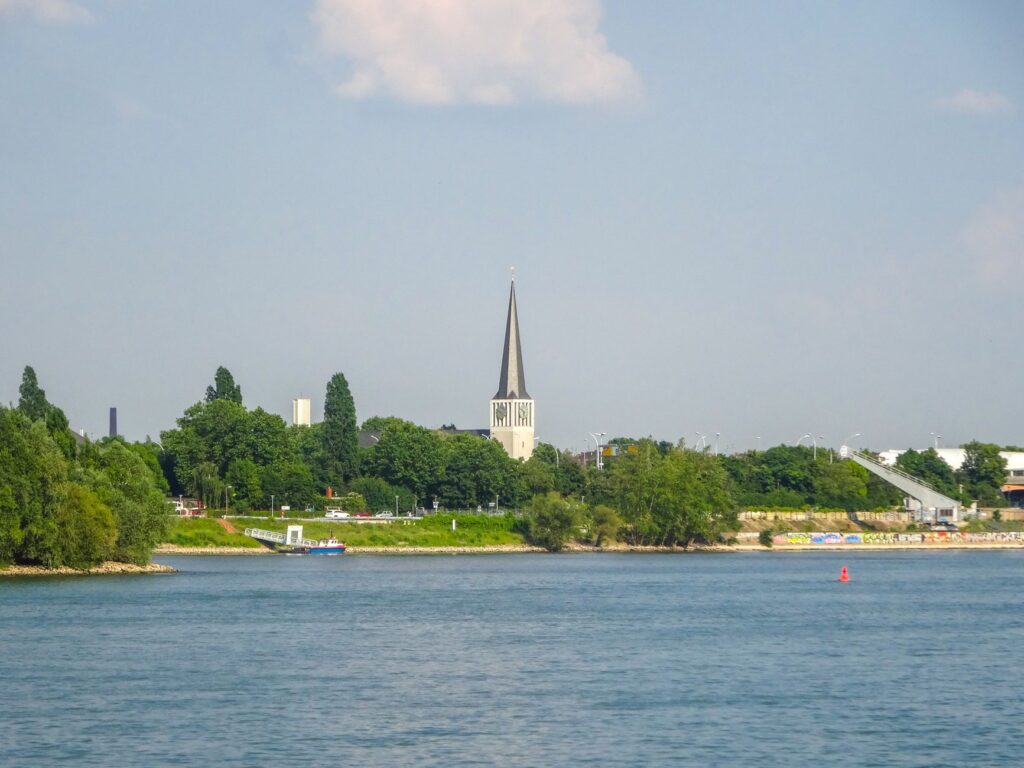
The true strength of the Rhine corridor lies in its capacity to articulate different transport modes without friction, proving that fluvial infrastructure and rail networks can coexist and complement each other exemplarily.
Intermodal logistics centers feature heavy-duty gantry cranes and automated sorting systems enabling container and luggage handling with millimetric precision. This infrastructure not only supports the industrial supply chain of Germany and its neighbors but also facilitates baggage handling and operational logistics for tour operators moving thousands of weekly passengers along the water axis.
Environmental Challenges and the Impact of Climate Change
The greatest challenge facing navigation on the Rhine in the 21st century is the alteration of its hydrological regime driven by global warming. Winters with reduced alpine snow accumulation and extremely warm, dry summers provoke drastic drops in river discharge. During recent historical droughts, water levels at critical points such as the Kaub bottleneck dropped so low that commercial vessels were forced to operate loaded at a fraction of maximum capacity.
This draft limitation creates severe economic disruptions across industrial supply chains and forces tour operators to cancel or modify navigation itineraries at short notice. To mitigate these vulnerabilities, the governments of Germany and the Netherlands have launched joint action plans aimed at deepening critical stretches, improving hydrological early-warning systems, and developing shallow-draft vessels optimized for low water levels.
Simultaneously, strict waste management regulations have been implemented onboard. Discharging gray water and oily waste into the river channel is strictly prohibited, and ships must dock at facilities equipped with advanced purification systems. Protecting aquatic biodiversity—threatened by historical pollution and habitat alteration—remains an absolute priority for international environmental protection agencies operating within the basin.
Practical Information for Planning the Journey
Planning a trip or logistical transit along the Rhine corridor requires understanding the operational specifics of its various sections. Essential recommendations for organizing a successful land and river route are detailed below:
- Navigation Season: The optimal months for river cruises or tourist routes run between May and September, when weather conditions are most stable and water levels typically remain within safe parameters.
- Intermodal Connections: The cities of Basel, Strasbourg, Mainz, Cologne, and Rotterdam feature major railway stations located within a short distance of river docks, facilitating rail-boat combinations.
- Documentation and Regulations: For citizens of the European Union and the Schengen area, mobility along riparian borders requires no additional visas, though specific baggage and security requirements of each river cruise line should be verified.
- Hydrological Safety: Consulting official navigation bulletins and portal information from German and Dutch transport ministries is advised to check updated draft conditions in case of drought or flood alerts.
Future Outlook: Innovation and Sustainability on the Rhine Axis
The future of navigation on the Rhine inevitably involves the total decarbonization of its fleets and the digital modernization of its infrastructure. Pilot projects for hydrogen fuel cell-powered vessels and high-capacity battery systems are already being tested on commercial stretches of the Lower Rhine. These zero-emission technologies aim to ensure that fluvial transport maintains its environmental competitive edge over land alternatives.
Likewise, riparian cities are redesigning former industrial docks into dynamic public spaces, integrating modern cruise passenger terminals with pedestrian promenades and cycling lanes. This urban transformation demonstrates that the Rhine remains a dynamic engine for communities growing along its banks, adapting to aesthetic, ecological, and social demands of the 21st century.
The Rhine’s capacity for reinvention demonstrates that major historical infrastructures can transform into models of sustainability and smart connectivity without losing their essential identity.
Ultimately, the Rhine river corridor consolidates its position as a global benchmark in resource management and intermodal mobility. The balanced combination between commercial freight transport, tourist passenger navigation, and rigorous protection of the natural environment confirms that this historic waterway will remain, for decades to come, the true beating heart of modern Europe.


