
A capital of seven hills and interior silences
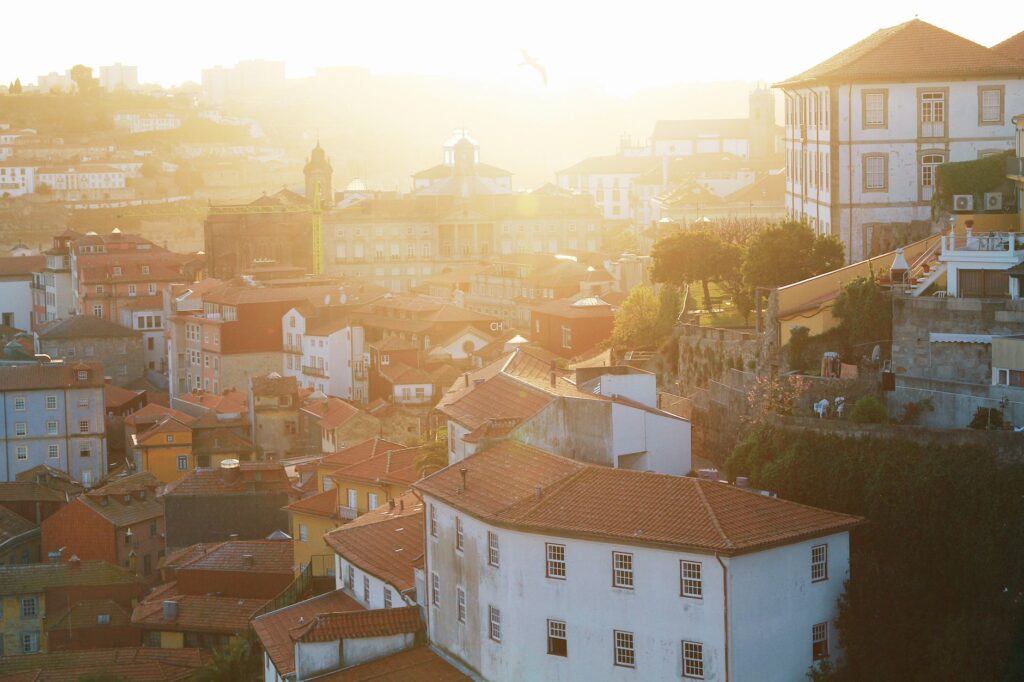
Lisbon never reveals itself all at once. It unfolds in layers, like a palimpsest of limestone, Atlantic light, and terracotta rooftops descending toward the Tagus estuary. For too long, the city’s hospitality landscape oscillated between nineteenth-century grand hotels and modest guesthouses, leaving a void for travelers seeking an experience where human scale meets aesthetic rigor. In recent years, however, the capital has witnessed a quiet revolution led by the boutique hotel. These are not merely smaller establishments or design fancies, but a way of inhabiting the city that directly engages with the history of its most emblematic neighborhoods, from the sober nobility of Lapa to the creative pulse of Príncipe Real.
This report explores how these urban sanctuaries redefine the stay in the Atlantic metropolis. Far from the standardization of large chains, these accommodations function as sounding boards for local culture. Within them, the noble wood of a restored mansion coexists with Scandinavian design pieces or traditional ceramics from Portugal’s master potters. The experience is no longer just about sleeping, but about understanding the pulse of a city that has reinvented itself without forsaking its foundational melancholy.
Architecture of memory: From forgotten palaces to contemporary sanctuaries
Lisbon’s hotel renaissance is fundamentally anchored in its architectural heritage. Many of the finest boutique establishments occupy buildings that suffered decades of abandonment before being rescued by prestigious architects and interior design studios. In the Chiado district and along the slopes overlooking Alfama, contemporary intervention in historic structures demands a balancing act: respecting the original layout, wooden coffered ceilings, protected tiles, and interior courtyards while introducing the technological and thermal comforts demanded by twenty-first-century travelers.

Conservation is not an exercise in inert nostalgia, but a commitment to structural authenticity. When a guest crosses the threshold of a former convent transformed into a hotel in the Madragoa neighborhood, they immediately perceive the thickness of the walls, the calculated gloom of the cloisters, and the muffled sound of the outside world. Developers and designers have understood that true contemporary luxury in Europe is not an excess of square meters, but a tangible connection to the place’s history.
Luxury in Lisbon has stopped shouting in impersonal lobbies to whisper instead in colonnaded courtyards and libraries lined with noble woods.
Príncipe Real and the avant-garde of inhabited design
If Alfama represents the medieval substratum and Baixa the Pombaline rationality, Príncipe Real embodies the most cosmopolitan and contemporary Lisbon. Amidst nineteenth-century mansions, independent art galleries, and gardens where centuries-old cedars offer shade, the boutique hotel scene has found its natural habitat. Here, establishments do not seek to camouflage themselves in the past, but rather to propose a bold dialogue between bourgeois residential tradition and avant-garde design.
The properties in this area are characterized by integrating global lifestyle concepts without losing local roots. It is common to find in their common areas furniture pieces created by contemporary Portuguese designers, works by emerging artists displayed in the hallways, and culinary menus that reinterpret local produce—from coast-caught fish to wines from Colares or Setúbal—through an unpretentious haute cuisine perspective. The result is accommodation that functions as a cultural embassy for vibrant Lisbon.
The art of invisible service: Human-scale hospitality
One of the differentiating elements of the boutique experience in the Portuguese capital is the nature of the relationship between the staff and the traveler. In hotels that rarely exceed thirty or forty rooms, the anonymity of large complexes gives way to personalized, almost domestic hospitality reminiscent of a private liberal aristocrat’s residence.
The staff does not recite corporate scripts; they share genuine recommendations on which tasca preserves the best grilled cod without catering to mass tourism, or in which antique shop on Rua de São Bento original eighteenth-century engravings can be found. This approach requires deep knowledge of the territory and a dedication to service that values discretion above ostentation. The best service is one that is sensed rather than imposed, allowing guests to feel the city as their own from the very first moment.
The urban oasis: Courtyards, terraces, and the light of the Tagus
Lisbon is, above all else, a city of light. The inclination of its streets and its proximity to the estuary cause Atlantic clarity to bathe façades with an almost cinematographic quality. The finest boutique hotels have successfully incorporated this atmospheric element into their interior architecture, designing rooftop terraces, landscaped courtyards, and large windows that function as living frames of the city.

Enjoying a late breakfast in an interior courtyard where a centuries-old lemon tree grows, protected from urban traffic noise, defines the wellness experience in Lisbon. These silent pauses are essential in a metropolis that demands constant walking uphill and downhill. The upper terraces, meanwhile, have become privileged observatories to watch the sunset over red rooftops while sipping a glass of Bucelas white wine.
Zero-kilometer gastronomy and the cuisine of memory
Dining in Lisbon’s boutique hotels has abandoned the generic international restaurant model to embrace cuisine with a strong territorial identity. The chefs leading these spaces reinterpret Portugal’s Atlantic and Mediterranean pantry using contemporary techniques. Fresh fish from Sesimbra, vegetables from gardens near the river, and artisan cheeses from Serra da Estrela take center stage on dynamic menus that change with the seasons.

This commitment to sustainability and local produce is not merely a marketing strategy, but a response to the maturity of travelers who demand transparency and roots. Having sourdough bread baked in the neighborhood for breakfast, accompanied by homemade jams and Azores butter, establishes an immediate sensory bond with the country’s gastronomic culture.
Dining in these spaces is an exercise in gustatory memory where traditional recipes recover their original elegance.
Sustainability and heritage: The challenge of preserving neighborhood souls
The tourism boom in Lisbon has raised complex challenges in terms of gentrification and pressure on residential fabric. In this context, the best boutique hotels assume an active commitment to social and environmental sustainability. Many of these projects have been developed under strict criteria of energy efficiency, recovery of local materials, and hiring staff from the neighborhoods themselves, contributing to the local economy.
Likewise, respectful integration into the surroundings avoids aggressive touristification, opting for a model of longer-stay travelers with lower mass impact. Keeping ground floors or courtyards open to local residents and visitors is another formula through which these establishments seek not to become isolated bubbles, but active parts of community life.

Practical information for a boutique stay in Lisbon
To make the most of a boutique accommodation experience in the Portuguese capital, it is useful to keep a few operational guidelines in mind:
- Advanced reservations: Due to the small number of rooms in these establishments, availability often sells out months in advance, especially during spring and autumn.
- Location and mobility: Historic neighborhoods like Alfama, Chiado, Príncipe Real, or Lapa feature steep streets paved with traditional calçada portuguesa, making large-wheeled luggage difficult to manage. It is advisable to consult the hotel regarding the best arrival option for transportation or transfer services.
- Climate and seasonality: The months from April to June and from September to October offer the most balanced temperatures for walking the city, avoiding the intense summer heat and frequent Atlantic winter rains.
- Exclusive experiences: Many boutique hotels arrange private access to local artisan workshops, guided visits to private art collections, or sailboat tours on the Tagus, services that should be requested at the time of confirming the reservation.
Epilogue: Inhabiting melancholy with fresh eyes
Staying in a boutique hotel in Lisbon is not simply a logistical choice, but an aesthetic and intellectual decision. It is a way of understanding that contemporary travel requires pauses, authentic textures, and a profound respect for the genius loci of destinations. When travelers close their room door in a rehabilitated mansion in Lapa or a design refuge in Príncipe Real, Lisbon ceases to be a static set and becomes an intimate, complex, and enduring experience.
Source in Condé Nast Traveler España: Los mejores hoteles boutique de Lisboa