


The Vertical Geography of the Hajar and Its Historical Isolation
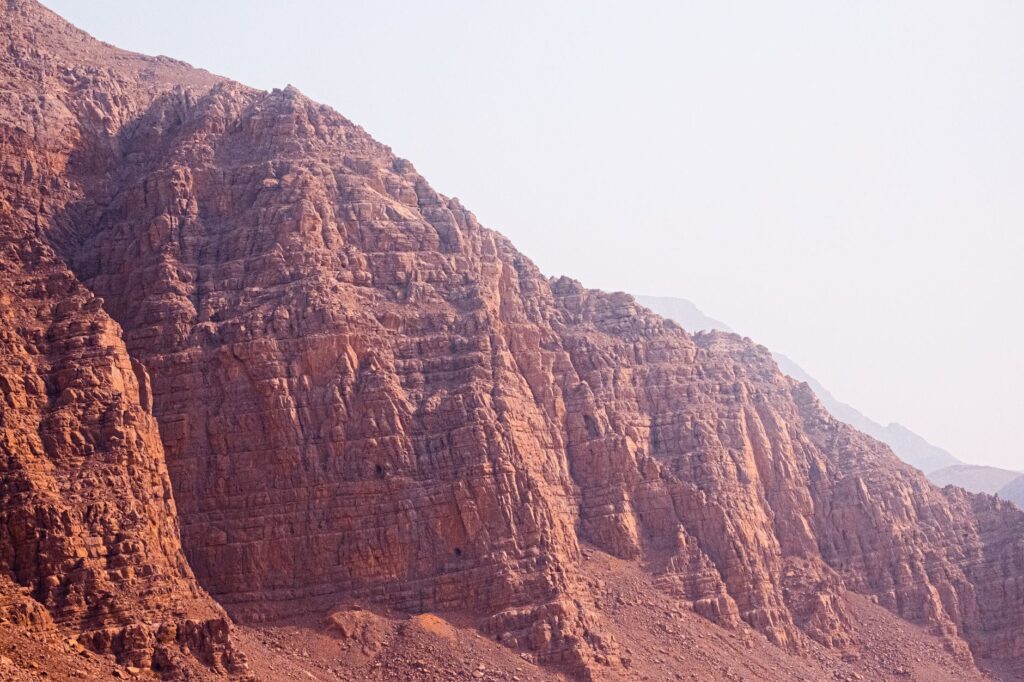
Northern Oman and the eastern United Arab Emirates are dominated by the imposing Hajar mountain range, a labyrinth of dark limestone rising sharply from coastal plains to elevations exceeding three thousand meters. For centuries, this fragmented relief imposed near-total isolation on the small interior valleys, locally known as wadis. Communities inhabiting these high-altitude oases depended entirely on steep footpaths traversed by camel caravans and a profound understanding of seasonal rainfall cycles for their survival and trade.
The rugged topography not only dictated communication routes but also fragmented the local economy into self-sufficient yet fragile microclimates. Connectivity relied on human and animal endurance to overcome extreme elevation gains under temperatures frequently topping forty degrees Celsius during the summer months. The complete absence of paved roads turned any journey toward the ports of the Persian Gulf or the Gulf of Oman into a multi-day odyssey, restricting commercial exchange to durable agricultural goods and artisanally quarried minerals.
Road Engineering in Extreme Terrain: Scoring the Rock
The radical transformation of mobility in the Hajar began with territorial integration efforts initiated in the late twentieth century and consolidated over the past two decades. Civil engineers and surveyors faced the titanic challenge of routing high-specification highways across impossible slopes and wadi beds prone to flash floods during winter storms. The construction of arterial routes such as the highway ascending Jebel Jais required the excavation of millions of tons of limestone, the installation of complex drainage systems, and slope stabilization via high-tensile mesh and shotcrete.

The modern mountain road in the Hajar is not merely a transit corridor, but an engineering artifact that redefines territorial sovereignty over historically impassable terrain.
These road infrastructures have substantially altered freight and passenger transit times. Journeys that once demanded days of marching on animal back are now completed in minutes thanks to meticulously calculated alignments complying with rigorous international road safety standards. However, maintaining this network demands relentless logistical effort. Rockfalls caused by thermal erosion and sudden flash floods compel maintenance crews to sustain round-the-clock patrols and utilize satellite monitoring technology to detect structural instabilities before they compromise traffic flow.
Freight Transport and High-Altitude Supply Logistics
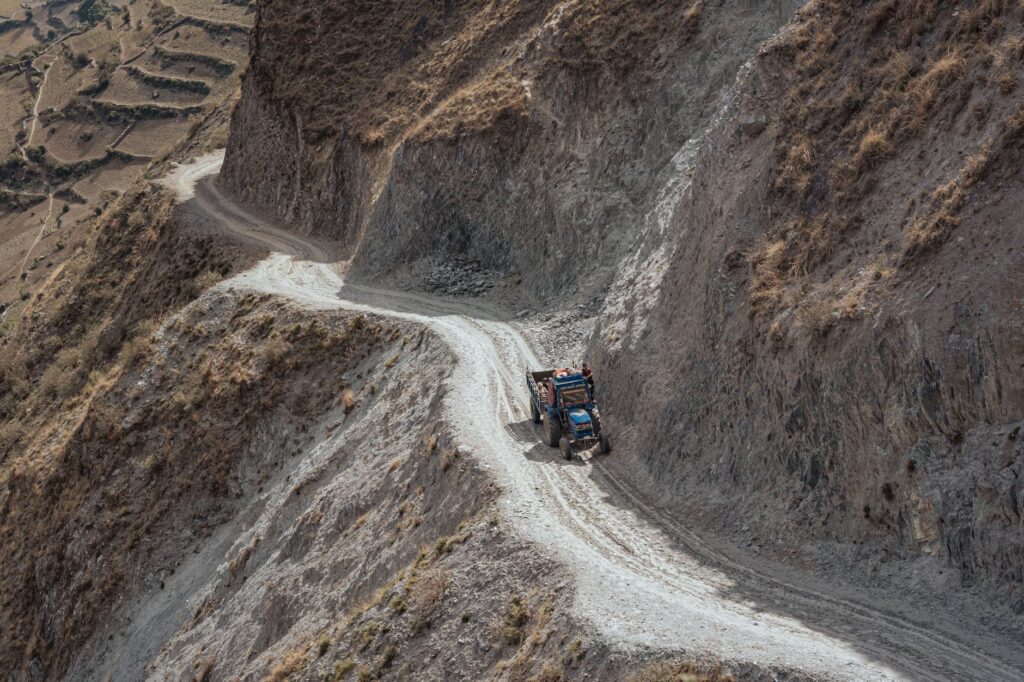
Supplying populations and the scientific and tourism complexes situated on the Hajar summits poses a unique logistical puzzle. Heavy transport trucks must contend with tight hairpin turns and steep gradients that test braking systems and engine power. Logistics firms operating in this region deploy specialized fleets equipped with gearboxes optimized for mountain driving and reinforced refrigeration systems to protect perishables and sensitive electronics from extreme heat.
Beyond road transport, the deployment of cargo helicopters has become an indispensable solution for installing critical infrastructure, including telecommunication towers, weather stations, and solar energy equipment on inaccessible summits. This operational intermodality demonstrates how contemporary logistics in the Middle East blends traditional civil engineering with precision utility aviation to overcome the most severe geographical barriers.
Local Mobility and Socioeconomic Impact in the Wadis
For the local residents of the wadis, the upgrading of the road network has meant a total reconfiguration of daily life. Once confined to subsistence economies, current inhabitants easily commute to coastal urban centers for higher education, specialized healthcare, and employment in the public or tourism sectors. Four-wheel-drive vehicles, once the only viable option for navigating gravel tracks, have been complemented and often replaced on main routes by standard automobiles and public buses regularly connecting mountain villages with emirate capitals.
Road accessibility has halted the rural exodus that threatened to depopulate the historic settlements of the Hajar, allowing a new generation of residents to combine territorial roots with integration into the UAE’s globalized economy.
Nevertheless, this steady influx of vehicles has introduced new environmental and traffic management tensions. During weekends, thousands of urban visitors ascend mountain roads in search of milder temperatures and natural landscapes, causing congestion at viewpoints and critical bottlenecks along the network. Local authorities have implemented strict speed enforcement, smart signage, and parking restrictions to protect fragile wadi ecosystems and safeguard the operational flow of commercial and emergency transport.

Road Safety and Emergency Protocols in Arid Environments
Driving in the Hajar demands absolute mastery of prolonged descent techniques and strict adherence to speed limits. Traffic engineers have installed emergency runaway truck ramps along the steepest slopes, engineered with deep gravel beds to safely halt heavy vehicles experiencing brake failure. Furthermore, the network features satellite SOS call boxes and twenty-four-hour thermal surveillance cameras linked directly to emergency control centers in Ras al-Khaimah and Fujairah.
During the rainy season, typically spanning from November to March, safety protocols are raised to the highest alert level. At-grade crossings over wadi beds, known as *sabkha* or Fords, are equipped with automated barriers and flow sensors that immediately block passage upon the risk of flash flooding. Alpine rescue services and civil protection teams conduct regular air and ground evacuation drills to guarantee rapid response times across the most isolated stretches of the cordillera.
Sustainability and the Future of Transport Infrastructure
The future development of transport networks in the Hajar Mountains focuses on decarbonization and minimizing landscape impact. Faced with growing pressure to expand road capacity, urban and environmental planners prioritize smart-technology solutions, such as solar-powered dynamic traffic management and low-energy LED lighting tailored to native nocturnal fauna. Low-impact transit alternatives and high-capacity cable cars are also being evaluated to connect key tourist points without clearing additional slopes or paving new mountain stretches.
This transition toward environmentally sensitive infrastructure seeks to balance the imperative need for connectivity with the preservation of Hajar’s biodiversity, home to endemic species like the Arabian tahr and various arid-adapted flora. Sustainability in this context is not an abstract concept, but an essential technical and ethical prerequisite ensuring that regional economic development does not destroy the natural heritage sustaining it.
Practical guide
How to get there: Access to the Hajar mountain range originates from Dubai or Sharjah via the E11 or E311 highways toward Ras al-Khaimah or Fujairah, subsequently connecting to the secondary road network ascending into the wadis and summits.
Best time to visit: From November to March, when daytime summit temperatures range between 15 °C and 25 °C. Summer months must be avoided as asphalt temperatures reach extremes that test vehicle mechanics.
Vehicle requirements: For main paved highways (such as Jebel Jais), any roadworthy vehicle is suitable. To explore secondary wadis and gravel tracks, a four-wheel-drive (*4×4*) vehicle with tires in prime condition and an additional spare is strictly necessary.

Safety regulations: Strictly obey speed limits and engage lower gears on steep descents to prevent brake overheating. Always carry abundant drinking water and a satellite or mobile communication device with an external battery pack.
Environmental respect: Dumping waste or camping outside designated zones within wadi beds is strictly prohibited. Fines for altering the natural environment or damaging protected flora are severe.
The Final Echo of Stone and Engine
In the ancient silence of the Hajar Mountains, the distant roar of a freight truck or the steady hum of tires on flawless asphalt reminds us that modernity has successfully woven a thread of steel and bitumen over the most indomable rock. Every tight hairpin turn and suspension bridge spanning the dry wadi bed represents a daily victory against isolation, a silent pact between human engineering audacity and the stony sovereignty of the desert. Contemplating the vastness of the horizon from windswept summits, the traveler understands that the true miracle of this landscape is not its ancestral inaccessibility, but the tenacious determination that opened it to the world without breaking its ancient soul.


