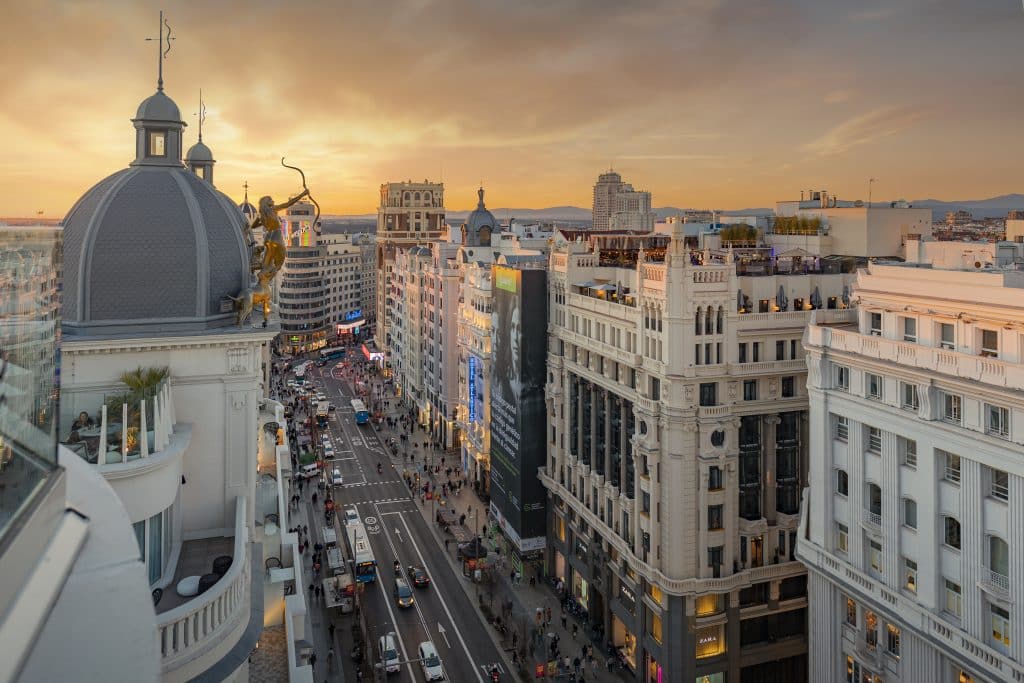
There are cities you visit to check monuments off a bucket list, and then there are cities you experience through your skin, the rhythm of their streets, and the cadence of their conversations. Madrid belongs, without a doubt, to this second category. Upon crossing into its central core, the seasoned traveler quickly grasps a fundamental truth: this is a metropolis designed by and for connoisseurs of urban life. It is not merely about the opulence of its art galleries or the grand scale of its 19th-century facades, but rather an invisible infrastructure and a community spirit that conspire to turn daily routines into a refined art form. For those of us who love to get lost in the asphalt, decode neighborhood identities, and adopt local customs as our own, the Spanish capital reveals itself not as a tourist playground, but as the perfect canvas for contemporary livability.
The Sophistication of the Everyday on Madrid’s Streets
The true luxury of Madrid is not locked away in five-star hotel vaults along the Paseo de la Castellana; it lies in the democratization of urban pleasure. The city has successfully preserved a human scale that many other global capitals sacrificed to massive gentrification and unchecked vertical development. Here, life unfolds in the streets—a public space that functions as the grand collective living room of Madrileño society. From the early morning hours, when the scent of freshly ground coffee and warm porras fills the corners, to the dead of night, the city maintains a constant yet never hysterical vibration.
For the observant traveler, the city’s design facilitates a fluid transition between public and private spheres. Plazas are not mere traffic junctions but agoras where kids play soccer, elders debate local politics, and young professionals share beers. This social cohesion, so difficult to replicate in other latitudes, is the foundation of the capital’s magnetic appeal. Madrid does not demand that you squeeze yourself into its mold; it simply invites you to grab a chair at an outdoor terrace and watch the world spin at a deliciously measured pace.
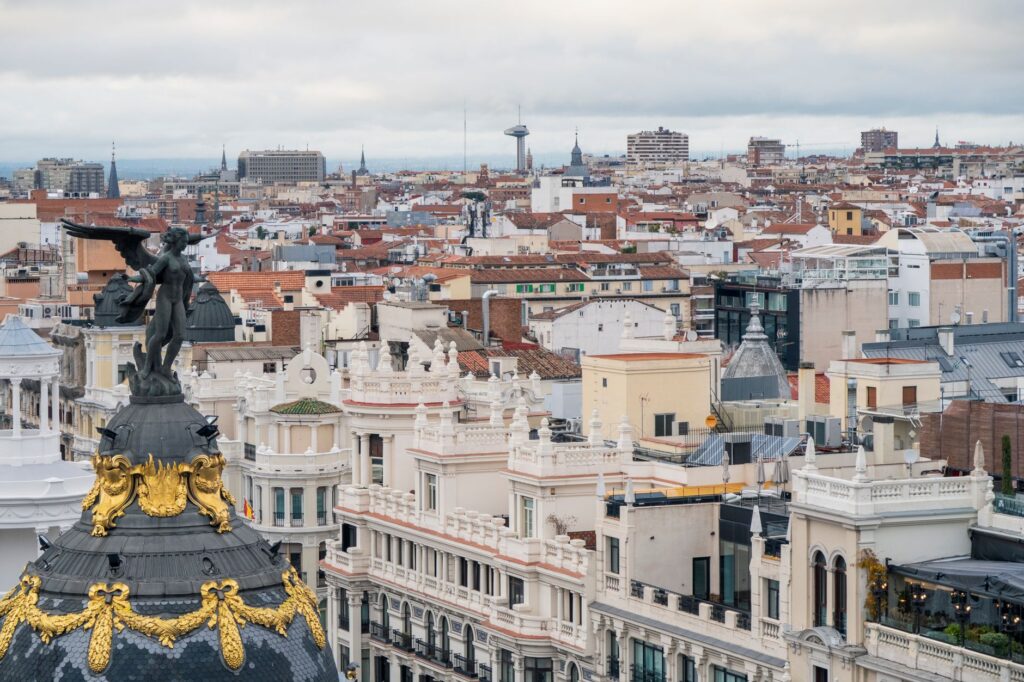
«Madrid is not a city to be contemplated from the distance of a tour bus; it is a living organism that demands to be walked, breathed, and, above all, shared at the counter of a neighborhood bar.»
The Pulse of the Neighborhoods: From Malasaña to La Latina
Understanding Madrid requires shedding the idea of a monolithic identity and embracing its fragmented nature of distinct neighborhoods, each with its own soul. Every barrio operates as a cultural and social microclimate, complete with its own schedules, aesthetic codes, and local characters. In Malasaña, the spirit of the 1980s Movida Madrileña still beats beneath a layer of hipster modernity. Here, independent bookstores stand alongside vintage clothing shops and specialty cafes where digital nomads type away next to neighbors who have lived in the same historic apartment buildings for fifty years. This intergenerational coexistence lends the neighborhood an authenticity that resists passing trends.
Crossing south of the bustling Gran Vía, the cityscape shifts into the medieval labyrinth of La Latina and the historic Madrid de los Austrias. In these narrow, sloping streets, the weight of history is tangible in the weathered ochre facades and century-old taverns. On Sundays, this area becomes the epicenter of the ultimate Madrileño ritual: vermouth and the Rastro flea market. Wandering down Ribera de Curtidores only to end up looking for a table at Plaza de la Paja is not a tourist activity; it is an act of communion with the city’s very essence, where lively chatter and laughter replace any pre-recorded soundtrack.
A Transit Network That Defines Metropolitan Civility
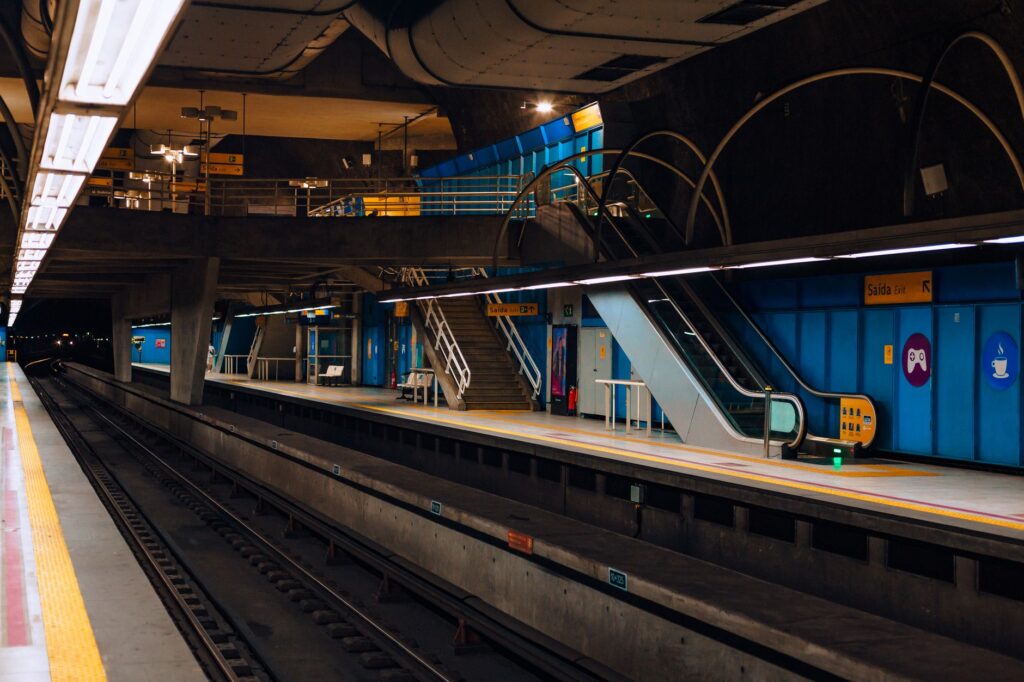
For any connoisseur of urban living, the efficiency and cleanliness of public transportation are the true indicators of a city’s democratic health. In this regard, Madrid stands at the global forefront. Its Metro network is not just a way to get from point A to point B; it is a monument to civil engineering and civic respect. Featuring wide, bright, impeccably clean stations with exemplary accessibility, the Madrid subway removes the friction typically associated with commuting in major global hubs.
Riding public transit in Madrid is an experience entirely devoid of the hostility that characterizes the systems of other European or American capitals. Trains are punctual, air conditioning works with surgical precision during the harsh summer heat, and signage is so intuitive that even a first-time visitor feels like a seasoned commuter on day one. This infrastructure does not just improve the quality of life for residents; it transforms the traveler’s experience, allowing one to cross the city from end to end in minutes without relying on taxis or rideshares, integrating seamlessly into the daily flow of the local population.
The Art of the Tapeo: Unpretentious Gastronomy and Fine Dining
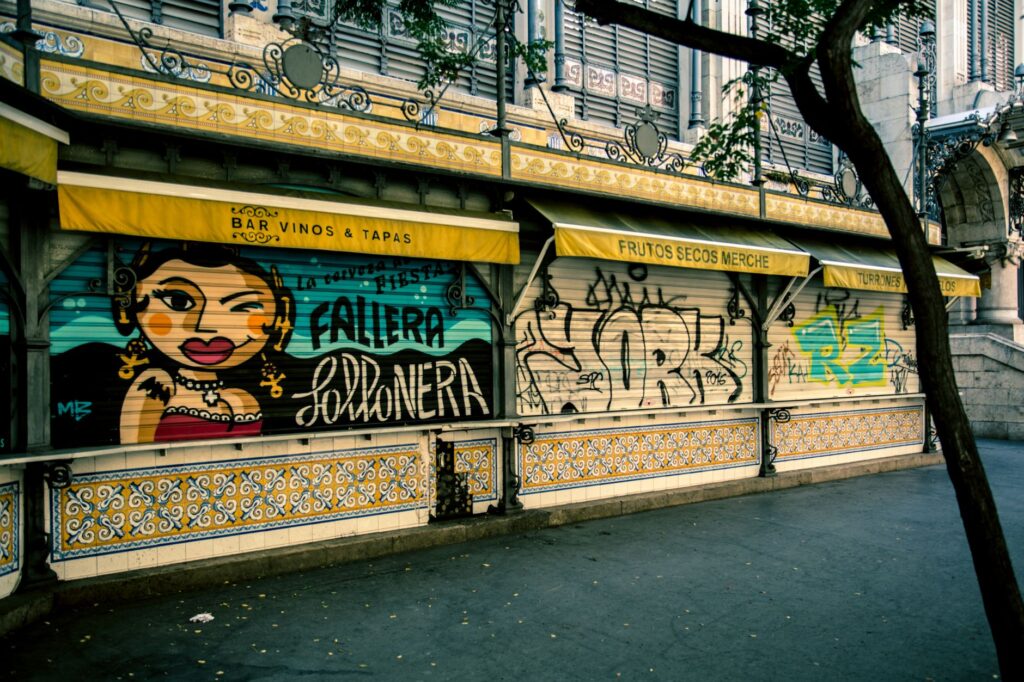
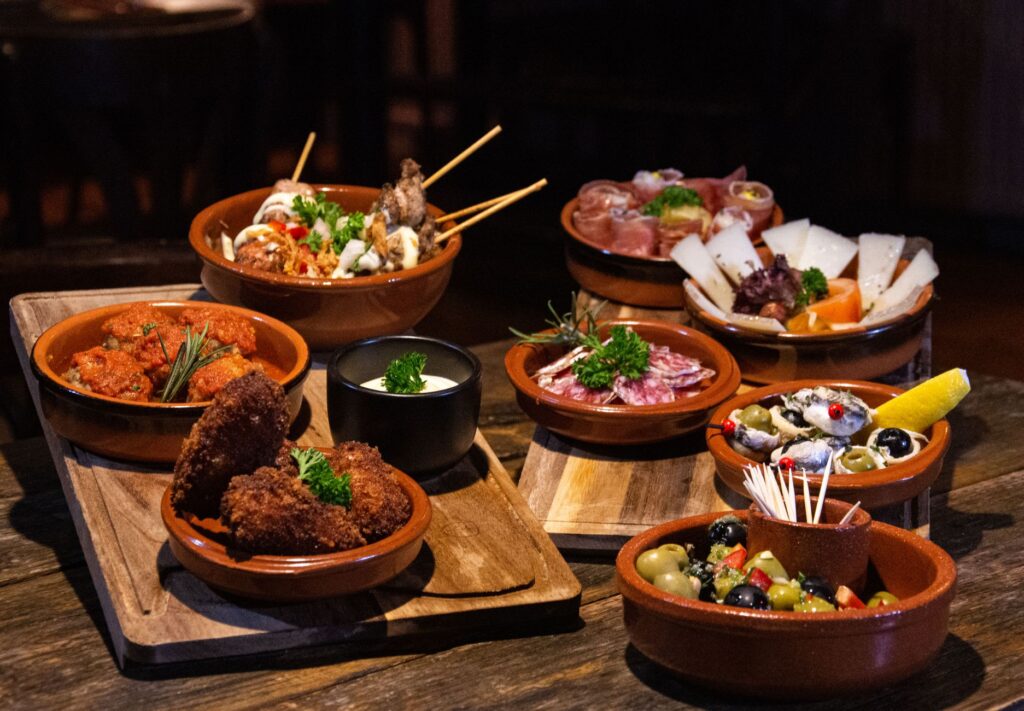
Madrid’s relationship with food is deep, visceral, and refreshingly free of snobbery. While the city hosts a constellation of Michelin-starred restaurants that draw the world’s most demanding palates, the real culinary revolution takes place at eye level, along the zinc bars of traditional taverns and within converted neighborhood food markets. Tapeo is, at its core, a social choreography: you walk in, order a perfectly poured draft beer—featuring that dense foam head only Madrileño bartenders seem to master—receive a complimentary tapa, and chat with whoever is standing next to you before moving on to the next establishment.
This culinary nomadism allows you to discover local specialties that celebrate simplicity and high-quality ingredients. From patatas bravas with their secret, perfectly spiced sauce, to crispy calamari sandwiches devoured near the Plaza Mayor, to creamy croquetas that seem to defy gravity. In Madrid, food is the glue that binds people together; you do not eat simply to refuel, but to celebrate being together. Even historic markets like San Miguel or San Fernando in Lavapiés reflect this duality: spaces where imported gourmet treats live side-by-side with the neighborhood fruit stand.
El Retiro and the Culture of Green Public Spaces
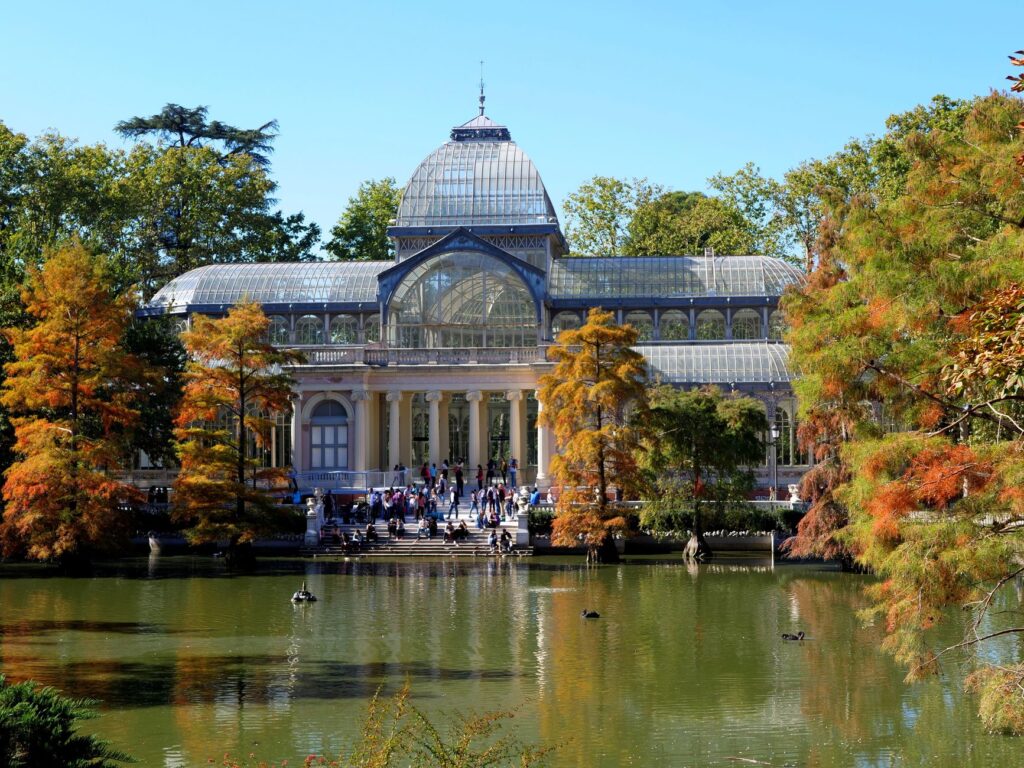
In the heart of the metropolis lies an oasis that defines enlightened urban planning: the Buen Retiro Park. Recently designated a UNESCO World Heritage site along with the Paseo del Prado, this immense green lung is not just a place for Sunday strolls; it is the epicenter of physical and mental well-being for Madrileños. Originally designed as a royal palace garden, it is today a deeply democratic space where joggers, solitary readers under the shade of ancient bald cypresses, and street musicians setting the soundtrack to lakeside walks all share the same ground.
The park’s architecture, crowned by the iconic Crystal Palace—a delicate iron-and-glass structure that seems to float over its own artificial lake—invites quiet contemplation amid the urban rush. El Retiro teaches visitors that a great city does not have to be a grey concrete jungle. The constant presence of monumental trees, carefully tended rose gardens, and neoclassical fountains provides a necessary escape from summer heat and a golden, melancholic backdrop in autumn, proving that urban quality of life is measured by how much sky and greenery you can see between buildings.
«The Crystal Palace in El Retiro is a beautiful reminder that nineteenth-century architecture sought a harmony between light, nature, and technology—an ideal that Madrid still pursues in every one of its green spaces.»
Museums and the Golden Triangle of Art: An Endless Visual Feast
Few cities in the world can boast such a dense concentration of artistic masterpieces in such a walkable area as the Paseo del Prado. The so-called Golden Triangle of Art, made up of the Prado Museum, the Reina Sofía, and the Thyssen-Bornemisza, represents a world-class cultural itinerary. However, what makes Madrid’s relationship with its museums unique is the accessibility and ease with which citizens incorporate these temples of art into their everyday lives. It is common to see students reviewing notes in front of Velázquez’s Las Meninas during free admission hours, or local families discussing Picasso’s cubism in front of Guernica on a Saturday afternoon.
The Prado Museum offers an overwhelming journey through Spanish, Italian, and Flemish schools, where works by Goya, Hieronymus Bosch, and Rubens dialogue across solemn galleries. Meanwhile, the Thyssen-Bornemisza acts as the perfect complement, housing one of the world’s most comprehensive private collections, spanning from Italian Gothic to American Pop Art. This artistic density turns Madrid into a capital of the gaze, a place where the eye is constantly trained to appreciate form, color, and the history of human emotion.
The Madrileño Secret: Living Outward and the Endless Night
There is a popular local saying that in Madrid, no one is a stranger, and its origin lies in the innate hospitality of its people and their outdoor lifestyle. Unlike northern European capitals, where homes are the primary social hubs, Madrileños live their lives outdoors. Their home is the corner terrace, the table at their favorite cafe, or the plaza bench. This lifestyle creates an exceptionally safe and welcoming urban environment; streets are never empty, which reduces isolation and fosters an informal yet highly effective neighborhood safety net.
When the sun sets, the city does not go to sleep; it transforms. Madrid’s nightlife is legendary not for its exclusivity, but for its accessibility and variety. Whether you prefer an intimate jazz gig in a basement off Plaza de Santa Ana, a cutting-edge electronic music set in an industrial club, or an endless conversation with friends at a classic cocktail bar on Gran Vía, the city offers options for every age and taste. Night here is not a parenthesis of excess, but a natural extension of the day, lived with the same elegance and lack of pretense that defines the rest of urban life.
A Practical Guide for the Urban Connoisseur in Madrid
To make the most of your stay in the Spanish capital and experience the city like a true local, keep these practical tips and urban etiquette guidelines in mind:
- The Daily Rhythm: Adjust your body clock to Madrid time. Lunch is typically served between 2:00 PM and 4:00 PM, while dinner rarely starts before 9:30 PM or 10:00 PM. Attempting to dine at 7:00 PM will only lead you to empty dining rooms or tourist traps.
- Smart Mobility: Purchase a rechargeable public transport card (Multi) at any Metro station. Opting for a 10-trip ticket is the most economical and efficient way to ride both the Metro and EMT buses, which benefit from dedicated lanes to bypass surface traffic.
- Avoid Tourist Traps: For an authentic calamari sandwich or high-quality tapas, walk a few blocks away from crowded hubs like Plaza Mayor or Puerta del Sol. Look for side streets where you see local workers eating standing up at the bar.
- Wander Without a Map: Dedicate at least one afternoon to walking aimlessly through the Barrio de las Letras. Its pedestrian streets, inscribed with quotes from the great writers of the Spanish Golden Age who once lived here, house some of the city’s finest secondhand bookstores, independent art galleries, and cozy cafes.
The City Where Asphalt Feels Like Home
Ultimately, Madrid’s greatest triumph is having achieved an almost utopian balance between the scale of a major international metropolis and the warmth of a small town. It is a city that does not overwhelm you with sterile skyscrapers, nor does it alienate its residents with unsustainable paces of life. Instead, it offers a refuge for those who find joy in the small details: the crunch of a freshly made churro, the shade of an ancient tree on a hot day, the knowing nod of a bartender who remembers your name on your second visit, or the quiet view of a pink sunset from the Temple of Debod.
For the urban connoisseur, Madrid is not just a geographic destination; it is a state of mind. It is proof that city life can be beautiful, civil, vibrant, and deeply human. When bidding farewell to its streets, you do not leave with the feeling of having visited a place, but of having belonged to it, if only for a few brief, memorable days.
Source in EN: Adventurous Kate