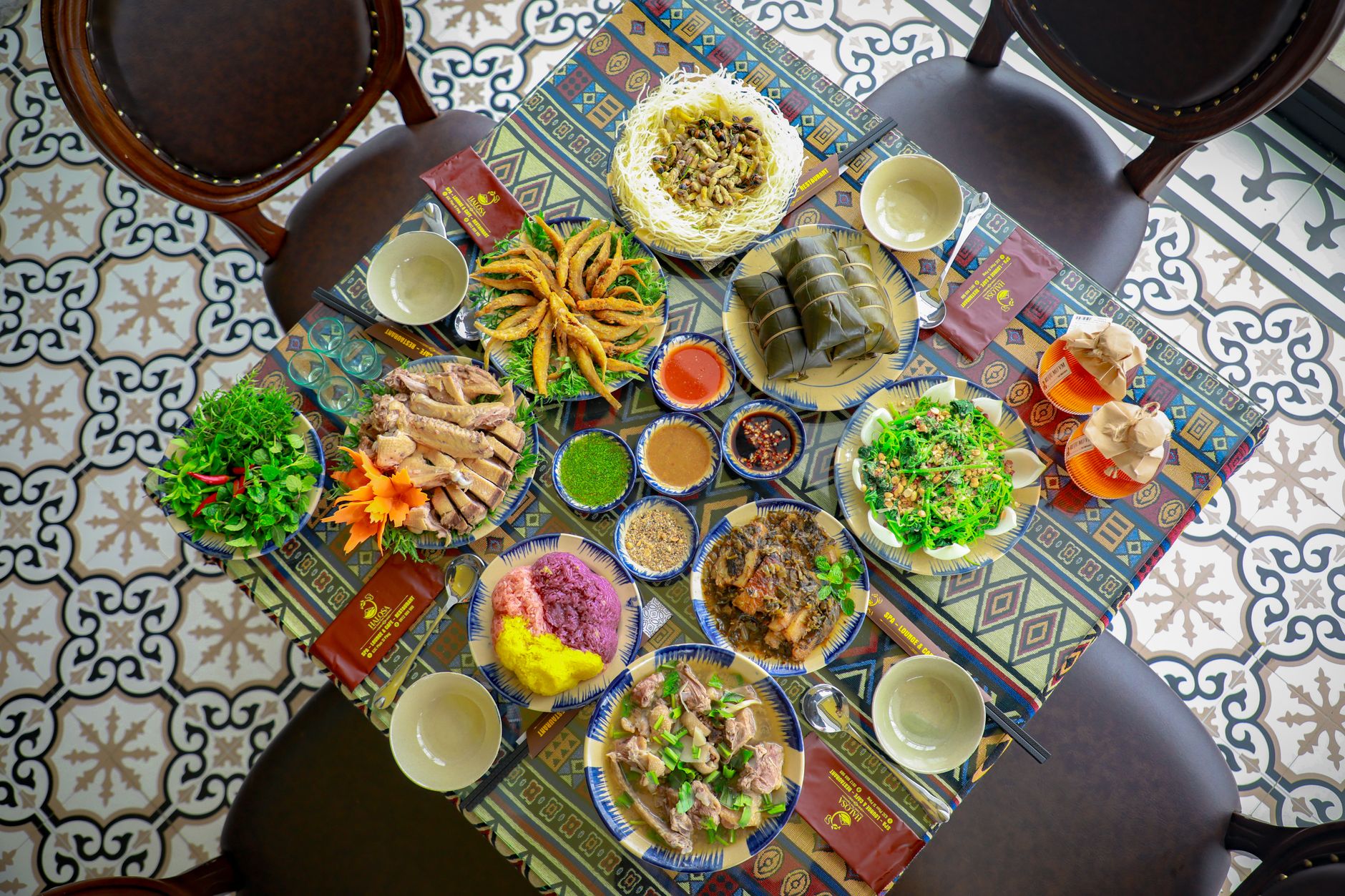

The aroma of star anise, cinnamon, and bones simmered for hours is not merely a morning greeting on the bustling streets of Hanoi; it is a clear declaration of intent from a culture that views nourishment as an act of holistic care. Far from the touristic reduction that boils local cuisine down to quick street snacks, Vietnam’s culinary tradition unfolds as a sophisticated philosophical system where health, geography, and family memory converge in every single bite. At a time when contemporary travelers seek experiences that transcend the mere accumulation of sights, the Vietnamese recipe book stands out as a sanctuary of healing and discovery.
This immersive journey into Southeast Asian flavors raises a fundamental question: how has a nation marked by historical scars managed to maintain a recipe book so luminous, vibrant, and deeply intertwined with physical and mental wellbeing? The answer lies not in luxury guidebooks, but on low tiled sidewalks, within the floating markets of the Mekong Delta, and inside family kitchens where time is measured not by minutes, but by the gentle patience of a simmering pot.
The philosophy of balance: five elements on the plate
To truly understand Vietnamese cuisine, one must delve into the theory of the five elements applied to the palate. Each dish strives for a precise balance between bitter, salty, sweet, sour, and spicy notes, which correspond to the foundational elements of nature. This balance is far from aesthetic; it responds to an ancestral vision of traditional medicine where ingredients are carefully selected according to the season, climate, and physical condition of the diner.
Balance is never a rigid rule, but rather a fluid dialogue with the surrounding environment. When the weather is humid and stifling, fresh herbs and sour elements take center stage to stimulate circulation and cool the body. During the cooler months in the northern highlands, animal fats and root vegetables step forward to provide warmth and sustained energy.
Dawn at the markets: true zero kilometer
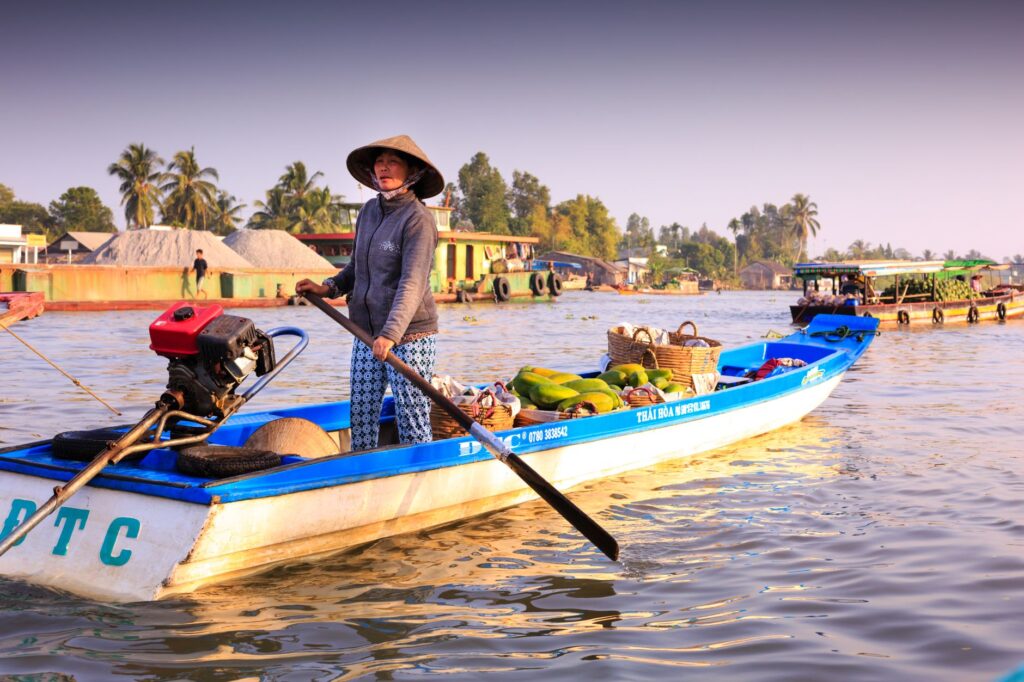
The day in Vietnam begins not with the crowing of roosters, but with the silent movement of wooden boats and motorbikes laden with greens heading toward traditional markets. Enclaves like the Cai Rang floating market in Can Tho or the narrow alleys of Hanoi’s Old Quarter operate as the true beating heart of the nation. Here, the modern concept of zero kilometer is an everyday, unbroken reality.
Vendors arrange large banana leaves upon which rest crisp soybean sprouts, banana flower stems, Vietnamese mint, spicy cilantro, and perilla. The radical freshness of these ingredients is the undisputed secret elevating seemingly simple dishes to the realm of popular haute cuisine. The traveler wandering through these markets is no mere spectator, but a witness to the vital cycle of a community that nourishes itself directly from what the earth and rivers yield each dawn.
The invisible art of broth: patience and memory
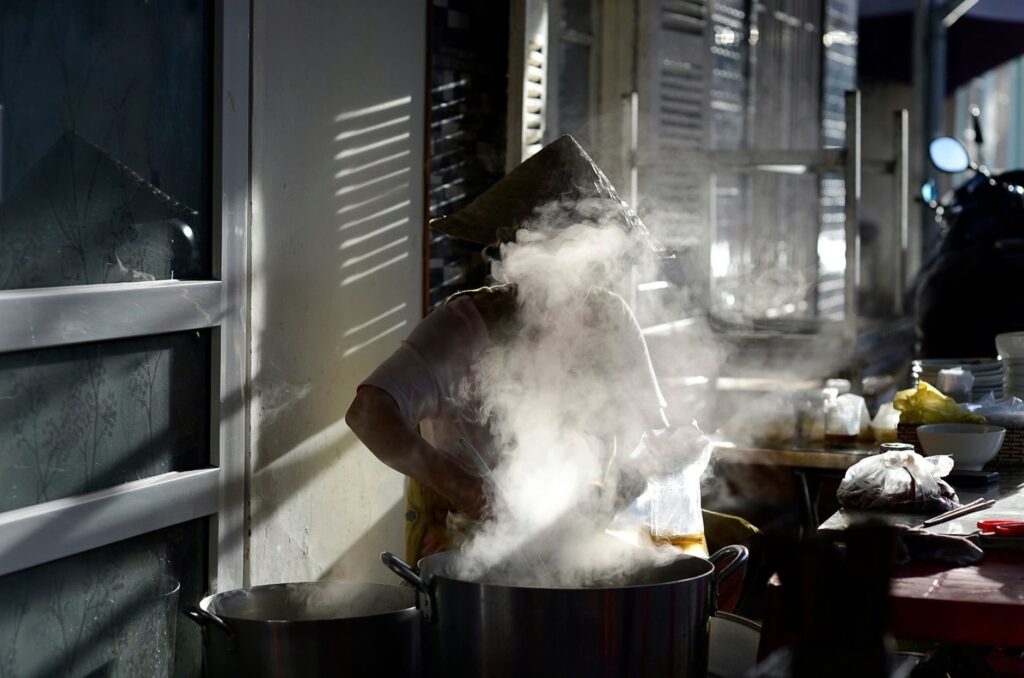
It is impossible to discuss wellbeing at the Vietnamese table without mentioning the ritual of broth. Whether it is the iconic pho or the less internationally famous yet equally intricate bun rieu, the liquid base of these soups demands hours of attentive labor. Bones are blanched, rinsed in cold water, and returned to massive metal cauldrons alongside charred onions and toasted spices.
The alchemy of Pho
Pho, widely regarded as the national dish, is far more than a simple rice noodle soup with beef. It is an exercise in culinary alchemy. The broth must be impeccably clear yet dense in flavor, an achievement that requires absolute mastery of heat. Served alongside a heaping platter of fresh herbs, lime, and chilies, each diner finishes composing the dish to their own taste, a gesture that empowers the consumer and turns the meal into a deeply participatory experience.
Vietnamese broth does more than feed the physical body; it comforts the spirit and builds an invisible bridge across generations through the lingering memory of flavor.
From street to plate: the democratization of fine eating
One of the most fascinating traits of Vietnam’s gastronomy is the total absence of social barriers surrounding exceptional food. On the pavement, seated on a blue plastic stool knee-high from the ground, a bank executive shares physical space with a construction worker. Both enjoy the exact same culinary quality.
This radical democratization of flavor transforms the act of eating into an exercise in social communion. There is neither pretension nor artificiality. Excellence is measured strictly by the diner’s satisfaction and the skill with which the cook has balanced fish sauce nuoc mam with sugar and lime juice.
The Mekong Delta: the floating garden of abundance
Navigating the canals of the Mekong means stepping into Indochina’s verdant pantry. Here, the cuisine adopts sweeter, more tropical nuances, where coconut, lemongrass, and an endless variety of freshwater fish dictate the rhythm of the menu. Floating orchards supply exotic fruits such as rambutan, soursop, and dragon fruit, which are enjoyed fresh or integrated into vibrant salads tossed with shrimp and roasted peanuts.
The abundance of water shapes not just agriculture, but the very architecture of the dishes, which remain light and rich in natural moisture. Fresh rice paper rolls, wrapped with meticulous precision and filled with herbs and boiled pork, summarize the ethos of this region: contrasting textures that burst in the mouth without weighing down the body.
The filter coffee and meditative pause
No exploration of Vietnamese wellbeing would be complete without pausing for the coffee ritual. Introduced by the French but appropriated with absolute local genius, coffee in Vietnam is brewed using a small individual metal filter known as a *phin*. The dark infusion drips slowly over a base of thick condensed milk, creating a dense, bitter, and sweet contrast that awakens the senses.
Waiting for that final drop of coffee to fall is, in practice, an invitation to pause and contemplate. In a world obsessed with instant gratification, sitting at a street terrace and watching chaotic traffic while coffee drips patiently becomes a silent act of resistance and mental restoration.
Practical guide
When to travel: The months from November to April offer the driest and mildest weather across most of the country, ideal for enjoying open-air markets and walking tours.
How to get around: The Reunification Express train is the most sustainable and scenic option for traversing the country from north to south, while urban transit is efficiently handled via ride-hailing motorcycle apps.
Dining etiquette: It is customary to use chopsticks to transfer food to your personal bowl before consuming it. Never leave chopsticks stuck vertically upright in a rice bowl, as this evokes funeral rituals.

Accommodation and wellness: Numerous boutique hotels in Hanoi, Hoi An, and the Mekong Delta seamlessly integrate traditional cooking retreats and herbal medicine workshops into their wellness programming.
The echo of eternal flavors
At the end of the journey, when luggage returns home laden with small bags of lotus flower tea and jars of artisanal fish sauce, we understand that Vietnam’s true essence lies in its capacity to nourish without overwhelming. The Vietnamese table serves as a constant reminder that health and pleasure are never opposing paths, but rather the very same road walked with mindfulness, profound respect for the land, and deep affection for the diner.
Eating in Vietnam is learning to listen to the rhythm of the world through the senses, discovering that well-executed simplicity remains the highest form of sophistication.
Source in EN: Vietnam.vn – Gastronomy: one of the strong points of Vietnamese tourism