
The Stone Peninsula Where Time is Measured by Tides
Pontevedra cannot be understood without its estuary, that salt-water slice that bites into Galician stone with the patience of centuries. In the heart of this medieval-layout city, where granite guards the dampness of morning mists, the Central Market stands as the community’s true secular sanctuary. Here, architecture is not a mere backdrop, but a living structure that channels the pulse of an economy tied umbilically to the Atlantic ebb and flow. Crossing its doors at dawn means stepping into an ancient ritual where fishermen and female shellfishermen transfer the fruit of their daily labor into the expert hands of the market stallholders.
The building, a witness to urban and social transformations, nevertheless maintains its original vocation intact: to be the nutritional and cultural thermometer of a region where the sea sets the tempo of existence. The stone flagstones worn down by the transit of generations remind us that this space has never been a simple point of commercial exchange, but the core where the collective identity of the Rías Baixas is woven. Every morning, before the sun warms the arcaded squares of the historic quarter, the ground-floor stalls begin to fill with silver reflections, the dark tones of seaweed, and the steady murmur of a language declined in nautical terms.
The Geography of the Seabed: Mollusks, Crustaceans, and the Science of Mud
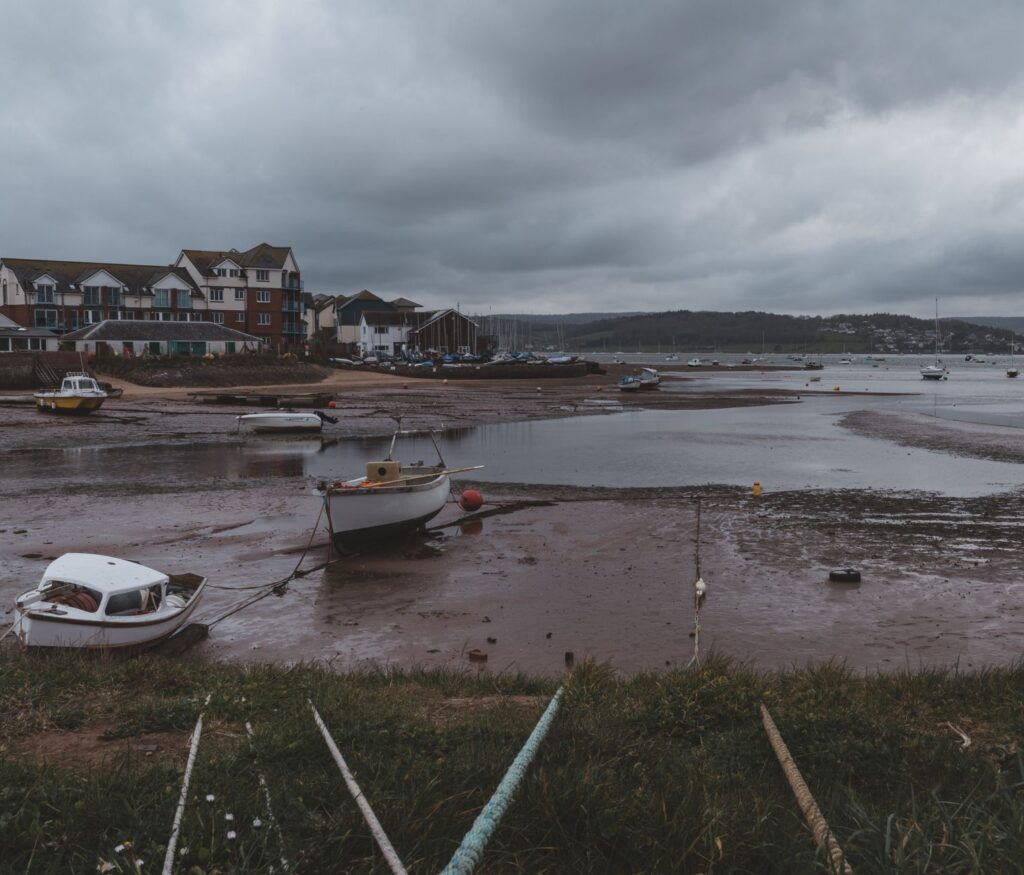
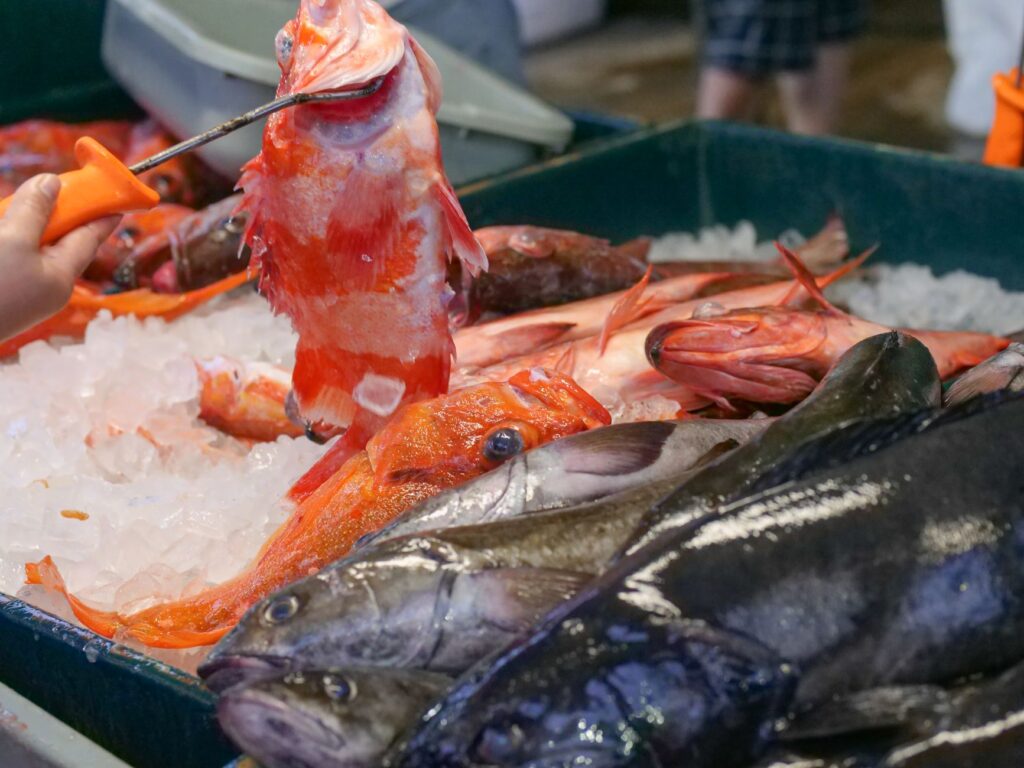
Descending the steps that lead to the seafood sector is like plunging into a lesson in applied oceanography. Unlike other peninsular markets where the offer is diluted in species of distant origin, the produce exhibited here responds to a rigorous cartography of proximity. Swimming crabs, small lobsters, and barnacles come from the rocky reefs beaten hardest by the surf, while fine clams, pullet carpet shells, and cockles find in the sandy banks of the estuary the perfect habitat to develop that characteristic iodine profile.
The work of the female shellfishermen, often performed on their knees over damp sand in the rain or polar wind, sustains a human-scale economy. In the market stalls, this effort acquires the category of ephemeral art. The stallholders select the specimens based on size, freshness, and vitality, discarding those that fail to pass the strict visual and tactile controls accumulated after decades of trade. It is an exercise in absolute respect for the marine resource that guarantees the sustainability of a fragile and coveted ecosystem.
The sea does not gift its treasures; it temporarily lends them to those who know how to listen to the murmur of the tides and respect the biological cycles of the estuary.
The transparency of the water in nearby raft cultures and the phytoplankton richness of the Pontevedra estuary give local seafood an unmistakable fleshiness. It is not just about size, but about the density of flavor concentrated within. Regular buyers, local chefs, and local residents walk the aisles with a mixture of devotion and pragmatism, examining open or closed shells, searching for the fresh trace of salt spray that certifies the product was extracted hours before dawn.
The Upper Floor: The Territory of Inland Agriculture and the Atlantic Forest
If the ground floor is the undisputed kingdom of the ocean, the upper level of Pontevedra’s Central Market represents the terrestrial counterpoint: the agriculture of the river valleys and the fruits of the surrounding forest. Here, the stalls trade cobalt blue and silver for the intense greens of collard greens, the earthy tones of native potato varieties, and the bright yellow of traditional maize. This space reflects the Galician geographical duality, where coast and mountain constantly converse in the larder.
Female farmers from nearby rural parishes display their seasonal surpluses on wooden tables: Couto peppers, winter pumpkins, tender turnip tops when the cold presses, and a wide variety of wild mushrooms foraged in the oak and pine forests flanking the region. This direct contact between producer and final consumer preserves plant varieties that would otherwise have vanished in the standardized commercial circuits of large supermarkets. Each season dictates its own law in these corridors, reminding visitors that the earth has its own timing and that patience is the secret ingredient of local cuisine.
Among the vegetable stalls, the presence of small producers of artisanal cheeses with protected designation of origin completes the picture. Rolls of goat and cow milk, matured in damp cellars or wrapped in chestnut leaves, provide intense lactic notes that contrast with the vegetal freshness of the greens. It is a diet based on circular economy long before the concept was coined by modern manuals; an invisible network of peasant complicities that sustains the city’s gastronomy.

The Ritual of the Counter: The Dialogue Between Stallholder and Buyer
Visiting the market without pausing to converse with the stallholders means missing half the experience. Commercial exchange in this historic space is mediated by the spoken word, culinary advice, and, on occasion, affectionate scolding if a customer attempts to cook a fish using an inappropriate technique. The female vendors act as guardians of gastronomic memory, dictating recipes passed down from generation to generation that do not appear in modern cookbooks.
Asking about the exact cooking point of an octopus or the ideal combination of fish for a seasonal broth unleashes a cascade of precise recommendations. Discussions arise over whether hake should be prepared Galician-style with boiled potatoes or if monkfish deserves a light green sauce enriched with a splash of local Albariño wine. This constant dialogue humanizes the act of shopping and turns the market into a public square where people debate the health of the estuary, the weather, or the fuel prices paid by small-scale fishing boats.
New generations of local chefs come to this same counter every morning in search of the inspiration that will dictate the daily menu in their restaurants. The complicity between the hospitality sector and the market vendors ensures that Pontevedra’s cuisine maintains a firm anchor in tradition, even when venturing into contemporary techniques. The market is, ultimately, the laboratory where the future of local flavor is negotiated daily.
The Urban Setting: From Market Flagstones to Stone Arcades
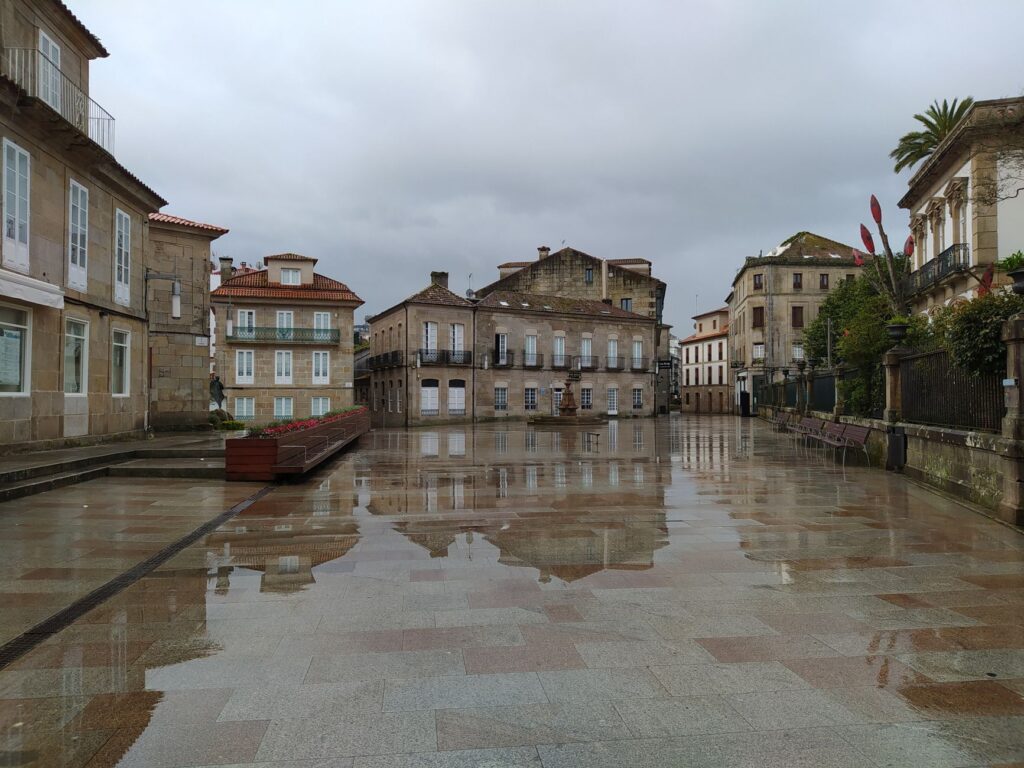
Upon exiting the Central Market, the city welcomes the visitor with its network of arcaded squares and granite porticos that seem to prolong the atmosphere of dimness and coolness from the architectural interior. Plaza de la Leña, with its characteristic central stone cross, or Plaza de la Verdura act as natural extensions of the market, where the terraces of traditional taverns pick up the baton of freshly purchased goods. In these enclaves, life proceeds at a human speed, facilitated by the exemplary pedestrianization of the historic center.
In the centennial taverns surrounding the area, the market produce finds its final destination. A glass of young white wine or a glass of barrel red accompanies modest yet overwhelmingly honest tapas: corn empanada with queen scallops, pulpo á feira sliced with millimetric precision on a wooden board, or Padrón peppers fried in extra virgin olive oil. Everything in this closed circuit breathes territorial coherence, proving that a destination’s true wealth lies in its capacity to keep local larders intact against global homogenization.
Practical guide
- How to get there: Pontevedra has excellent rail connections via high-speed and medium-distance trains linking with Santiago de Compostela, A Coruña, and Vigo. The train station is located a fifteen-minute walk from the historic center.
- Location and hours: Pontevedra’s Central Market is located on Avenida de Buenos Aires, a few meters from the Lérez River. General opening hours for the public are Monday through Saturday, from 07:00 to 14:00, with early morning hours being the period of highest activity.
- Recommended accommodation: For a complete immersion in granite architecture, small boutique hotels housed in rehabilitated manor houses in the historic center offer a quiet and convenient refuge close to all gastronomic points of interest.
- Shopping tips: If you plan to purchase fresh seafood for transport, ask at the stalls for appropriate isothermal packaging; most vendors offer preparation and packaging services for medium-distance travel.
- Local etiquette: Customers are encouraged to ask vendors about the exact origin of the produce and the best culinary preparation techniques according to the season.
Atlantic Epilogue: The Echo of Mist on the Plate
When the afternoon begins to extinguish the profiles of the stone rooftops and the tide starts to recede from the estuary’s sandy shores, Pontevedra recovers an ancient calm. In home kitchens and the discreet stoves of traditional taverns, the ingredients acquired at dawn complete their metamorphosis. The metallic noise of scales and the hustle of wooden boxes are gone, but the invisible essence of a territory that has managed to negotiate its survival with the Atlantic persists.
Eating here is an act of communion with the landscape. Every bite of fish cleansed by the tide or vegetable born under persistent rain encapsulates a narrative of effort, memory, and respect for natural rhythms. The Central Market is not merely a building where buying and selling take place; it is the constant heartbeat of a community that understands true sophistication consists of preserving, without altering or corrupting, the genuine flavor of its land and sea.