
Wartime Origins and Vertical Geology in the Dolomites
The history of the Via Ferrata is inextricably linked to the harshness of the alpine fronts during the First World War. Between 1915 and 1918, the vertical walls of the Dolomites became the stage for an extreme altitude conflict between the armies of the Austro-Hungarian Empire and the Kingdom of Italy. To move troops, heavy artillery, and supplies across impassable abysses, military engineers from both sides drilled into the rock, installed iron stakes, cable handrails, and wooden ladders. Those wartime survival routes were abandoned for decades until the Italian Alpine Club (CAI), in collaboration with local guides from Cortina d’Ampezzo and Val di Fassa, began restoring them, equipping them with modern safety standards and transforming them into the most celebrated mixed-climbing heritage on the planet.
Geologically, the Dolomites are neither granite nor slate, but marine sedimentary rock composed of dolomite, a double carbonate of calcium and magnesium formed more than 250 million years ago in the prehistoric atolls of the Tethys Sea. This marine origin gives the walls their characteristic pale coloration, oscillating between ivory white and fiery pink during the optical phenomenon known as the enrosadira. Glacial erosion and mineral-laden water have sculpted slender towers, isolated spires, and walls exceeding one thousand meters of vertical drop. This unique morphology allows for aerial itineraries where horizontal progression is minimal and altitudinal gain is measured in steel cables tensioned against the void of the mountain.
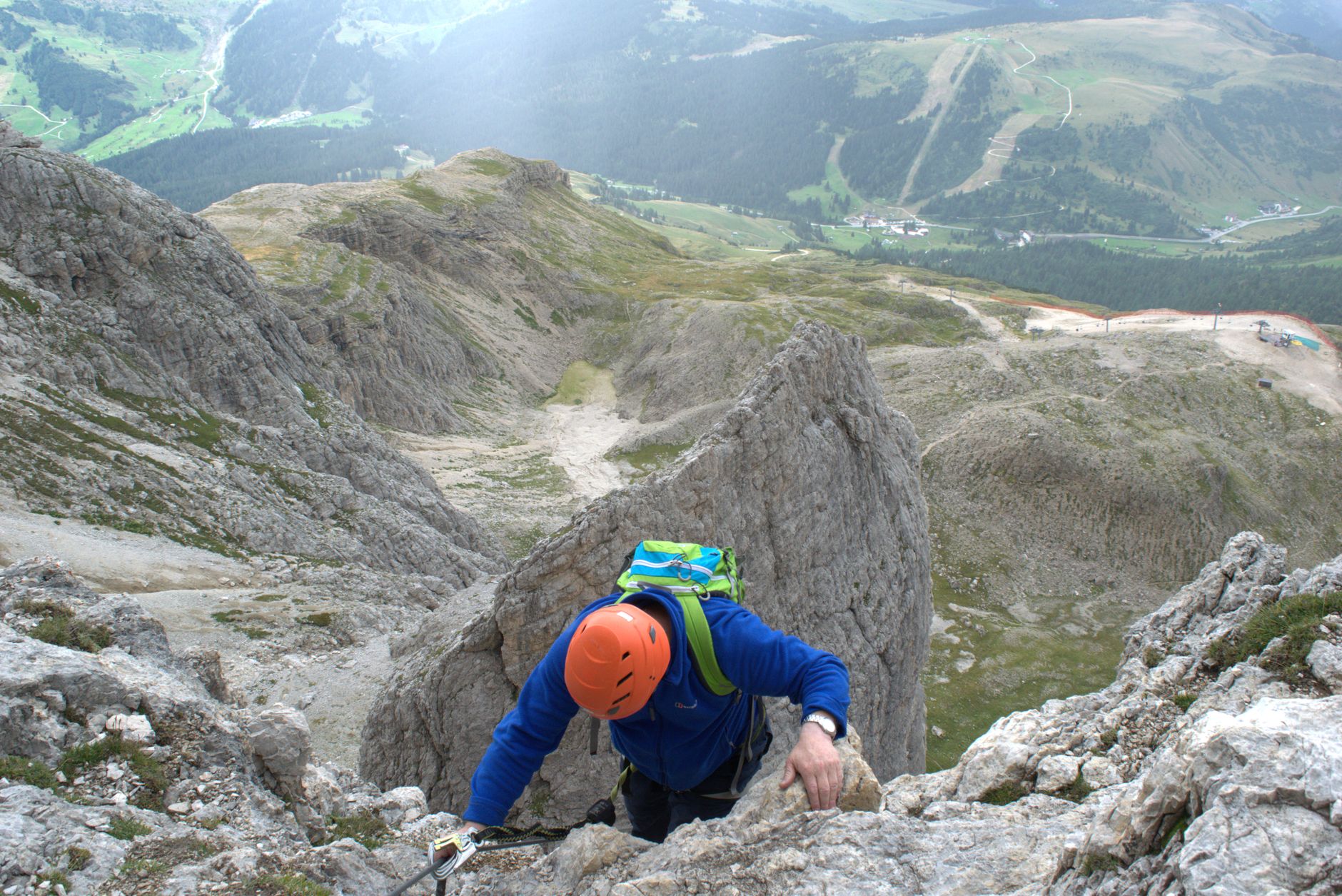
Unlike traditional hiking, where aerobic endurance is the sole determining factor, progression along a Via Ferrata demands rigorous mastery of alpine technique and the mandatory use of specific personal protective equipment (PPE). The system consists of a certified climbing harness, a helmet prepared for falling stones, and an energy-absorbing tear-webbing lanyard connected to two large automatic-opening carabiners. These elements are not mere accessories, but survival tools designed to arrest falls at factor two on the vertical rock. Understanding this environment requires acknowledging that the margin of error is narrow and that meteorological conditions in exposed passages can mutate within minutes.
Logistical Planning and Seasonality in High Alpine Terrain
The optimal seasonal window for undertaking such an expedition in the Dolomites extends from late June to mid-September. Outside of this period, high mountain passes above 2,500 meters typically accumulate heavy winter snowpack and black ice that nullify the security of the steel cables. Even in high summer, afternoon thunderstorms are a recurrent and predictable phenomenon in the region. Warm air masses rising from the valleys collide with the cold summits, generating powerful cumulonimbus clouds accompanied by electrical activity. For this reason, the daily planning of any itinerary requires starting the march before dawn, reaching the highest sections of the ferrata before noon to avoid exposure to lightning on the metallic ridges.
The transportation network to access the starting points of major routes combines regional trains connecting Venice or Innsbruck with the Pusteria and Gardena valleys, supplemented by alpine bus lines operating synchronously during the summer season. However, relying exclusively on public transit demands millimeter precision, as frequencies drop drastically in remote valleys such as San Martino di Castrozza or the surroundings of the Three Peaks of Lavaredo. Many expeditioners choose to rent compact front-wheel-drive vehicles at Treviso or Verona airports, which facilitates the transport of bulky technical equipment and access to refuge parking areas.
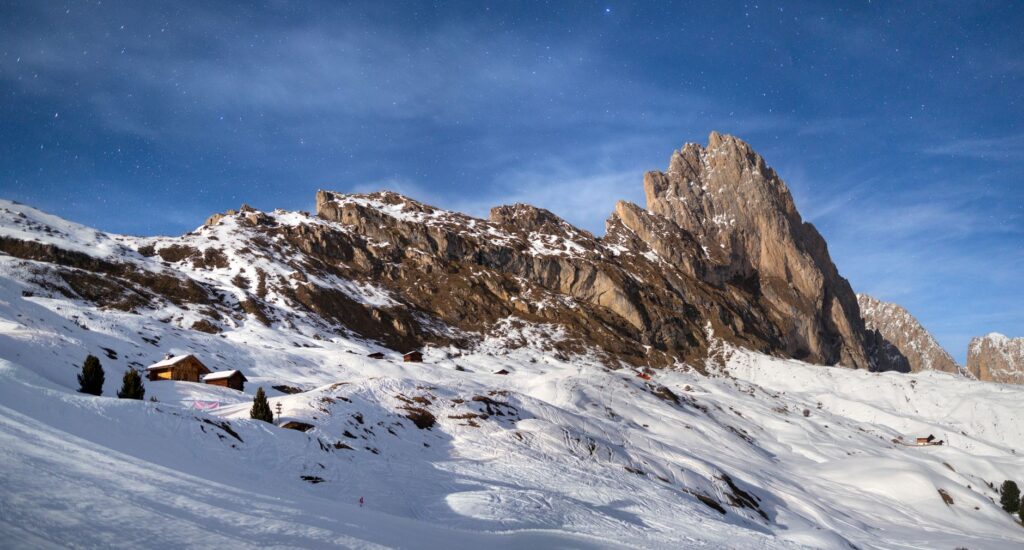
Accommodation management is governed by a historical system deeply rooted in alpine culture: the rifugi. These facilities, mostly managed by local CAI sections or traditional mountaineering families, offer secure lodging with bunks, blankets, and communal dining rooms above two thousand five hundred meters of altitude. However, high international demand requires booking months in advance, especially in strategic refuges such as Locatelli, Nuvolau, or Tissi. Lacking a confirmed booking along the route can seriously compromise team safety, as wild camping is strictly prohibited in most dolomitic nature parks to protect fragile alpine flora and high-mountain ecosystems.
The High-Altitude Refuge Network as Logistical Nodes
Dolomitic refuges are not mere tourist hostels; they operate as true logistical centers for survival and provisioning in isolated environments. Due to altitude and inaccessibility by conventional roads, the supply of fresh food, gas, and maintenance materials is carried out via a complex system of cargo cable cars, high-capacity helicopters, and, in extreme cases, human portage across bridle paths. This reality conditions the culinary offer and available services, where running water may be rationed during dry summer years and electricity depends on small diesel generators or solar panels that shut down strictly at ten at night to guarantee mountaineers’ rest.
From a nutritional and energetic standpoint, refuge menus are designed to replenish calories lost during long days of vertical climbing. Traditional Tyrolean and Venetian dishes such as canederli in broth, polenta with game stew, barley soups, and homemade apple strudels form part of the daily diet of expeditioners. This combination of Germanic and Italian influences reflects the complex historical identity of the Südtirol and Trentino regions. Furthermore, overnight stays in these establishments foster unique international camaraderie, where climbers from around the world share updated weather forecasts, topographic maps, and technical advice on changing wall conditions.
Technical self-sufficiency within the refuge network requires each expeditioner to carry their own biodegradable toiletries kit, lightweight sleeping bags—since refuges provide blankets but demand personal sheets or liners for hygiene reasons—and a personal reserve of water and energy bars. Refuge wardens, known as gestori, act as the supreme moral and meteorological authority on the mountain. Their advice not to initiate a traverse due to an impending cold front or the presence of ice on the wall must be heeded without hesitation, as their empirical knowledge of local microclimatology frequently surpasses any digital weather forecasting application.
Anatomy of Technical Gear: Harnesses, Lanyards, and Footwear
Success and safety on a Via Ferrata critically depend on the correct selection and inspection of technical gear. The most critical component is the energy absorber, a device equipped with a stitched webbing that tears in a controlled manner during a fall, absorbing the kilojoules of kinetic energy generated to prevent spinal injuries or severe fractures from dry impact against the steel cable. Older friction models based on sliding plates have been almost entirely replaced by progressive tear-webbing systems, which offer greater lightness and predictable behavior. It is essential to verify that the device complies with European standard EN 958 and periodically inspect safety stitching for abrasions caused by contact with limestone rock.
Footwear constitutes another fundamental pillar in the vertical progression equation. Conventional low-cut trekking boots prove insufficient to withstand the continuous pressure of iron rungs and the need to edge on small rock ledges. Semi-rigid mountaineering boots with high-adhesion rubber compound soles—such as Vibram Megagrip—and reinforced toe caps are recommended. These boots provide the rigidity needed to prevent plantar fatigue during prolonged ascents on slopes exceeding sixty degrees, while offering the tactile sensitivity essential for precise placement on exposed horizontal traverses over vertical abysses.
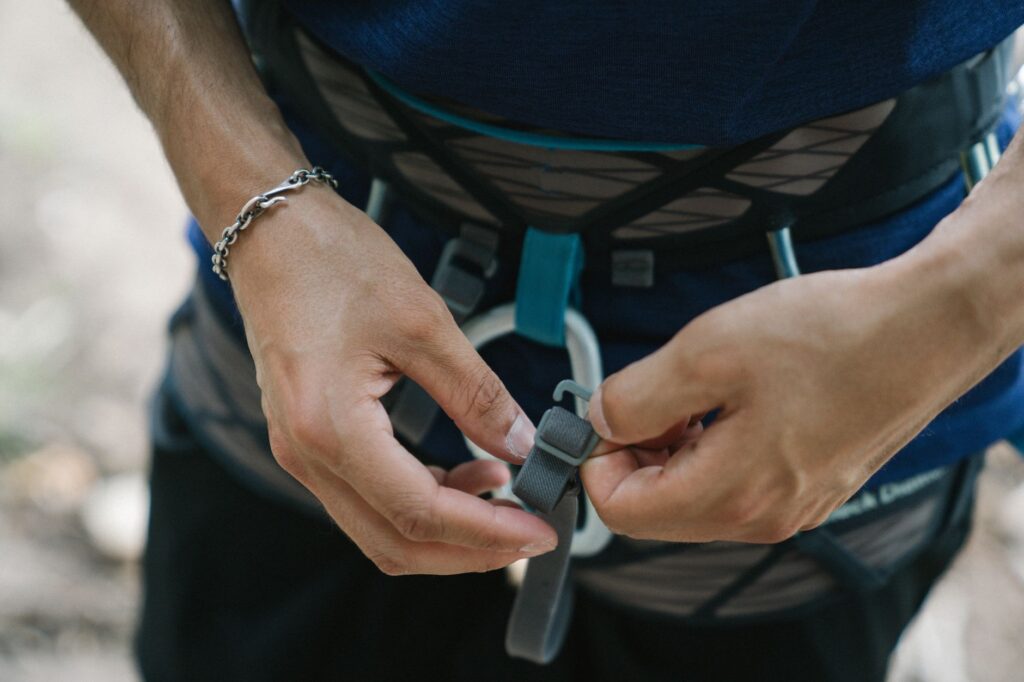
The harness must be a specific climbing or mountaineering model allowing rapid adjustment of leg loops and waist, facilitating placement even over thermal pants and waterproof jackets. This is accompanied by the CE EN 12492 certified climbing helmet, designed to withstand overhead impacts from falling stones dislodged by other mountaineers or by freeze-thaw rock dynamics. Fingerless leather gloves, specifically designed to protect palms from continuous friction with oxidized steel cables and metal burrs, complete an individual kit that must be meticulously inspected before heading out to the wall.
Vertical mountain rewards not raw strength, but constant attention to anchor points, precise reading of the rock, and absolute respect for the schedules imposed by the sky of the Dolomites.
Progression Strategies and Risk Management on the Walls
Advancing safely along a via ferrata requires internalizing strict self-belay protocols. The unbreakable golden rule dictates that at least one of the lanyard’s two carabiners must remain permanently anchored to the steel cable at all times, even during section change maneuvers or meetings with other climbers. When reaching an intermediate anchor point where the cable is fixed to the wall by a metal pin, the mountaineer must unclip the carabiners one by one, successively passing them to the next cable section before advancing the body. Both carabiners must never be unclipped simultaneously, as a stumble or rockfall in that interim would cause a free fall of fatal consequence.
Vertical traffic management is another critical safety factor frequently overlooked. On busier routes, such as the Tridentina Ferrata or Ivano Dibona, traffic jams in narrow chimneys or suspension bridges are common. The ascending climber must maintain a prudent safety distance from the preceding companion—at least one full rope or cable length between them—to prevent a fall by the first member from dragging down the second. Likewise, if a faster mountaineer requests passage, a wide and secure ledge must be sought to anchor with a short rest sling before yielding the turn, avoiding overtaking maneuvers in sections of maximum verticality and exposure.
Cumulative arm fatigue is one of the greatest hidden dangers in vertical progression. Beginners tend to make the mistake of constantly pulling with the strength of biceps and forearms to hoist their own weight, leading to severe muscular congestion in minutes and total loss of grip capacity. Correct technique requires keeping arms relaxed, using legs as the primary propulsion engine and employing hands mainly for balance and lateral stability. At any symptom of extreme exhaustion, using an auxiliary rest carabiner tied directly to the harness to hang from the cable and recover muscle tone before continuing the march is mandatory.
Geography of Key Massifs: From Cortina d’Ampezzo to Brenta
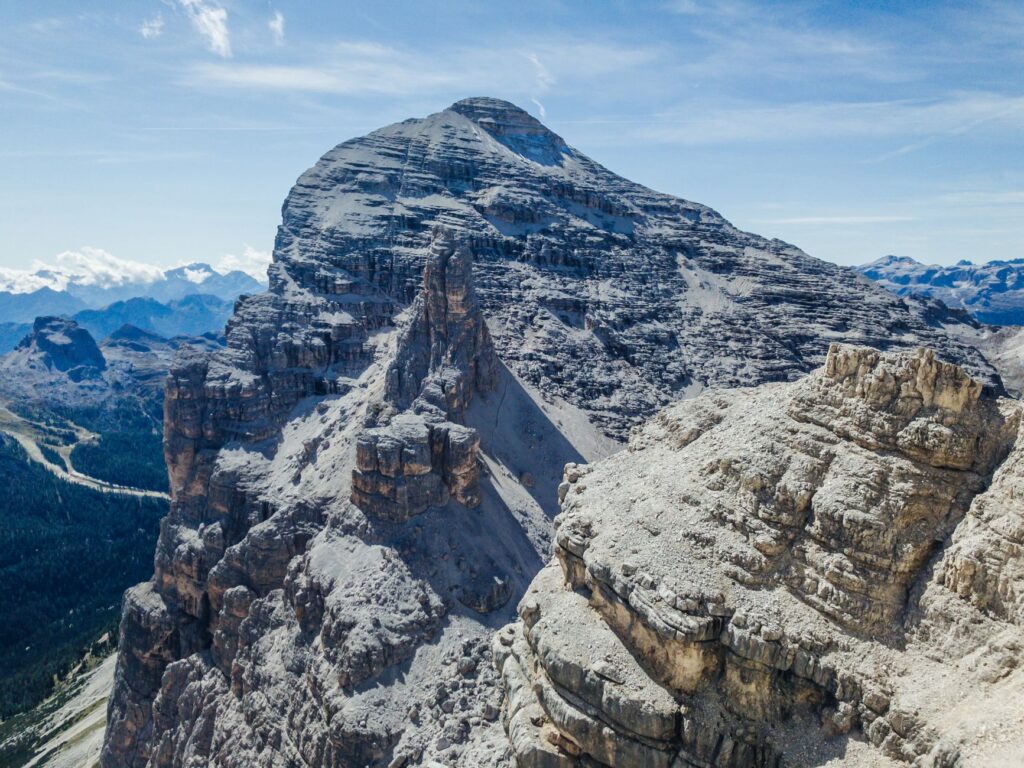
The territory of the Dolomites is divided into several mountain subgroups of overwhelming beauty and technical complexity, each with its own personality. In the eastern sector, around Cortina d’Ampezzo, the most historical and cinematic routes are concentrated. The Tofana massif and the Three Peaks of Lavaredo offer large-scale alpine itineraries where views stretch to the Adriatic Sea on clear days. Routes like the Giuseppe Olivieri Ferrata or Punta Anna combine aerial stretches over sharp crests with impressive leaps into the void, demanding high physical fitness and excellent acclimatization to altitudes above two thousand five hundred meters.
n
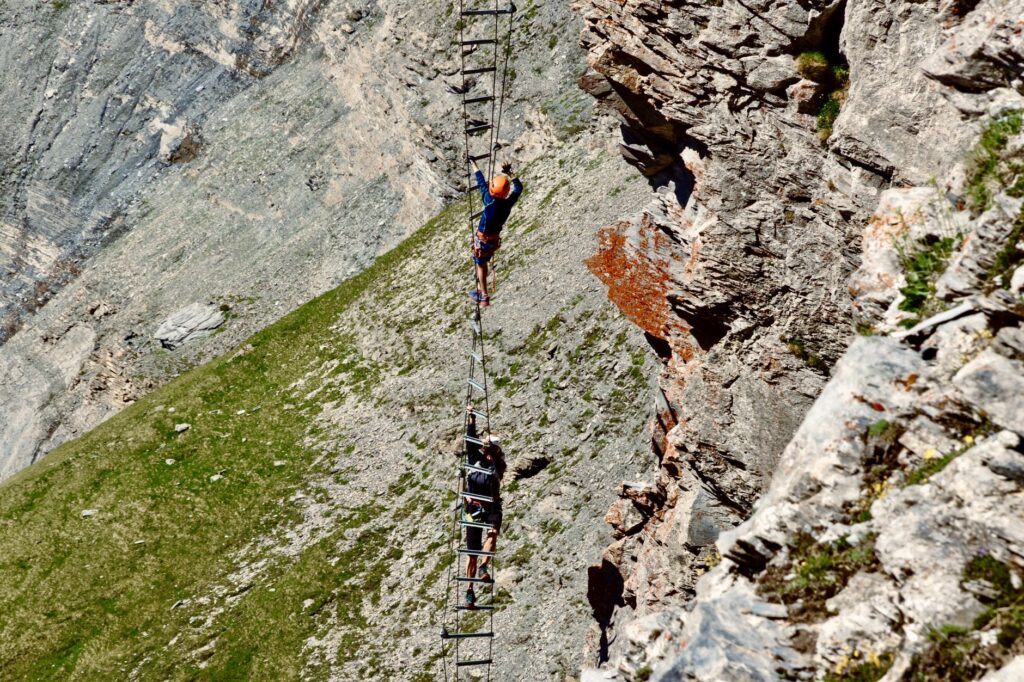
Further west, the Sella group and Val di Gardena represent the calcareous heart of the Dolomites, an immense walled plateau surrounded by vertical walls where the cable car network facilitates rapid access to high elevations. Here, the legendary Brigata Tridentina Ferrata stands out, a highly popular itinerary ascending the southern slope of Gran Circo to Forcella dei Camosci. This route features excellent equipment, beautiful passages over dry waterfalls, and a metallic suspension bridge crossing a dizzying abyss, making it an obligatory reference for understanding the modern evolution of recreational mountaineering in the region.
n
In the western extreme, separated from the main block, rises the Brenta massif, a limestone stronghold characterized by monolithic spires and deep forested valleys. Brenta hosts one of the most ambitious hiking and ferrata projects in the Alps: the Via delle Bocchette. This multi-day traverse allows crossing the core of the massif almost entirely via hanging ledges, tunnels carved into rock during the war, and walkways suspended over cirque glaciers. Unlike Cortina’s vertical ferratas, the Bocchette prioritize horizontal progression over aerial ledges, offering an alpine exploration experience of high technical continuity and deep aesthetic beauty.
Practical guide
- Documentation and Permits: No special permits or fee payments are required to access via ferratas, as they form part of the public mountain path network managed by the regional governments of Veneto and Trentino-Alto Adige.
- Recommended Season: Late June to mid-September. July and August offer greater daytime stability, though with higher climber volume and afternoon thunderstorm risk.
- Mandatory Equipment: Certified climbing helmet (EN 12492), adjustable climbing harness (EN 12277), energy absorber with specific via ferrata carabiners (EN 958), and protective gloves.
- Access Transport: International flights to Venice (VCE) or Verona (VRN) airports, followed by car rental or regional train combinations to the Cortina, Pusteria, or Gardena valleys.
- Accommodation: Advance booking mandatory in the CAI high-altitude refuge network. Lightweight sleeping bags or personal sheets required, along with cash, as many refuges do not accept cards due to lack of stable satellite connectivity.
- Communications and Safety: European emergency number is 112. Downloading offline maps and carrying a high-capacity power bank is recommended, as mobile coverage is intermittent in deep gorges.
Prior physical preparation should include specific cardiovascular endurance work, upper chain strengthening, and joint stability training in irregular terrain. It is worth noting that descending on foot through scree slopes and descent channels typically accumulates more knee injuries than the ascent along cables, making the use of telescopic poles in trail sections highly recommended.
Mineral Silence and Memory in the Summits of the Dolomites
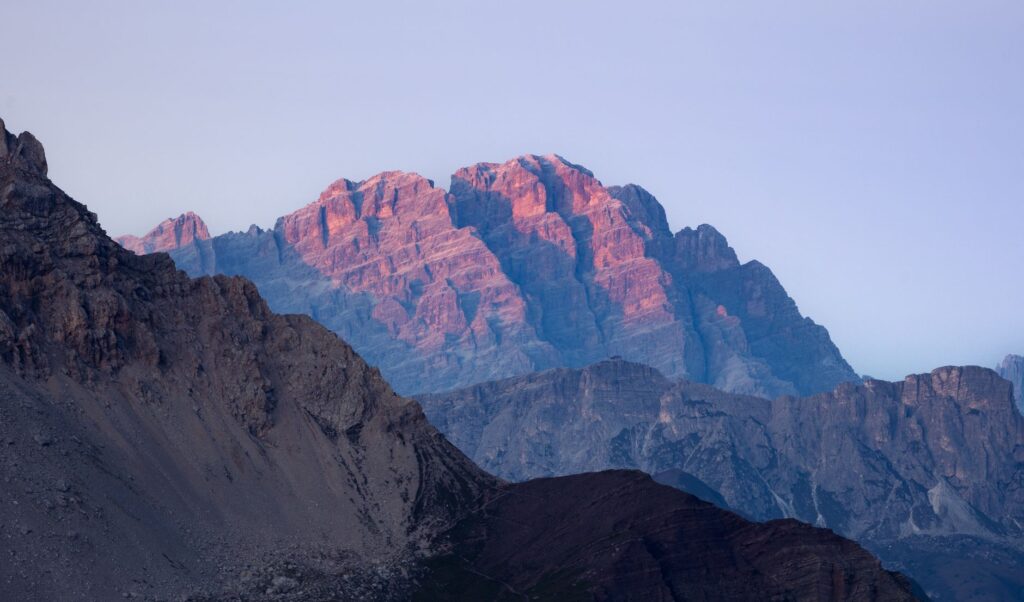
When the sun begins to decline behind the limestone peaks and the last rays of light ignite the stone with crimson hues, the high mountain recovers its ancestral silence. In those moments of stillness, seated on the stone terrace of a millenary refuge while the wind stirs the steel cables of the nearby ferrata, the true dimension of the traverse is understood. The vertical abysses that during the day demanded every ounce of concentration and respect transform into silent monuments to human history and the implacable force of geological nature. No medals or records remain on these walls, only the intimate certainty of having traversed with humility a vertical world where stone, sky, and memory merge into an unalterable horizon.