
The route of verticality and endurance in the heart of Norway
Western Norway conceals one of the most challenging engineering and geographical feats on the European continent: the Troll’s Road, known locally as Trollstigen. This route is not merely an asphalt road connecting towns, but a millimeter-thin scar traced onto vertical rock faces where nature and human audacity intersect in perpetual balance. Venturing into this territory demands an absolute understanding of meteorological elements, glacial topography, and the seasonality that governs the Scandinavian highlands.
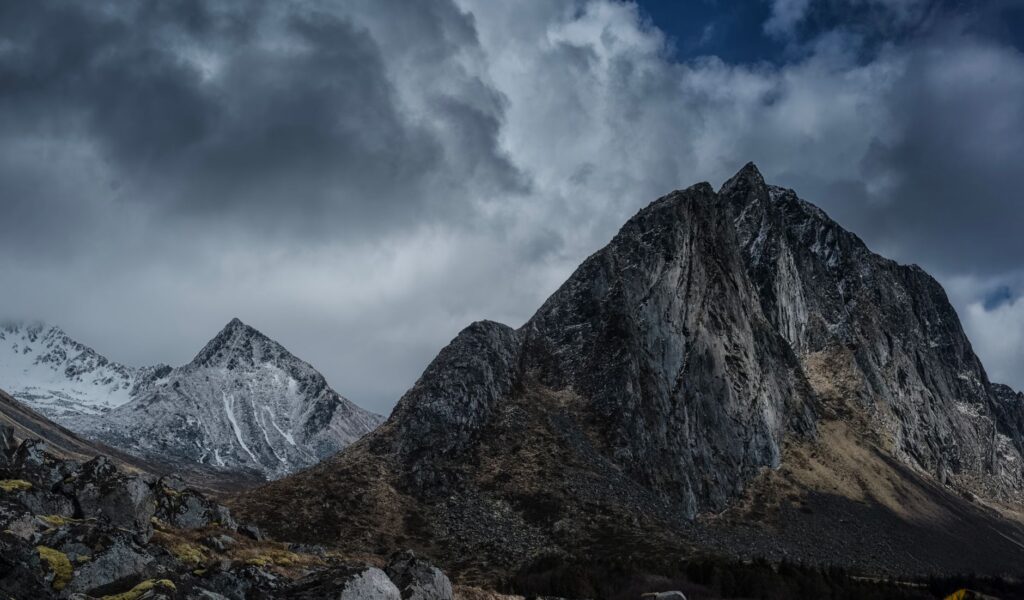
Traveling through this region does not respond to the logic of conventional tourism. Here, every kilometer of asphalt is dictated by the imposing presence of peaks such as Kongen, Dronningen, and Bispen, stone giants exceeding fifteen hundred meters in altitude above valleys sculpted by ice for millennia. The question guiding any serious expedition to this corner of Norway is how to traverse an environment of extreme ecological fragility without altering its ancestral rhythm, maintaining safety on a route where the margin for error is minimal.
Historical engineering and ice-sculpted geography
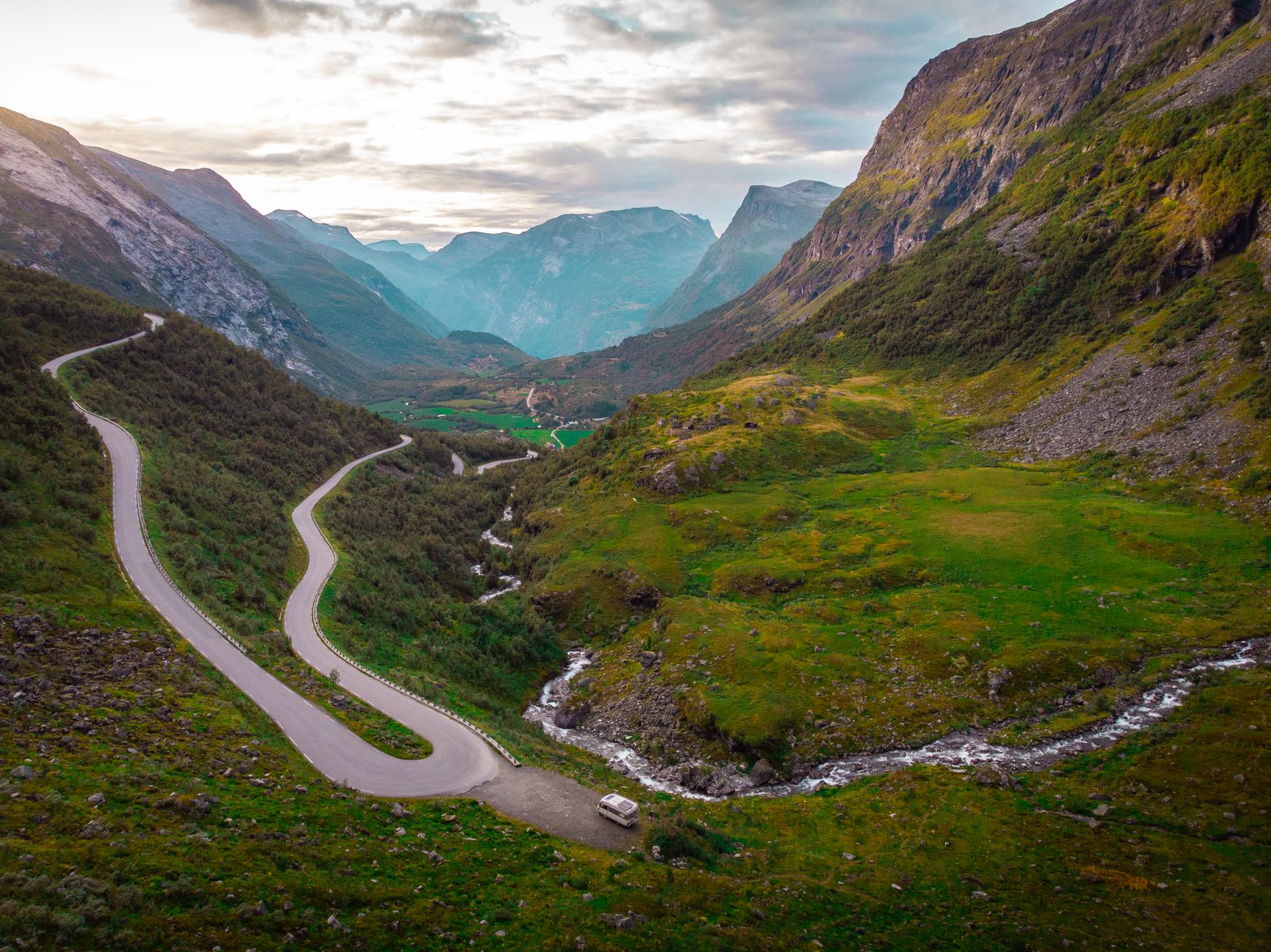
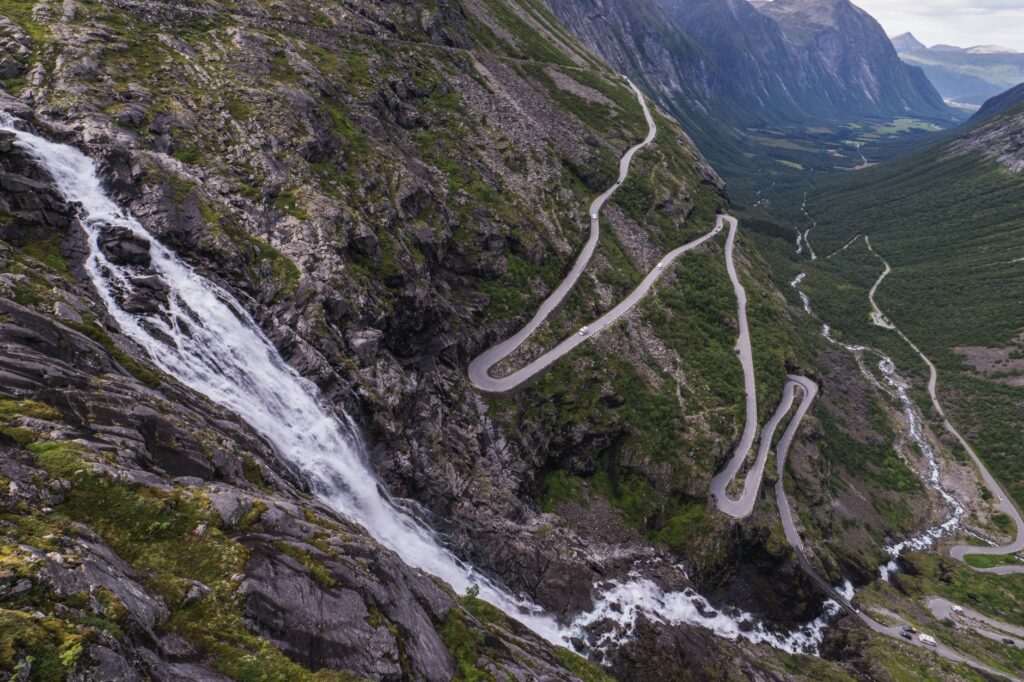
Inaugurated in the summer of 1936 after eight years of manual construction, the Trollstigen road represents a milestone in Norwegian road history. The engineers of the era had to contend with the absolute verticality of the terrain, designing eleven hairpin turns that overcome a nine percent grade along a sheer rock face. Each dry-stone wall supporting the roadbed was laid by hand, a testament to human effort to tame a slope that seemed reserved exclusively for alpine birds and wildlife.
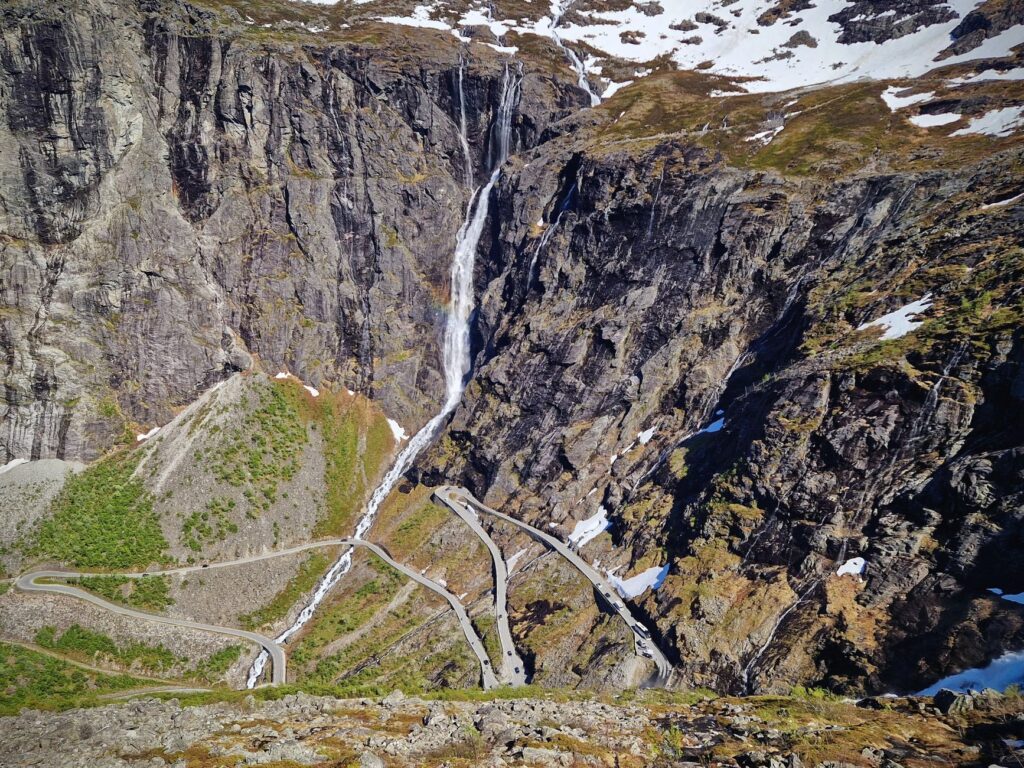
The surrounding geography is the direct result of the last glaciation. U-shaped valleys, such as the deep Isterdalen valley, show the traces of immense ice rivers that widened and deepened terrestrial depressions. Waterfalls, of which the Stigfossen is the most celebrated, plunge dramatically down the vertical cliffs, bathing the road in a constant mist that tests vehicle traction and driver concentration.
Logistical planning and seasonality in western Norway
The viability of any expedition through the western fjord roads depends entirely on the calendar. Trollstigen remains buried under meters of snow throughout winter and spring, opening its gates to traffic only between late May and early October, depending on the severity of accumulated snowfall. Planning a trip outside this temporal window is not only unviable due to physical road barrier closures, but extremely dangerous due to the constant risk of avalanches and rockfalls.
Transportation in the region requires adapted vehicles and rigorous inspection of braking systems. Prolonged downhills subject brake rotors and pads to severe thermal stress, forcing experienced drivers to use lower gears to harness engine braking. Furthermore, the flow of motorhomes and large vehicles during the peak summer months demands proverbial patience and the strategic use of designated pull-outs along the road to allow safe passing on stretches where a car barely fits.
The true measure of an expedition in northern Europe does not lie in the distance covered, but in the ability to read the subtle changes of sky and mountain before they turn into an emergency.
The human pulse: local communities and fjord traditions
At the foot of the great rock faces and winding toward the deep fjords, small rural communities have maintained a way of life deeply tied to land and water. Towns like Åndalsnes, situated at the mouth of the Rauma River, serve as historic basecamps for mountaineers and explorers seeking to connect with the essence of the country. Here, the traditional economy based on seasonal fishing and high-altitude livestock farming has evolved toward sustainable tourism that prioritizes landscape conservation over mass development.
Abandoned mountain farms, clinging improbably to cliff ledges in nearby fjords like the Geirangerfjord, recall the harshness of rural existence in past centuries. These structures, now protected as historical heritage, narrate stories of isolation and resilience. Current inhabitants of the region keep this memory alive through a gastronomy based on local products: lamb grazed in free alpine meadows, fresh fish from the North Sea, and wild berries harvested during the short yet intense months of summer daylight.
Road architecture and the impact of contemporary tourism
Over the past decade, the Norwegian government has invested significantly in the National Tourist Routes program, an initiative combining excellence in architectural design with absolute respect for the natural environment. At the Trollstigen viewing platform, designed by the architectural practice Reiulf Ramstad, steel and concrete walkways project over the void, allowing visitors to contemplate the scale of the abyss without interfering with natural water runoff or harming alpine flora.
This architectural approach seeks to channel the massive influx of visitors in an orderly fashion. Minimalist and integrated design prevents the proliferation of intrusive visual elements, allowing the infrastructure to merge with the gray landscape of stone and the white of persistent snowfields. However, the exponential increase in summer traffic poses complex challenges for waste management and the protection of fragile tundra ecosystems bordering the road.
Meteorological challenges and high-mountain safety
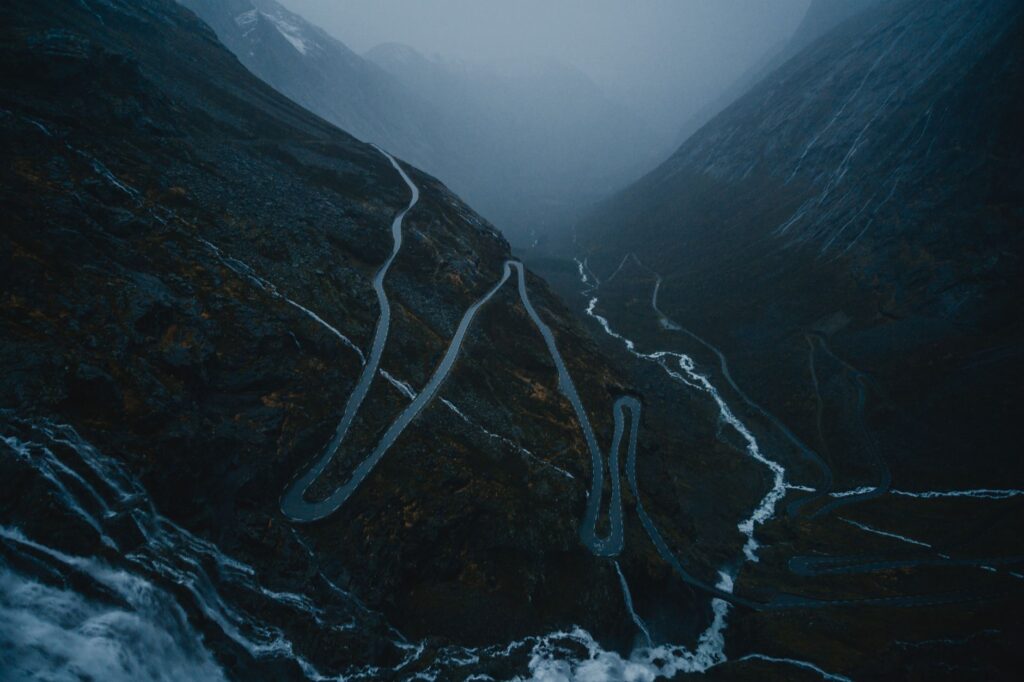
The climate in the western fjords is notoriously volatile. A sunny, clear day can transform within minutes into a horizontal wind and rainstorm, with fog banks dense enough to reduce visibility to less than two meters. Travelers must always carry high-quality waterproof gear, even if the initial forecast seemed favorable. Hypothermia is a real risk for those who underestimate the sharp drop in temperature when gaining altitude or stopping at viewpoints.
Route communication also requires caution. Although mobile phone networks cover most main valleys, numerous blind spots exist between deep gorges where signal disappears completely. It is essential to consult official meteorological bulletins and traffic alerts issued by the Norwegian Public Roads Administration before initiating any driving journey or hike along adjacent trails ascending toward the upper plateaus.
Respecting the Norwegian mountain implies accepting that the weather dictates the schedule; any attempt to defy a weather alert for the sake of a rigid itinerary usually ends in unnecessary rescue situations.
The natural fabric: flora and fauna of glacial valleys
Despite the apparent barrenness of rocky summits, the surroundings of Trollstigen harbor biodiversity adapted to extreme subarctic conditions. During the brief summer, slopes become covered in a colorful carpet of alpine flowers, such as mountain everlasting and various species of heather that take advantage of the snowmelt to complete their life cycle in a few weeks. In wetter zones, mosses and lichens dominate the landscape, creating a spongy substrate that retains precipitation water.
Wildlife is elusive but fascinating. It is not uncommon to spot herds of domestic and wild reindeer grazing on upper plateaus, especially in areas where vegetation is denser. Bald eagles soar over fjord skies searching for prey, while birch forests bordering the valleys are home to moose and small mammals adapted to the cold Scandinavian winter. Observing these animals requires silence and distance, ensuring their natural behavior is not disrupted by human presence.
Practical guide
How to get there: The main gateway to explore the western fjord region is the city of Ålesund, featuring an international airport and regular ferry and bus connections. From there, road access toward Åndalsnes and the base of the Troll’s Road is via route E39 and national highway 63.
Best time to visit: The official opening season for the Trollstigen road runs from late May through October. July and August offer greater climatic stability and prolonged daylight, though they coincide with the peak of international traffic.
Driving requirements: A valid driver’s license is indispensable. Vehicles with good power and brakes in pristine condition are strongly recommended. Large motorhomes must exercise extreme caution on hairpin turns and strictly respect passing spaces.
Recommended equipment: Layered waterproof clothing, mountain footwear with high-traction soles for short walks at viewpoints, offline navigation systems downloaded beforehand, and warm clothing even during summer months.
Accommodation and reservations: Hotel infrastructure in the surrounding valleys ranges from traditional Norwegian cabins to small boutique hotels. Booking several months in advance during the peak summer season is essential due to high global demand.
Silence on the summit: twilight over the Isterdalen valley
When the daytime bustle of tour buses fades and the oblique light of the Nordic sunset bathes the granite walls in golden and copper tones, the Troll’s Road recovers its ancient, silent dignity. Sitting on the edges of time-polished stone, watching the Isterelva River wind like a silver ribbon along the valley floor, reveals why this landscape has inspired myths of giants and subterranean creatures across generations. It is in that moment of stillness, when the wind ceases and high-altitude chill begins descending the slopes, that the true traverse finds its deepest and most enduring meaning.